Content Menu
● Black Currant Extract vs. Elderberry Extract: At a Glance
● What Does "Improving Protein Digestion" Actually Mean?
● Black Currant Extract: Relevant Evidence and Important Limits
>> What Makes Black Currant Extract Distinctive?
>> Human Research on Intestinal Barrier Function
>> Why Glucose Research Does Not Prove Protein Benefits
● Elderberry Extract: Chemistry, Processing, and Evidence Gaps
>> How Elderberry Differs Chemically
>> Does Elderberry Help Digest Protein?
>> Why Processing Safety Matters
● The Hidden Variable: Polyphenol–Protein Interactions
● A Practical Testing Roadmap for Ingredient Developers
>> Step 1: Define a Measurable Objective
>> Step 2: Compare Clearly Defined Extracts
>> Step 3: Test the Actual Protein Matrix
>> Step 4: Separate Laboratory Findings From Human Claims
● An Illustrative Protein-Drink Development Scenario
● Safety and Responsible Consumer Guidance
● Choosing an Ingredient With Botaniex
● Frequently Asked Questions
>> 1. Is black currant extract better than elderberry extract for protein digestion?
>> 2. Does elderberry extract contain proven protein-digesting activity?
>> 3. Can either extract be added to a protein shake?
>> 4. Is improved anthocyanin absorption the same as improved protein digestion?
>> 5. What dose should be used for protein digestion?
>> 6. What is the main elderberry safety precaution?
● Evidence and Editorial Notes
Black currant extract vs. elderberry extract for protein digestion: which ingredient deserves a place in your next formulation? The evidence-based answer is neither has been established as a protein-digesting ingredient. Their anthocyanins can interact with proteins, but those interactions do not automatically improve protein breakdown or amino acid absorption.
For consumers, that distinction prevents unrealistic expectations. For supplement brands and functional-food developers, it separates a credible botanical formulation from an unsupported digestive-health claim.
This comparison examines the ingredients' chemistry, relevant human research, formulation challenges, and quality requirements. It also explains where black currant extract offers an interesting research direction—and where both ingredients still need stronger evidence.
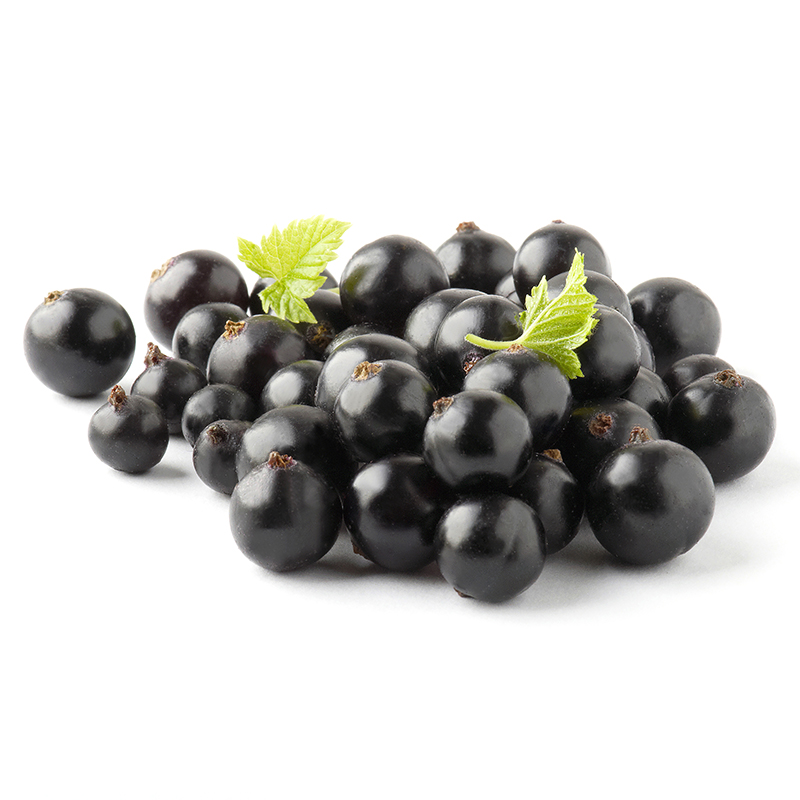
Black Currant Extract vs. Elderberry Extract: At a Glance
| Comparison point | Black currant extract | Elderberry extract |
| Botanical identity | Ribes nigrum L. | Commonly Sambucus nigra L. |
| Characteristic anthocyanins | Delphinidin and cyanidin rutinosides | Cyanidin derivatives, including cyanidin-3-O-sambubioside |
| Relevant evidence | Small human studies on exercise-related intestinal barrier function and post-meal glucose responses | Composition and processing-safety evidence; no established protein-digestion benefit in the sources reviewed |
| Protein-formulation consideration | Anthocyanin–protein interactions require testing | Anthocyanin–protein interactions and processing safety require testing |
| Proven winner for protein digestion? | Not established | Not established |
These differences come from ingredient-composition studies and research with specific extracts. They should not be treated as specifications or performance guarantees for every commercial product. [pubs.acs]
What Does "Improving Protein Digestion" Actually Mean?
A useful comparison must distinguish three different questions:
1. Does an ingredient help enzymes break dietary protein into smaller fragments?
2. Does it improve the availability or absorption of amino acids?
3. Does it reduce discomfort after a protein-containing meal?
These outcomes are related, but they are not interchangeable. Likewise, improving intestinal barrier markers does not establish improved protein digestion.
Research on protein–polyphenol complexes shows why precision matters. Depending on the protein, phenolic compound, processing conditions, and food structure, interactions can change enzyme access and digestion in different directions. A result from one laboratory mixture cannot establish how another finished product performs in people.
My starting point for evaluating this comparison is therefore the measurement—not the marketing category. "Antioxidant," "gut health," and "protein digestion" describe different propositions and require different supporting evidence.
Black Currant Extract: Relevant Evidence and Important Limits
What Makes Black Currant Extract Distinctive?
Black currant extract contains anthocyanins, including delphinidin-3-O-rutinoside and cyanidin-3-O-rutinoside. These compounds help distinguish its chemical profile from that of elderberry.
However, an ingredient name alone does not define a formulation. A particular research extract has a specific composition, dose, and manufacturing history. Before applying its findings commercially, developers should compare those characteristics with the proposed ingredient.
Human Research on Intestinal Barrier Function
A randomized, double-blind crossover study investigated 12 recreationally active men taking 600 mg of anthocyanin-rich blackcurrant extract daily for seven days. Participants then completed a 60-minute run under hot conditions.
Compared with placebo, supplementation produced approximately:
- A 12% reduction in the lactulose/rhamnose ratio, a measure associated with intestinal permeability.
- A 40% reduction in the area under the curve for intestinal fatty acid-binding protein, a marker of intestinal cell damage.
These findings make black currant interesting for exercise-related gastrointestinal research. Nevertheless, the study did not establish better dietary protein breakdown, increased amino acid absorption, or improved tolerance of protein shakes. Its small, male-only sample and exercise-heat setting also limit generalization.
Why Glucose Research Does Not Prove Protein Benefits
Another randomized crossover trial enrolled 23 adults and tested drinks supplying 150, 300, or 600 mg of blackcurrant anthocyanins before a high-carbohydrate meal. Its purpose was to investigate post-meal glucose responses.
That research should not be repurposed as evidence of improved protein digestion. Proposed effects involving carbohydrate-digesting enzymes and intestinal glucose transport concern a different nutritional pathway.
For product communication, this distinction is essential: a study can be relevant to an ingredient without supporting every proposed benefit.
Elderberry Extract: Chemistry, Processing, and Evidence Gaps
How Elderberry Differs Chemically
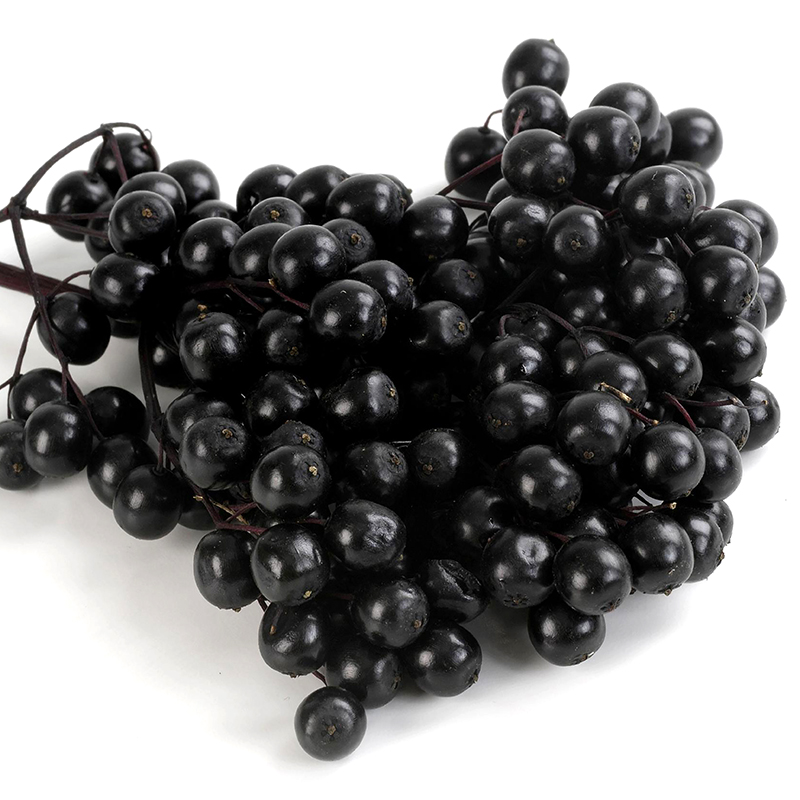
Elderberry has a different anthocyanin profile. Research on *Sambucus nigra* juice identifies cyanidin derivatives, particularly cyanidin-3-O-sambubioside, among its characteristic compounds.
Consequently, black currant and elderberry should not be considered interchangeable simply because both are dark-colored, anthocyanin-rich berries.
Their different profiles provide a reason to investigate formulation behavior—not a basis for declaring one superior for digestion.
Does Elderberry Help Digest Protein?
The sources reviewed do not establish elderberry extract as an effective ingredient for improving human protein digestion.
General research showing that anthocyanins interact with proteins cannot fill this gap. Such interactions may affect pigment stability, food structure, or compound release without demonstrating greater nutritional protein availability.
A responsible elderberry comparison therefore acknowledges the missing outcome rather than substituting unrelated benefits.
Why Processing Safety Matters
The U.S. National Center for Complementary and Integrative Health warns that raw or unripe elderberries, leaves, and stems contain cyanide-producing substances that can cause nausea, vomiting, and severe diarrhea. It states that cooking eliminates this toxin.
For commercial sourcing, the practical question is not simply whether elderberry was "heated." Developers should request documented botanical identity, appropriate processing information, and a safety specification suited to the ingredient and intended application.
Raw-fruit safety warnings also should not be used to imply that all properly manufactured elderberry extracts are unsafe.
The Hidden Variable: Polyphenol–Protein Interactions
One of the most useful insights for developers is that protein can influence a botanical extract just as the extract influences protein.
Anthocyanins can associate with proteins through mechanisms including hydrogen bonding, hydrophobic interactions, and electrostatic interactions. These associations may change stability and functional properties.
Three outcomes deserve separate evaluation:
- Pigment protection: protein binding may help stabilize anthocyanins.
- Changed release: digestion may release compounds previously associated with protein.
- Changed protein hydrolysis: interactions may increase or restrict access by digestive enzymes, depending on the system.
This creates an important distinction: protecting an anthocyanin during digestion is not the same as improving digestion of the protein carrying it.
A recent review emphasizes that liquid, semi-solid, and solid food structures behave differently. Protein type, phenolic characteristics, processing, and matrix structure all influence the outcome.
For black currant extract vs. elderberry extract in protein beverages, the finished formulation—not berry reputation—should determine the decision.
A Practical Testing Roadmap for Ingredient Developers
The following is a proposed development workflow, not a description of testing already completed by Botaniex.
Step 1: Define a Measurable Objective
Choose one primary question:
- Better protein hydrolysis?
- Improved anthocyanin stability?
- Less sedimentation?
- Better consumer tolerance?
- Acceptable taste and color through shelf life?
Avoid treating all five as a single "digestive support" objective.
Step 2: Compare Clearly Defined Extracts
Request documentation covering:
- Botanical species and plant part.
- Extraction solvent and carrier ingredients.
- Anthocyanin specification and analytical method.
- Batch-specific certificate of analysis.
- Microbiological and relevant contaminant results.
- Processing and safety documentation.
Compare extract mass and anthocyanin content separately. The 600 mg extract dose in the intestinal-barrier study is not interchangeable with 600 mg of anthocyanins in the glucose-response trial.
Step 3: Test the Actual Protein Matrix
Evaluate both extracts in the intended whey, pea, soy, or blended-protein system.
A useful experimental design compares:
1. Protein without botanical extract.
2. Protein with black currant extract.
3. Protein with elderberry extract.
Keep protein concentration and processing conditions consistent. Consider separate comparisons at matched extract mass and matched anthocyanin content; these answer different questions.
This matrix-specific approach reflects evidence that protein–phenolic behavior depends on formulation conditions.
Step 4: Separate Laboratory Findings From Human Claims
Simulated digestion can help screen protein breakdown and compound release. It does not, by itself, establish improved amino acid absorption or reduced bloating in consumers.
If the intended positioning concerns human digestive performance, plan research that directly measures that outcome rather than relying only on antioxidant assays or laboratory stability.
An Illustrative Protein-Drink Development Scenario
Imagine a brand developing a berry-flavored pea-protein beverage. Its initial brief asks for "better digestion," but the prototype's visible problems are sedimentation and color loss.
Choosing black currant because of intestinal-barrier research would not directly solve those formulation problems. Selecting elderberry because of its anthocyanin content would not establish digestive efficacy either.
The more useful sequence is:
1. Identify the actual product failure.
2. Compare both extracts in the beverage.
3. Measure stability, sensory acceptance, and digestion-related endpoints separately.
4. Limit claims to the results obtained.
This is a hypothetical scenario, not a customer case study. Its lesson follows the matrix-dependent behavior described in protein–phenolic research.
Safety and Responsible Consumer Guidance
Neither extract should be presented as a treatment for persistent digestive symptoms.
For elderberry specifically, NCCIH advises people taking medicines to speak with their healthcare provider before use. It also notes limited safety information during pregnancy and breastfeeding.
There is no established protein-digestion dose for either ingredient in the evidence reviewed. Doses investigated for exercise-related intestinal stress or glucose responses should not be relabeled as digestion recommendations.
Choosing an Ingredient With Botaniex
For protein digestion specifically, neither ingredient has a demonstrated winning position. Black currant has relevant but indirect human evidence on exercise-related intestinal barrier function; elderberry requires equally careful separation of chemical properties from clinical outcomes.
Based on Botaniex's supplied company profile, the strongest positioning is customized ingredient development supported by transparent specifications—not a promise that either berry resolves protein digestion.
Contact Botaniex with your protein source, dosage format, target market, and intended claim. Request the relevant specifications and discuss a matrix-specific evaluation plan before selecting black currant extract or elderberry extract.
Frequently Asked Questions
1. Is black currant extract better than elderberry extract for protein digestion?
No superiority is established. Black currant's intestinal-barrier findings concern exercise-related heat stress, not demonstrated improvements in protein digestion.
2. Does elderberry extract contain proven protein-digesting activity?
The evidence reviewed does not establish elderberry extract as an effective protein-digesting ingredient. Anthocyanin–protein interactions alone do not demonstrate that benefit.
3. Can either extract be added to a protein shake?
They can be evaluated as formulation candidates, but compatibility and nutritional effects require testing in the actual product. Protein–phenolic behavior depends on the food matrix and processing conditions.
4. Is improved anthocyanin absorption the same as improved protein digestion?
No. Research on anthocyanin delivery examines the fate of plant compounds. It does not automatically establish improved breakdown or absorption of dietary protein.
5. What dose should be used for protein digestion?
No effective dose is established in the evidence reviewed. Research doses for other endpoints should not be presented as validated protein-digestion doses.
6. What is the main elderberry safety precaution?
Avoid consuming raw or unripe elderberries and inappropriate plant parts. NCCIH identifies cyanide-producing compounds as a safety concern and advises checking with a healthcare provider about medicine use.
Evidence and Editorial Notes
- National Center for Complementary and Integrative Health. "Elderberry: Usefulness and Safety." Government guidance supporting the processing, medication, and pregnancy-safety discussion.
- "Anthocyanin-Rich Blackcurrant Extract Preserves Gastrointestinal Barrier Function During Exertional Heat Stress." Human crossover research published in 2022; supports the narrowly defined intestinal-barrier findings.
- "Drinks Containing Anthocyanin-Rich Blackcurrant Extract Decrease Postprandial Glycaemia…" Human crossover research; supports the distinction between carbohydrate-related outcomes and protein digestion.
- "Absorption of Anthocyanin Rutinosides After Consumption of a Blackcurrant Extract." Published in 2019; supports the identification of characteristic blackcurrant anthocyanins.
- "Anthocyanin Profile of Elderberry Juice: A Natural-Based Bioactive Colouring Ingredient With Potential Food Application." Published in 2019; supports the elderberry composition discussion.
- "A Review of the Interaction Between Anthocyanins and Proteins." Published in 2020; supports the molecular-interaction discussion.
- "Protein-Binding Approaches for Improving Bioaccessibility and Bioavailability of Anthocyanins." Published in 2022; supports the distinction between anthocyanin delivery and protein-digestion outcomes.
- "Digestion of Protein-Phenolic Complex: Interactions, Matrix…" Published in 2026; supports the matrix-dependent formulation analysis.
Hot Tags: China, Global, OEM, private label, manufacturers, factory, suppliers, manufacturing company