Content Menu
● Short-Term Memory Recall: Define the Target Before Choosing an Extract
● Cordyceps Militaris Extract vs. Centella Asiatica Extract: Comparison Table
● Centella Asiatica Extract for Memory: What Human Studies Actually Show
>> A systematic review provides a necessary reality check
>> Why Centella still attracts formulation interest
● Cordyceps Militaris Extract for Memory: Mechanisms and Emerging Data
>> What preclinical findings suggest
>> An emerging human report deserves qualified attention
● Protein Digestion: Where It Fits—and Where It Does Not
>> Protein digestion and ingredient absorption are different questions
>> Can either extract improve protein digestion and memory together?
● Industry Insight: Why Extract Specifications Matter More Than a "10:1" Label
● A Practical Evaluation Workflow for Botaniex Customers
>> Step 1: Write a measurable product brief
>> Step 2: Build an extract-to-study matching sheet
>> Step 3: Separate technical feasibility from efficacy
>> Step 4: Create an evidence-gap register
● Safety and Responsible Use
● Frequently Asked Questions
>> 1. Which extract is better for short-term memory recall?
>> 2. Is gotu kola the same as Centella asiatica?
>> 3. Does Cordyceps militaris extract improve protein digestion?
>> 4. Can Centella and Cordyceps be combined?
>> 5. Do published study doses apply to every commercial extract?
>> 6. Does a higher marker percentage mean better results?
● Develop a Better-Documented Ingredient Brief With Botaniex
When comparing Cordyceps militaris extract vs. Centella asiatica extract for short-term memory recall, the most important distinction is evidence. Centella has a longer-established human cognitive research base, but pooled findings remain inconclusive. Cordyceps has substantial preclinical interest and an emerging human report that requires cautious interpretation. Neither ingredient should be presented as a proven solution for everyday forgetfulness—or as a demonstrated enhancer of protein digestion. [pmc.ncbi.nlm.nih]
For supplement brands and ingredient buyers, this is more than a comparison of two natural ingredients. It is a decision about extract identity, study relevance, formulation quality, and responsible communication.
This guide examines their differences from a formulation-review perspective, including an often-overlooked question: where does protein digestion genuinely fit?

Short-Term Memory Recall: Define the Target Before Choosing an Extract
"Memory support" is too broad to serve as a precise formulation brief.
For this comparison, separate three research targets:
- Immediate recall: reproducing information shortly after presentation.
- Working memory: holding and manipulating information during a task.
- Delayed recall: retrieving information after a longer interval.
These outcomes should not be treated as interchangeable. The Centella literature includes working-memory measures, while the emerging Cordyceps trial discussed below reports delayed verbal recall and overall cognitive screening scores. A positive finding in one category does not establish improvement in another.
My starting question in evaluating a memory ingredient would therefore be: "Which task, in which population, did this particular extract improve?"
That question is more useful than asking which ingredient has the stronger reputation.
Cordyceps Militaris Extract vs. Centella Asiatica Extract: Comparison Table
| Evaluation point | Cordyceps militaris extract | Centella asiatica extract |
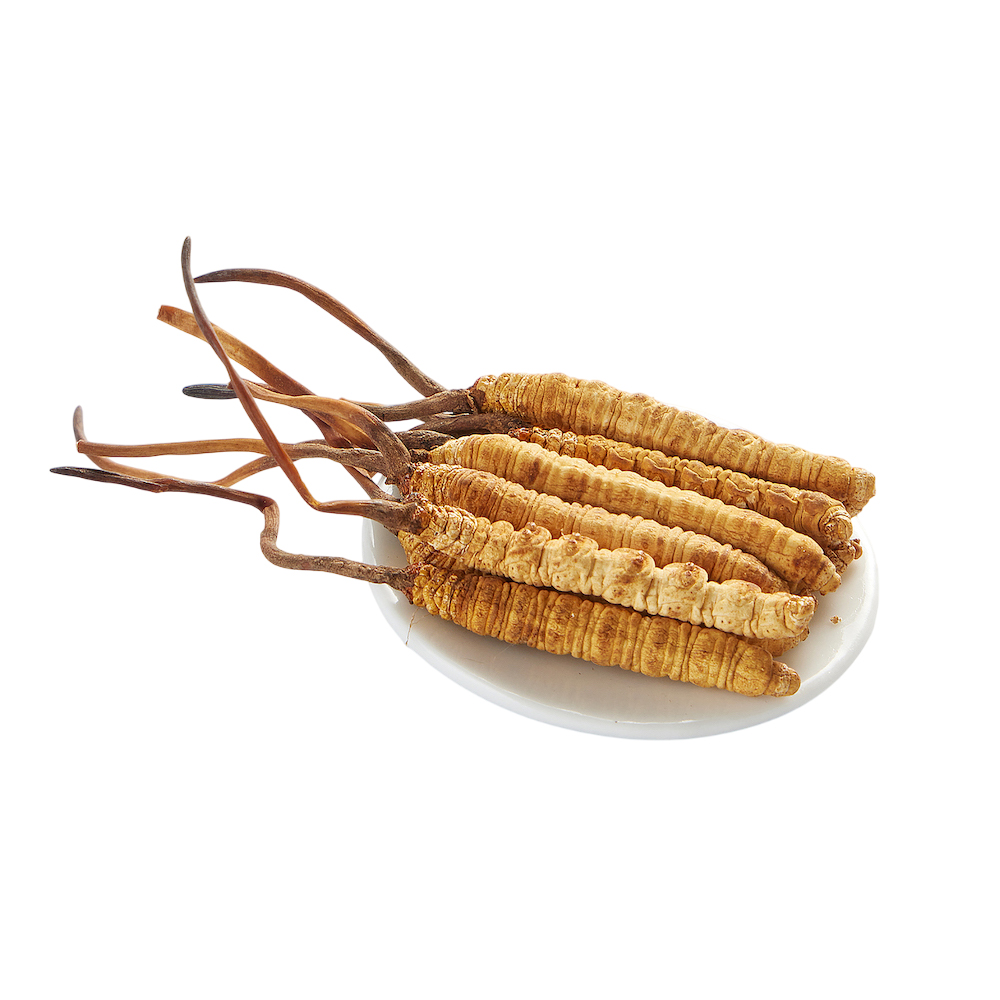
| Ingredient identity | A fungal extract; species and cultivation material matter | A botanical extract, also known as gotu kola |
| Compounds of research interest | Cordycepin, adenosine, and polysaccharides | Asiaticoside, madecassoside, asiatic acid, madecassic acid, and caffeoylquinic acids |
| Cognitive research foundation | Predominantly laboratory and animal research, with emerging human reporting | Multiple human trials and a systematic review |
| Main limitation | Preclinical mechanisms and limited human reporting do not establish reliable short-term recall benefits | Pooled results did not show significant benefits across cognitive domains |
| Protein-digestion positioning | Not established by the cognitive evidence reviewed | Not established by the cognitive evidence reviewed |
| Buyer priority | Confirm species, material, extraction process, and measured composition | Confirm plant material, chemical fingerprint, and similarity to the studied extract |
These distinctions reflect the research reviewed here, not a head-to-head clinical comparison. Neither the Centella meta-analysis nor the Cordyceps report directly compared the two ingredients.
Centella Asiatica Extract for Memory: What Human Studies Actually Show
A systematic review provides a necessary reality check
A 2017 systematic review included five randomized controlled trials of Centella alone and six trials of Centella-containing products. Its meta-analysis found no significant differences versus placebo across the assessed cognitive domains.
For working-memory scores, the pooled standardized mean difference was 0.61, with a 95% confidence interval from −0.25 to 1.48. Because that interval includes zero, the result does not establish a reliable benefit.
This matters commercially. Highlighting a positive individual study while omitting the pooled uncertainty would give readers an incomplete picture.
Why Centella still attracts formulation interest
A small double-blind trial involving 28 healthy older adults evaluated 250, 500, or 750 mg daily over two months. Reviews describe favorable working-memory and mood findings at the highest dose. However, its small sample and specific extract limit generalization.
Researchers have also investigated Centella's effects on antioxidant responses, mitochondrial activity, and synaptic features. Much of this mechanistic work remains preclinical.
The appropriate conclusion is measured: Centella is a research-supported candidate for further investigation, not a guaranteed short-term memory enhancer.
For buyers, the next question is whether a commercial extract meaningfully resembles the preparation used in the relevant study.
Cordyceps Militaris Extract for Memory: Mechanisms and Emerging Data
What preclinical findings suggest
Cordyceps militaris research includes cell and animal models examining oxidative stress, inflammatory signaling, cholinergic activity, and memory-related pathways. A review describes improved memory outcomes in experimentally impaired animals, including models involving cerebral ischemia and chemically induced deficits.
These findings offer hypotheses for human research. They do not demonstrate that a healthy adult will remember names, instructions, or shopping lists more accurately after supplementation.
Another important distinction is ingredient identity. Results involving isolated cordycepin, a particular solvent extract, or another Cordyceps species should not automatically be assigned to every Cordyceps militaris product. The review documents different species, preparations, and experimental systems.
An emerging human report deserves qualified attention
A 2025 indexed abstract reports a 12-week randomized, double-blind, placebo-controlled trial involving 120 adults aged 45–65 with subjective cognitive decline. Participants received 300 mg daily of a mycelial extract standardized to 3% cordycepin or placebo.
The abstract reports favorable differences in overall cognitive screening, delayed verbal recall, and sleep outcomes. However, this article's assessment is limited to the indexed abstract, not an independent appraisal of the full protocol, registration, and underlying data.
It would therefore be premature to describe Cordyceps as clinically proven for short-term recall. Delayed recall is also not identical to immediate recall or working memory.
From a product-development perspective, this is an emerging research signal—not a basis for transferring efficacy claims to an unrelated extract.
Protein Digestion: Where It Fits—and Where It Does Not
Protein digestion and ingredient absorption are different questions
Protein digestion breaks dietary proteins into smaller components, including amino acids, that the body can absorb and use. The small intestine absorbs amino acids into the bloodstream.
That process is distinct from the absorption and metabolism of compounds such as cordycepin or Centella triterpenes. These compounds belong to different chemical classes; describing their availability as "better protein digestion" would confuse separate biological processes.
Three claims must therefore remain separate:
1. An ingredient contains proteins or amino acids.
2. An ingredient improves the digestion of dietary protein.
3. An ingredient improves memory.
Evidence for one does not establish the others.
Can either extract improve protein digestion and memory together?
The cognitive studies and reviews discussed here do not establish a clinical pathway in which either extract improves protein digestion and thereby enhances short-term memory recall. They investigate cognitive outcomes or neurological mechanisms, not that combined claim.
For a protein powder, nutrition beverage, or functional food, this distinction is especially important.
A product may contain protein alongside a botanical or fungal extract. But combining ingredients does not demonstrate improved protein breakdown, amino-acid absorption, or cognitive performance.
A credible development brief should define separate endpoints for digestive tolerance, protein digestion, and memory rather than presenting them as one benefit.
Industry Insight: Why Extract Specifications Matter More Than a "10:1" Label
A concentration ratio alone cannot tell buyers whether two extracts have comparable chemistry or clinical relevance.
A published Centella development project illustrates this problem. Researchers found substantial variation among source materials: total triterpenes in their water extracts ranged from approximately 0.5% to 11%. Higher triterpene content also did not necessarily coincide with higher caffeoylquinic-acid content.
The lesson is practical: one prominent marker cannot describe the entire extract.
For a supplier discussion, I would request:
- Confirmed species and source material.
- Plant part, fruiting body, or mycelial material, as applicable.
- Extraction solvent and processing description.
- Marker specifications and analytical methods.
- Carrier and excipient composition.
- Batch-specific contaminant results.
- Stability information for the intended application.
- A clear explanation of how the ingredient relates to cited research.
This checklist follows the same quality questions emphasized in botanical clinical-product development: identity, composition, contaminants, reproducibility, and formulation suitability.
For Cordyceps, cultivation conditions and extraction choices can also alter composition, making a generic ingredient name insufficient for evaluating research relevance.
A Practical Evaluation Workflow for Botaniex Customers
The following is a proposed purchasing and development framework—not a claim about services or specifications already verified for Botaniex.
Step 1: Write a measurable product brief
Specify the intended user, delivery format, target market, and outcome. Replace "better brain health" with a defined research question, such as working-memory accuracy after a specified period.
Step 2: Build an extract-to-study matching sheet
Compare the proposed ingredient with the study material by identity, extraction process, composition, daily amount, population, and duration.
The botanical development literature identifies inadequate product characterization and poorly justified endpoints as recurring barriers to meaningful clinical evaluation.
Step 3: Separate technical feasibility from efficacy
Evaluate taste, dispersibility, processing compatibility, and storage stability as formulation questions. Do not treat a successful beverage prototype as proof of a memory benefit.
The Centella development project specifically addressed palatability, dispersion, excipients, and stability alongside—not instead of—clinical investigation.
Step 4: Create an evidence-gap register
List what remains unproven: immediate recall, performance in younger adults, combination effects, or protein digestion.
This makes the development discussion more precise and prevents uncertainty from disappearing between technical review and marketing copy.
Safety and Responsible Use
Natural origin does not establish universal safety.
LiverTox links Centella asiatica to rare reports of clinically apparent liver injury, while noting that contamination or other ingredients could not be excluded in some reports. This deserves proportionate disclosure rather than either alarmism or dismissal.
For Cordyceps, LiverTox describes adverse effects in studied preparations as generally uncommon and minimal, without convincing evidence of hepatotoxicity. That does not establish that every species, extract, dose, or combination has an identical safety profile.
Consumers with medical conditions or medication use should seek individualized professional advice rather than interpreting an ingredient comparison as a personal treatment recommendation.
This article is educational and does not establish an effective dose or treatment for memory disorders.
Frequently Asked Questions
1. Which extract is better for short-term memory recall?
Neither has established superiority. Centella has a broader established human cognitive literature, but pooled findings are inconclusive. Cordyceps has emerging human reporting that does not settle this specific comparison.
2. Is gotu kola the same as Centella asiatica?
Yes. Gotu kola is a common name for Centella asiatica. However, products using that name can differ in composition, preparation, and concentration.
3. Does Cordyceps militaris extract improve protein digestion?
The cognitive sources reviewed here do not establish that benefit. A protein-digestion claim requires evidence measuring digestion or related outcomes, not animal memory findings.
4. Can Centella and Cordyceps be combined?
They can be considered in a formulation proposal, but the cited studies do not establish that their combination improves memory more than either ingredient alone. Combination efficacy and tolerability remain separate questions.
5. Do published study doses apply to every commercial extract?
No. A study amount describes a particular preparation. Differences in composition, extraction, and formulation can prevent direct equivalence between products.
6. Does a higher marker percentage mean better results?
Not necessarily. Marker concentration helps characterize an ingredient, but it does not independently demonstrate a cognitive benefit. Centella research illustrates why multiple constituent groups and the complete preparation matter.
Develop a Better-Documented Ingredient Brief With Botaniex
For brands exploring Cordyceps militaris extract or Centella asiatica extract, the next step is a documented technical discussion—not a stronger promise.
Contact Botaniex with your intended application, target market, delivery format, and required specifications. Request available samples, batch documentation, analytical information, and formulation options for review.
Keep short-term memory, protein digestion, and product quality as separate evaluation tracks. That creates a clearer basis for ingredient selection and a more trustworthy story for customers.
Hot Tags: China, Global, OEM, private label, manufacturers, factory, suppliers, manufacturing company