Content Menu
● Agaricus Blazei Extract vs. Black Ginger Extract: The Essential Differences
● Protein Digestion: What Can Either Extract Actually Claim?
>> Functional-Ingredient Research Is Not Digestive Proof
>> Test the Finished Protein Product
● Natural Dye Transition: Color Potential Is Not Colorant Authorization
>> Why Black Ginger Deserves Pigment Research
>> Why Agaricus Requires a Different Development Brief
>> Natural Origin Does Not Remove Regulatory Requirements
● Which Extract Fits a Protein Beverage or Functional Food?
>> For a Mushroom-Led Product Concept
>> For a Black-Ginger-Led Product Concept
>> For a Color-Led Reformulation
● A Practical Development Plan: Separate Function, Color, and Digestion
>> Step 1: Define the Product Brief
>> Step 2: Compare Traceable Extract Grades
>> Step 3: Build Matched Prototypes
>> Step 4: Evaluate Appearance and Digestion Separately
>> Step 5: Establish Decision Gates
● Expert Perspective: Three Mistakes Worth Avoiding
>> Mistake 1: Confusing a Botanical Marker With a Pigment Specification
>> Mistake 2: Treating Ingredient Research as Finished-Product Evidence
>> Mistake 3: Turning a Bench Result Into a Human Benefit
● Safety and Supplier Qualification
● Conclusion: Choose by Evidence, Not Ingredient Reputation
● Frequently Asked Questions
>> 1. Which extract is better for protein digestion?
>> 2. Can black ginger extract replace a synthetic food dye?
>> 3. Is Agaricus blazei extract a digestive enzyme ingredient?
>> 4. Does dark color indicate a stronger black ginger extract?
>> 5. Can INFOGEST testing support a protein-digestion project?
>> 6. Are naturally sourced colors automatically approved?
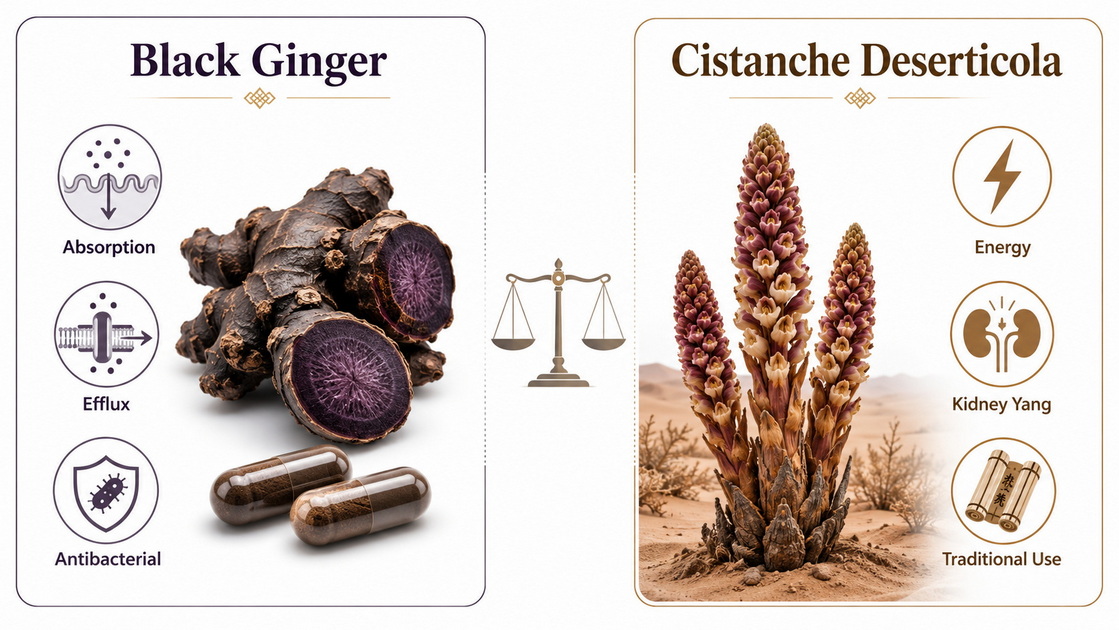
Agaricus Blazei Extract vs. Black Ginger Extract is an unusual but useful comparison for brands navigating natural dye transition in protein beverages, functional foods, and supplements. Both ingredients offer distinctive formulation stories, but neither should automatically be treated as an approved colorant or a proven aid to protein digestion. Their chemistry, supporting evidence, and regulatory requirements demand separate evaluation.
My recommendation is to separate three questions: What functional role should the extract play? What appearance does the finished product require? And what evidence supports its digestive claims? Treating these as independent decisions creates a more credible development brief.
Agaricus Blazei Extract vs. Black Ginger Extract: The Essential Differences
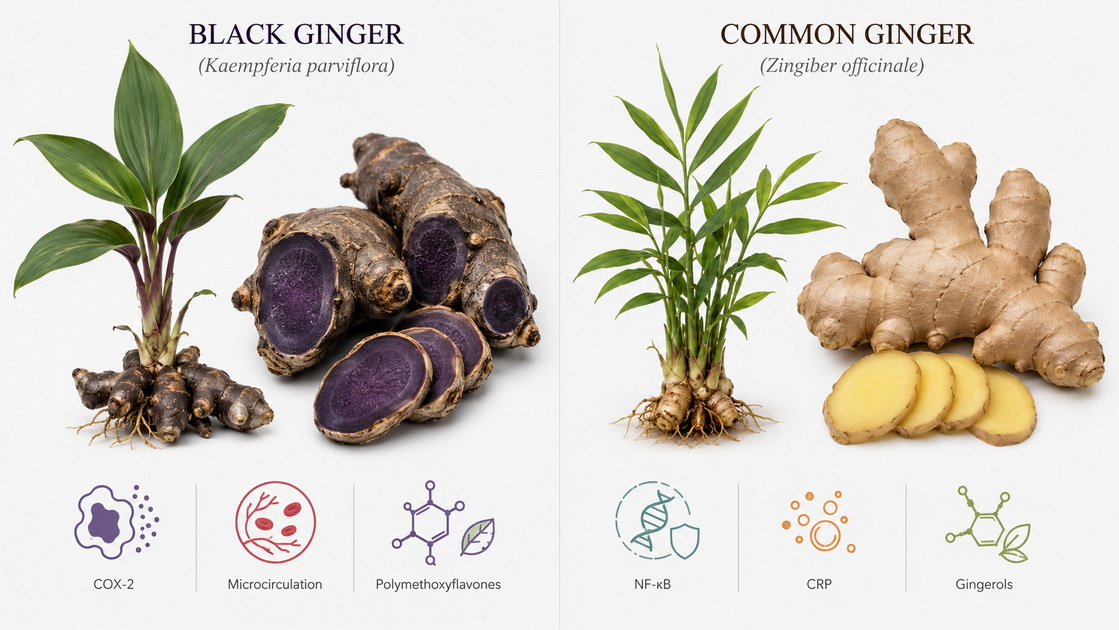
Agaricus blazei is a mushroom studied for polysaccharides, including beta-glucans. Black ginger, *Kaempferia parviflora*, is a rhizome investigated for compounds including polymethoxyflavones. Its purple appearance has also prompted research into anthocyanin pigments. These are different ingredient platforms, not interchangeable extracts.
| Comparison point | Agaricus blazei extract | Black ginger extract |
| Ingredient origin | Mushroom material; confirm the exact material used | Kaempferia parviflora rhizome |
| Research emphasis | Polysaccharides, beta-glucans, and potential biological effects | Methoxyflavones, metabolism, and physical-performance applications |
| Color-related evidence | The reviewed literature does not establish a standardized colorant application | Published research investigates black ginger anthocyanin stability |
| Protein-digestion evidence | No direct comparative human evidence identified in the reviewed sources | No direct comparative human evidence identified in the reviewed sources |
| Essential development question | Does the specified extract suit the product's functional and sensory brief? | Does the specified extract provide the required chemistry, appearance, and compatibility? |
The comparison reflects the reviewed literature, not a head-to-head trial or a specification for every commercial grade.
From a formulation-strategy perspective, I would shortlist ingredients by measured specifications rather than the appeal of their common names.
Protein Digestion: What Can Either Extract Actually Claim?
Functional-Ingredient Research Is Not Digestive Proof
The evidence reviewed does not establish that either extract improves human protein digestion or amino-acid absorption. Agaricus research covers several biological activities, but clinical evidence remains limited. Black ginger clinical reviews likewise identify limitations in the available human studies. Neither research stream establishes superiority for protein digestion.
This distinction matters for marketing. "Studied for metabolic effects," "contains beta-glucans," and "improves protein digestion" describe different propositions. Evidence supporting one cannot simply substantiate the others.
I would therefore avoid statements such as "maximizes protein absorption" or "breaks down protein more efficiently" unless the exact ingredient and finished-product claim have suitable supporting evidence.
Test the Finished Protein Product
A more useful question is whether adding an extract changes protein breakdown in the actual formulation.
The INFOGEST method provides an internationally standardized approach to simulated gastrointestinal digestion. It exposes food samples to sequential oral, gastric, and intestinal conditions, controlling factors such as enzymes, pH, bile, dilution, and digestion time. It is a practical research framework, not proof of a human clinical benefit.
A proposed comparison should include:
- A protein-only control.
- The same formula containing Agaricus blazei extract.
- The same formula containing black ginger extract.
- A color-only comparator, if color replacement is part of the brief.
- Appropriate analytical blanks for each extract.
This design helps distinguish the ingredient's functional contribution from the separate effects of the color system.
Natural Dye Transition: Color Potential Is Not Colorant Authorization
Why Black Ginger Deserves Pigment Research
Black ginger has a more direct pigment-research rationale in this comparison. A published study investigated the stability of its anthocyanins using copigments extracted from Makiang seeds. Under one specified condition—pH 3, 80°C, 120 minutes, and a 1:15 anthocyanin-to-copigment molar ratio—the researchers reported 89.57% anthocyanin retention.
That finding supports further investigation, not a ready-to-use beverage claim. It does not establish equivalent performance in milk, pea-protein shakes, commercial extraction grades, or a finished product throughout shelf life.
It also does not mean that an extract standardized for methoxyflavones has the same pigment profile as the anthocyanin preparation used in that experiment. The research targets are different.
Why Agaricus Requires a Different Development Brief
The reviewed Agaricus literature emphasizes chemical composition and potential health-related activities rather than validated food-color applications. Its research story therefore provides a stronger basis for investigating a functional mushroom ingredient than for promising a predictable replacement dye.
For product development, I would request actual color measurements, photographs under controlled lighting, and application samples before assigning any color role to an Agaricus extract.
Natural Origin Does Not Remove Regulatory Requirements
In the United States, color additives require FDA authorization for their intended uses. Even colors exempt from batch certification must be approved before use; "exempt" does not mean exempt from color-additive regulation.
Do not assume that either extract can legally color a food because it is botanical, edible, or sold as a supplement ingredient. Ask a regulatory specialist to evaluate the exact substance, manufacturing process, intended function, application, and use level.
Which Extract Fits a Protein Beverage or Functional Food?
For a Mushroom-Led Product Concept
Agaricus blazei extract may be worth evaluating when the concept specifically calls for a mushroom ingredient. Its polysaccharide-focused research provides context for ingredient selection, but the finished product still needs its own specification and claim review.
My suggested brief would prioritize:
- Verified identity and starting material.
- Clearly defined analytical markers.
- Acceptable flavor and appearance at the intended dose.
- Compatibility with the selected protein.
- Evidence appropriate to any proposed claims.
For a Black-Ginger-Led Product Concept
Black ginger may suit a concept built around its distinctive botanical identity and existing metabolic or performance research. However, those research areas should not be relabeled as digestive benefits.
A black ginger brief should separately define the desired methoxyflavone profile, pigment characteristics, dispersibility, and sensory limits. A specification answering one question does not automatically answer the others.
For a Color-Led Reformulation
If predictable color replacement is the primary objective, I would evaluate authorized color systems first and select functional extracts separately.
FDA lists multiple color additives derived from natural sources, with specific permitted uses and restrictions. The correct alternative depends on the product category, target shade, processing conditions, and applicable regulation—not simply the ingredient's origin.
A Practical Development Plan: Separate Function, Color, and Digestion
The following is a proposed workflow, not a reported Botaniex trial.
Step 1: Define the Product Brief
Specify the protein source, serving size, target market, pH, processing method, packaging, desired shade, and shelf-life objective.
Also identify what "better digestion" means for the project. Is the goal a laboratory protein-breakdown endpoint, consumer tolerance, or a substantiated human claim? Do not treat those as equivalent outcomes.
Step 2: Compare Traceable Extract Grades
Request representative samples with batch-specific documentation. Record extraction solvent, carrier ingredients, marker concentrations, and analytical methods.
Avoid treating a high extraction ratio as proof of a superior product. Instead, connect each requested specification to a measurable product requirement.
Step 3: Build Matched Prototypes
Keep protein content, processing, and other ingredients consistent. Compare each extract at its intended inclusion level rather than forcing an arbitrary equal dose.
Include a separate approved-color control where legally appropriate. This makes the color-replacement question easier to interpret.
Step 4: Evaluate Appearance and Digestion Separately
For appearance, I would commission instrumental color measurements, visual assessment, sedimentation observations, and stability testing.
For protein digestion, use a justified laboratory protocol such as INFOGEST and predefined analytical endpoints. Any apparent improvement should be investigated before it becomes a commercial claim.
Step 5: Establish Decision Gates
Before testing, agree on acceptable limits for color change, flavor, dispersion, protein breakdown, cost, and regulatory documentation.
This prevents the team from selecting whichever result looks most favorable after the experiment.
Expert Perspective: Three Mistakes Worth Avoiding
Mistake 1: Confusing a Botanical Marker With a Pigment Specification
Black ginger methoxyflavone research and black ginger anthocyanin research examine different chemical targets. A purchasing specification should identify which target matters to the application rather than assuming that all black ginger extracts perform alike.
Mistake 2: Treating Ingredient Research as Finished-Product Evidence
An ingredient study does not establish the performance of a different extract, dose, processing method, or protein formula. The limited clinical evidence for both ingredient categories makes careful claim matching particularly important.
Mistake 3: Turning a Bench Result Into a Human Benefit
INFOGEST can help investigate digestion under standardized laboratory conditions. It does not reproduce every aspect of human physiology, and its results should not be described as proof that consumers absorb more protein.
My preferred approach is to make the strongest claim the evidence supports—not the strongest claim the product concept suggests.
Safety and Supplier Qualification
Natural ingredients still require safety review. Memorial Sloan Kettering notes limited human evidence for Agaricus and reports including abnormal liver function and allergic reactions. These reports warrant attention without implying that every Agaricus product causes those outcomes.
For black ginger, a clinical systematic review found encouraging but inconclusive results from small studies. A later perspective review also highlights the need to establish long-term safety more clearly.
Before purchase, request:
- Identity and batch-traceability records.
- Relevant contaminant and microbiological results.
- Residual-solvent information where applicable.
- Marker assays with identified test methods.
- Carrier and allergen declarations.
- Intended-use regulatory documentation.
- Safety information relevant to the proposed dose and population.
For Botaniex, the most credible positioning is evidence-led formulation: connect ingredient specifications, application testing, and regulatory review rather than promising unverified benefits.
Conclusion: Choose by Evidence, Not Ingredient Reputation
For natural dye transition, black ginger offers a specific pigment-research lead, while Agaricus blazei offers a different, polysaccharide-centered ingredient platform. Neither has established superiority for protein digestion in the sources reviewed, and neither should be presumed authorized for coloring a finished food.
Contact Botaniex with your protein source, target shade, processing conditions, intended market, and proposed claims. Request an application-focused ingredient discussion covering available specifications, sample evaluation, documentation, and a clearly defined validation plan.
Frequently Asked Questions
1. Which extract is better for protein digestion?
Neither can currently be identified as the better option from the reviewed evidence. A defensible comparison requires the specified extracts, a matched protein formula, and suitable digestion testing; human benefit claims require additional support.
2. Can black ginger extract replace a synthetic food dye?
Not automatically. Anthocyanin research demonstrates a reason to investigate its color properties, but commercial suitability and legal authorization remain separate questions.
3. Is Agaricus blazei extract a digestive enzyme ingredient?
The reviewed literature characterizes it primarily through compounds such as polysaccharides and beta-glucans. That does not establish a standardized digestive-enzyme activity or justify marketing it as a protease product.
4. Does dark color indicate a stronger black ginger extract?
Color alone is not a substitute for an assay. Black ginger research addresses both methoxyflavones and anthocyanins, so the relevant specification depends on which compounds and application the buyer intends to evaluate.
5. Can INFOGEST testing support a protein-digestion project?
Yes. It offers a standardized simulated-digestion framework for comparing formulations. However, it is an in vitro method, not a human absorption trial or automatic substantiation for a digestive-health claim.
6. Are naturally sourced colors automatically approved?
No. FDA requires authorization for color additives, including those exempt from batch certification. Manufacturers must verify the exact permitted substance, application, and restrictions.