Content Menu
● Elderberry Extract vs. Artichoke Extract: Key Formulation Differences
● What Catechin Retention Actually Means
>> Measure Specific Catechins, Not Just Total Polyphenols
● Can Either Extract Improve Catechin Retention?
>> Prioritize the Formulation Environment
● Flavor Masking: Distinguish Bitterness, Astringency, and Aroma
>> Test the Sensory Problem Separately
● Protein Digestion: The Most Important Scientific Distinction
>> Protein–Polyphenol Interactions Can Help or Hinder
● A Practical Comparative Testing Workflow
>> Step 1: Build Matched Prototypes
>> Step 2: Measure Processing and Storage Retention
>> Step 3: Evaluate Protein Digestion Separately
>> Step 4: Combine Chemistry With Sensory Results
● Two Product Scenarios That Clarify the Choice
>> Scenario A: Berry-Positioned Protein and Tea Drink
>> Scenario B: Botanical Digestive-Support Powder
● Supplier Qualification and Responsible Claims
● Frequently Asked Questions
>> 1. Is elderberry extract better than artichoke extract for catechin retention?
>> 2. Does artichoke extract improve protein digestion?
>> 3. Can elderberry extract mask catechin bitterness?
>> 4. Can protein binding protect catechins without changing digestion?
>> 5. Is total antioxidant activity enough to prove catechin retention?
>> 6. What is the best starting digestion test?
● Start With a Defined Formulation Brief
● References
Elderberry extract vs. artichoke extract is more than a comparison between two botanical ingredients. For developers of protein beverages, functional powders, and tea-enriched supplements, the practical question is how each extract might influence catechin retention, flavor masking, and protein digestion. Their different polyphenol profiles make this a formulation question—not a contest with a universal winner. Published research helps explain those differences, but it does not establish that either extract consistently outperforms the other in finished protein products.
From a formulation-strategy perspective, I would evaluate three outcomes separately: chemical stability, sensory acceptance, and digestive performance. Improving one does not automatically improve the others.
For Botaniex, whose supplied company profile emphasizes botanical extraction and customized ingredient solutions, this evidence-led approach provides a useful framework for discussing customer projects without overstating ingredient benefits.
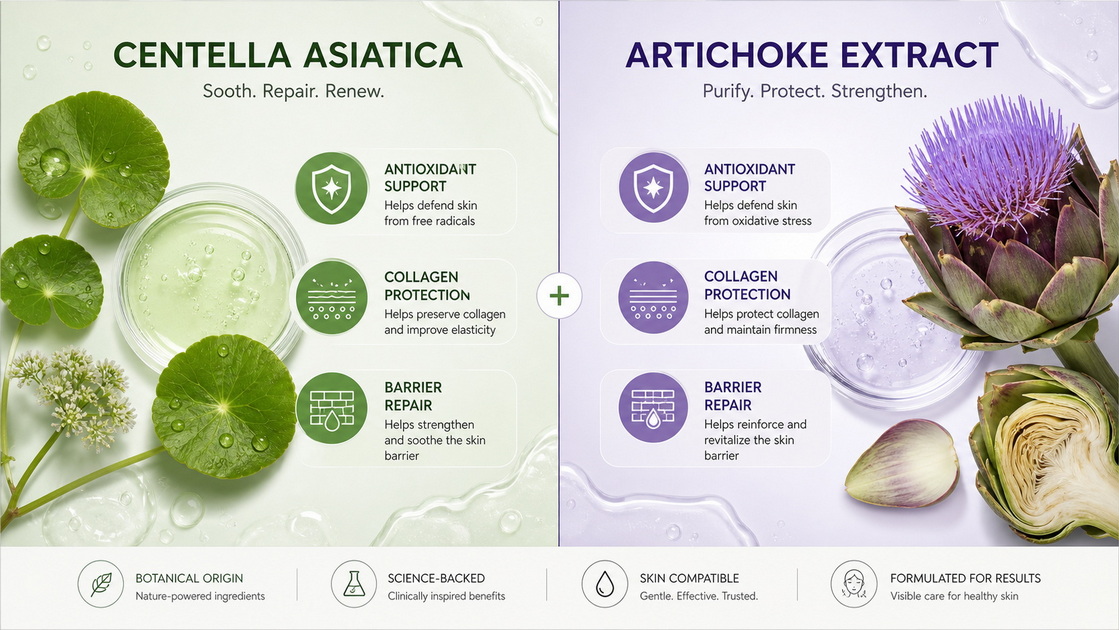
Elderberry Extract vs. Artichoke Extract: Key Formulation Differences
Elderberry fruit extract, commonly associated with *Sambucus nigra*, is characterized by anthocyanins alongside other phenolics. Artichoke leaf extract, from *Cynara cardunculus* syn. *Cynara scolymus*, contains caffeoylquinic acid derivatives and bitter constituents. Neither should be treated as interchangeable with a standardized tea-catechin ingredient.
| Comparison | Elderberry fruit extract | Artichoke leaf extract |
| Characteristic compounds | Anthocyanins, including cyanidin derivatives; other phenolics | Caffeoylquinic acids, including cynarin; flavonoids and bitter constituents |
| Primary development question | Can its composition support the intended color and botanical positioning? | Can its botanical identity fit a digestive-positioned product without unacceptable bitterness? |
| Catechin-retention evidence | No direct superiority established by the sources reviewed | No direct superiority established by the sources reviewed |
| Protein-digestion conclusion | Requires testing in the actual protein matrix | Digestive-use tradition does not establish improved protein hydrolysis |
| Main specification issue | Species, fruit identity, anthocyanin profile, and processing | Leaf identity, extraction method, marker profile, and bitterness |
The compositional distinctions are supported by botanical reviews and regulatory material; the product-development questions are proposed decision criteria, not demonstrated comparative outcomes.
What Catechin Retention Actually Means
Before selecting a botanical, define the catechin you want to preserve. Catechin, epicatechin, and epigallocatechin gallate—EGCG—are related compounds, but they are not analytically interchangeable.
Also define when retention matters:
- After mixing and thermal processing.
- During packaged shelf life.
- After simulated gastrointestinal digestion.
These are different endpoints. Tea-catechin research identifies pH, temperature, concentration, and oxygen exposure as important stability variables. A storage result cannot simply be extended to intestinal conditions.
Measure Specific Catechins, Not Just Total Polyphenols
A total-polyphenol result cannot establish that the original catechins survived. Adding elderberry or artichoke introduces other phenolics, potentially making an overall assay look favorable without answering the catechin question.
A stronger development plan quantifies the target catechins individually using a validated chromatographic method. Published catechin-stability research has used high-performance liquid chromatography for this purpose.
My practical recommendation is to establish a catechin-only control before adding either botanical. Otherwise, changes caused by the base formulation may be mistaken for an extract effect.
Can Either Extract Improve Catechin Retention?
The evidence reviewed does not support a defensible head-to-head ranking.
Elderberry's anthocyanins are themselves sensitive to processing conditions. Their stability varies with factors including species, molecular structure, heat, light, oxygen, and pH. An anthocyanin-rich ingredient therefore should not automatically be described as a protective system for another polyphenol.
Artichoke's caffeoylquinic acids provide a different chemical profile. However, their presence does not establish that an artichoke extract protects EGCG or other tea catechins in a protein beverage. Composition is a starting point for testing, not proof of performance.
Prioritize the Formulation Environment
In one kinetic study, catechins in concentrated green-tea systems showed greater stability around pH 4 under the conditions examined. Other research illustrates the importance of oxygen and warns that acidic conditions alone do not guarantee stability in complex products. These findings are useful screening guidance, not universal formulation specifications.
A sensible test plan should therefore control:
1. Final pH.
2. Processing temperature and holding time.
3. Dissolved oxygen and packaging conditions.
4. Protein source and concentration.
5. Extract dose and catechin-to-protein ratio.
Comparing extracts without controlling these variables risks answering the wrong question.
Flavor Masking: Distinguish Bitterness, Astringency, and Aroma
Flavor masking should be treated as a measurable sensory outcome, not an assumed botanical function.
Artichoke leaf contains recognized bitter constituents. That makes it a candidate requiring careful bitterness screening, rather than an obvious solution for masking a bitter tea ingredient.
Elderberry may be worth screening in a berry-oriented concept, but its botanical name alone does not establish sweetness, aroma strength, or masking performance. The actual extract specification and finished-product sensory results must determine suitability.
Test the Sensory Problem Separately
I would ask a panel to score:
- Initial bitterness.
- Lingering bitterness.
- Drying or puckering sensations.
- Botanical or vegetal notes.
- Overall flavor compatibility.
- Overall acceptance.
This proposed scorecard separates "less bitter" from "more pleasant." A prototype could improve overall acceptance while leaving catechin bitterness largely unchanged.
Use coded samples and include an extract-free control. If the goal is to compare extract effects, keep the sweetener and flavor system constant. If the goal is to compare optimized commercial concepts, allow different flavor systems—but identify that as a separate experiment.
Protein Digestion: The Most Important Scientific Distinction
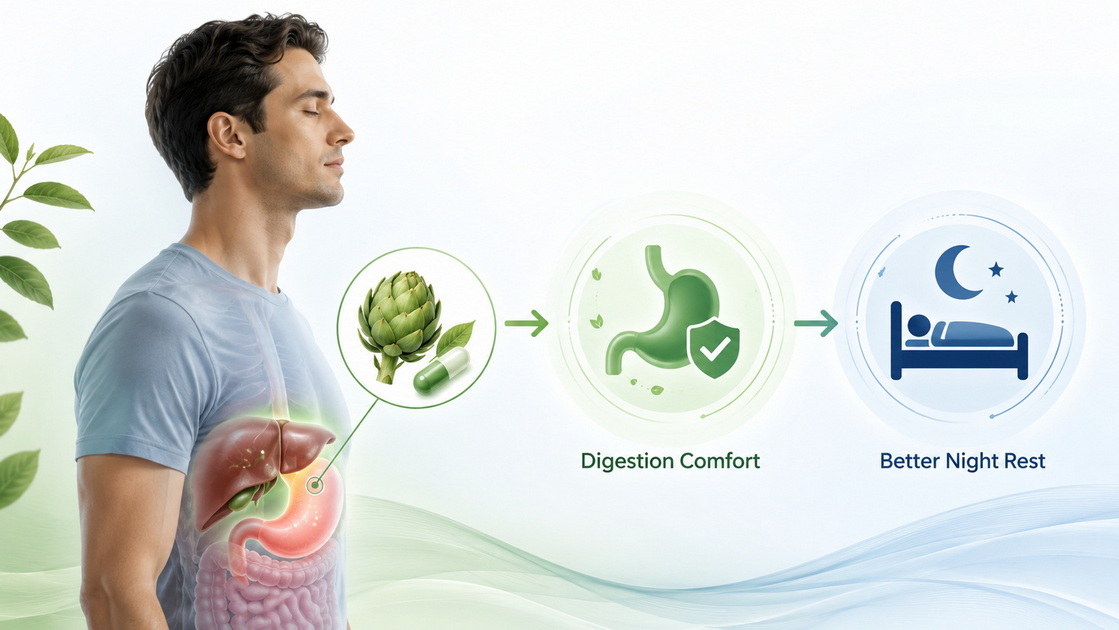
Artichoke's digestive reputation requires careful interpretation. The European Medicines Agency recognizes certain artichoke leaf preparations for traditional use in relieving indigestion associated with fullness, bloating, and flatulence. That is not equivalent to evidence that artichoke improves protein breakdown or amino-acid absorption in a fortified food.
Likewise, elderberry's polyphenol content does not establish improved protein digestion.
Protein–Polyphenol Interactions Can Help or Hinder
Polyphenols can interact with proteins in ways that change enzyme accessibility. Depending on the compounds, protein structures, concentrations, and processing conditions, interactions may favor partial unfolding or promote aggregation that limits digestion. A recent review explicitly rejects the idea that polyphenols uniformly inhibit protein digestibility.
Specific experimental results also differ. One casein study found that EGCG did not affect casein hydrolysis in the digestion models used. Another study involving β-lactoglobulin reported that particular catechin interactions could promote gastric degradation under its experimental conditions. Neither result establishes how elderberry and artichoke will behave in an unrelated commercial formula.
The practical lesson is straightforward: neither "polyphenols impair protein digestion" nor "botanical extracts improve protein digestion" is an adequate formulation rule.
A Practical Comparative Testing Workflow
The following workflow is a proposed development framework, not a report of completed Botaniex trials.
Step 1: Build Matched Prototypes
Prepare a protein-only control, a protein-plus-catechin control, and matching catechin formulas containing either elderberry or artichoke extract.
Keep the protein content, catechin dose, processing, and storage conditions consistent. Use multiple extract levels if resources permit.
Step 2: Measure Processing and Storage Retention
Measure catechins before processing, immediately afterward, and at predefined storage intervals.
Calculate retention using the same analytical basis throughout:
Catechin retention (%)=catechin amount at the selected endpoint/initial catechin amount×100
Correct comparisons for dilution and other relevant mass-balance changes. Report individual catechins alongside any combined result.
Step 3: Evaluate Protein Digestion Separately
Use an established method such as INFOGEST 2.0 to simulate sequential oral, gastric, and intestinal digestion. The protocol supports analysis of digestion products and nutrient release, but its static design is not intended to reproduce digestion kinetics.
Possible endpoints include peptide release, amino-acid release, and protein breakdown patterns. These remain laboratory measurements—not direct proof of improved digestion in people.
Step 4: Combine Chemistry With Sensory Results
Use a decision dashboard rather than a single "best extract" score:
| Outcome | Suggested measurement | Decision question |
| Catechin retention | Validated chromatographic analysis | Did the target compounds remain? |
| Protein breakdown | Standardized digestion endpoints | Did the extract change hydrolysis? |
| Physical performance | Sediment, turbidity, dispersibility | Is the product commercially usable? |
| Sensory acceptance | Blinded comparative panel | Will customers accept the formula? |
Set acceptance thresholds before reviewing results to reduce the temptation to select only favorable findings.
Two Product Scenarios That Clarify the Choice
These scenarios illustrate development logic; they are not published comparative case studies.
Scenario A: Berry-Positioned Protein and Tea Drink
Elderberry is the more logical first screening candidate when berry identity and botanical color are part of the brief. However, color stability, catechin retention, and protein digestion still need separate assessment. Elderberry's anthocyanin chemistry makes processing validation particularly important.
Scenario B: Botanical Digestive-Support Powder
Artichoke may fit the intended botanical positioning, subject to local regulatory review and sensory testing. Its traditional digestive-use context should not be converted into a protein-digestion claim without additional relevant evidence.
In both cases, select the extract because it fits a defined brief—not because "antioxidant" or "digestive" language appears attractive.
Supplier Qualification and Responsible Claims
For a Botaniex development discussion, request or establish:
- Botanical species and plant part.
- Extraction solvent and extract ratio.
- Marker-compound specifications and analytical methods.
- Carrier ingredients and recommended handling.
- Relevant contaminant and microbiological documentation.
- Batch consistency and available application data.
Plant part and extraction method deserve particular attention: the EMA documentation describes specific artichoke leaf preparations, not every ingredient marketed under the word "artichoke."
Before publication, add a real author biography and a qualified technical reviewer only if those individuals have actually contributed. Do not substitute an invented expert voice for documented review.
Frequently Asked Questions
1. Is elderberry extract better than artichoke extract for catechin retention?
No superiority is established by the sources reviewed. Compare both in the intended formula while controlling pH, processing, oxygen exposure, and storage. These variables materially affect catechin stability. [pubs.acs]
2. Does artichoke extract improve protein digestion?
Traditional use for indigestion does not establish improved protein hydrolysis or amino-acid absorption. A protein-digestion claim requires evidence relevant to that specific outcome. [ema.europa]
3. Can elderberry extract mask catechin bitterness?
Treat that as a sensory hypothesis. The elderberry literature reviewed describes composition and stability, not a demonstrated head-to-head masking advantage over artichoke. Validate the finished product with blinded testing. [pmc.ncbi.nlm.nih]
4. Can protein binding protect catechins without changing digestion?
Potentially, but the relationship is formulation-dependent. Published protein–polyphenol studies show different digestive outcomes, so protection and protein breakdown must be measured independently. [pubmed.ncbi.nlm.nih]
5. Is total antioxidant activity enough to prove catechin retention?
No. It does not specifically quantify the catechins of interest. Use compound-specific analysis; catechin-stability studies commonly employ chromatography. [pubs.acs]
6. What is the best starting digestion test?
INFOGEST 2.0 offers a standardized laboratory starting point. It supports comparisons of digestive endpoints but does not replace human research or establish a clinical benefit. [pubmed.ncbi.nlm.nih]
Start With a Defined Formulation Brief
Bring Botaniex your protein source, catechin specification, target format, processing conditions, sensory brief, and intended market. Use those requirements to discuss extract selection and a staged validation plan.
The objective is not to declare one botanical universally superior. It is to identify which documented ingredient performs best against your product's chemical, sensory, and digestive requirements.
References
1. "Elderberry Extracts: Characterization of the Polyphenolic Chemical Composition, Quality Consistency, Safety, Adulteration, and Attenuation of Oxidative Stress- and Inflammation-Induced Health Disorders." 2023. Full text available through PubMed Central. [pmc.ncbi.nlm.nih]
2. European Medicines Agency. "Cynarae folium—Herbal medicinal product." Regulatory summary explaining the traditional-use basis for specified artichoke leaf preparations. [ema.europa]
3. European Medicines Agency. "European Union herbal monograph on *Cynara cardunculus* L. (syn. *Cynara scolymus* L.), folium." Specifications for covered herbal preparations. [ema.europa]
4. "Kinetic Study of Catechin Stability: Effects of pH, Concentration, and Temperature." *Journal of Agricultural and Food Chemistry*, 2012. DOI: 10.1021/jf304116s. [pubs.acs]
5. "Stability of Tea Theaflavins and Catechins." *Food Chemistry*, 2003. Research addressing catechin stability, including the influence of the surrounding environment. [sciencedirect]
6. Brodkorb, A., et al. "INFOGEST Static In Vitro Simulation of Gastrointestinal Food Digestion." *Nature Protocols* 14, 991–1014, 2019. DOI: 10.1038/s41596-018-0119-1. [pubmed.ncbi.nlm.nih]
7. "Bioefficacy of Tea Catechins Associated with Milk Caseins." 2014. DOI: 10.1007/s13228-014-0035-y. [link.springer]
8. "Digestive Stability and Transport Ability Changes of β-Lactoglobulin …" *Frontiers in Nutrition*, 2022. DOI: 10.3389/fnut.2022.955135. Experimental research on catechin–protein interactions. [frontiersin]
9. "Polyphenol–Protein Complexes: Modulating Protein Digestibility, Selected Food Processing Effects (Extrusion, Fermentation, and Cold Plasma), and Health Outcomes." *Journal of Food Science*, 2026. DOI: 10.1111/1750-3841.71605. [pubmed.ncbi.nlm.nih]
10. American Botanical Council. "Artichoke Leaf." Commission E monograph resource describing constituent classes and traditional applications. [herbalgram]
Hot Tags: China, Global, OEM, private label, manufacturers, factory, suppliers, manufacturing company