Content Menu
● Kombucha Extract vs. Pomegranate Extract: The Evidence at a Glance
● What Are Kombucha Extract and Pomegranate Extract?
>> Kombucha extract: fermentation does not guarantee probiotic activity
>> Pomegranate extract: plant part changes the comparison
● Does Kombucha Extract Prevent UTIs?
>> Recent urinary-metabolomics research is not prevention evidence
>> Digestive findings cannot substitute for urinary outcomes
● Does Pomegranate Extract Prevent UTIs?
>> Laboratory studies provide a research rationale
>> What the 33-patient combination study actually showed
● Protein Digestion: A Separate Formulation Question
>> Pomegranate tannins can interact with proteins
>> Kombucha is not a proven protein-digestion enhancer
● Three Expert-Level Checks Before Choosing an Ingredient
>> 1. Separate biological activity from clinical effectiveness
>> 2. Match the commercial material to the research material
>> 3. Design research around recurrence, not attractive biomarkers
● Safety and Evidence-Based UTI Prevention
>> Natural ingredients still require safety assessment
>> Better-supported prevention options deserve priority
● Which Extract Is the Better Development Candidate?
>> Discuss Your Botanical Formulation With Botaniex
● Frequently Asked Questions
>> 1. Is kombucha extract better than pomegranate extract for UTI prevention?
>> 2. Can pomegranate extract replace antibiotics?
>> 3. Does kombucha's probiotic content prevent UTIs?
>> 4. What dose should be used for recurrent UTI prevention?
>> 5. Does pomegranate extract affect protein digestion?
>> 6. Can both ingredients be combined?
Kombucha extract vs. pomegranate extract for UTI prevention is a comparison that deserves an evidence-first answer: neither ingredient currently has convincing clinical evidence establishing that it prevents recurrent urinary tract infections. Pomegranate has more directly relevant laboratory research and limited human research involving a multi-ingredient formula. Kombucha research offers insights into fermentation and metabolism, but these findings do not establish urinary protection.
For consumers, that distinction helps prevent unrealistic expectations. For ingredient buyers and product developers, it determines which research questions, specifications, and claims deserve attention.
This article compares the ingredients' evidence, formulation considerations, safety, and relationship to protein digestion—without confusing scientific potential with proven efficacy.
*Editorial disclosure: This article is prepared for Botaniex, a natural-ingredient manufacturer and supplier. It provides educational information, not medical advice or evidence that a particular Botaniex ingredient prevents disease.*
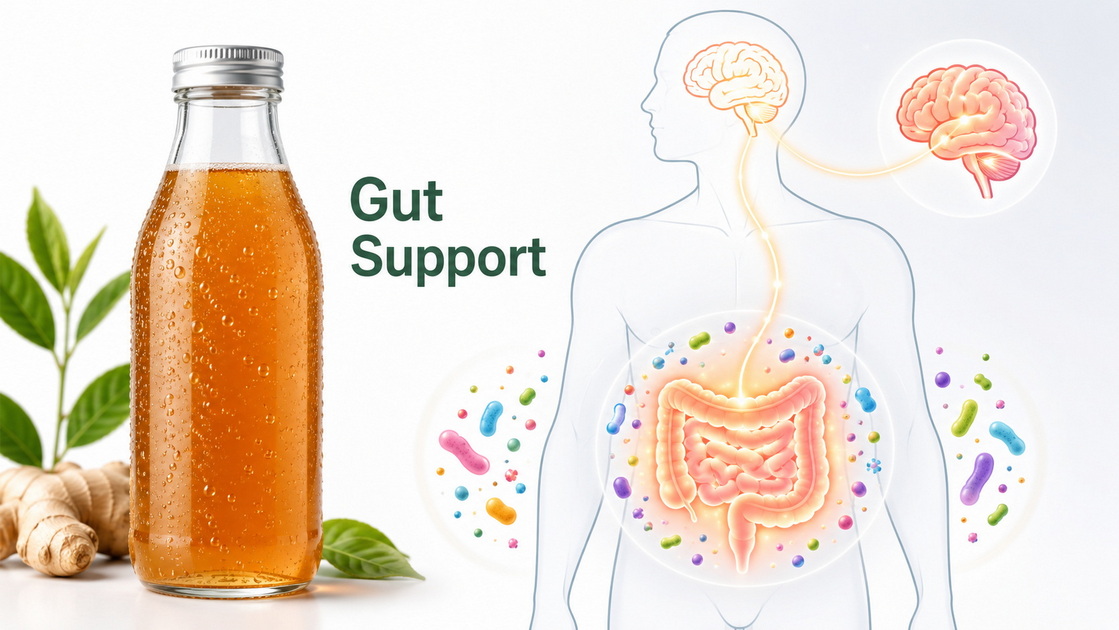
Kombucha Extract vs. Pomegranate Extract: The Evidence at a Glance
The most useful comparison separates what researchers measured from what consumers ultimately want: fewer symptomatic, clinically confirmed infections.
| Comparison point | Kombucha extract | Pomegranate extract |
| Ingredient identity | Fermented-tea-derived material; composition depends on processing | Fruit-, juice-, or peel-derived material; composition depends on plant part and extraction |
| Relevant research | Human beverage studies examining metabolism and gastrointestinal outcomes | Laboratory studies involving urinary pathogens; a small uncontrolled combination-formula study |
| Proven standalone UTI prevention | Not established | Not established |
| Main interpretation problem | Beverage findings cannot automatically support extract claims | Combination-formula findings cannot isolate pomegranate's contribution |
| Development priority | Define fermentation, processing, and final composition | Define plant part, chemical markers, and safety specifications |
These distinctions matter because "kombucha extract" and "pomegranate extract" describe ingredient categories, not interchangeable clinical interventions.
What Are Kombucha Extract and Pomegranate Extract?
Kombucha extract: fermentation does not guarantee probiotic activity
Kombucha is traditionally produced by fermenting sweetened tea with a community of bacteria and yeast. Its composition varies with tea type, fermentation conditions, storage, filtration, and pasteurization.
A concentrated or dried ingredient should therefore be evaluated separately from the beverage used in a study.
It should not automatically be described as a probiotic. That designation requires appropriate evidence, including identification of the microorganisms, viability where relevant, and a demonstrated health benefit. Fermentation alone does not meet that standard.
Pomegranate extract: plant part changes the comparison
Pomegranate ingredients may come from different parts of *Punica granatum*. Peel-focused laboratory research cannot automatically substantiate claims for a juice-derived commercial powder.
Human research also requires careful matching. One cystitis pilot study used a pomegranate extract within a formula containing D-mannose, prebiotics, and probiotics. Its results do not apply to every pomegranate ingredient—or establish the effects of pomegranate alone.
From an ingredient-development perspective, the first question is not "Which extract is stronger?" It is "Which exact material was tested?"
Does Kombucha Extract Prevent UTIs?
Recent urinary-metabolomics research is not prevention evidence
A 2025 randomized, double-blind study investigated daily consumption of 330 mL of kombucha for eight weeks. Fifty-six adults were randomized, and 51 completed the study. Researchers measured urinary metabolites and plasma short-chain fatty acids.
The study identified changes associated with kombucha consumption, including increased urinary metabolites linked to fermentation and polyphenol metabolism. However, it did not establish reduced UTI recurrence. It studied a beverage in generally healthy adults, not a standardized extract in patients with recurrent infections.
This distinction is fundamental: finding dietary metabolites in urine does not demonstrate antibacterial activity in the bladder.
Digestive findings cannot substitute for urinary outcomes
A 2025 systematic review included eight kombucha clinical trials. It described potentially useful gastrointestinal and metabolic findings, but also emphasized study heterogeneity and the limited clinical evidence base.
Those findings may inform future research. They do not justify presenting kombucha extract as an established UTI-prevention ingredient.
For a urinary-health development program, the missing endpoint remains straightforward: does the specific finished product reduce clinically meaningful infections compared with an appropriate control?
Does Pomegranate Extract Prevent UTIs?
Laboratory studies provide a research rationale
A 2017 study tested aqueous pomegranate peel extract against *E. coli* obtained from urinary cultures. Researchers reported antimicrobial and anti-virulence effects, including reduced adhesion under the experimental conditions. Activity depended on concentration and pH.
That is relevant to early-stage screening, but laboratory contact between bacteria and an extract is not equivalent to oral supplementation.
The clinical translation requires additional steps:
1. Identify which compounds remain available after digestion.
2. Determine what is absorbed and metabolized.
3. Measure urinary exposure.
4. Test whether those exposures affect relevant pathogens.
5. Demonstrate fewer infections in controlled human trials.
A laboratory inhibition result answers only part of that sequence.
What the 33-patient combination study actually showed
A 2020 pilot study enrolled 33 women with symptoms of acute cystitis. Participants received a combination containing D-mannose, pomegranate extract, prebiotics, and probiotics, alongside advice to increase fluid intake.
At 30 days, 30 participants reported that all or most symptoms had resolved. However, six participants required antibiotics, and their results remained included in the symptom analysis.
The study had important limitations:
- No control group.
- No microbiological confirmation of infection.
- Multiple active ingredients.
- Increased hydration as a potential confounder.
- No long-term recurrence assessment.
Consequently, the study cannot establish pomegranate-only efficacy, bacterial eradication, or prevention of future UTIs.
The responsible interpretation is that the formula generated a hypothesis—not a standalone prevention claim.
Protein Digestion: A Separate Formulation Question
Protein Digestion is relevant when these ingredients enter protein powders, meal replacements, or multifunctional nutrition products. It should remain separate from UTI efficacy.
Pomegranate tannins can interact with proteins
Tannins can bind proteins, and research reviews describe mechanisms through which tannin–protein interactions may reduce protein digestibility or amino-acid availability under particular conditions.
This does not establish that every pomegranate supplement meaningfully impairs protein digestion in people. The effect depends on the ingredient, concentration, protein source, and food matrix.
Nevertheless, developers considering a tannin-rich extract in a protein product should investigate:
- Solubility and precipitation.
- Astringency and sensory acceptance.
- Stability during storage.
- Protein digestibility under relevant test conditions.
These are proposed development checks, not evidence of a clinical disadvantage for every pomegranate formulation.
Kombucha is not a proven protein-digestion enhancer
The cited kombucha research does not establish that kombucha extract improves protein digestion in humans. Changes in gastrointestinal symptoms, microbial composition, or metabolites are different outcomes from improved digestion and absorption of dietary protein.
A dual-purpose urinary-health and protein-nutrition product therefore needs separate evidence for each intended benefit.
Protein Digestion should not become a bridge for unsupported UTI claims.
Three Expert-Level Checks Before Choosing an Ingredient
1. Separate biological activity from clinical effectiveness
For this comparison, an evidence ladder helps:
| Evidence level | What it can establish | What it cannot establish alone |
| Chemical characterization | Which compounds the material contains | A health benefit |
| Laboratory pathogen testing | Activity under controlled experimental conditions | Effective oral dosing |
| Human metabolomics | Changes in measured metabolites | Fewer infections |
| Uncontrolled combination study | Preliminary observations | Ingredient-specific causality |
| Controlled prevention trial | Effects on predefined recurrence outcomes | Automatic equivalence of other extracts |
This framework explains why pomegranate's more directly relevant laboratory findings do not make it a proven clinical winner.
2. Match the commercial material to the research material
A useful supplier assessment should document:
- Botanical identity and plant part.
- Extraction or fermentation process.
- Relevant analytical markers.
- Carrier ingredients and processing aids.
- Batch consistency.
- Microbiological and contaminant specifications.
- Stability in the intended finished product.
For kombucha, explicitly clarify whether the ingredient contains viable microorganisms. For pomegranate, clarify whether the material matches the plant part and composition evaluated in the supporting research. The reviewed studies show why these distinctions cannot be ignored.
This is the development lens most relevant to Botaniex's stated focus on customized botanical ingredient solutions: define the material before discussing its commercial positioning.
3. Design research around recurrence, not attractive biomarkers
For either ingredient, a stronger future trial would use a chemically characterized product, an appropriate control, predefined diagnostic criteria, and sufficient follow-up.
Priority outcomes should include:
- Symptomatic, culture-confirmed recurrences.
- Time to first recurrence.
- Antibiotic use.
- Adverse events.
- Adherence and quality of life.
These are proposed study-design priorities. They address the gap between the endpoints measured in existing exploratory research and the prevention benefit readers are seeking.
Safety and Evidence-Based UTI Prevention
Natural ingredients still require safety assessment
The US National Center for Complementary and Integrative Health states that pomegranate extract may be safe, but some people experience digestive symptoms or allergic reactions. Large amounts of certain plant parts, including peel, may be unsafe. Safety information for non-juice forms during pregnancy and breastfeeding is limited.
That does not mean every standardized peel extract is unsafe. It means plant part, dose, composition, and product-specific safety documentation matter.
Kombucha also requires product-specific assessment. Processing changes microbial composition, and beverage research should not be treated as a blanket safety assessment for concentrated extracts.
People taking medicines should discuss herbal-product use with a healthcare professional.
Better-supported prevention options deserve priority
NICE guidance includes individualized measures and, where appropriate, vaginal estrogen, trigger-related antibiotic prophylaxis, methenamine hippurate, or daily antibiotic prophylaxis. Eligibility and sequencing depend on the person's clinical circumstances.
Neither kombucha extract nor pomegranate extract should displace an established prevention plan or necessary treatment.
For readers with current urinary symptoms, prevention content is not a diagnosis. Symptoms suggesting possible upper-tract infection, such as fever, chills, or kidney-area pain, warrant medical assessment rather than reliance on supplements.
Which Extract Is the Better Development Candidate?
For UTI-focused research, pomegranate currently has the more directly relevant starting point because researchers have investigated its effects on urinary pathogens and included it in an exploratory cystitis formula. That is a research-priority judgment, not evidence of superior prevention efficacy.
Kombucha may fit fermentation-led product concepts, but its urinary-metabolomics findings should not be presented as infection-prevention results.
For both ingredients, the commercially credible path is the same: characterize the material, assess safety, validate the finished formulation, and keep claims within the evidence.
Discuss Your Botanical Formulation With Botaniex
Contact Botaniex to discuss your target application, desired ingredient specifications, formulation constraints, and evidence requirements.
For urinary-health concepts, begin with a clear technical brief—not a predetermined disease-prevention promise. Request documentation appropriate to the specific ingredient under consideration.
Frequently Asked Questions
1. Is kombucha extract better than pomegranate extract for UTI prevention?
No reliable comparative clinical evidence establishes that either is better. Pomegranate has more directly relevant exploratory research, but neither has established standalone prevention efficacy.
2. Can pomegranate extract replace antibiotics?
The cited evidence does not support that use. The small combination study included participants who required antibiotics and cannot establish pomegranate as an alternative treatment.
3. Does kombucha's probiotic content prevent UTIs?
Not all kombucha products qualify as probiotics. Microorganism identity, processing, viability, and demonstrated benefits matter. The reviewed kombucha trial did not establish UTI prevention.
4. What dose should be used for recurrent UTI prevention?
The cited studies do not establish an effective standalone prevention dose for either extract. A combination-study dose or beverage serving should not be converted into an extract recommendation.
5. Does pomegranate extract affect protein digestion?
Tannins can interact with proteins and influence digestibility in studied systems. Whether a specific product produces a meaningful human effect requires formulation- and dose-specific evidence.
6. Can both ingredients be combined?
A combination could be investigated, but the cited evidence does not establish synergy, an effective dose, or improved UTI-prevention outcomes. Combining ingredients does not eliminate the need for finished-product research.
Hot Tags: China, Global, OEM, private label, manufacturers, factory, suppliers, manufacturing company