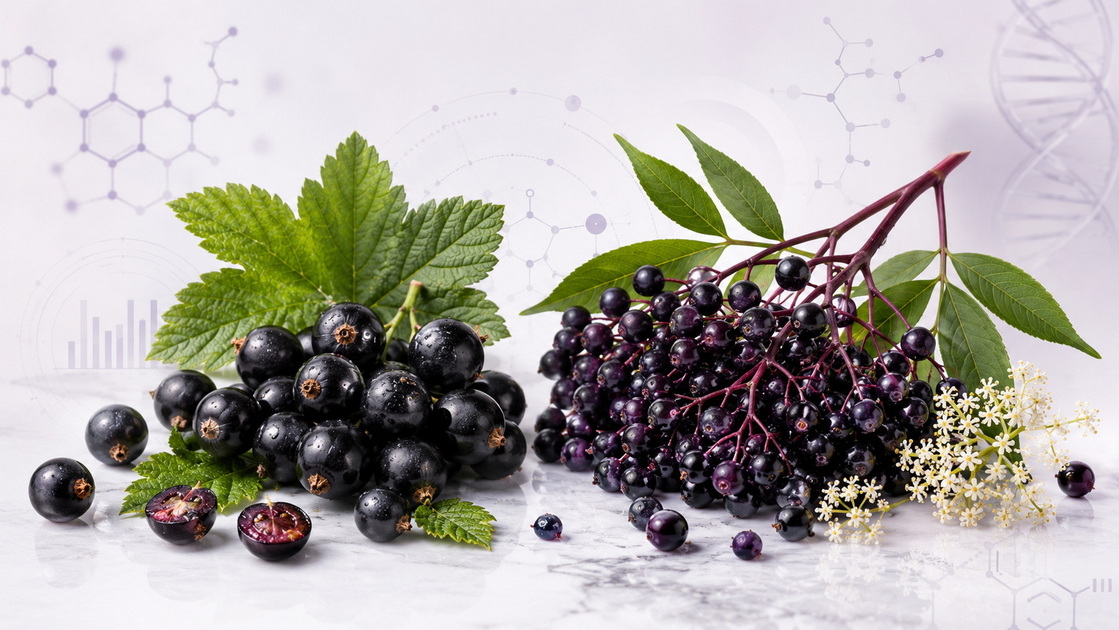
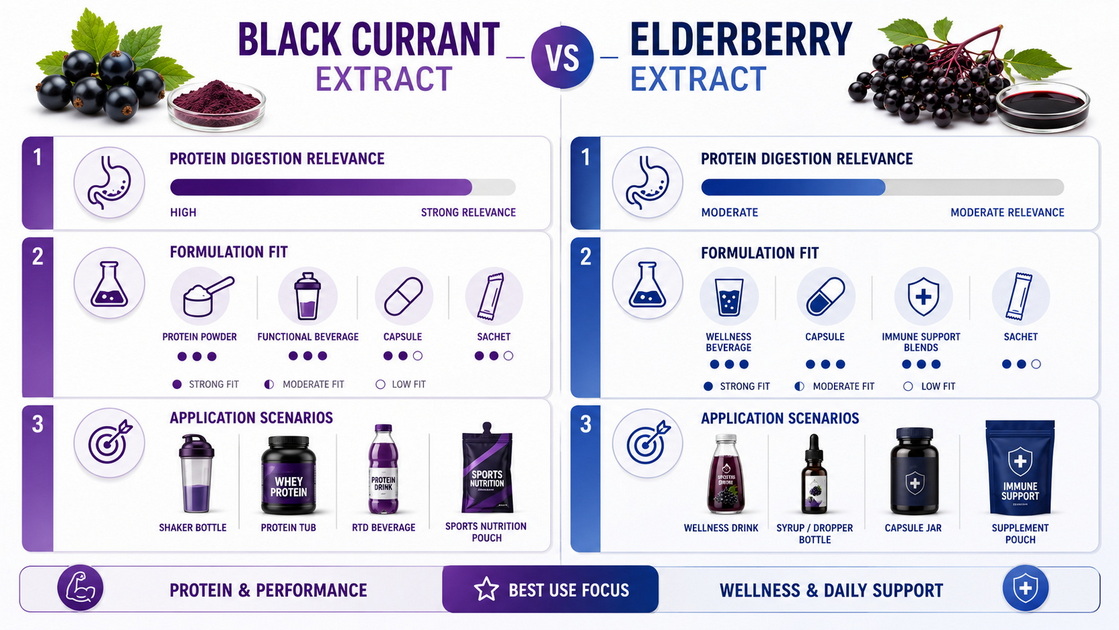
Black currant extract and elderberry extract are both anthocyanin-rich botanical ingredients, but black currant extract is the stronger primary choice when your content goal is to explain protein digestion, food-system interactions, and formulation relevance with clearer scientific support. Elderberry extract remains a valuable comparator because it also contains abundant anthocyanins and offers useful evidence on polyphenol-protein behavior and digestive functionality. [tandfonline]
Introduction
Protein digestion is not only a nutrition topic. It is also a formulation topic, a bioavailability topic, and a consumer-experience topic. For brands developing functional foods, beverages, and dietary supplements, the way anthocyanin-rich extracts interact with proteins can affect texture, stability, release kinetics, and possibly digestive performance. [journals.sagepub]
Botaniex is well positioned to discuss this topic because it specializes in botanical extracts, herbal formulations, and customized ingredient solutions for dietary supplements, functional foods, beverages, cosmetics, and pharmaceuticals. That makes this comparison especially relevant for companies looking for practical ingredient insights rather than generic wellness claims. [botaniex]
Why This Comparison Matters
Black currant and elderberry are often grouped together because both are dark berries with high polyphenol content. Yet they are not identical in composition or application behavior. Black currant is frequently discussed in relation to anthocyanin bioavailability, digestive enzyme interaction, and food-system compatibility, while elderberry is often highlighted for its rich anthocyanin profile and antioxidant activity. [frontiersin]
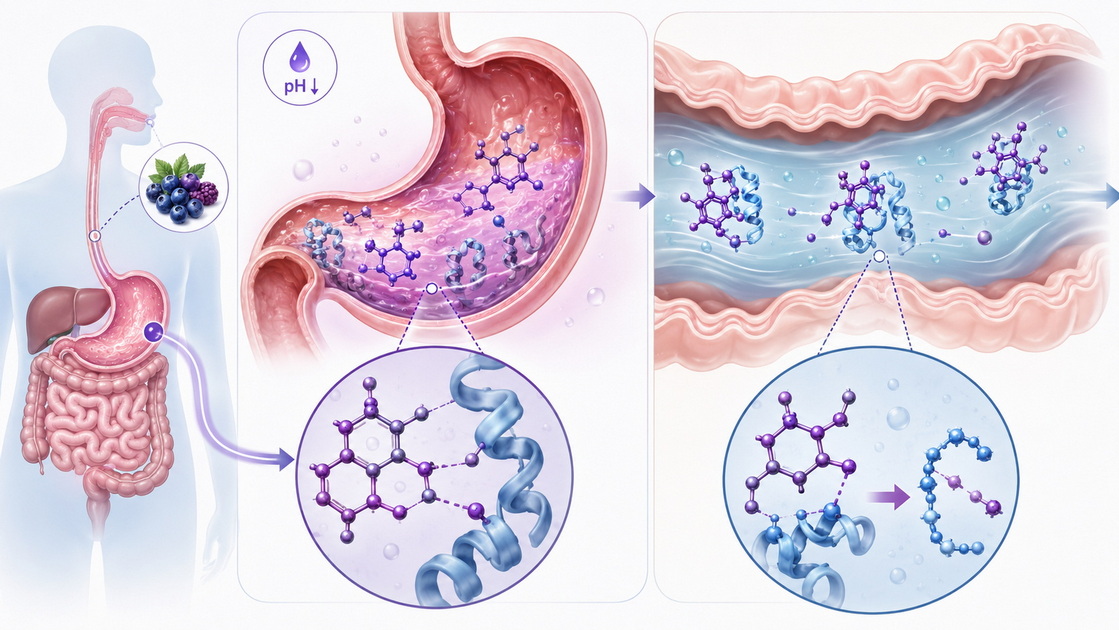
For protein digestion, the key issue is not simply "which berry is healthier." The real question is how each extract behaves when it meets proteins in the stomach, intestines, or a finished product matrix. Anthocyanins can interact with proteins through hydrophobic forces, hydrogen bonding, and electrostatic interactions, and these complexes may change stability, emulsification, and digestion behavior. [pubmed.ncbi.nlm.nih]
What Protein Digestion Means
Protein digestion begins in the stomach with acid and pepsin, then continues in the small intestine with pancreatic enzymes. In food science, however, "protein digestion" also refers to how proteins behave inside a product before the body even consumes it. That includes protein unfolding, binding, precipitation, and the protection or inhibition of enzymatic access. [research.chalmers]
Anthocyanins are especially important because they can alter the structure of proteins and influence digestibility. A recent review reported that anthocyanins can reduce protein digestion by inducing structural changes that make proteins more resistant to digestive processes. Another review found that anthocyanin-protein interactions can improve stability while also affecting digestion and absorption. [pubmed.ncbi.nlm.nih]
Ingredient Overview
Black Currant Extract
Black currant extract comes from *Ribes nigrum* and is recognized as a polyphenol-dense ingredient with a strong anthocyanin profile. Research has shown that black currant anthocyanins are rapidly bioavailable after ingestion and can appear in plasma within a short time window, supporting its relevance in digestion-focused formulations. Black currant has also been studied for postprandial metabolic effects and for interactions with dietary components in complex food systems. [sciencedirect]
From a formulation perspective, black currant is attractive because it is widely discussed in both ingredient science and product development. That makes it easier to connect the botanical to consumer-facing benefits such as digestive support, functional beverage positioning, and protein-rich applications. [sciencedirect]
Elderberry Extract
Elderberry extract comes from *Sambucus nigra* and is also rich in anthocyanins, often representing a major share of its polyphenol content. Its antioxidant and metabolic properties have been documented in multiple studies, and elderberry anthocyanins show interesting behavior in cellular and digestive research. Elderberry is therefore a credible comparator in any comparison centered on polyphenols and digestion. [pmc.ncbi.nlm.nih]
Mechanisms Behind Digestion
Anthocyanins do not act like enzymes, but they can influence how digestion unfolds. They may bind proteins, shift surface hydrophobicity, and change the way digestive enzymes access protein chains. In some food matrices, this can increase structural stability; in others, it may slow digestion or change release patterns. [pubmed.ncbi.nlm.nih]
For black currant, the literature includes evidence about anthocyanin interactions in dairy and protein systems, which is highly relevant for product developers working with whey, milk proteins, or plant proteins. Elderberry also shows strong anthocyanin behavior, but the available studies lean more toward antioxidant activity, enzyme inhibition, and metabolic health rather than direct protein-system design. [pubs.acs]
Industry Formulation Angle
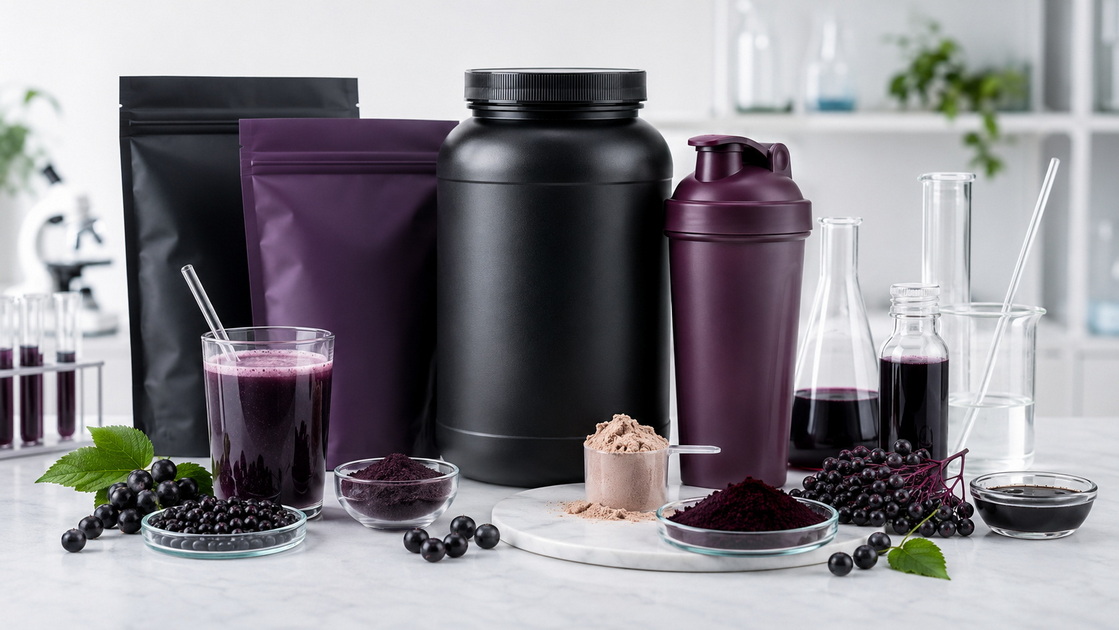
This comparison is especially useful in the nutraceutical and functional food industry. Protein drinks, ready-to-mix shakes, yogurt-style products, bars, and hybrid supplement foods all need ingredient compatibility. If a botanical extract destabilizes protein, changes mouthfeel, or alters digestion behavior too aggressively, it can hurt consumer acceptance. [pmc.ncbi.nlm.nih]
Black currant extract is often the better fit in protein-containing formulations because its anthocyanin behavior has been explored in protein matrices. Elderberry extract can still be used, but it is usually stronger as a supporting botanical than as the central digestive-science claim driver. For brands, this means black currant is easier to position in a "protein digestion" article without stretching the evidence. [frontiersin]
Latest Research Insight
A modern view of anthocyanins is that they should be evaluated as matrix-sensitive compounds, not just as isolated antioxidants. Recent reviews emphasize that anthocyanin digestibility and bioaccessibility depend on the food matrix, including protein interactions, release behavior, and intestinal stability.
Practical Use Cases
If a brand wants to build a protein-digestion angle around these ingredients, the content strategy should match the use case.
1. Protein powders and shakes. Use black currant extract to support a science-led digestive story in dairy or plant protein systems. [pmc.ncbi.nlm.nih]
2. Functional beverages. Use black currant for a clearer link to postprandial and matrix-sensitive positioning. [sciencedirect]
3. Antioxidant wellness blends. Use elderberry when the goal is broader immune, antioxidant, or seasonal wellness positioning. [pmc.ncbi.nlm.nih]
4. Hybrid nutrition products. Pair either extract with protein only after considering flavor, color, pH stability, and interaction effects. [research.chalmers]
CTA
Contact Botaniex to explore custom black currant extract solutions for protein-focused functional foods, beverages, and dietary supplements.
FAQ
1. Is black currant extract better than elderberry extract for protein digestion?
Yes, for this topic black currant extract is the stronger choice because the research more directly supports anthocyanin-protein interactions, food-matrix behavior, and digestion-related formulation discussion. [pmc.ncbi.nlm.nih]
2. Does elderberry extract also affect digestion?
Yes. Elderberry is rich in anthocyanins and has been studied for antioxidant, metabolic, and digestive-related effects, but it is less directly tied to protein-digestion positioning than black currant. [pmc.ncbi.nlm.nih]
3. Why do anthocyanins matter in protein products?
Anthocyanins can bind to proteins, influence structure, and alter how proteins behave during digestion, stability, and absorption. [pubmed.ncbi.nlm.nih]
4. Can black currant extract be used in protein drinks?
Yes. It is a practical fit for protein beverages and powders, especially when the brand wants a science-backed botanical with digestion-oriented relevance. [research.chalmers]
5. Which ingredient is better for functional food branding?
Black currant is usually better for protein-digestion storytelling, while elderberry is often stronger for antioxidant and seasonal wellness branding. [tandfonline]
6. Is this article suitable for B2B buyers?
Yes. It is designed for formulators, product managers, and procurement teams who need a clear comparison backed by ingredient science and application context. [botaniex]
References
1. Botaniex official website: [https://www.botaniex.com] [botaniex]
2. Botaniex company profile: [https://www.botaniex.com/] and related profile pages [mail.botaniex]
3. Black currant anthocyanin bioavailability study: [https://www.frontiersin.org/journals/nutrition/articles/10.3389/fnut.2019.00073/full] [frontiersin]
4. Blackcurrants review: [https://www.tandfonline.com/doi/full/10.1080/87559129.2022.2162076] [tandfonline]
5. Elderberry polyphenol characterization: [https://pmc.ncbi.nlm.nih.gov/articles/PMC10096080/] [pmc.ncbi.nlm.nih]
6. Anthocyanin digestion and protein interaction review: [https://pubmed.ncbi.nlm.nih.gov/39874887/] [pubmed.ncbi.nlm.nih]
7. Anthocyanin-protein interaction review: [https://pubmed.ncbi.nlm.nih.gov/33059464/] [pubmed.ncbi.nlm.nih]
8. Blackcurrant pectin and whey protein complexation study: [https://pmc.ncbi.nlm.nih.gov/articles/PMC9268037/] [pmc.ncbi.nlm.nih]
9. Anthocyanin properties in digestion and food matrices review: [https://research.chalmers.se/publication/533399/file/533399_Fulltext.pdf] [research.chalmers]
10. Elderberry lectin digestibility and stability study: [https://pmc.ncbi.nlm.nih.gov/articles/PMC6155927/] [pmc.ncbi.nlm.nih]