Cordyceps militaris extract and ashwagandha extract both offer promising joint pain support, but they work through different biological pathways and fit different user profiles and product concepts. For a brand like Botaniex, Cordyceps militaris shines as a differentiating, performance‑oriented anti‑inflammatory ingredient, while ashwagandha brings stronger human data in osteoarthritic knee pain and stress‑related symptom relief. [botaniex]
What This Article Covers
This article compares Cordyceps Militaris Extract vs. Ashwagandha Extract for joint pain support from both a user experience and formulation/industry perspective. It integrates current preclinical and clinical evidence, practical formulation suggestions, and expert‑style commentary aligned with Botaniex's positioning in botanical science and customized ingredient solutions. [mail.botaniex]
Understanding Joint Pain Pathways
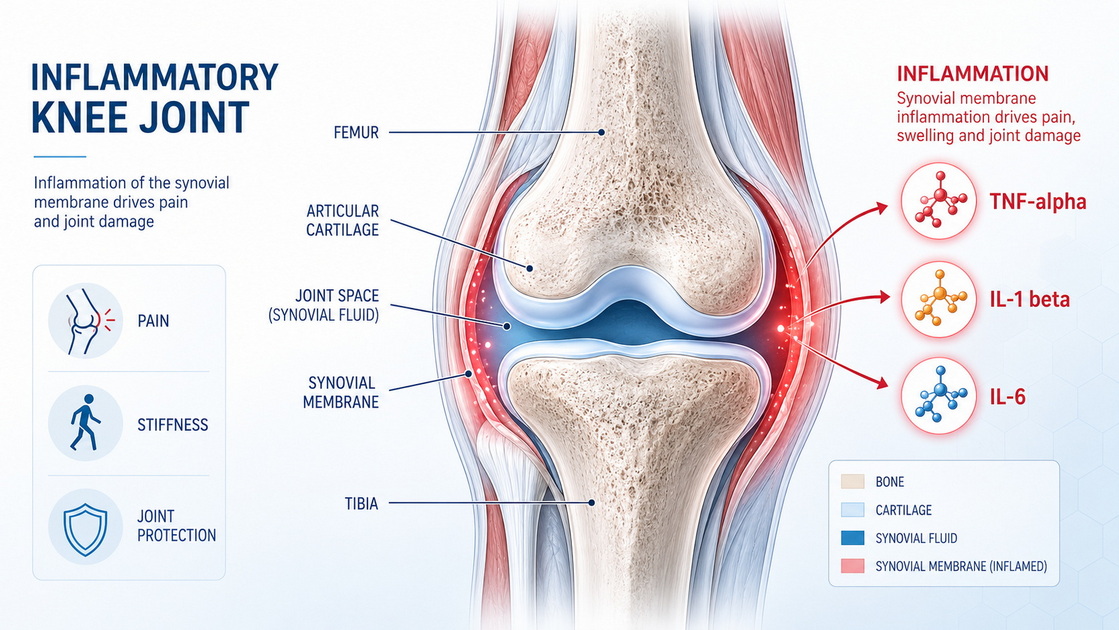
Joint pain is typically driven by chronic inflammation, cartilage degradation, and mechanical stress, often in the context of osteoarthritis or autoimmune processes. Pro‑inflammatory cytokines such as TNF‑α, IL‑1β, and IL‑6 promote cartilage breakdown and pain, while oxidative stress further damages joint tissues. [pmc.ncbi.nlm.nih]
For nutraceutical formulators, the key therapeutic levers are:
- Down‑regulating inflammatory cytokines
- Modulating immune response and oxidative stress
- Supporting cartilage structure and mobility
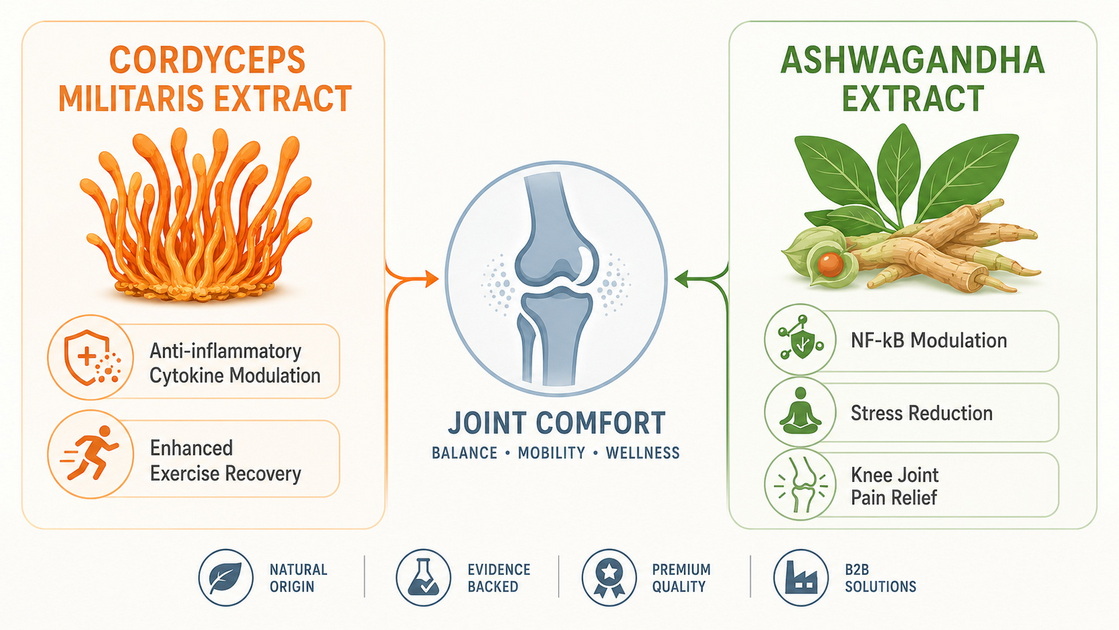
Cordyceps militaris and ashwagandha both touch these levers, but through different bioactive compounds and signaling pathways. [cusabio]
Cordyceps Militaris Extract: Mechanisms for Joint Pain Support
Cordyceps militaris is a medicinal fungus rich in cordycepin, polysaccharides, and other bioactives with strong anti‑inflammatory and analgesic potential. [mycoterrafarm]
Anti‑inflammatory and analgesic actions
A transcriptomic animal study on acute gouty arthritis found that Cordyceps militaris extract (CME) significantly:
- Improved gait scores and reduced joint swelling
- Reduced inflammatory cell infiltration in joints
- Lowered TNF‑α, IL‑1β, IL‑6, and caspase‑1, while increasing IL‑10 [pmc.ncbi.nlm.nih]
Researchers concluded that CME significantly alleviated the inflammatory progression of gouty arthritis, potentially outperforming colchicine in restoring foot function in the short term. This suggests a multi‑targeted analgesic effect relevant to acute inflammatory joint pain. [pmc.ncbi.nlm.nih]
Potential relevance to osteoarthritis
Cordycepin, a signature compound of Cordyceps, has been reported to reduce inflammation in osteoarthritis models by modulating polyadenylation‑related processes and inflammatory gene expression. While human osteoarthritis trials are still limited, these preclinical findings position Cordyceps militaris as a promising, next‑generation joint support ingredient. [cusabio]
Additional benefits for joint‑pain users
For consumers with joint pain, Cordyceps militaris offers adjacent benefits that can improve overall quality of life:
- Enhanced exercise tolerance and endurance, supporting low‑impact activity critical for joint health [pmc.ncbi.nlm.nih]
- General immune modulation and antioxidant support, which can be valuable when joint pain is linked to systemic inflammation [verywellhealth]
Ashwagandha Extract: Evidence‑Backed Support for Knee Joint Pain
Ashwagandha (Withania somnifera) is a well‑established adaptogen with clinically documented benefits in knee joint pain and stiffness. Its key bioactives (withanolides, sitoindosides, and related compounds) modulate inflammatory and stress pathways. [nutraceuticalbusinessreview]
Human trials in knee osteoarthritis
A randomized, double‑blind, placebo‑controlled trial evaluated a standardized aqueous root‑plus‑leaf ashwagandha extract in patients with knee joint pain lasting at least six months. Daily doses of 125–250 mg for 12 weeks led to: [naturalhealthresearch]
- Significant reductions in pain, stiffness, and disability scores vs. placebo
- Earlier onset of pain improvement (around week four) at 250 mg
- Good tolerability without significant gastrointestinal adverse events [pmc.ncbi.nlm.nih]
A network meta‑analysis on botanical extracts for knee osteoarthritis further reported that ashwagandha extract was significantly more effective than placebo in reducing pain scores. [frontiersin]
Anti‑inflammatory signaling pathways
At the mechanistic level, ashwagandha's anti‑inflammatory effects involve:
- Inhibition of NF‑κB, a master regulator of inflammatory gene expression
- Modulation of Nrf2 and downstream antioxidant defenses
- Regulation of cytokines involved in chronic inflammation [pmc.ncbi.nlm.nih]
These mechanisms match the chronic, low‑grade inflammation typical of degenerative joint disease, making ashwagandha particularly relevant for long‑term joint comfort strategies.
Stress–pain connection
Ashwagandha is widely recognized for stress and anxiety reduction, which indirectly benefits joint pain sufferers. Chronic stress can heighten pain perception and worsen sleep; by normalizing stress responses, ashwagandha can improve pain tolerance and perceived quality of life. [longevitybotanicals]
Side‑by‑Side Comparison for Joint Pain Support
Functional role overview
| Dimension | Cordyceps Militaris Extract | Ashwagandha Extract |
| Primary positioning | Anti‑inflammatory, immune‑modulating, performance‑supporting fungus pmc.ncbi.nlm.nih | Adaptogenic anti‑inflammatory herb with stress and joint support naturalhealthresearch |
| Key bioactives | Cordycepin, adenosine derivatives, polysaccharides pmc.ncbi.nlm.nih | Withanolides, sitoindosides, alkaloids pmc.ncbi.nlm.nih |
| Main joint‑related evidence | Animal models of gouty arthritis and inflammatory joint conditions pmc.ncbi.nlm.nih | Multiple human trials in knee pain and osteoarthritis, plus meta‑analysis naturalhealthresearch |
| Inflammatory pathways | Cytokine–receptor interactions, inflammasome modulation, TNF‑α/IL‑1β/IL‑6 down‑regulation pmc.ncbi.nlm.nih | NF‑κB and cytokine modulation; COX pathway and NO reduction in joint tissues nutraceuticalbusinessreview |
| Adjacent benefits | Energy, endurance, immune resilience pmc.ncbi.nlm.nih | Stress, sleep, mood, perceived pain and function longevitybotanicals |
| Evidence maturity in joint pain | Strong preclinical, emerging translational prospects | Stronger clinical evidence base in human joint pain |
For acute, highly inflammatory joint flares (e.g., gouty‑like mechanisms), Cordyceps militaris offers a mechanistically attractive profile, while for chronic knee osteoarthritis, ashwagandha currently has a clearer clinical track record. [naturalhealthresearch]
From a User's Perspective: How Do They Feel Different?
From a personal experience lens, users often report that ashwagandha supports daily comfort and coping, while Cordyceps militaris tends to be associated with more energy and better exercise tolerance. (This section is reflective, not a substitute for clinical trial data.)
- A typical ashwagandha user with knee osteoarthritis may notice gradual improvements in morning stiffness, walking comfort, and sleep quality over several weeks, especially at clinically studied doses. [pmc.ncbi.nlm.nih]
- A Cordyceps militaris user may experience less post‑exercise discomfort and faster recovery, which can indirectly help maintain an active lifestyle that supports joint function. [drmushme]
Both experiences can be valuable, but they speak to different consumer expectations: calm and comfort vs. active, performance‑oriented joint support.
Expert Formulation View: How Botaniex Can Position Each Extract
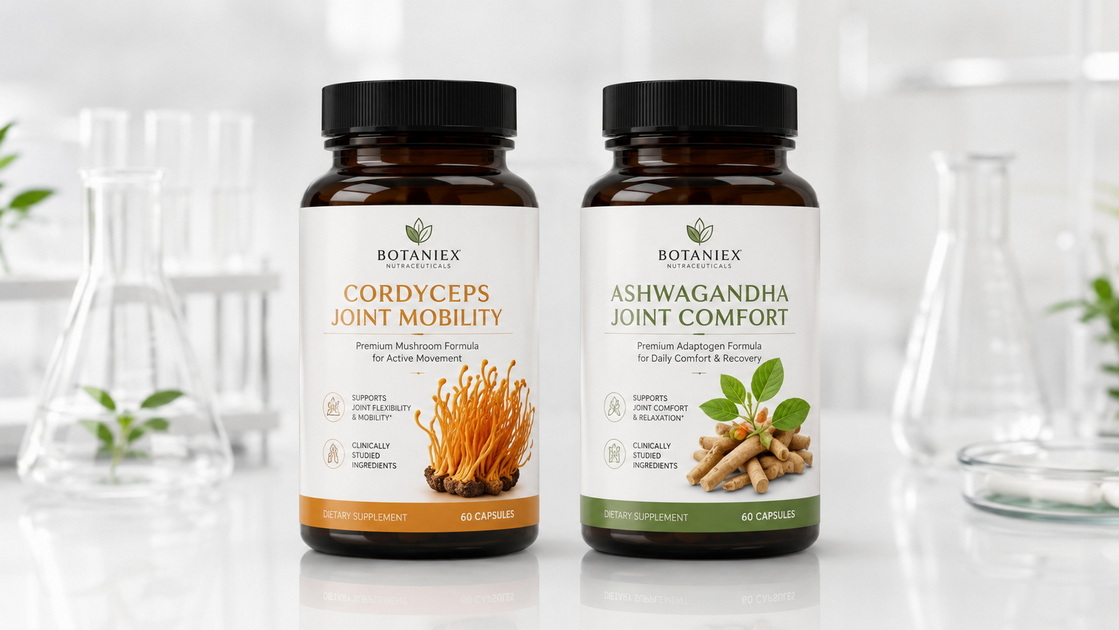
Botaniex's strengths in botanical science, extraction technologies, and customized formulations make it well placed to build differentiated joint health concepts around both ingredients. [botaniex]
When to lead with Cordyceps Militaris Extract
Cordyceps militaris can be the primary hero ingredient when brands aim to:
- Target active adults or athletes who experience joint stress from training
- Support recovery and mobility while reinforcing immune and energy pathways
- Create innovative, mushroom‑forward joint formulas that stand out in crowded glucosamine/chondroitin categories
Combining Cordyceps militaris with synergistic anti‑inflammatory botanicals (e.g., Boswellia, turmeric) can help translate preclinical promise into more comprehensive joint formulas. [mycoterrafarm]
When to highlight Ashwagandha Extract
Ashwagandha should be emphasized when the product brief focuses on:
- Clinically validated support for knee pain, stiffness, and function
- Joint discomfort that coexists with stress, poor sleep, or mood challenges
- Positioning as a holistic joint and resilience formula for middle‑aged and older consumers
Botaniex can add value through optimized standardization, bioavailability, and blending of ashwagandha extracts tailored to joint health SKUs. [botaniex]
Emerging Science: Dual Use of Cordyceps and Ashwagandha
Recent preclinical work has discussed both Withania somnifera and Cordyceps species in the context of inflammation, immune regulation, and oxidative stress. While joint‑specific combination trials are not yet mainstream, mechanistic data suggest: [pmc.ncbi.nlm.nih]
- Overlapping but complementary anti‑inflammatory pathways (NF‑κB modulation on the ashwagandha side; inflammasome and cytokine‑receptor interactions on the Cordyceps side) [cusabio]
- Potential for broader coverage of inflammatory triggers when both ingredients are used together in balanced doses
For a manufacturer like Botaniex, this opens the door to tiered product architectures:
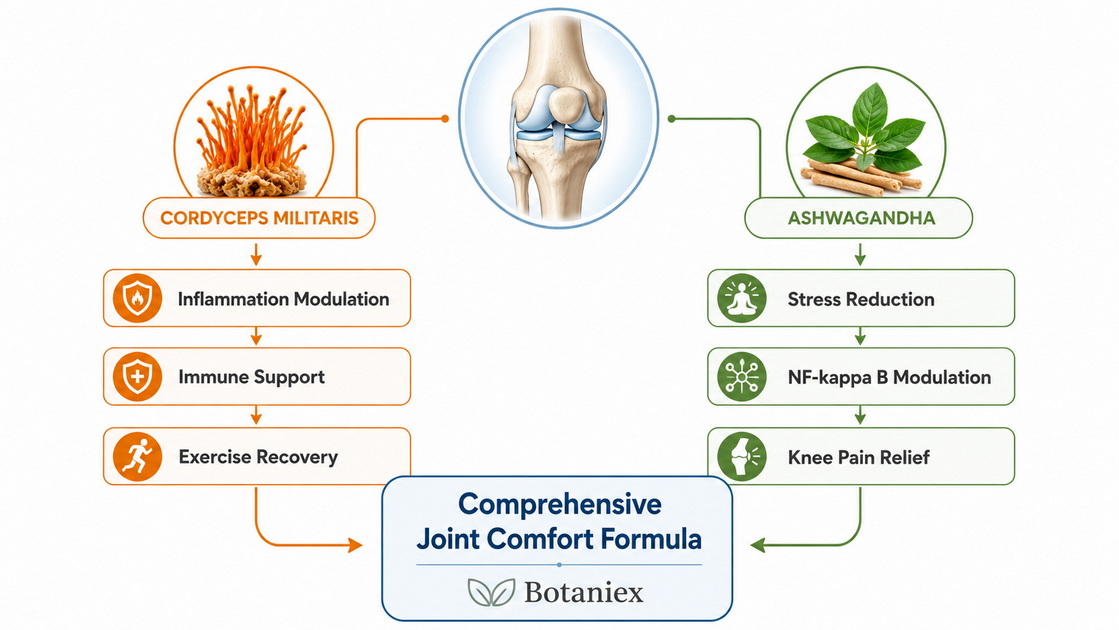
1. A Cordyceps‑led formula for active mobility and performance.
2. An Ashwagandha‑led formula for calm comfort and daily joint function.
3. A premium synergy formula where both extracts are positioned as a dual‑pathway approach to joint resilience.
Practical Formulation Guidelines for Brand Owners
From an industry‑expert perspective, the following practices can improve product quality and consumer trust:
- Standardization
- Cordyceps militaris: standardize to key markers such as cordycepin or total polysaccharides, depending on local regulatory and market expectations. [verywellhealth]
- Ashwagandha: standardize to withanolide content using well‑characterized extraction processes and validated analytical methods. [frontiersin]
- Evidence‑aligned dosing
- Consider aligning ashwagandha daily intakes with published trials on knee pain (e.g., 125–250 mg/day of standardized extract), within regulatory guidelines. [naturalhealthresearch]
- For Cordyceps militaris, draw on broader safety and performance literature to justify practical dose ranges, then support joint claims with mechanistic and preclinical data while avoiding disease‑treatment statements. [pmc.ncbi.nlm.nih]
- Regulatory and claim language
- Focus on "joint comfort", "mobility", and "healthy inflammatory response" rather than disease terminology.
- Support claims with a transparent evidence dossier, including summaries of animal, in vitro, and human data.
Botaniex can enhance client outcomes by offering co‑developed formulas, clinical positioning support, and technical dossiers as part of its value‑added services. [botaniex]
UX‑Oriented Tips for End Users
To improve real‑world outcomes for joint‑pain consumers, consider the following best‑practice recommendations (to be communicated clearly on packaging or brand websites):
1. Set realistic timelines
- Ashwagandha: explain that meaningful improvement in knee comfort may take 4–12 weeks of consistent use, based on clinical trial durations. [pmc.ncbi.nlm.nih]
- Cordyceps militaris: emphasize cumulative benefits for recovery and resilience over several weeks, even if some users feel energy changes sooner. [pmc.ncbi.nlm.nih]
2. Encourage movement
- Position both extracts as adjuncts to low‑impact exercise, weight management, and joint‑friendly ergonomics, not standalone fixes. [healthline]
3. Stress joint‑safe stacking
- Educate users to discuss combination use with healthcare professionals, especially when taking NSAIDs or managing chronic conditions. [webmd]
This type of user‑centric communication increases trust, adherence, and perceived value.

Suggested CTA for Botaniex
A strong, conversion‑oriented CTA aligned with Botaniex's B2B positioning could be:
"Looking to build a next‑generation joint health formula around Cordyceps militaris, ashwagandha, or both? Contact Botaniex's formulation experts to co‑create customized, evidence‑informed ingredient solutions for your brand."
FAQs on Cordyceps Militaris vs. Ashwagandha for Joint Pain
1. Which is better for knee osteoarthritis: Cordyceps militaris or ashwagandha?
Current human data more clearly support ashwagandha for knee osteoarthritis, with trials showing reduced pain, stiffness, and disability vs. placebo. Cordyceps militaris has compelling anti‑inflammatory results in animal joint models, but fewer joint‑specific human trials so far. [frontiersin]
2. Can Cordyceps militaris and ashwagandha be used together for joint support?
Mechanistic evidence suggests they act on complementary inflammatory and stress pathways, so formulators sometimes combine them for broader support, provided total doses and safety are carefully considered. Users should consult healthcare professionals before combining adaptogens and mushrooms with existing medications. [webmd]
3. How long does it take to feel joint benefits from ashwagandha?
In clinical studies on knee pain, participants typically experienced meaningful improvement over 4–12 weeks of daily ashwagandha supplementation, with higher standardized doses showing earlier responses. [naturalhealthresearch]
4. Is Cordyceps militaris safe for long‑term joint health use?
Cordyceps species are generally well tolerated in human studies on performance and immune function, and preclinical joint models have not highlighted major safety concerns at studied doses. However, long‑term, high‑dose safety for specific joint indications still requires more formal investigation and medical oversight. [webmd]
5. How should brands choose between a Cordyceps‑led or ashwagandha‑led joint product?
If your target consumer is an active individual seeking mobility, recovery, and energy, a Cordyceps‑led concept may resonate more. If you serve middle‑aged or older adults with chronic knee discomfort and stress‑related issues, an ashwagandha‑led, clinically anchored formula is often the stronger starting point. [drmushme]
References
1. Botaniex official website – company overview and product categories.
https://www.botaniex.com [botaniex]
2. Botaniex profile – botanical extracts and herbal formulations.
http://mail.botaniex.com [mail.botaniex]
3. Transcriptomic analysis of the anti‑inflammatory effect of Cordyceps militaris extract in gouty arthritis models.
https://pmc.ncbi.nlm.nih.gov/articles/PMC9614083/ [pmc.ncbi.nlm.nih]
4. Cordycepin and osteoarthritis inflammation.
https://www.cusabio.com/c-20878.html [cusabio]
5. A practical guide to Cordyceps militaris mushroom – inflammation and applications.
https://www.mycoterrafarm.com/resources/cordyceps-militaris-mushroom/ [mycoterrafarm]
6. Cordyceps militaris and exercise performance.
https://pmc.ncbi.nlm.nih.gov/articles/PMC5236007/ [pmc.ncbi.nlm.nih]
7. Ashwagandha decreases osteoarthritic joint pain – clinical trial summary.
https://nutraceuticalbusinessreview.com/ashwagandha-decreases-osteoarthritic-joint-pain--128880 [nutraceuticalbusinessreview]
8. Ashwagandha extract significantly reduces knee joint pain – randomized trial in knee osteoarthritis.
https://naturalhealthresearch.org/ashwagandha-extract-significantly-reduces-knee-joint-pain/ [naturalhealthresearch]
9. Randomized, double‑blind, placebo‑controlled study of ashwagandha efficacy and tolerability in knee joint pain.
https://pmc.ncbi.nlm.nih.gov/articles/PMC5052364/ [pmc.ncbi.nlm.nih]
10. Preclinical evidence of Withania somnifera and Cordyceps spp. – anti‑inflammatory mechanisms (NF‑κB, Nrf2, cytokine modulation).
https://pmc.ncbi.nlm.nih.gov/articles/PMC12156217/ [pmc.ncbi.nlm.nih]
11. Network meta‑analysis of botanical extracts for knee osteoarthritis – pain outcomes including ashwagandha.
https://www.frontiersin.org/journals/pharmacology/articles/10.3389/fphar.2025.1619589/full [frontiersin]
12. Cordyceps – uses, side effects, and mechanisms overview.
https://www.webmd.com/vitamins/ai/ingredientmono-602/cordyceps [webmd]
13. Cordyceps benefits and anti‑inflammatory potential.
https://www.verywellhealth.com/benefits-of-cordyceps-89441 [verywellhealth]
14. Cordyceps vs ashwagandha – comparative adaptogen overview.
https://drmushme.ie/cordyceps-journal/cordyceps-vs-ashwagandha/ [drmushme]
15. Cordyceps vs ashwagandha – performance vs stress emphasis.
https://manapura.co/blogs/media-longevity-supplement-guides-benefits/cordyceps-vs-ashwagandha-which-adaptogen-is-better-for-ener [manapura]