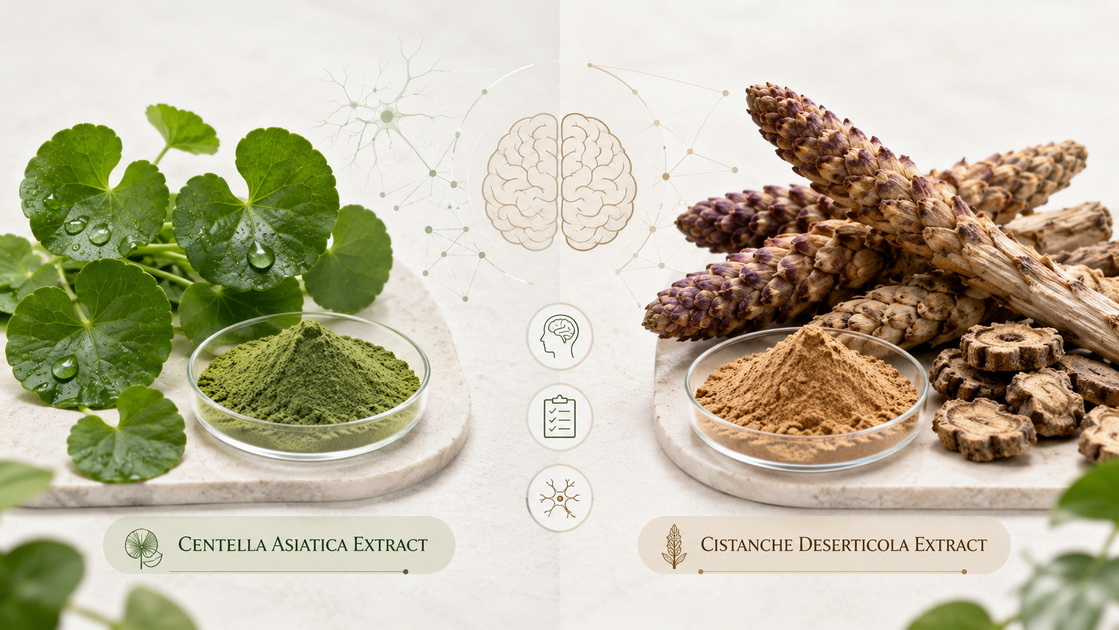
Centella Asiatica Extract and Cistanche Deserticola Extract are both promising botanical ingredients for memory-focused formulations, but they are not identical in how they may support cognition. Centella asiatica has stronger preclinical support for memory, antioxidant defense, and hippocampal function, while Cistanche deserticola is better known for broader neuroprotective, anti-fatigue, and gut-brain axis mechanisms that may complement memory performance. Botaniex's botanical-extract expertise makes this comparison especially relevant for brands developing science-forward cognitive support products. [botaniex]
Why Short-Term Memory Recall Matters
Short-term memory recall is the ability to hold and retrieve information over a brief period, such as remembering a phone number, a meeting detail, or a shopping task. In product marketing, this matters because consumers do not usually buy "cognitive function" in abstract terms; they buy clear outcomes like focus, recall, and mental clarity.
Ingredient Profiles
Centella Asiatica Extract
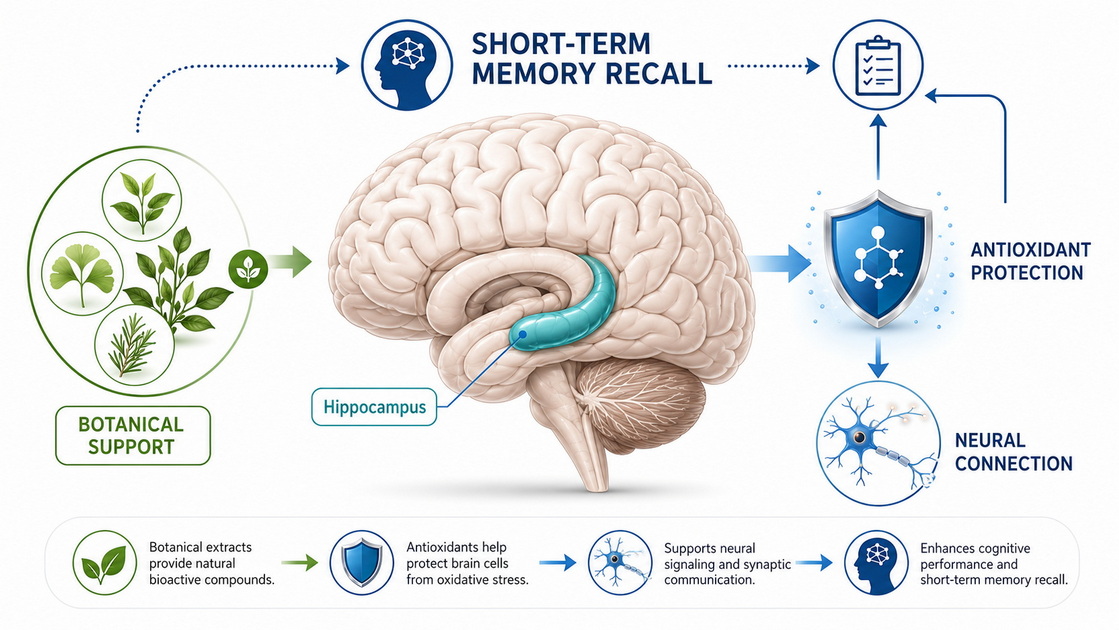
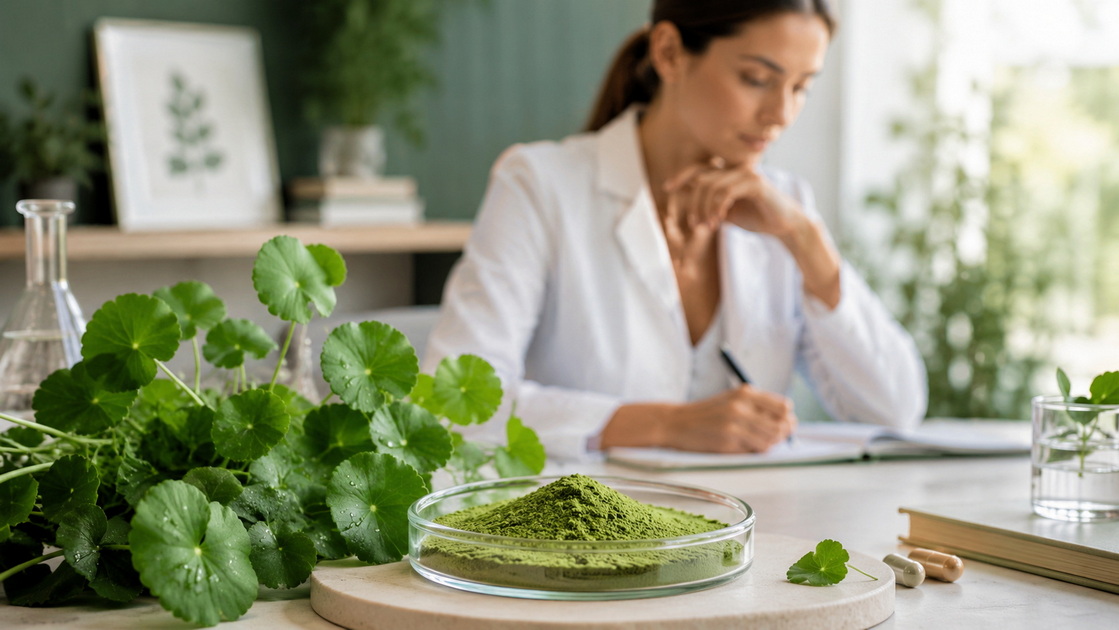
Centella asiatica has long been used in traditional systems as a brain-tonic herb, and modern studies suggest it may influence memory by supporting antioxidant pathways and hippocampal health. Preclinical research reported improvements in spatial memory, working memory, and neuronal protection, including NRF2-related antioxidant signaling and synaptic density changes. A review of human evidence found mixed outcomes overall, but some short-term improvements in mood and working-memory-related tasks were observed. [pmc.ncbi.nlm.nih]
Cistanche Deserticola Extract
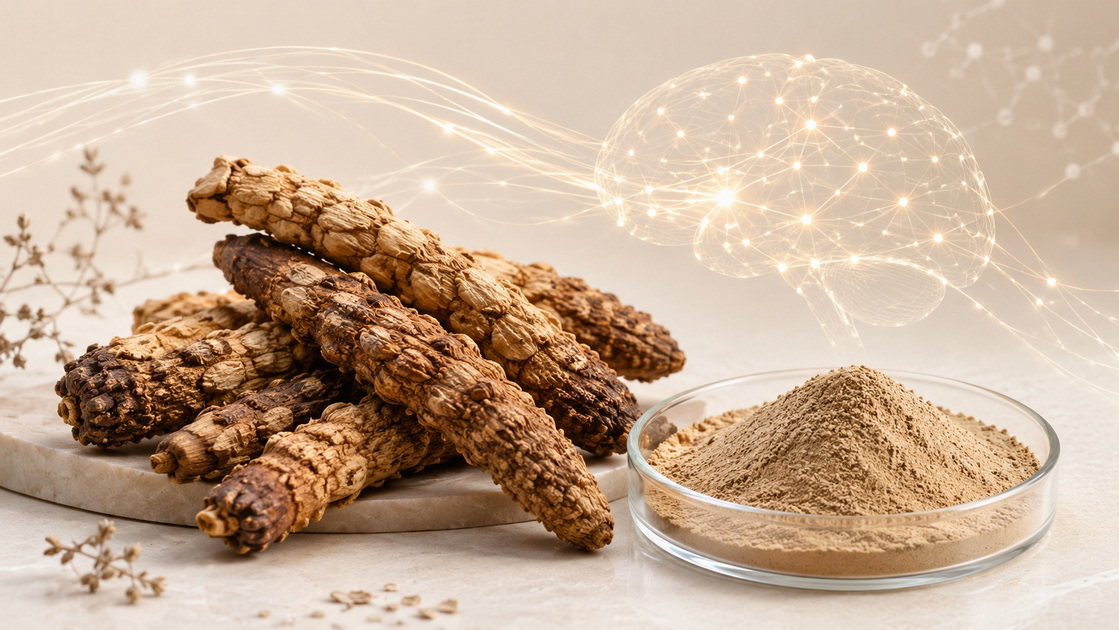
Cistanche deserticola is traditionally valued for vitality and wellness, and recent research links it to learning, memory, stress response, and gut-brain axis regulation. In animal models, Cistanche extract or its polysaccharides improved cognitive function, including short-term object recognition memory, while reducing oxidative stress and peripheral inflammation. Its phytochemistry is rich in phenylethanoid glycosides, which are widely discussed as core bioactives in neuroprotective applications. [pmc.ncbi.nlm.nih]
Evidence for Memory Recall
The evidence profile differs in an important way. Centella asiatica has a longer and more direct memory-focused research history, especially in hippocampal function, antioxidant support, and age-related memory decline models. Some human data remain limited, but the preclinical signal is consistent enough to make it attractive for short-term recall positioning. [pmc.ncbi.nlm.nih]
Cistanche deserticola, by contrast, looks more like a supportive cognition ingredient than a narrowly targeted memory herb. Its studies often highlight broader neurological resilience, stress reduction, and improved learning performance rather than isolated short-term recall alone. For formulators, that means Cistanche can be positioned as a complementary ingredient that may help create a more complete cognitive-support stack. [pmc.ncbi.nlm.nih]
Mechanisms That Matter
Both ingredients may help memory through overlapping but distinct pathways.
- Centella asiatica may support:
- Antioxidant defense through NRF2 signaling.
- Hippocampal synaptic density.
- Reduced oxidative stress in the brain.
- Better working-memory performance in preclinical models. [pmc.ncbi.nlm.nih]
- Cistanche deserticola may support:
- Gut microbiota balance and gut-brain signaling.
- Lower peripheral inflammation.
- Reduced oxidative stress.
- Improved learning and memory behavior in animal studies. [sciencedirect]
This mechanism split is important for SEO and product strategy. Centella speaks more directly to "memory recall," while Cistanche adds a broader resilience and recovery story that can strengthen a synergistic formula narrative.
Centella vs. Cistanche
| Factor | Centella Asiatica Extract | Cistanche Deserticola Extract |
| Primary memory angle | Stronger direct focus on memory and hippocampal support (pmc.ncbi.nlm.nih) | Broader cognition, learning, and stress-related support (pmc.ncbi.nlm.nih) |
| Best-supported model | Working memory, spatial memory, antioxidant pathways (pmc.ncbi.nlm.nih) | Short-term recognition memory, learning, gut-brain axis (pmc.ncbi.nlm.nih) |
| Key bioactives | Triterpenoid-related compounds and standardized extracts discussed in safety literature (cir-safety) | Phenylethanoid glycosides, polysaccharides, echinacoside, acteoside (pmc.ncbi.nlm.nih) |
| Formulation role | Memory-core ingredient | Synergistic support ingredient |
| Evidence style | More memory-specific research overall (pmc.ncbi.nlm.nih) | More multi-target and systems-level research (pmc.ncbi.nlm.nih) |
Why They May Work Together
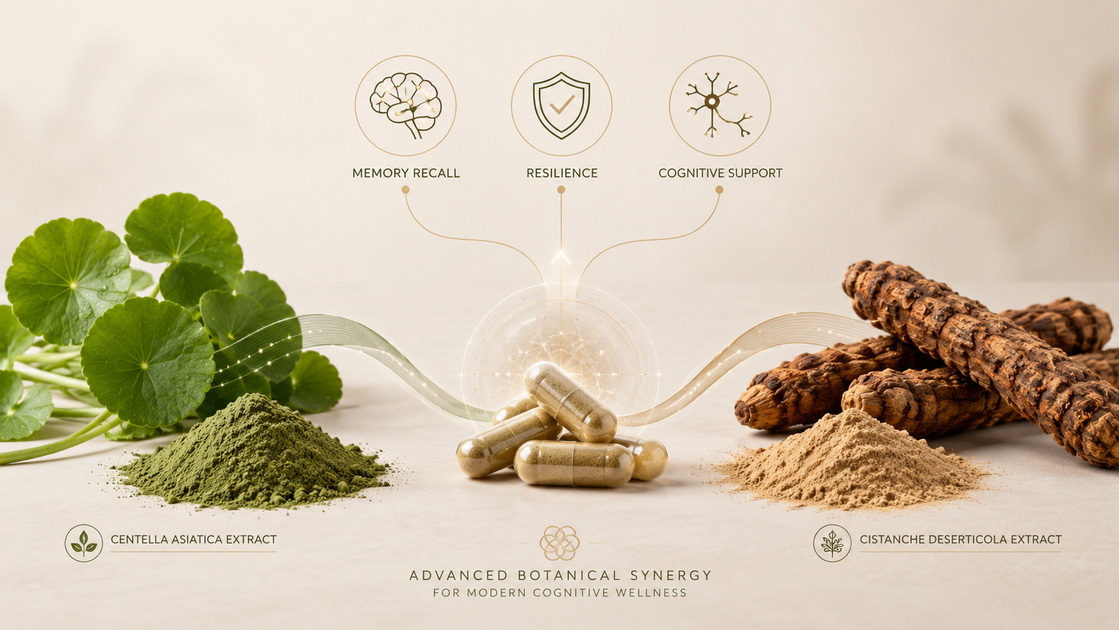
A synergy story works because the two botanicals do not rely on exactly the same biological pathway. Centella asiatica leans into hippocampal protection and oxidative balance, while Cistanche deserticola contributes gut-brain axis support, anti-inflammatory activity, and neuroprotection. In product development terms, this creates a cleaner functional narrative: recall + resilience + recovery. [pmc.ncbi.nlm.nih]
For consumers, that can translate into a supplement positioned for mentally demanding days, study sessions, aging-related memory concerns, or work-related cognitive load. For brands, it also provides more flexibility in communication because the formula can be framed as both memory-focused and stress-aware, without sounding exaggerated.
Formulation Strategy for Brands
If Botaniex were building a cognitive-support ingredient line, the strongest content angle would be to avoid claiming a cure and instead emphasize supportive structure-function language. A practical formulation narrative could look like this: [botaniex]
1. Centella asiatica as the primary memory-support anchor.
2. Cistanche deserticola as the complementary resilience ingredient.
3. Optional supportive cofactors such as phosphatidylserine, B-vitamins, or ginkgo for broader cognition positioning, depending on market and regulatory constraints.
This strategy is strong because it matches what the data suggest. Centella carries the memory message, while Cistanche strengthens the "brain vitality" story and may improve the perceived completeness of the formula. [pubmed.ncbi.nlm.nih]
Expert Perspective
From a product strategist's viewpoint, the winning ingredient is not always the one with the broadest wellness story. It is the one that maps most cleanly to the consumer's problem and the brand's claim strategy. For a product centered on short-term memory recall, Centella asiatica is the more direct lead ingredient; Cistanche deserticola is the smarter partner ingredient when the formula needs deeper differentiation and a more holistic cognition platform. [aging-us]
Conclusion and CTA
If your goal is a memory-support product centered on short-term recall, Centella asiatica should usually be the primary botanical. If your goal is a more differentiated cognitive formula with broader resilience support, Cistanche deserticola is the best secondary partner. For Botaniex, this creates a strong content and product-development opportunity: position Centella as the lead cognition ingredient, then use Cistanche to deepen the formula story for global supplement buyers. [botaniex]
CTA: Build your next memory-support formulation around a primary Centella asiatica extract and a complementary Cistanche deserticola extract, then validate the final positioning with your target market's claim language and regulatory requirements.
FAQ
1. Which extract is better for short-term memory recall?
Centella asiatica is the more directly relevant ingredient for short-term memory recall because the published research more often focuses on memory performance and hippocampal support. [pmc.ncbi.nlm.nih]
2. Is Cistanche deserticola also good for cognition?
Yes, but its research is broader. Cistanche deserticola is linked to learning, memory, anti-fatigue effects, inflammation control, and gut-brain axis support rather than only short-term recall. [pmc.ncbi.nlm.nih]
3. Can these two ingredients be used together?
Yes, they can be positioned as complementary botanicals because they appear to support cognition through different pathways, which makes a synergy-based formula story plausible. [pmc.ncbi.nlm.nih]
4. What is the main mechanism behind Centella asiatica?
The main themes in the research are antioxidant defense, reduced oxidative stress, hippocampal support, and synaptic health. [pmc.ncbi.nlm.nih]
5. What is the main mechanism behind Cistanche deserticola?
Its main themes include phenylethanoid glycosides, gut microbiota balance, anti-inflammatory effects, oxidative stress reduction, and improved learning and memory in animal studies. [sciencedirect]
6. Are human studies available?
Centella asiatica has some human evidence, though results are mixed. For Cistanche deserticola, much of the evidence remains preclinical, so product claims should stay conservative and structure-function oriented. [pmc.ncbi.nlm.nih]
References
1. Botaniex official website: [High-quality Botanical Extracts and Proprietary Herbal Formulas Designed to Support Overall Health and Wellness] [botaniex]
2. Botaniex value-added services page: [Value Added Services] [botaniex]
3. Centella asiatica memory and antioxidant study: [Centella Asiatica Improves Memory and Promotes Antioxidative Signaling] [pmc.ncbi.nlm.nih]
4. Centella asiatica working memory study: [The Ameliorative Impact of Centella asiatica on the Working Memory] [pmc.ncbi.nlm.nih]
5. Centella asiatica hippocampal synaptic density study: [Centella asiatica increases hippocampal synaptic density and ...] [pmc.ncbi.nlm.nih]
6. Centella asiatica cognitive review: [Effects of Centella asiatica (L.) Urb. on cognitive function and ...] [pubmed.ncbi.nlm.nih]
7. Centella asiatica cognitive function and metabolome study: [Centella asiatica improves cognitive function and alters the hippocampal metabolome] [lpi.oregonstate]
8. Cistanche deserticola learning and memory study: [The Antidepressant and Cognitive Improvement Activities of ...] [pmc.ncbi.nlm.nih]
9. Cistanche deserticola polysaccharides and cognition: [Cistanche deserticola polysaccharides alleviate cognitive impairment] [pmc.ncbi.nlm.nih]
10. Cistanche deserticola and NGF mechanism: [Cistanches Herba enhances learning and memory by ...] [sciencedirect]
11. Cistanche deserticola memory study: [Effect of Cistanche deserticola Ma extract on memory of aged mice] [pdfs.semanticscholar]
12. Cistanche deserticola glycosides review: [Phenylethanoid Glycosides from Cistanche deserticola Y. C. Ma] [pmc.ncbi.nlm.nih]
13. Centella safety assessment: [Safety Assessment of Centella asiatica-derived Ingredients ...] [cir-safety]
14. Cistanche deserticola safety assessment: [Safety assessment of powdered Cistanche deserticola ...] [pubmed.ncbi.nlm.nih]