Modern formulators are looking for plant-based ingredients that can reliably support sustained cognitive focus under real‑world stressors such as multitasking, ageing, and high information load. In this context, cranberry extract and black cohosh extract sit at very different points on the evidence spectrum: cranberries bring emerging human data and well‑characterized polyphenol mechanisms, while black cohosh remains a niche, symptomatic botanical for menopausal discomfort with no proven impact on attention or memory. [clinicaltrials]
Botanical Profiles and Use Cases
What Is Cranberry Extract?
Cranberry extract is typically standardized from Vaccinium macrocarpon, delivering a concentrated spectrum of polyphenols such as proanthocyanidins, flavonols, and phenolic acids. These bioactives are best known for urinary tract health, but recent work highlights antioxidant, anti‑inflammatory, and neuroprotective actions relevant to cognitive performance and stress resilience. [cranberryinstitute]
From a formulation standpoint, cranberry extract can be offered as standardized powders, granules, or water‑soluble liquids suitable for dietary supplements, functional foods, and ready‑to‑drink beverages—product formats where Botaniex already provides value‑added support and customized specifications. [botaniex]
What Is Black Cohosh Extract?
Black cohosh (Actaea racemosa, formerly Cimicifuga racemosa) extract is traditionally positioned for menopausal symptoms such as hot flashes, mood swings, and sleep disturbances. Mechanistic work suggests interactions with serotonin and opioid receptors, but it does not act as a classical phytoestrogen and has not demonstrated cognitive enhancement. [pmc.ncbi.nlm.nih]
Commercially, black cohosh is usually standardized to triterpene glycosides and used in women's health formulations rather than focus, memory, or productivity blends. [nutraingredients]
Evidence for Cognitive Focus – Cranberry vs. Black Cohosh
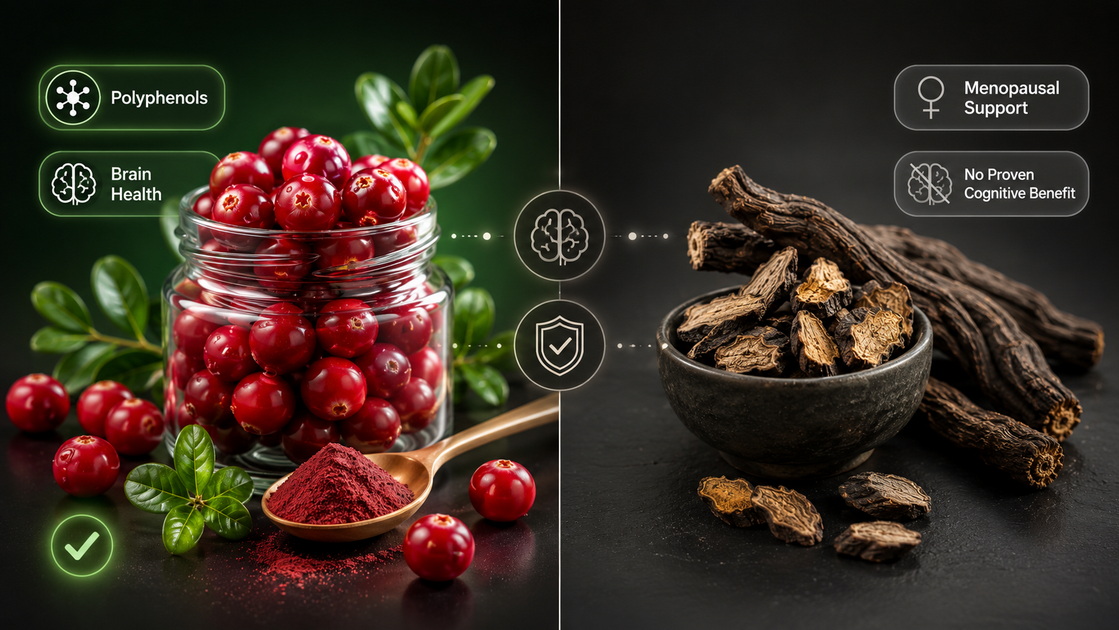
Human Data on Cranberry and Cognitive Function
Multiple lines of emerging clinical and preclinical research connect cranberry intake to cognitive outcomes:
- In older adults, 12‑week daily cranberry supplementation (equivalent to about one small cup of cranberries) improved episodic memory performance and neural functioning, suggesting benefits for age‑related cognitive decline. [pmc.ncbi.nlm.nih]
- Ongoing and recent trials are testing whether 70 days of cranberry juice consumption can improve multitasking performance, motor accuracy, and stress responses in healthy adults, directly targeting focus under stress and dual‑task load. [trialx]
- Animal and mechanistic studies show cranberry polyphenols can reduce oxidative and nitrosative stress in the brain, improve mitochondrial function, and support cholinergic activity, collectively underpinning neuroprotection and learning capacity. [pmc.ncbi.nlm.nih]
These data support positioning cranberry extract as a natural, polyphenol‑rich ingredient that helps maintain mental sharpness, especially in ageing populations or individuals experiencing frequent stress and multitasking demands. [cranberryinstitute]
Human Data on Black Cohosh and Cognition
By contrast, clinical work on black cohosh has not demonstrated cognitive benefits:
- A phase II trial assessing botanicals and hormone therapy for menopausal symptoms found no effect of black cohosh on cognitive function, while hormone therapy actually worsened some aspects of verbal memory. [pmc.ncbi.nlm.nih]
- Follow‑up analyses confirmed that black cohosh did not significantly change measures such as verbal memory and other cognitive indices over 12 months. [nutraingredients]
- Experts note that while black cohosh may bind to certain serotonin receptors, no convincing human data currently show memory or attention enhancement. [sciencedaily]
For brands seeking to support sustained cognitive focus, black cohosh therefore lacks both a solid evidence base and a clear regulatory‑friendly structure–function narrative.
Mechanisms Supporting Sustained Focus
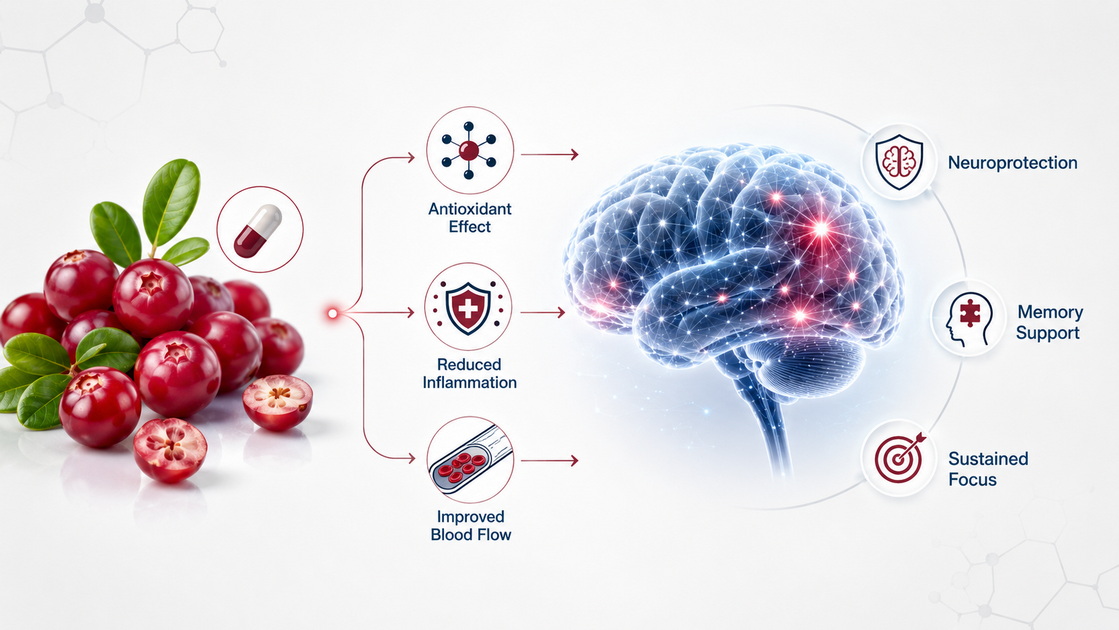
Cranberry Polyphenols and the Brain
The cognitive potential of cranberry extract is rooted in its dense polyphenol profile:
- Polyphenols modulate oxidative stress, microglial activation, and inflammatory signaling via pathways such as NF‑κB, MAPK, and Nrf2, all of which are implicated in cognitive decline and mental fatigue. [brieflands]
- Cranberry juice has shown the ability to protect neuronal structures, reduce apoptosis markers, and improve motor coordination in preclinical models, indicating broad neuroprotective effects. [cranberryinstitute]
- Polyphenols can also influence cerebral blood flow and synaptic plasticity, which are critical to sustained attention and efficient information processing. [pmc.ncbi.nlm.nih]
Emerging clinical trials are now actively exploring a microbiome–gut–brain angle, where cranberry‑induced shifts in gut bacteria and metabolites may translate into better stress resilience and cognitive clarity under multitasking conditions. [blogs.ifas.ufl]
Black Cohosh Mechanisms and Their Limits
Black cohosh's known mechanisms revolve around:
- Binding to serotonin receptor subtypes and mu‑opioid receptors, which may influence mood or vasomotor symptoms. [sciencedaily]
- A lack of classic estrogenic activity, despite earlier assumptions that it functioned as a phytoestrogen. [pmc.ncbi.nlm.nih]
These targets are not inherently aligned with sustained cognitive focus, and, importantly, trials have not translated these receptor‑level activities into measurable improvements in attention, working memory, or mental performance under load. As a result, black cohosh remains better described as a symptomatic, short‑term support for menopausal comfort rather than a focus or productivity ingredient. [nutraingredients]
Safety, Tolerability, and Regulatory Considerations
Safety Profile of Cranberry Extract
Cranberry products are widely consumed with a strong safety track record when used at typical dietary and supplemental intakes. Human trials investigating cognitive and cardiometabolic endpoints report good tolerability, with gastrointestinal discomfort being the most common mild adverse event when it occurs. [clinicaltrials]
From a product‑development perspective:
- Cranberry extract is generally recognized as safe (GRAS) in many food applications when properly standardized and manufactured.
- Its positioning around urinary tract health, cardiovascular support, and emerging cognitive benefits sits comfortably within existing structure–function claim frameworks in major markets when supported by appropriate evidence. [clinicaltrials]
Safety Considerations for Black Cohosh
The safety narrative for black cohosh is more complex:
- While prospective trials in over 1,200 patients did not show enzyme elevations or clear hepatotoxicity, over fifty cases of acute liver injury have been associated in the literature with products labeled as black cohosh, ranging from transient hepatitis to liver failure. [ncbi.nlm.nih]
- Clinical and consumer health references therefore flag liver damage as a serious potential risk, and regulators in some markets expect careful quality control and clear safety communication. [webmd]
For brands aiming to support daily cognitive performance and focus, these safety uncertainties make black cohosh a less attractive core ingredient compared with better‑tolerated neuroprotective botanicals like cranberry.
Formulation Strategy – Positioning Cranberry as the Primary Cognitive Focus Ingredient
Why Cranberry Extract Should Lead
From both a scientific and UX perspective, cranberry extract is better aligned with the promise of managing sustained cognitive focus:
- It carries emerging human data improving memory and brain function in older adults, and ongoing trials targeting multitasking and stress‑related cognitive fatigue. [clinicaltrials]
- It offers a coherent mechanistic story via polyphenols, antioxidant and anti‑inflammatory activity, and neuroprotection that can be communicated effectively to health‑conscious consumers and professional buyers. [brieflands]
- It fits naturally into low‑sugar beverages, capsules, chewables, and functional snacks, where consumers already associate cranberry with proactive self‑care. [botaniex]
For Botaniex, this opens the door to branded cranberry ingredients, customized polyphenol standardization, and clinically inspired formulations tailored to cognition and stress.
Where Black Cohosh Might Still Fit
Black cohosh can still play a defined, secondary role in specialized women's health formulations:
- In a "menopause‑and‑mind" concept, black cohosh could be included at appropriate doses to target vasomotor comfort, while cranberry and other polyphenol sources carry the cognitive focus positioning. [sciencedaily]
- Any such formula should prioritize rigorous raw‑material authentication and quality control to mitigate hepatotoxicity concerns and align with E‑E‑A‑T standards on safety and transparency. [ncbi.nlm.nih]
However, black cohosh should not be the hero ingredient for claims related to focus, mental performance, or productivity, given the current evidence gap.
Practical Guidance for Product Developers and Brand Owners
Expert‑Level Steps to Build a Cognitive Focus Formula with Cranberry
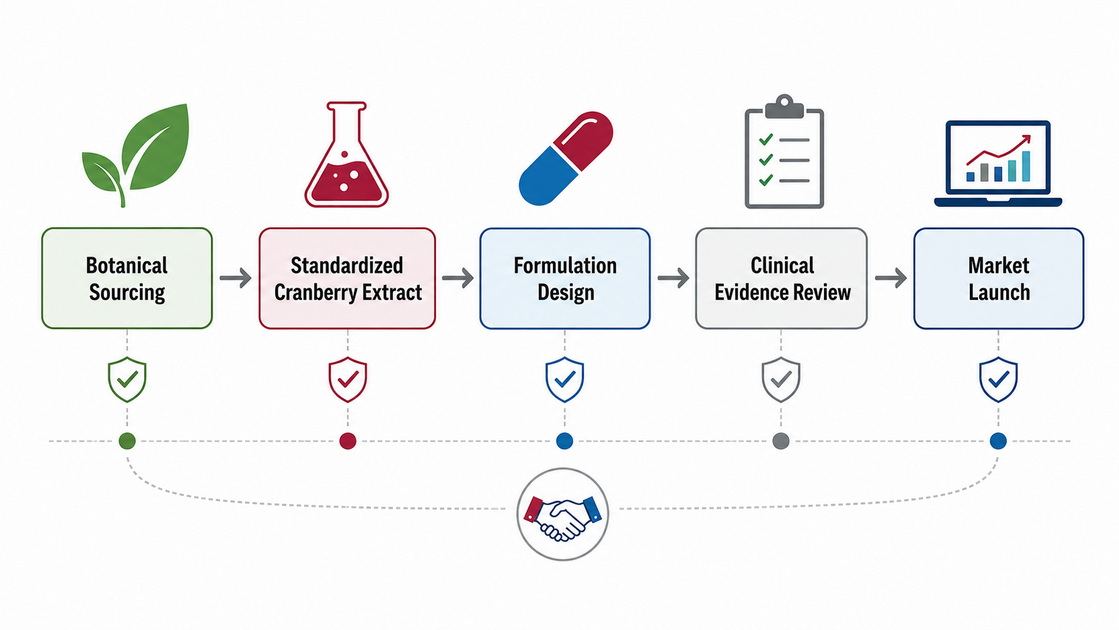
From an industry expert viewpoint, a pragmatic development process might look like this:
1. Define target use context
Focus on clearly framed scenarios such as "multitasking knowledge workers," "active adults 45+," or "post‑menopausal women concerned about cognitive ageing," and align dosage and format accordingly. [clinicaltrials]
2. Select cranberry extract specs
Choose a standardized cranberry extract with defined total polyphenols and proanthocyanidin content, backed by compositional and contaminant testing to support clean‑label and regulatory requirements. [botaniex]
3. Leverage synergistic actives
Combine cranberry with complementary polyphenols (e.g., green tea catechins or other flavonoids) or nutrients (e.g., B‑vitamins) that have documented benefits for mental performance, while keeping claims conservative and supported. [pmc.ncbi.nlm.nih]
4. Design usage patterns for sustained focus
For sustained focus, prioritize daily intake protocols (e.g., once or twice daily) over single "quick‑hit" doses, reflecting the chronic nature of cognitive support and the time course in existing cranberry trials. [trialx]
5. Document and communicate evidence
Prepare technical dossiers that link cranberry's polyphenol content to published neurocognitive and polyphenol‑inflammation data, while clearly stating limitations and ongoing research to maintain scientific integrity. [pmc.ncbi.nlm.nih]
UX‑Driven Content and Labeling Tips
For consumer‑facing UX and labeling:
- Use clear, benefit‑oriented language such as "supports sustained cognitive focus and mental clarity under everyday stress" rather than disease‑related claims.
- Provide simple usage instructions and expectations (e.g., "best results after consistent daily use for 8–12 weeks"), mirroring timelines seen in clinical work. [trialx]
- Highlight quality signals—standardization, third‑party testing, and botanical traceability—that align with Botaniex's manufacturing strengths and reassure both practitioners and end users. [ttnet]
UX Enhancements ( Tables)
You can include a mid‑article table such as:
| Aspect | Cranberry Extract | Black Cohosh Extract |
| Primary traditional use | Urinary tract and general wellness support cranberryinstitute | Menopausal symptoms (hot flashes, mood, sleep) pmc.ncbi.nlm.nih |
| Evidence for cognition | Human and preclinical data suggesting memory and neuroprotective benefits clinicaltrials | Clinical studies show no significant effect on cognitive function pmc.ncbi.nlm.nih |
| Key mechanisms | Polyphenol‑driven antioxidant, anti‑inflammatory, neuroprotective actions cranberryinstitute | Serotonin and opioid receptor modulation; non‑estrogenic pmc.ncbi.nlm.nih |
| Safety profile | Generally well tolerated in food and supplement use pmc.ncbi.nlm.nih | Rare but serious liver injury cases reported in association with products labeled as black cohosh ncbi.nlm.nih |
| Best‑fit positioning | Daily support for sustained cognitive focus, healthy ageing, stress resilience clinicaltrials | Complementary women's health botanical, not a primary focus ingredient pmc.ncbi.nlm.nih |
CTA: From Evidence to Execution with Botaniex
If your brand is exploring plant‑based solutions for sustained cognitive focus, focus your R&D and marketing efforts around high‑polyphenol cranberry extract rather than black cohosh, which lacks proven cognitive benefits and has more complex safety considerations. Partnering with a botanical specialist such as Botaniex enables you to access standardized cranberry ingredients, co‑develop cognitive‑focus formulations, and build evidence‑aligned claims that resonate with both regulators and consumers. [shippingonline]

FAQs
Q1: Can cranberry extract replace synthetic nootropics for focus?
Cranberry extract is not a stimulant and should not be positioned as a direct replacement for synthetic nootropics, but its polyphenol‑driven neuroprotective effects may support long‑term cognitive health and focus when used consistently as part of a broader lifestyle strategy. [pmc.ncbi.nlm.nih]
Q2: How long does it take to notice cognitive benefits from cranberry extract?
Most human trials assessing cognitive or neurological outcomes with cranberry use protocols lasting around 8–12 weeks, suggesting that any meaningful focus or memory support is likely to emerge gradually with daily use rather than immediately. [trialx]
Q3: Is black cohosh suitable for younger adults seeking better concentration?
Current evidence does not support using black cohosh to enhance concentration or attention in younger adults, and given the reported liver‑injury cases, it is not an ideal choice for prolonged, everyday cognitive support in a general population. [webmd]
Q4: Can cranberry and black cohosh be combined in one formula?
They can be technically combined, but black cohosh should be reserved for targeted menopausal formulations, with cranberry and other evidence‑backed polyphenols carrying the cognitive‑support positioning, and overall safety and labeling carefully evaluated. [ncbi.nlm.nih]
Q5: What quality markers should formulators look for in cranberry extract for cognitive products?
Formulators should prioritize standardized polyphenol and proanthocyanidin content, validated identity testing, contaminant control, and supplier transparency to ensure consistent efficacy and to support strong E‑E‑A‑T‑aligned product documentation and marketing. [botaniex]
References
1. Botaniex. "About Botaniex – Botanical Extracts and Herbal Formulations." [https://www.botaniex.com] [botaniex]
2. Botaniex. "Products – Botanical and Herbal Extracts." [https://www.botaniex.com/products.html] [botaniex]
3. Changsha Botaniex Inc. Company Profile. [https://botaniex.en.made-in-china.com] [botaniex.en.made-in-china]
4. Bowtell, J. et al. "Chronic Consumption of Cranberries for the Improvement of Cognition in Older Adults." *Frontiers in Nutrition* 2022. [pmc.ncbi.nlm.nih]
5. ClinicalTrials.gov. "Cranberry Polyphenols and Stress Resilience During Multitasking." NCT07453537. [clinicaltrials]
6. ClinicalTrials.gov. "The Impact of Cranberries on the Gut Microbiota and Cognitive Performance in Ageing." NCT03679533. [clinicaltrials]
7. Cranberry Institute. "Neuro‑Cognitive Health Research Library." [cranberryinstitute]
8. UF Food Science & Human Nutrition. "Cranberry Juice & Stress." 2024. [blogs.ifas.ufl]
9. LiverTox, NIH. "Black Cohosh – LiverTox: Clinical and Research Information on Drug‑Induced Liver Injury." 2025. [ncbi.nlm.nih]
10. WebMD. "Black Cohosh: Uses, Side Effects, Interactions." [webmd]
11. Maki, P. et al. "Effects of Botanicals and Combined Hormone Therapy on Cognition in Menopause." *Menopause* 2005. [pmc.ncbi.nlm.nih]
12. NutraIngredients. "Botanicals Fail to Cool Hot Flashes or Boost Brain Function: Study." 2009. [nutraingredients]
13. ScienceDaily. "Clinical Trial of Botanicals for Memory Loss in Menopause." 2026. [sciencedaily]
14. WithPower. "Cranberry Juice for Cognitive Symptoms – Clinical Trial Overview." 2024. [withpower]
15. ClinicalTrials listing: "Can Cranberry Juice Enhance Cognition Accuracy and Alleviate Negative Consequences of Frequent Multitasking?" [trialx]
16. Trial description: "Effects of a Polyphenol‑Rich Cranberry Extract on Cardiometabolic Health and Cognition." [clinicaltrials]
17. Brieflands. "Neuroprotective Role of Polyphenols in Treatment of Neurological Disorders." 2021. [brieflands]
18. PMC Review. "Molecular Mechanisms Underlying the Neuroprotective Effects of Dietary Polyphenols." 2025. [pmc.ncbi.nlm.nih]