From both a formulation and end‑user perspective, protein digestion is no longer a niche topic—it sits at the center of sports nutrition, healthy aging, weight management, and gut health. As a consultant working with brands that supply to these categories, I increasingly see R&D teams asking not just "Is this extract healthy?" but "How does it behave around protein in the gut and in our finished formula?". [healthline]
Magnolia bark extract (rich in magnolol and honokiol) and green tea extract (rich in catechins such as EGCG) are both polyphenol‑dense, but their interaction with digestive function, gut motility, and protein–polyphenol binding differs in ways that directly affect protein digestion and absorption outcomes. [frontiersin]
Core Overview of Both Extracts
What Is Magnolia Bark Extract?
Magnolia bark extract is derived mainly from *Magnolia officinalis* and has been used in traditional Chinese and Japanese medicine for digestive complaints, bloating, and stress‑related gut issues. Its primary bioactives, magnolol and honokiol, are polyphenolic compounds with anti‑inflammatory, antioxidant, neuroprotective, and gastrointestinal–protective actions. [pmc.ncbi.nlm.nih]
Preclinical and traditional use data suggest magnolia bark can support gut motility and help food move more easily through the digestive tract, indirectly aiding digestion and nutrient transit. Modern pharmacological reviews report magnolol's gastrointestinal protection and antidiarrheal effects, indicating regulatory activity along the digestive tract. [troscriptions]
What Is Green Tea Extract?
Green tea extract is concentrated from Camellia sinensis leaves and standardized for catechins such as EGCG, EGC, EC, and ECG, plus caffeine and other polyphenols. It is widely used for weight management, metabolic health, antioxidant support, and cardiovascular health. [pmc.ncbi.nlm.nih]
In the digestive context, green tea catechins are known to interact with proteins and lipids, forming complexes that can alter both nutrient absorption and digestive enzyme activity in the gut. This dual behavior—beneficial antioxidant and metabolic effects, but sometimes reduced protein digestibility—makes green tea extract a nuanced choice for high‑protein formulations. [sciencedirect]
Mechanisms of Protein Digestion – Quick Primer
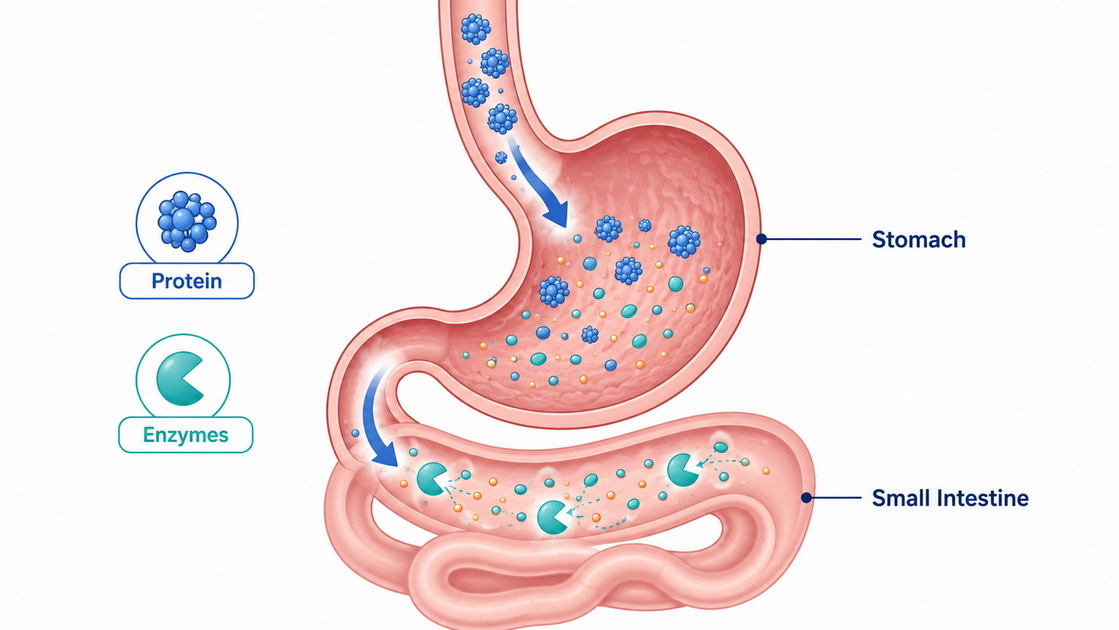
Protein digestion depends on enzyme activity and gut motility. [pmc.ncbi.nlm.nih]
- In the stomach, pepsin starts cleaving proteins into peptides.
- In the small intestine, pancreatic proteases (trypsin, chymotrypsin, elastase) continue breakdown into absorbable amino acids and small peptides.
- Optimal digestion requires sufficient enzyme activity, appropriate pH, intact mucosa, and adequate transit time. [healthline]
Polyphenols from botanical extracts can bind to proteins or to digestive enzymes, sometimes reducing enzyme activity or forming complexes that slow or modify protein digestion. At the same time, extracts that modulate inflammation, motility, or microbiota can indirectly improve digestive efficiency and comfort. [sciencedirect]
Magnolia Bark Extract and Protein Digestion
Gut Motility and Transit of Protein
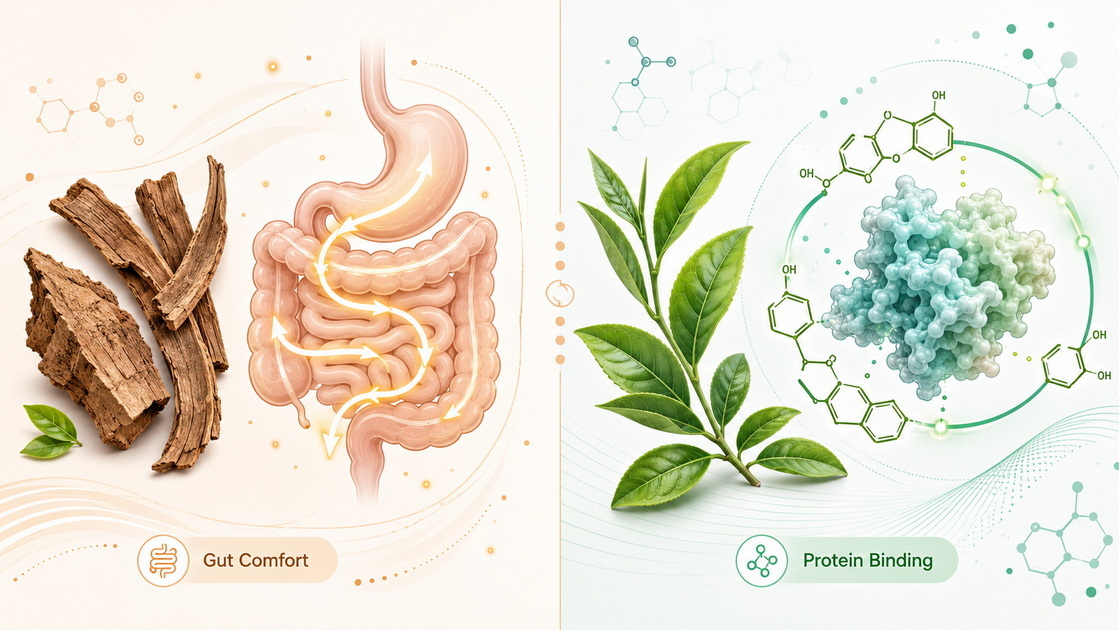
Traditional usage and modern summaries highlight magnolia bark's role in supporting digestion and relieving bloating, which is often interpreted clinically as improving gut motility and reducing stagnation. Animal studies suggest magnolia constituents can influence the gut environment and help food move more smoothly through the digestive tract, which is particularly relevant when users consume dense, high‑protein meals. [webmd]
By promoting balanced motility—not too slow, not excessively rapid—magnolia bark may help maintain sufficient contact time between dietary protein and proteolytic enzymes, supporting more complete breakdown and reduced post‑meal heaviness. For consumers, this can translate into less perceived "brick‑like" fullness after protein shakes or high‑protein meals. [frontiersin]
Gastrointestinal Protection and Enzyme Environment
Pharmacological reviews of magnolol show gastrointestinal protective activity, including anti‑inflammatory and antioxidative effects along the digestive tract. Reducing low‑grade inflammation and oxidative stress in the gut may support more efficient secretion and activity of endogenous digestive enzymes. [pmc.ncbi.nlm.nih]
While magnolia bark is not a digestive enzyme per se, its ability to modulate inflammatory signaling pathways and oxidative damage in the gut environment may create better conditions for protein digestion, especially in stressed or sensitive individuals. This indirect mechanism is attractive in formulations where a gentle, long‑term digestive support profile is preferred over aggressive enzyme dosing. [pmc.ncbi.nlm.nih]
Green Tea Extract and Protein Digestion
Protein–Polyphenol Binding and Digestibility
Green tea catechins are well known to bind dietary proteins and digestive enzymes, forming complexes that can reduce protein digestibility in vitro and in model systems. Research on tea catechins, proteins, and digestive enzymes shows that catechin–protein interactions may lower the digestibility of proteins, with measurable reductions in the extent of proteolysis. [sciencedirect]
When catechins bind to proteins, they can shield peptide bonds from protease access, effectively slowing or limiting protein breakdown. In high‑protein formulations—such as whey‑based shakes or fortified bars—this binding may partly offset the intended benefit of rapid amino‑acid availability, especially if catechin dosage is high. [sciencedirect]
Impact on Digestive Enzymes and Nutrient Absorption
Studies examining catechin interactions with digestive enzymes indicate non‑specific binding and inhibition, especially with enzymes such as trypsin and other proteases that act on protein substrates. This inhibition can contribute to reduced protein digestibility, although the magnitude depends on dose, matrix, and processing conditions. [pmc.ncbi.nlm.nih]
Interesting work on tea with milk shows that catechins can also bind milk proteins, altering catechin bioaccessibility and transport across intestinal models. While this research focuses on catechin absorption, it illustrates the same principle: catechins form complexes with proteins that modify both polyphenol bioavailability and protein digestion/transport dynamics. [sciencedirect]
Side‑by‑Side Comparison for Protein Digestion
Functional Differences That Formulators Care About
For R&D teams and product managers, the critical question is not just "Is it healthy?" but "What happens when we add this extract to a protein‑rich formulation or recommend it with protein‑heavy diets?". [healthline]
| Dimension | Magnolia Bark Extract | Green Tea Extract |
| Primary actives | Magnolol, honokiol polyphenols webmd | EGCG and related catechins, caffeine, other polyphenols pmc.ncbi.nlm.nih |
| Traditional digestive role | Used for bloating, digestive support, motility in East Asian systems webmd | Not historically a protein‑specific digestive aid; more for general tea consumption and metabolism pmc.ncbi.nlm.nih |
| Effect on gut motility | Supports smoother transit and can reduce stagnation webmd | Mild stimulation via caffeine, but not targeted motility modulation pmc.ncbi.nlm.nih |
| Interaction with proteins | No strong evidence of reduced protein digestibility; focus is environmental support webmd | Catechins form complexes with proteins, lowering digestibility in models sciencedirect |
| Interaction with digestive enzymes | Indirect (via anti‑inflammatory and protective effects) frontiersin | Direct binding and partial inhibition of digestive enzymes sciencedirect |
| Net effect on protein digestion | Potentially supportive, especially under stress or mild GI irritation webmd | Potentially neutral to mildly impairing protein digestion at higher catechin levels sciencedirect |
From a protein digestion standpoint, magnolia bark extract tends to support the environment in which protein digestion occurs, whereas green tea extract tends to directly interact with proteins and enzymes, which may be counterproductive in protein‑centric formulations at higher doses. [frontiersin]
Expert Perspective – Matching Extract to Use Case
When I Would Prioritize Magnolia Bark Extract
From a practitioner and formulation‑strategy angle, magnolia bark extract is better aligned with:
- High‑protein products targeting digestive comfort (e.g., mass‑market whey shakes, senior nutrition, high‑protein meal replacements).
- SKUs aimed at stress‑related digestive issues, where users experience bloating or delayed gastric emptying after protein‑rich meals. [webmd]
- Formulas that combine protein, probiotics, and gentle herbal support for long‑term gut health.
The key advantage is its indirect, environment‑modulating effect—improved motility, reduced inflammation, and GI protection—without strong evidence of impairing protein breakdown or enzyme action. [pmc.ncbi.nlm.nih]
When I Would Leverage Green Tea Extract Carefully
Green tea extract remains extremely valuable for weight management, metabolic support, and antioxidant positioning, but I recommend careful use in protein‑dense formulas: [pmc.ncbi.nlm.nih]
- Favor moderate catechin doses when co‑formulated with high protein to avoid excessive protein–polyphenol complex formation. [sciencedirect]
- Consider timing strategies (e.g., separating green tea capsules from protein shakes by 60–90 minutes) if the main goal is rapid amino‑acid availability. [pmc.ncbi.nlm.nih]
- Use green tea extract more aggressively in low‑protein metabolic health products, where protein digestibility is less critical. [pmc.ncbi.nlm.nih]
Practical Guidance for Formulators and Brand Owners
Step‑by‑Step Decision Flow for Protein‑Focused Products
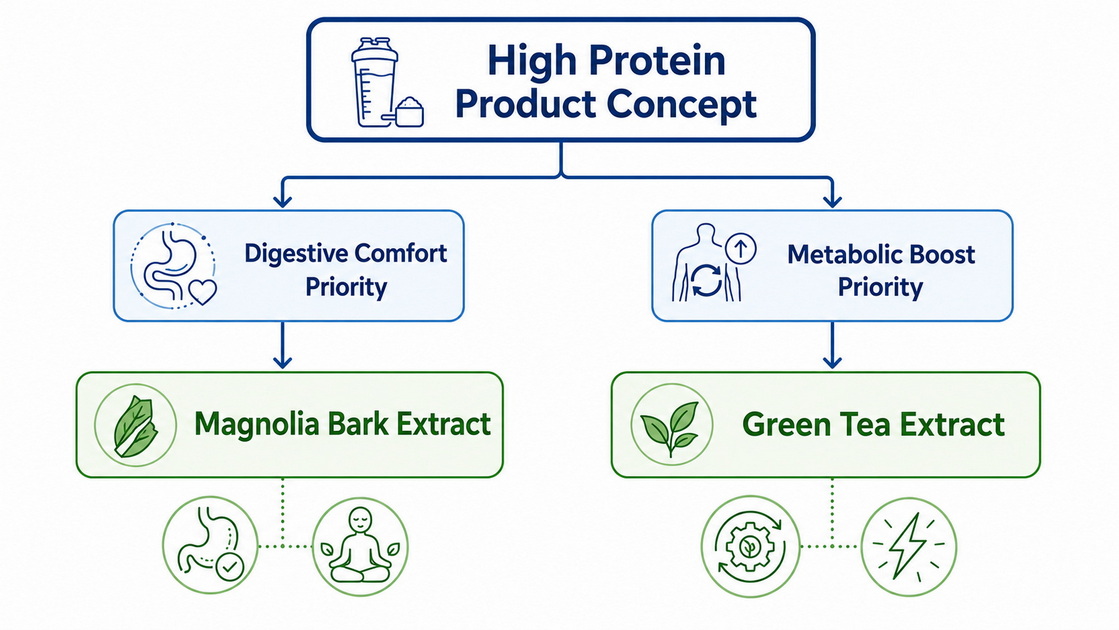
If your primary KPI is supporting protein digestion and comfort, a simple decision sequence helps:
1. Define the product's protein intensity
- If the formula delivers ≥20 g protein/serving and promises rapid absorption, prioritize ingredients that do not hinder proteases. [healthline]
2. Clarify the primary claim
- "Easier on your stomach" or "gentle on digestion" → magnolia bark becomes a strong candidate. [webmd]
- "Thermogenic," "metabolic boost," or "antioxidant" → green tea extract can still play a central role. [pmc.ncbi.nlm.nih]
3. Select and position the extract
- Use magnolia bark extract as part of a gut‑support blend alongside enzymes, probiotics, or ginger, highlighting digestive comfort around protein‑rich meals. [frontiersin]
- Use green tea extract in separate SKUs or with lower catechin loads when paired with high protein, keeping messaging focused on metabolism and antioxidant support. [pmc.ncbi.nlm.nih]
4. Validate with pilot testing
- Run sensory and GI‑tolerance trials focusing on post‑prandial heaviness, bloating, and subjective digestion scores for high‑protein prototypes with and without magnolia bark. [troscriptions]
- Evaluate amino‑acid appearance curves or in‑vitro digestibility for green tea co‑formulations if rapid protein availability is a key brand promise. [sciencedirect]
Safety, Dosing, and Regulatory Considerations
Magnolia Bark Extract Safety Notes
Magnolia bark has been granted "generally recognized as safe" (GRAS) status by the U.S. FDA for specific uses, reflecting its long traditional history and emerging safety data. It is, however, listed in herbal safety references as not generally recommended in pregnancy or breastfeeding, and caution is advised when combining it with sedatives due to its calming effects. [webmd]
For product developers, typical supplemental doses in the market fall within modest ranges (often in the low hundreds of milligrams of standardized extract), but exact levels should be set according to regional regulations, toxicology data on the chosen extract profile, and intended use (e.g., day vs. night support). [pmc.ncbi.nlm.nih]
Green Tea Extract Safety Notes
Green tea extract is widely used and recognized as safe at moderate intakes, but high‑catechin doses have been associated with rare cases of liver stress in susceptible individuals, particularly when taken on an empty stomach. Caffeine content must be managed to match label claims and consumer expectations, especially in evening or relaxation‑positioned products. [pmc.ncbi.nlm.nih]
From a digestion angle, formulators should be aware that while green tea contributes to weight management positioning, higher catechin levels may subtly impair protein digestibility, which conflicts with claims around "maximum protein utilization." [pmc.ncbi.nlm.nih]
How End Users Experience These Extracts Around Protein
Consumer‑Level Outcomes
From a user‑experience standpoint, the most meaningful differences often show up as how someone feels after a protein‑heavy meal or shake:
- With magnolia bark extract, consumers may notice less bloating, smoother digestion, and better comfort when protein intake is high, especially in periods of psychological stress. [troscriptions]
- With green tea extract, users may appreciate increased alertness, thermogenic effects, and metabolic support, but might not see direct improvements in protein comfort; at high catechin doses, some may experience GI sensitivity or heaviness. [sciencedirect]
This is why positioning magnolia bark as a digestive and comfort‑oriented companion for protein, and green tea extract as a metabolic amplifier that may be timed away from protein, creates a clearer, more honest user journey.

CTA – Positioning Magnolia Bark Extract Around Protein
If you are developing high‑protein supplements, functional foods, or complex blends where digestive comfort and utilization matter, magnolia bark extract offers a differentiated story that complements rather than competes with your protein. [frontiersin]
Consider trialing Botaniex magnolia bark extract in your next protein‑focused formula and pairing it with targeted green tea extract SKUs or timing recommendations, so you can deliver both digestive support and metabolic benefits without compromising protein digestion.
FAQs
Q1: Can magnolia bark extract replace digestive enzymes in a protein formula?
A: No. Magnolia bark supports the digestive environment and motility but does not provide direct protease activity like dedicated digestive enzymes; it works best alongside enzymes in high‑protein products. [healthline]
Q2: Is green tea extract always bad for protein digestion?
A: Not necessarily; low to moderate catechin levels may have minimal impact, but higher doses can reduce protein digestibility by binding proteins and enzymes, which is more relevant in very high‑protein formulations. [pmc.ncbi.nlm.nih]
Q3: Can consumers take magnolia bark and green tea extract together?
A: They can be combined, but brands should manage timing and dose—using magnolia bark more closely with protein‑rich meals and positioning green tea extract earlier in the day or between meals for metabolic support. [webmd]
Q4: Which extract is better for users with stress‑related digestive discomfort after protein shakes?
A: Magnolia bark extract is generally more suitable due to its tradition and emerging data around digestive support, motility, and stress‑linked gut symptoms. [troscriptions]
Q5: How should formulators validate the impact of these extracts on protein digestion?
A: Combine in‑vitro digestibility assays (e.g., simulated gastric and intestinal digestion) with small human tolerance and satiety studies, measuring fullness, bloating, and amino‑acid availability where feasible. [sciencedirect]
References
1. WebMD. *What Are the Health Benefits of Magnolia Bark?*
https://www.webmd.com/vitamins-and-supplements/what-are-health-benefits-magnolia-bark [webmd]
2. Frontiers in Pharmacology. *Pharmacology, Toxicity, Bioavailability, and Formulation of Magnolol.*
https://www.frontiersin.org/articles/10.3389/fphar.2021.632767/full [frontiersin]
3. PMC. *The Cardioprotective Effect of Magnolia officinalis and Its Major Constituents.*
https://pmc.ncbi.nlm.nih.gov/articles/PMC12072210/ [pmc.ncbi.nlm.nih]
4. Troscriptions. *The Effects and Benefits of Magnolia Bark Extract.*
https://troscriptions.com/blogs/main/magnolia-bark-extract [troscriptions]
5. Healthline. *12 Foods That Contain Natural Digestive Enzymes.*
https://www.healthline.com/nutrition/natural-digestive-enzymes [healthline]
6. ScienceDirect. *Competitive interactions among tea catechins, proteins, and digestive enzymes.*
https://www.sciencedirect.com/science/article/abs/pii/S0963996920310759 [sciencedirect]
7. PMC. *Polyphenolic Compounds and Digestive Enzymes: In Vitro Non‑Covalent Interactions.*
https://pmc.ncbi.nlm.nih.gov/articles/PMC6154557/ [pmc.ncbi.nlm.nih]
8. ScienceDirect. *Milk enhances intestinal absorption of green tea catechins in in vitro digestion/Caco‑2 cell model.*
https://www.sciencedirect.com/science/article/abs/pii/S0963996912003079 [sciencedirect]
9. PMC. *Green Tea as Inhibitor of the Intestinal Absorption of Lipids.*
https://pmc.ncbi.nlm.nih.gov/articles/PMC1852441/ [pmc.ncbi.nlm.nih]
10. Botaniex corporate profile pages.
https://botaniex.en.made-in-china.com [botaniex.en.made-in-china]
https://www.botaniex.com/new-website-launched.html [botaniex]