Content Menu
● Introduction to Banaba Leaf Extract
● Traditional Extraction Methods
>> Ethanol Extraction
>> Water Extraction
● Modern Extraction Techniques
>> Microwave-Assisted Solvent Extraction (MASE)
>> Ultrasonic-Assisted Extraction
>> Comparison of Extraction Methods
● Quality Control and Testing
● Applications of Banaba Leaf Extract
● Conclusion
● FAQ
>> 1. What is the primary active compound in banaba leaf extract?
>> 2. What are the common solvents used for extracting banaba leaf extract?
>> 3. How does microwave-assisted solvent extraction (MASE) improve the extraction process?
>> 4. What is the role of HPLC in the quality control of banaba leaf extract?
>> 5. What are some applications of banaba leaf extract?
● Citations:
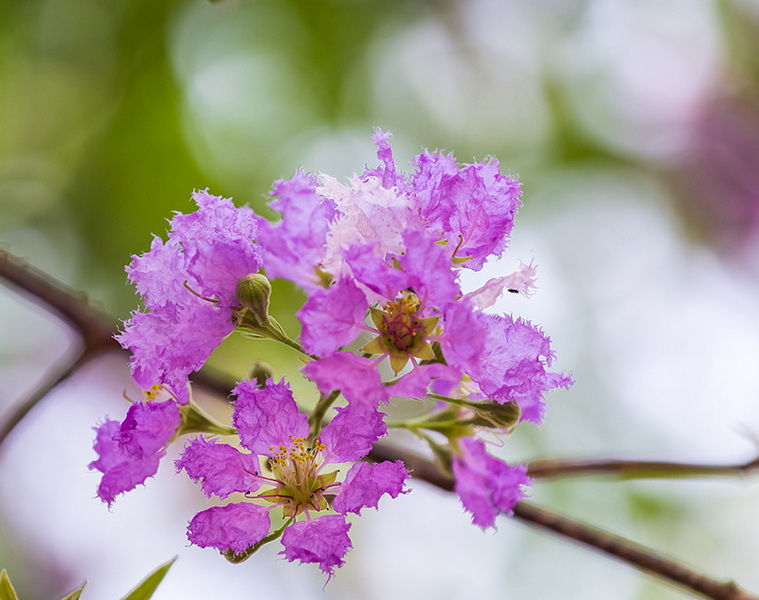
Banaba leaf extract, derived from the plant Lagerstroemia speciosa, is renowned for its antidiabetic and antiobesity properties, primarily attributed to the presence of corosolic acid. This compound enhances insulin receptor phosphorylation, thereby increasing glucose uptake by cells and reducing blood glucose levels. The extraction methods for banaba leaf extract are crucial for maximizing the yield of corosolic acid and ensuring the quality of the final product. This article will delve into the various extraction techniques used for banaba leaf extract, including conventional methods and more advanced technologies like microwave-assisted solvent extraction (MASE).
Introduction to Banaba Leaf Extract
Banaba leaves have been used in traditional medicine for centuries, particularly in Southeast Asia. The leaves contain several bioactive compounds, but corosolic acid is the most significant due to its potential health benefits. The extraction process involves several steps, from harvesting and drying the leaves to extracting the active compounds using solvents.
Traditional Extraction Methods
Traditional extraction methods typically involve using solvents such as ethanol or water to extract bioactive compounds from plant materials. These methods can be time-consuming and may result in lower yields compared to more modern techniques.
Ethanol Extraction
Ethanol is a common solvent used for extracting bioactive compounds from banaba leaves. The process involves soaking the leaves in ethanol, allowing the solvent to dissolve the desired compounds, and then filtering and concentrating the extract.
Ethanol Extraction Process:
1. Harvesting and Preparation: Fresh banaba leaves are harvested and cleaned.
2. Extraction: The leaves are soaked in ethanol for a specified period.
3. Filtration: The mixture is filtered to separate the solid plant material from the liquid extract.
4. Concentration: The extract is concentrated through evaporation or distillation.
Water Extraction
Water extraction is another traditional method, often used for its simplicity and cost-effectiveness. However, it may not be as efficient as ethanol extraction for extracting corosolic acid.
Modern Extraction Techniques
Modern extraction techniques offer improved efficiency and yield compared to traditional methods.
Microwave-Assisted Solvent Extraction (MASE)
MASE is a technique that uses microwave energy to enhance the extraction of bioactive compounds from plant materials. This method reduces extraction time and increases efficiency, making it more environmentally friendly.
MASE Process for Banaba Leaves:
1. Preparation: Fresh or dried banaba leaves are prepared for extraction.
2. Microwave Treatment: The leaves are treated with microwave energy in the presence of a solvent (e.g., ethanol or ethyl acetate).
3. Extraction Conditions: Parameters such as microwave power, extraction time, solvent-to-material ratio, and temperature are optimized for maximum yield.
Optimization of MASE Conditions:
- Microwave Power: 500W is often optimal for banaba leaf extraction.
- Extraction Time: 6 minutes is commonly used.
- Solvent-to-Material Ratio: A ratio of 10:1 (ml/g) is effective for ethanol.
- Temperature: 70°C is typically used for leaf extraction.
Ultrasonic-Assisted Extraction
Ultrasonic-assisted extraction uses high-frequency sound waves to enhance solvent penetration into plant tissues, improving extraction efficiency.
Ultrasonic-Assisted Extraction Process:
1. Preparation: Plant material is prepared and placed in a solvent.
2. Ultrasonic Treatment: The mixture is subjected to ultrasonic waves.
3. Filtration and Concentration: The extract is filtered and concentrated.
Comparison of Extraction Methods
| Extraction Method | Advantages | Disadvantages |
| Ethanol Extraction | Simple, cost-effective | Time-consuming, lower yield |
| MASE | Efficient, high yield, environmentally friendly | Requires specialized equipment |
| Ultrasonic-Assisted Extraction | Fast, efficient | May require additional filtration steps |
Quality Control and Testing
After extraction, the banaba leaf extract undergoes quality control tests to ensure its purity and potency. High-performance liquid chromatography (HPLC) is commonly used to identify and quantify corosolic acid.
HPLC Analysis:
1. Sample Preparation: The extract is prepared for HPLC analysis.
2. Chromatography: The sample is injected into the HPLC system.
3. Detection: Corosolic acid is detected based on its retention time and peak area.
Applications of Banaba Leaf Extract
Banaba leaf extract is used in various applications due to its health benefits:
- Pharmaceuticals: As a potential hypoglycemic agent.
- Supplements: In dietary supplements for weight management and blood sugar control.
- Cosmetics: In skincare products due to its antioxidant properties.
Conclusion
Banaba leaf extract is a valuable natural product with significant health benefits, primarily attributed to corosolic acid. The choice of extraction method can significantly impact the yield and quality of the extract. Modern techniques like MASE offer advantages over traditional methods in terms of efficiency and environmental sustainability. As research continues to uncover the full potential of banaba leaf extract, optimizing extraction processes will remain crucial for maximizing its benefits.
FAQ
1. What is the primary active compound in banaba leaf extract?
Answer: The primary active compound in banaba leaf extract is corosolic acid, a triterpenoid known for its antidiabetic properties.
2. What are the common solvents used for extracting banaba leaf extract?
Answer: Ethanol and ethyl acetate are commonly used solvents for extracting banaba leaf extract.
3. How does microwave-assisted solvent extraction (MASE) improve the extraction process?
Answer: MASE improves the extraction process by reducing extraction time, increasing efficiency, and being more environmentally friendly compared to traditional methods.
4. What is the role of HPLC in the quality control of banaba leaf extract?
Answer: HPLC is used to identify and quantify corosolic acid in the extract, ensuring its purity and potency.
5. What are some applications of banaba leaf extract?
Answer: Banaba leaf extract is used in pharmaceuticals, dietary supplements, and cosmetics due to its health benefits.
Citations:
[1] https://animorepository.dlsu.edu.ph/etd_masteral/6891/
[2] https://www.nutriavenue.com/ingredients/banaba-leaves-extract/
[3] https://www.cnblogs.com/apachecn/p/18462341
[4] https://research.lpubatangas.edu.ph/wp-content/uploads/2019/06/Steth-2014-001.pdf
[5] https://scispace.com/papers/method-for-producing-banaba-leaf-extract-highly-containing-gw04zu09kd
[6] https://huggingface.co/openbmb/VisCPM-Chat/raw/main/vocab.txt
[7] https://patents.google.com/patent/JP2005263650A/en
[8] https://www.botaniex.com/what-is-the-process-of-extracting-banaba-leaf-for-supplements.html