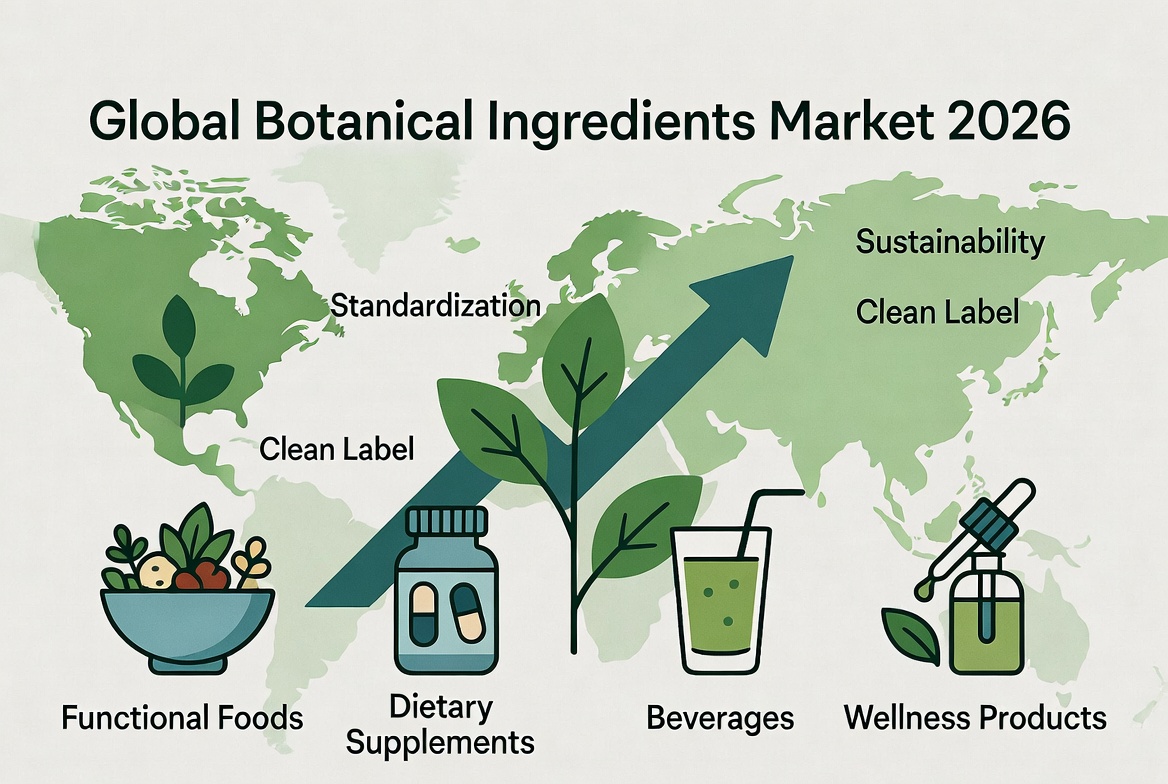
The global plant extracts market is entering a new phase of growth in 2026, supported by rising demand for natural ingredients across functional foods, dietary supplements, beverages, and wellness products. As more brands reformulate products around clean-label and plant-based positioning, botanical ingredients are becoming an essential part of product development strategies.
For B2B buyers, this expansion creates meaningful opportunities. Plant extracts are no longer evaluated only by their natural origin. Buyers now look for ingredients that can deliver reliable functionality, technical consistency, and commercial value in competitive markets. In many cases, the right extract can help a brand move faster from concept to launch while improving product differentiation.
One of the most important trends shaping the market in 2026 is the increasing preference for standardized extracts. Manufacturers and brand owners want ingredients with stable active compounds, clear specifications, and batch-to-batch consistency. This is especially important for nutraceuticals, functional beverages, and premium wellness products, where reliable performance is closely tied to brand reputation and consumer trust.
Standardization also supports formulation efficiency. When active markers are consistent, product developers can calculate dosage more accurately and maintain better control over the final formula. That is why standardized herbal extracts are becoming a priority for contract manufacturers, private label brands, and export-oriented companies that need predictable quality and smoother production processes.
Another major trend in 2026 is the continued rise of clean-label and sustainable sourcing. Buyers in North America, Europe, and Asia are under increasing pressure to source ingredients that align with both consumer expectations and regulatory requirements. Clean-label positioning has become especially important in functional foods, beverages, and dietary supplements, where simple ingredient declarations and familiar botanical names can improve market acceptance.
At the same time, sustainability is moving from a marketing advantage to a procurement requirement. B2B customers want to know where raw materials come from, how they are cultivated, and whether the supply chain supports traceability and responsible harvesting. Eco-friendly extraction methods, organic or responsibly sourced raw materials, and transparent documentation are becoming key decision factors for international buyers.
This shift is changing the role of ingredient suppliers. In the current market, buyers expect more than bulk raw materials. They want partners who can provide technical guidance, customized specifications, application support, and quality documentation. In other words, the supplier’s value is no longer limited to price and availability; it also includes formulation support, regulatory awareness, and product development assistance.
For companies like BotaniEx, this creates a clear opportunity to stand out in a competitive market. By offering standardized plant extracts, reliable quality control, and solutions tailored to different product categories, suppliers can better serve the needs of B2B buyers. This is particularly important for customers developing products in immune support, stress management, energy support, and daily wellness, where ingredient performance and market positioning both matter.
Looking ahead, the strongest growth opportunities will likely come from suppliers who can combine three strengths: consistent quality, application-focused innovation, and responsible sourcing. Buyers are increasingly looking for ingredients that are not only functional, but also easy to formulate, easy to explain to consumers, and aligned with modern brand values.
In summary, the 2026 plant extracts market offers strong potential for B2B buyers who understand where the market is heading. Standardization, clean-label demand, and sustainable sourcing are no longer optional trends. They are becoming the core requirements for success in botanical ingredient procurement and product development. For suppliers that can deliver both technical reliability and commercial flexibility, the coming years present significant room for growth.
BOTANIEX leverages over 20 years of experience in the natural ingredients industry, leading the way in innovation and quality. We provide top-tier botanical extracts and herbal formulations tailored for dietary supplements, nutraceuticals, functional beverages, natural pigments, and cosmetic applications. Backed by reputable international certifications and a range of patents, BOTANIEX is dedicated to delivering value to clients and nurturing mutual growth. Reach out to discover our product range and start a new partnership with us.
Botaniex specializes in the production of botanical extracts and functional herbal formulations, providing raw materials and value-added services for manufacturers in the health food/dietary supplement, functional beverage, cosmetics, and pharmaceutical industries.