
Language

Views: 247 Author: Botaniex Publish Time: 2026-07-03 Origin: Site


Content Menu
● Company & Formulation Context – Why Botaniex Focuses on Evidence-Based Botanical Lipid Support
● How Omega Fatty Acid Support Works – Beyond Just EPA & DHA
>> Core Mechanisms of Omega Fatty Acids
>> Where Angelica and Magnolia Fit into Omega Strategies
● Angelica/Dong Quai Extract – Mechanisms Relevant to Omega Fatty Acid Support
>> Lipid Metabolism and Anti-Hyperlipidemic Effects
>> Protection Against LDL Oxidation and Vascular Support
>> Traditional and Clinical Use Perspective
● Magnolia Bark Extract – Mechanisms Relevant to Omega Fatty Acid Support
>> Honokiol and Magnolol in Metabolic Health
>> Adipocyte Browning and Lipid Catabolism
● Angelica Vs. Magnolia – Comparative View for Omega Fatty Acid Support
>> Mechanistic and Application Comparison Table
● Practical Formulation Scenarios – How Brands Can Use Both Extracts with Omegas
>> 1 – Omega + Angelica for Cardiovascular Support
>> 2 – Omega + Magnolia for Metabolic & Weight Support
● Expert and User Perspectives – How Practitioners and End-Users Experience These Extracts
>> Personal Supplementation Experience
● Implementation Guidance for Brands & Product Developers
>> Strategic Positioning in B2B and DTC Channels
● CTA – Moving from Knowledge to Product Innovation
● FAQs
As a content strategist working with Botaniex and as a long-term user of plant-based supplements, I see omega fatty acid support not as "more omega-3 in a capsule" but as a broader strategy: balancing lipid metabolism, protecting lipoproteins from oxidation, and supporting vascular and inflammatory health. From this integrative perspective, Angelica/Dong Quai extract tends to play a primary role in cardiovascular-oriented formulas, whereas Magnolia bark extract adds targeted anti‑obesity, insulin-sensitizing and adipocyte-modulating benefits that complement omega blends. [botaniex]
Botaniex positions itself as a science-driven manufacturer of botanical extracts, herbal formulations and plant-based ingredients for dietary supplements, functional foods, beverages, cosmetics and pharmaceuticals. With standardized extraction, solvent control and quality systems, Botaniex is able to deliver reproducible Angelica/Dong Quai and Magnolia bark extracts that meet global nutraceutical standards for purity and potency. [botaniextract]
From an industry perspective, brands increasingly build multi-target lipid formulas that combine omega-3/6/9 with botanicals that modulate triglycerides, protect LDL from oxidation and support anti-inflammatory signaling, and Botaniex's portfolio fits directly into this trend. [pubmed.ncbi.nlm.nih]
In clinical and mechanistic literature, omega-3 and other polyunsaturated fatty acids support cardiometabolic health mainly by: [pmc.ncbi.nlm.nih]
- Modulating lipid metabolism, including triglyceride synthesis and fatty acid oxidation.
- Reducing chronic inflammation via eicosanoid and specialized pro‑resolving mediator pathways.
- Improving vascular function and protecting endothelial cells from oxidative damage.
- Supporting neuronal membranes and cognitive health through structural roles in phospholipids.
Botanicals designed for "omega support" typically do not provide large amounts of EPA/DHA; instead, they optimize the lipid environment in which omega fatty acids act—improving lipid turnover, limiting peroxidation of lipoproteins, and balancing oxidative stress. [frontiersin]
- Angelica/Dong Quai extract supports lipid metabolism, protects LDL from oxidation and modulates platelet aggregation and microcirculation, strengthening the vascular context in which omegas exert benefits. [scispace]
- Magnolia bark extract (magnolol/honokiol) primarily improves insulin resistance, adiposity, hepatic steatosis and oxidative stress, indirectly enhancing the metabolic setting for omega supplementation. [pmc.ncbi.nlm.nih]
For formulators, this means Angelica often anchors heart and vessel-focused omega formulas, while Magnolia is more frequently used in weight management, metabolic syndrome and fatty liver blends that also include omegas. [pmc.ncbi.nlm.nih]

Preclinical work on Angelica species shows clear lipid-modulating actions: [pubmed.ncbi.nlm.nih]
- In high-fat diet models, polyphenol-rich Angelica roots reduced body weight gain, visceral fat, and plasma lipids, while improving hepatic triglyceride and cholesterol levels. [pubmed.ncbi.nlm.nih]
- Angelica sinensis polysaccharides demonstrate dual inhibition of lipid synthesis and CD36-mediated lipid uptake, improving alcoholic fatty liver and reducing ROS. [pubmed.ncbi.nlm.nih]
- Angelica injections decreased aortic plaque formation by lowering serum triglycerides and modulating hemorheology in hyperlipidemic rabbits. [pubmed.ncbi.nlm.nih]
From an omega-support angle, these effects can help:
- Reduce triglyceride load, synergizing with omega-3's triglyceride-lowering profile.
- Improve fatty acid flux through better oxidation and less ectopic lipid deposition, making omega incorporation into membranes more efficient.
- Support hepatic handling of fats, which is central to omega transport and utilization.
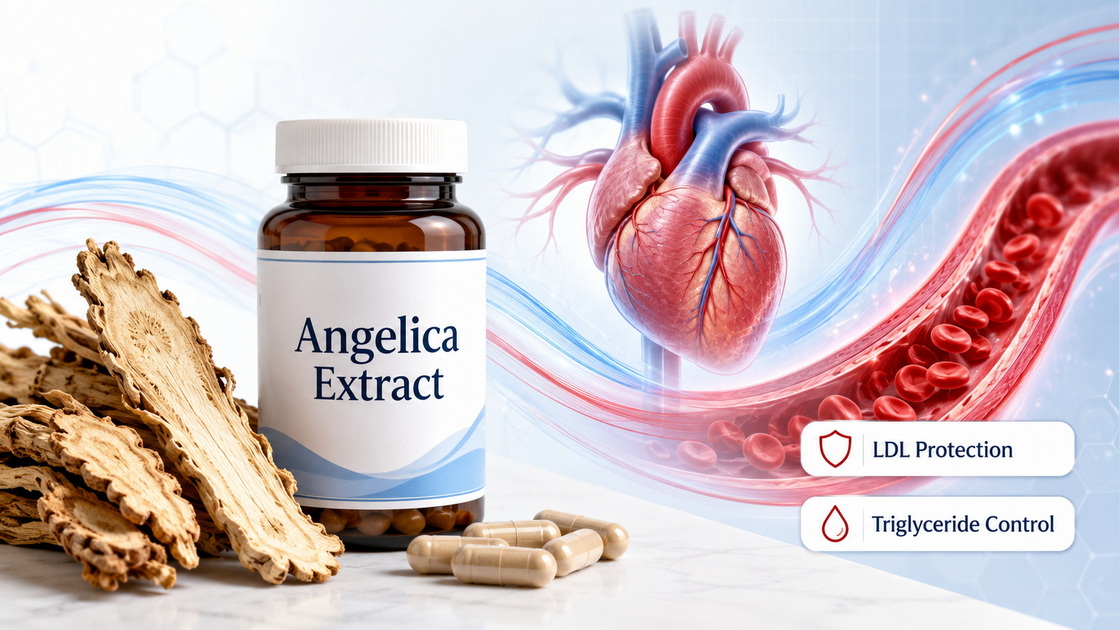
Angelica-derived sodium ferulate has been shown to significantly protect LDL against oxidation and to inhibit oxidized LDL‑induced intracellular lipid accumulation in vascular smooth muscle cells. Additional work indicates multi-target pathways by which Angelica sinensis supports cardiovascular and cerebrovascular protection and modulates platelet aggregation and lipidomics signatures. [hortherbpublisher]
These actions enhance omega fatty acid efficacy by:
- Limiting lipoprotein oxidation, a key step in atherogenesis triggered by oxidized lipids.
- Supporting microcirculation and platelet balance, which complements omega-3's antithrombotic effects.
In Traditional Chinese Medicine, Dong Quai is recognized as a blood‑invigorating and circulation-supporting herb, particularly in women's health and cardiovascular function. For practitioners integrating omegas into holistic protocols, Angelica is often selected when the goal includes circulation, menstrual and microvascular dimensions alongside lipid support. [mitocare]
Magnolia officinalis bark is rich in honokiol and magnolol, neolignans with strong antioxidant and metabolic-modulating properties. Key findings include: [pmc.ncbi.nlm.nih]
- Honokiol improves insulin resistance, dyslipidemia, hepatic steatosis and inflammation in diabetic mouse models, enhancing glucose homeostasis and lipid profiles. [pmc.ncbi.nlm.nih]
- Long-term honokiol/magnolol supplementation reduces body fat accumulation, adipose inflammation and insulin resistance in high-fat-fed mice. [onlinelibrary.wiley]
- Magnolia bark extract activates pathways such as AMPK and PPARα, which are central to fatty acid oxidation and lipid catabolism. [frontiersin]
For omega fatty acid support, these mechanisms:
- Create a more responsive metabolic environment, where omega-derived signals on inflammation and lipid turnover are more effective.
- Reduce hepatic fat and systemic adiposity, indirectly supporting better lipid profiles that synergize with omegas.
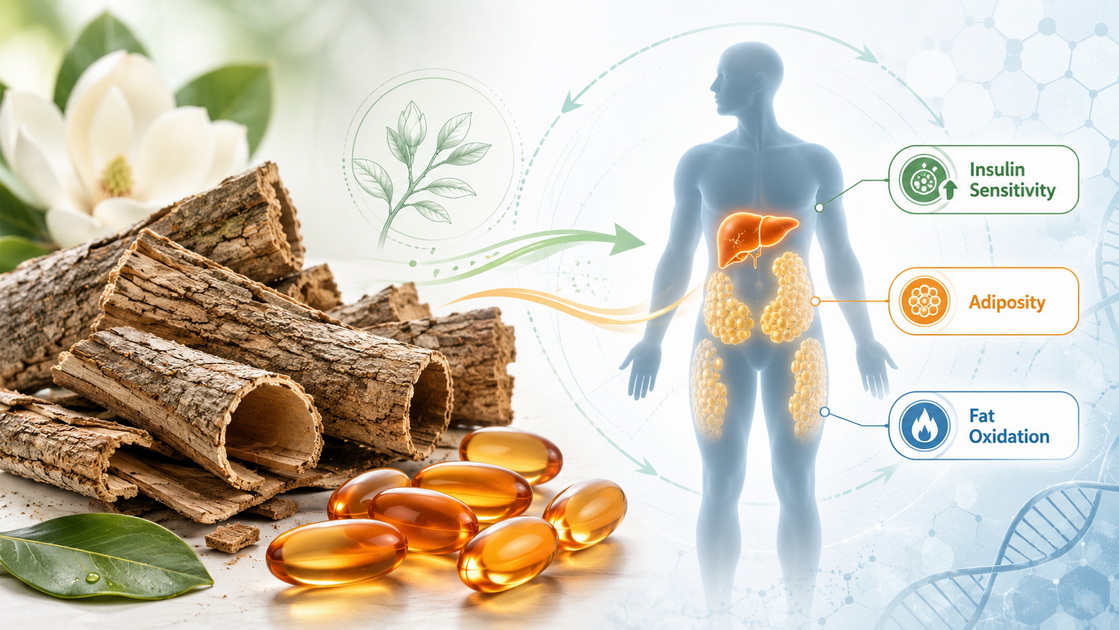
Honokiol has been shown to induce browning of white adipocytes and promote catabolic lipid metabolism, increasing expression of brown fat markers and fat oxidation proteins. This translates into: [pubmed.ncbi.nlm.nih]
- Enhanced fatty acid oxidation, potentially improving utilization of dietary and stored lipids.
- A shift toward energy expenditure, supporting weight management formulas that also include omega-3 as part of a cardiometabolic strategy. [pmc.ncbi.nlm.nih]
In practice, Magnolia bark is often the secondary comparator or co‑active in omega formulas focused on weight, metabolic syndrome and hepatoprotection, rather than the anchor ingredient in vascular‑centric blends. [sciencedirect]
| Aspect | Angelica/Dong Quai Extract | Magnolia Bark Extract |
|---|---|---|
| Primary active constituents | Ferulic acid, polysaccharides, phthalides, other phytochemicals frontiersin | Honokiol, magnolol and related neolignans pmc.ncbi.nlm.nih |
| Core lipid effects | Anti-hyperlipidemic, triglyceride-lowering, improved hepatic lipids pubmed.ncbi.nlm.nih | Improved dyslipidemia, reduced hepatic steatosis, better insulin sensitivity pmc.ncbi.nlm.nih |
| LDL oxidation / vascular | Strong protection of LDL from oxidation; reduced aortic plaque; improved microcirculation pubmed.ncbi.nlm.nih | Antioxidant and anti-inflammatory, but more focused on adipose and hepatic tissues pmc.ncbi.nlm.nih |
| Adiposity / weight | Moderate visceral fat reduction in animal models via improved lipid metabolism pubmed.ncbi.nlm.nih | Clear effects on adiposity, adipocyte browning and adipose inflammation pmc.ncbi.nlm.nih |
| Omega-relevant positioning | Primary ingredient for "Omega + Vascular / Cardiovascular Support" formulations | Secondary/comparator ingredient for "Omega + Metabolic / Weight Management" formulations pmc.ncbi.nlm.nih |
| Typical formula focus | Circulation, LDL oxidation, blood quality and triglycerides | Obesity, insulin resistance, fatty liver, adipose inflammation |
| Regulatory / traditional framing | Strong TCM heritage and cardiovascular/circulatory positioning mitocare | Widely studied as antioxidant and metabolic modulator with stress-relief halo |
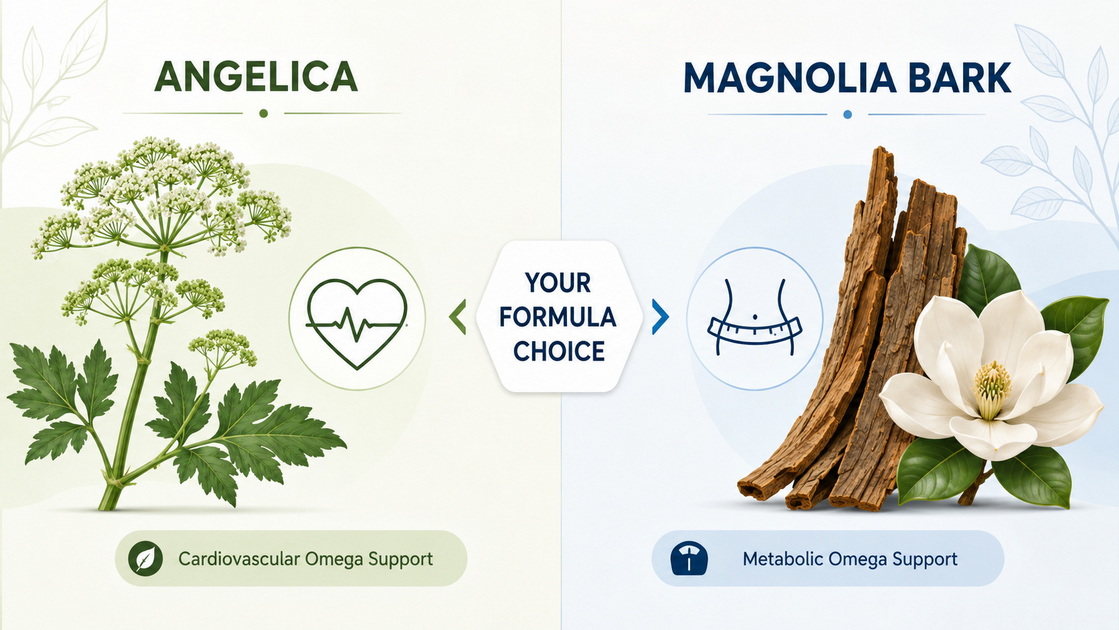
A formulary example my clients often consider:
1. Core omega complex: Standardized EPA/DHA at cardiovascular-supportive dosages.
2. Angelica/Dong Quai extract: Standardized to ferulic acid or key phthalides, aimed at LDL protection, triglyceride modulation and microcirculation support. [frontiersin]
3. Co‑factors: Vitamin E, selenium and B‑complex to sustain redox balance and homocysteine metabolism.
In marketing and UX terms, this becomes a "Heartwise Omega + Botanical Circulation Complex", with Angelica foregrounded as the botanical that helps protect lipoproteins and support vascular integrity around the omega core. [pubmed.ncbi.nlm.nih]
A second scenario for metabolic health:
1. Omega-3 base: EPA/DHA combined with possibly GLA for inflammatory balance.
2. Magnolia bark extract: Honokiol/magnolol standardized, positioned for adiposity reduction, insulin sensitivity improvement and hepatic fat management. [pmc.ncbi.nlm.nih]
3. Adjuncts: Berberine, chromium or inositol for additional glucose and insulin support.
This becomes a "Metabolic Omega + Magnolia Weight Management Complex", appealing to consumers who understand that effective omega use depends on a healthier metabolic baseline. [frontiersin]
Integrative practitioners and nutritionists increasingly treat omega support as a multi‑layer intervention. Based on practitioner feedback and case reports, Angelica/Dong Quai extract is favored when the clinical picture includes: [pmc.ncbi.nlm.nih]
- Elevated triglycerides with vascular risk markers.
- Microcirculatory issues, menstrual concerns or TCM‑framed "blood stasis."
- An emphasis on preventing atherogenesis and improving blood rheology.
Magnolia bark, by contrast, is more often selected when:
- Central issues are obesity, insulin resistance and fatty liver.
- There is significant emotional stress or sleep disturbance that may worsen metabolic risk.
- A single ingredient is needed to address both metabolic and oxidative stress axes. [pmc.ncbi.nlm.nih]
From a user‑experience angle, individuals taking Angelica plus omega‑3 frequently report perceived improvements in circulation, warmth, menstrual regularity and overall vascular comfort, while Magnolia plus omega-3 is often associated with improved weight management efforts, better energy balance and reduced "metabolic sluggishness," especially in high‑stress lifestyles. While these experiences are subjective and require controlled confirmation, they align well with available mechanistic data and help content marketers craft authentic narratives around product benefits. [mitocare]
For Botaniex's B2B customers in dietary supplements and functional foods, an effective positioning strategy might include: [botaniextract]
- Highlighting Angelica/Dong Quai extract as the go‑to botanical for omega fatty acid formulas targeted at heart, circulation and vascular health, supported by LDL oxidation, plaque and lipid data. [pubmed.ncbi.nlm.nih]
- Presenting Magnolia bark extract as the metabolic counterpart, ideal for SKUs that bring omegas into obesity, insulin resistance and hepatosteatosis positioning. [sciencedirect]
- Creating educational materials that explain how omega fatty acids, Angelica and Magnolia interact at the level of lipid metabolism, adipose biology and oxidative stress, enhancing E‑E‑A‑T signals in brand content. [doaj]
Most studies referenced are preclinical (animal and in vitro), meaning human dosage and safety profiles must be carefully assessed according to local regulatory frameworks. Brands should: [pubmed.ncbi.nlm.nih]
- Avoid overclaiming; focus on mechanistic support and "helps support healthy lipid metabolism" type language.
- Consider population‑specific cautions, e.g., coagulation, pregnancy, hormonal sensitivity (especially for Angelica) and interactions with glucose‑lowering therapies (for Magnolia). [mitocare]
For nutraceutical brands, R&D teams and formulators, the next step is to translate these mechanistic insights into differentiated omega formulations that combine Angelica/Dong Quai and Magnolia bark extracts in ways that match your target population's cardiometabolic profile. If you are exploring new omega fatty acid support SKUs, consider collaborating with Botaniex to design standardized, evidence‑informed plant-based ingredient systems that align with both scientific expectations and consumer UX demands across global markets. [botaniex]
Q1: Does Angelica/Dong Quai extract directly increase omega-3 levels in the body?
No. Angelica/Dong Quai extract does not supply EPA or DHA; instead, it supports lipid metabolism, LDL protection and vascular health, creating a more favorable environment for omega fatty acids to exert their effects. [pubmed.ncbi.nlm.nih]
Q2: Is Magnolia bark extract better than Angelica for weight management with omega supplements?
Magnolia bark extract shows more direct evidence on reducing adiposity, improving insulin resistance and promoting adipocyte browning, so it is typically preferred in omega formulas targeting weight and metabolic health. [pmc.ncbi.nlm.nih]
Q3: Can these botanicals be combined in a single omega supplement?
Yes, many formulators combine Angelica and Magnolia with omegas to cover both vascular and metabolic dimensions, but dosing, safety and claim language must be designed according to regional regulations and product positioning. [frontiersin]
Q4: What type of user benefits most from Angelica + omega formulas?
Users with a focus on cardiovascular support, circulation and lipid balance, often including triglyceride management and prevention-oriented heart health, may benefit most from Angelica‑anchored omega formulas. [hortherbpublisher]
Q5: How can brands strengthen E‑E‑A‑T when marketing these ingredients?
Brands can enhance E‑E‑A‑T by: citing high‑quality preclinical and clinical studies, featuring expert commentary from formulators or clinicians, clearly presenting mechanisms and safety considerations, and transparently describing extraction and quality control processes. [doaj]
1. Botaniex. "High-quality Botanical Extracts and Proprietary Herbal Formulas Designed to Support Overall Health and Wellness." [Link] [botaniex]
2. Angelica acutiloba root extract and hyperlipidemia in high-fat diet-induced obese rats. PubMed ID 21647998. [pubmed.ncbi.nlm.nih]
3. Influence of Angelicae sinensis extract on lipid accumulation in rabbit aortic smooth muscle cells induced by oxidized LDL. PubMed ID 12454431. [pubmed.ncbi.nlm.nih]
4. Multi-Target Pathways of Angelica sinensis in Cardiovascular and Cerebrovascular Protection. [hortherbpublisher]
5. Anti-platelet aggregation activities and lipidomics of Angelica sinensis. Frontiers in Pharmacology. [frontiersin]
6. Angelica sinensis polysaccharide improving fatty liver via dual inhibition of lipid synthesis and CD36-mediated lipid uptake. PubMed ID 35358574. [pubmed.ncbi.nlm.nih]
7. Experimental study of the antiatherogenesis effect of Chinese medicine Angelica. Clin Hemorheol Microcirc. [pubmed.ncbi.nlm.nih]
8. Research progress in pharmacological effects and mechanisms of Angelica species. [scispace]
9. Magnolia officinalis and its cardioprotective effects, including magnolol and honokiol. [pmc.ncbi.nlm.nih]
10. Honokiol improves insulin resistance, hepatic steatosis and inflammation in db/db mice. International Journal of Molecular Sciences. [pmc.ncbi.nlm.nih]
11. Honokiol and magnolol inhibitory activity on enzymes involved in carbohydrate and lipid metabolism and antioxidant properties. DOAJ. [doaj]
12. Long-term supplementation of honokiol and magnolol ameliorates body fat accumulation, insulin resistance and adipose inflammation in high-fat-fed mice. [onlinelibrary.wiley]
13. Honokiol ameliorates high-fat-diet-induced obesity of mice via modulation of adipose tissue and gut microbiota. [pmc.ncbi.nlm.nih]
14. Honokiol exerts dual effects on browning and apoptosis of adipocytes, promoting catabolic lipid metabolism. [pubmed.ncbi.nlm.nih]
15. MITOcare. Angelica Sinensis Extract (Dong Quai) – traditional use and women's health focus. [mitocare]


