Content Menu
● Understanding ORAC and Systemic Inflammation
● Company Context: Botaniex and Botanical Science
● Mulberry Leaf Extract: Primary Product Focus
>> What Is Mulberry Leaf Extract?
>> Key Bioactives Relevant to ORAC
● Gardenia Extract: Secondary Comparator
>> What Is Gardenia Extract?
>> Anti-inflammatory Mechanisms of Gardenia
● ORAC, Antioxidant Activity and Systemic Inflammation
● Comparative Table – Mulberry Leaf vs Gardenia
● Personal & Expert Perspective on ORAC Strategy
● Formulation Design – How to Combine Mulberry and Gardenia
>> Practical Steps for Product Developers
>> Label and Marketing Angle
● Latest Data and Expert Insights
● CTA – From Concept to Commercial Formulation
● FAQ
● References
Mulberry Leaf Extract and Gardenia Extract both show promising potential for managing oxidative stress and systemic inflammation, but they work through different bioactive compounds and mechanistic pathways that matter for ORAC-driven product formulation and positioning. [science]
Understanding ORAC and Systemic Inflammation
Oxygen Radical Absorbance Capacity (ORAC) is a laboratory metric used to quantify the antioxidant capacity of foods, botanicals, and nutraceutical ingredients. In simple terms, higher ORAC values suggest a stronger ability to neutralize free radicals that drive oxidative stress. Systemic inflammation is closely linked to chronic oxidative stress, and ingredients with robust ORAC performance are often positioned in formulations targeting cardiovascular health, metabolic balance, immune modulation, and healthy aging. [pmc.ncbi.nlm.nih]
From a product developer's perspective, ORAC is not just a marketing claim; it is a tool to rationally design formulations with quantified antioxidant "load," stack synergistic actives, and benchmark competing ingredients such as Mulberry Leaf Extract and Gardenia Extract against clinically relevant endpoints tied to inflammation. [dergipark.org]
Company Context: Botaniex and Botanical Science
Botaniex specializes in high-quality botanical extracts and plant-based ingredients for dietary supplements, functional foods, beverages, cosmetics, and pharmaceutical applications. With strong expertise in botanical science, modern extraction technologies, and formulation development, the company provides customized ingredient solutions that align ORAC performance with specific health positioning and regulatory frameworks. [botaniex]
For brands seeking to differentiate anti-inflammatory products, partnering with an experienced manufacturer like Botaniex enables tighter control over raw material origin, extract standardization, solvent systems, and batch-to-batch ORAC consistency—key pillars of science-backed product innovation and global market competitiveness. [botaniextract]
Mulberry Leaf Extract: Primary Product Focus
What Is Mulberry Leaf Extract?
Mulberry leaf (typically from Morus alba) has a long history of use in Asian traditional medicine for supporting blood glucose balance, cardiovascular function, and overall wellness. Modern research has confirmed that mulberry leaves contain flavonoids, polyphenols, and other phytochemicals with antioxidant and anti-inflammatory activity. [pmc.ncbi.nlm.nih]
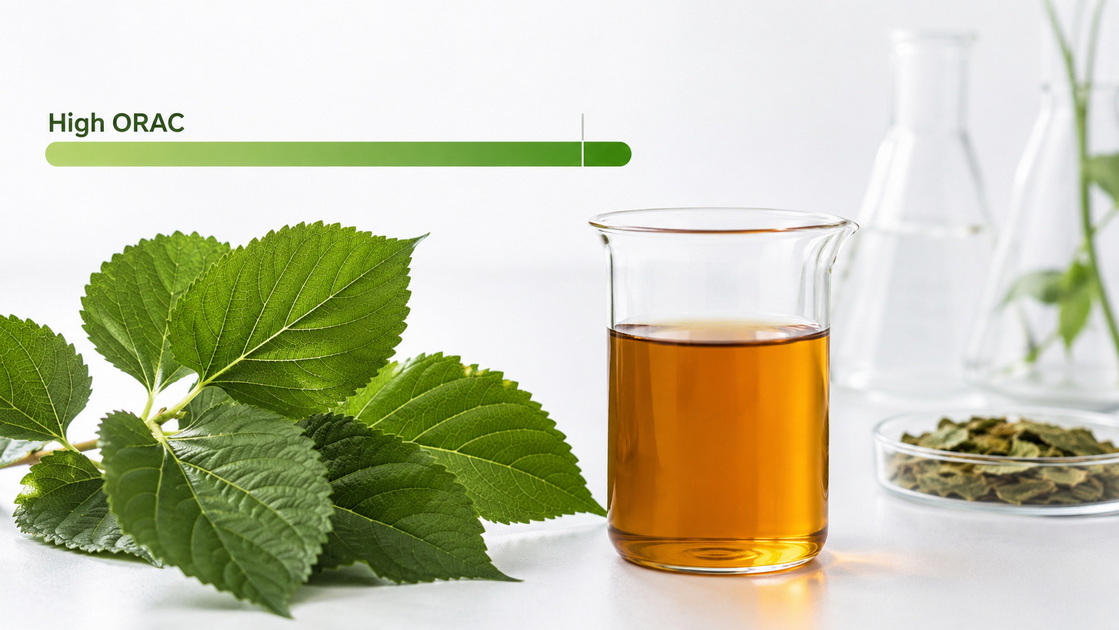
From an ORAC standpoint, mulberry leaf fractions show measurable antioxidant capacity in vitro, with both leaf and fruit extracts demonstrating the ability to scavenge free radicals and reduce oxidative damage in cell and animal models. This makes Mulberry Leaf Extract a strong candidate as a primary antioxidant engine in formulations that aim to modulate systemic inflammation through oxidative stress reduction. [dergipark.org]
Key Bioactives Relevant to ORAC
Mulberry Leaf Extract owes much of its ORAC performance to compounds such as:
- Flavonoids (e.g., quercetin derivatives). [pmc.ncbi.nlm.nih]
- Phenolic acids and related polyphenols. [dergipark.org]
- Other antioxidant constituents identified in leaf and fruit fractions. [pmc.ncbi.nlm.nih]
These molecules can donate electrons to neutralize reactive oxygen species (ROS), thereby lowering oxidative stress markers that contribute to chronic, low-grade systemic inflammation. In practice, standardized Mulberry Leaf Extract with high total polyphenols or flavonoid content is often used to support metabolic and vascular health formulations. [dergipark.org]
Gardenia Extract: Secondary Comparator
What Is Gardenia Extract?
Gardenia (*Gardenia jasminoides*) fruit has been used for centuries in traditional East Asian medicine for conditions related to inflammation and circulatory disturbances, and historically as a natural yellow dye. Modern phytochemical research shows that Gardenia fruit contains iridoid glycosides such as geniposide and genipin, carotenoids, and other bioactives with anti-inflammatory and antioxidant properties. [pmc.ncbi.nlm.nih]
While Gardenia Extract is frequently discussed in terms of anti-inflammatory pharmacology rather than raw ORAC numbers, several studies show that extracts and isolated iridoids can modulate nitric oxide, pro-inflammatory cytokines, and vascular permeability—all mechanisms linked indirectly to oxidative stress. [pmc.ncbi.nlm.nih]
Anti-inflammatory Mechanisms of Gardenia
The anti-inflammatory credibility of Gardenia Extract is largely driven by:
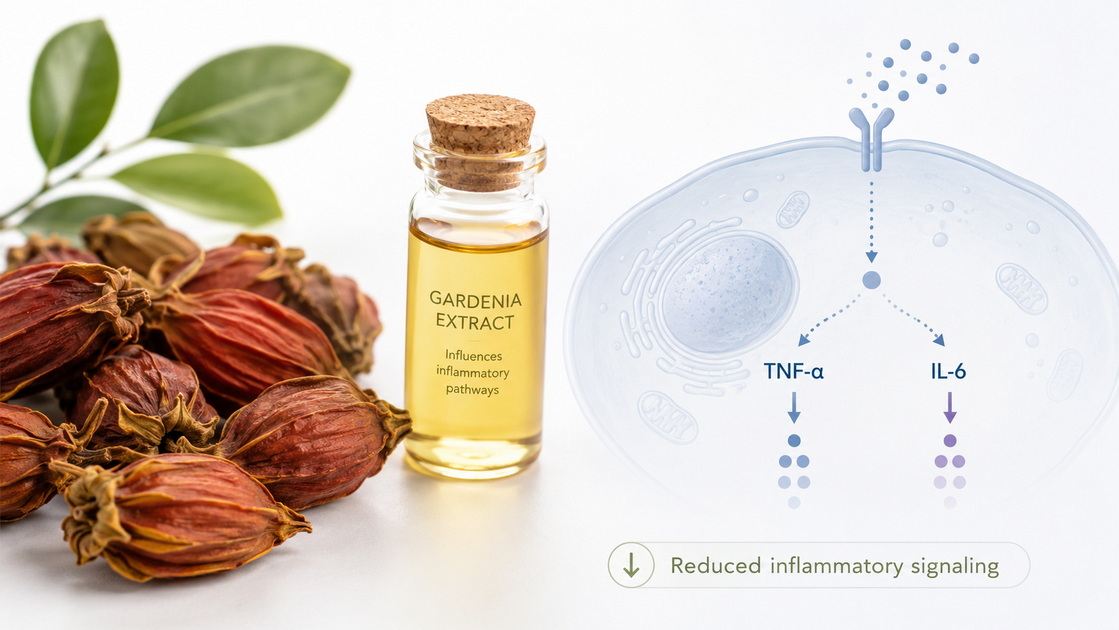
- Geniposide, which inhibits inflammatory cytokines (TNF-α, IL-6, IL-1β) and pathways such as NF-κB and MAPK in cell and animal models. [pubmed.ncbi.nlm.nih]
- Genipin, which shows even stronger anti-inflammatory activity than geniposide in certain rodent models, including carrageenan-induced edema and NO production. [arns.vnuhcmjournal.com]
- Crude Gardenia jasminoides extracts (GJE) that demonstrate anti-inflammatory potential in vitro and in vivo, including models relevant to retinal degeneration and autoimmune inflammation. [pubmed.ncbi.nlm.nih]
These mechanisms indicate that Gardenia Extract can impact systemic inflammatory cascades, making it a sophisticated comparator to Mulberry Leaf Extract when designing ORAC-driven formulations that also target specific cytokine and signaling pathways. [pubmed.ncbi.nlm.nih]
ORAC, Antioxidant Activity and Systemic Inflammation
Although direct ORAC values for every commercial extract are not always published, both Mulberry Leaf Extract and Gardenia Extract exhibit strong antioxidant and anti-inflammatory activities in experimental models. [pmc.ncbi.nlm.nih]
- Mulberry leaf fractions demonstrate measurable antioxidant capacity, reduce oxidative damage, and support antibacterial activity, which indirectly moderates inflammatory stress. [pmc.ncbi.nlm.nih]
- Gardenia extracts and iridoids influence nitric oxide production, vascular permeability, and pro-inflammatory cytokines, suggesting that they also lower oxidative and inflammatory load in tissues. [arns.vnuhcmjournal.com]
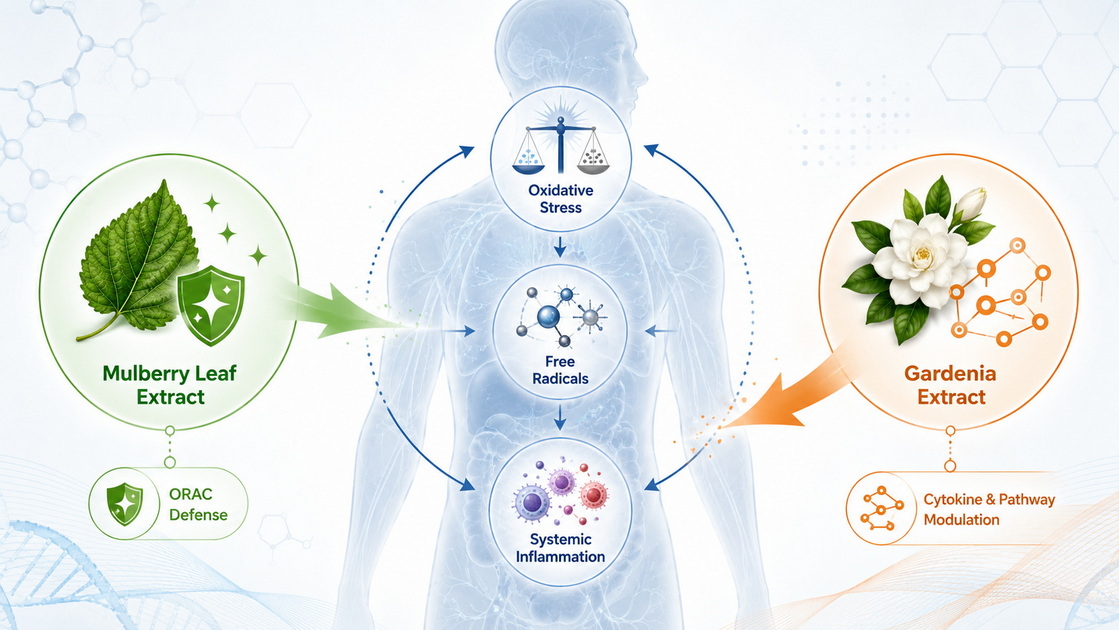
From a systemic inflammation perspective, ORAC helps quantify the "front line" antioxidant capacity, while mechanistic pharmacology (e.g., NF-κB, JAK–STAT, IL-17 pathways) helps explain deeper anti-inflammatory effects that go beyond free-radical scavenging. [pmc.ncbi.nlm.nih]
Comparative Table – Mulberry Leaf vs Gardenia
| Feature | Mulberry Leaf Extract | Gardenia Extract |
| Primary bioactives | Flavonoids, polyphenols. pmc.ncbi.nlm.nih | Iridoid glycosides (geniposide, genipin), carotenoids. pmc.ncbi.nlm.nih |
| Antioxidant/ORAC role | Strong direct antioxidant capacity; useful for ORAC-focused formulas. pmc.ncbi.nlm.nih | Antioxidant plus strong anti-inflammatory pharmacology; ORAC combined with signaling effects. pmc.ncbi.nlm.nih |
| Key anti-inflammatory actions | Indirect via oxidative stress reduction and metabolic support. pmc.ncbi.nlm.nih | Direct inhibition of TNF-α, IL-6, IL-1β; modulation of NF-κB, MAPK, JAK–STAT pathways. pubmed.ncbi.nlm.nih |
| Typical health positioning | Blood glucose, cardiovascular support, metabolic balance, general wellness. pmc.ncbi.nlm.nih | Inflammatory conditions, vascular permeability, retinal and autoimmune-related inflammation. pmc.ncbi.nlm.nih |
| Traditional use | Widely used in Asian traditional medicine for wellness and metabolic support. pmc.ncbi.nlm.nih | Used as traditional remedy and natural dye for centuries in Asia. pmc.ncbi.nlm.nih |
Personal & Expert Perspective on ORAC Strategy
From an industry strategist's viewpoint, ORAC for systemic inflammation is most powerful when treated as one pillar in a multi-dimensional formulation strategy rather than a standalone metric. Based on experience working with B2B supplement brands and botanical manufacturers:
- Mulberry Leaf Extract is often positioned as the primary ORAC engine, delivering broad-spectrum antioxidant capacity with a clean blood sugar and cardiovascular narrative suitable for mainstream consumers.
- Gardenia Extract works best as a targeted mechanistic co-hero, validating claims around cytokine modulation, microvascular integrity, and advanced inflammatory endpoints that resonate with more technical buyers such as clinicians or pharma-adjacent brands. [pubmed.ncbi.nlm.nih]
This dual approach allows product developers to build compelling front-of-pack messaging ("high antioxidant support") while backing it up with mechanistic depth ("supports healthy inflammatory responses via NF-κB, JAK–STAT modulation").
Formulation Design – How to Combine Mulberry and Gardenia
Practical Steps for Product Developers
To operationalize ORAC for systemic inflammation in a real-world product using both extracts:
1. Define your primary health positioning.
- If the goal is broad metabolic and vascular support with a simple consumer narrative, prioritize standardized Mulberry Leaf Extract as the leading active.
- If the goal is targeted inflammatory modulation (e.g., joint comfort, immune balance, eye health), layer Gardenia Extract with clearly defined iridoid content and mechanistic support. [pubmed.ncbi.nlm.nih]
2. Quantify ORAC and polyphenol load.
- Work with Botaniex or an equivalent supplier to secure standardized ORAC or antioxidant capacity data for your Mulberry Leaf Extract, preferably expressed per gram or per daily serving. [botaniex]
- Request data on total iridoid or geniposide/genipin content for Gardenia Extract, plus any available antioxidant/ORAC proxies. [pmc.ncbi.nlm.nih]
3. Build a synergistic matrix.
- Combine a high-ORAC Mulberry base with a mechanistically validated Gardenia fraction to cover both free-radical scavenging and cytokine signaling modulation.
- Align dosage ranges with published preclinical or pilot clinical data where available, while respecting regulatory limits in key markets. [pubmed.ncbi.nlm.nih]
4. Translate science into consumer language.
- Use phrases like "supports healthy inflammatory responses", "helps neutralize free radicals", and "clinically informed botanical synergy", while avoiding disease claims.
- Pair these with more technical content in B2B dossiers, white papers, and healthcare-professional materials.
Label and Marketing Angle
From a marketing and UX standpoint, emphasize:
- Mulberry Leaf Extract: "High-antioxidant botanical with ORAC-backed support for oxidative stress and healthy metabolism." [dergipark.org]
- Gardenia Extract: "Science-backed iridoid complex that supports healthy inflammatory signaling and microvascular integrity." [pmc.ncbi.nlm.nih]
Latest Data and Expert Insights
Recent research continues to refine the understanding of Gardenia's anti-inflammatory mechanisms:
- Network pharmacology and experimental data show geniposide can target multiple pathways relevant to autoimmune and inflammatory conditions, including IL-17 and JAK–STAT signaling. [pubmed.ncbi.nlm.nih]
- Gardenia extracts demonstrate strong inhibition of nitric oxide and TNF-α production in cellular models, reinforcing their relevance in systemic inflammatory states. [arns.vnuhcmjournal.com]
On the Mulberry side, newer studies confirm robust antioxidant and antibacterial activity across different plant parts, with leaves contributing significantly to the overall radical scavenging capacity. These evolving data sets support ongoing product innovation, where Botaniex and similar manufacturers can update specifications, white papers, and marketing claims to stay aligned with scientific progress. [botaniex]
CTA – From Concept to Commercial Formulation
For brand owners, R&D teams, and procurement managers exploring Mulberry Leaf Extract vs. Gardenia Extract for ORAC-driven systemic inflammation products, the next step is to translate this comparative insight into a concrete sourcing and formulation strategy.
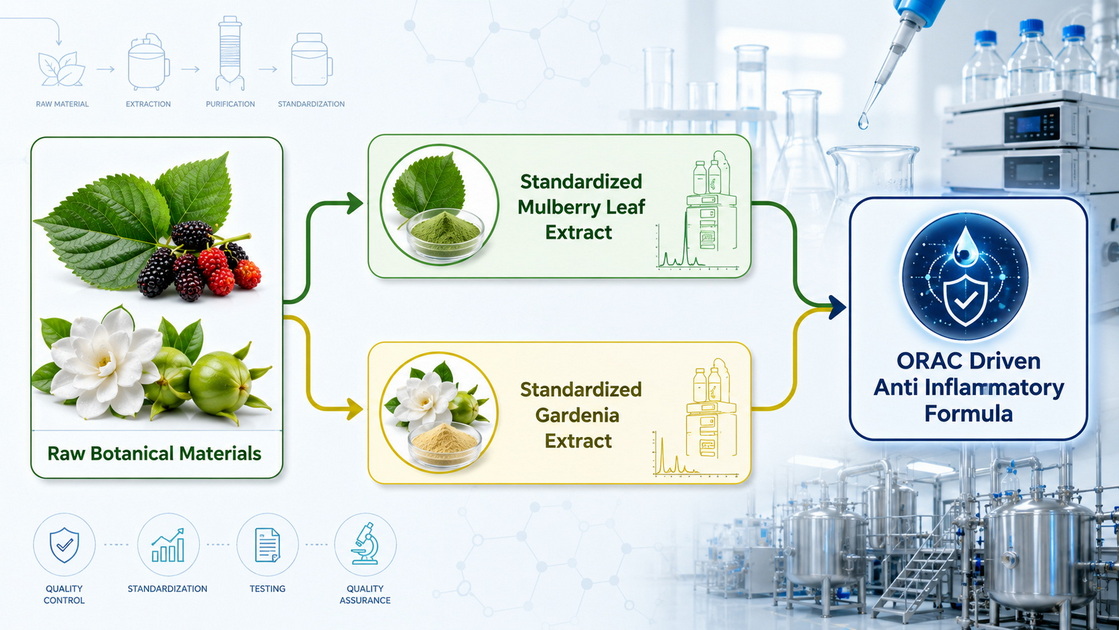
Consider collaborating with Botaniex to develop a customized, standardized botanical complex that integrates high-ORAC Mulberry Leaf Extract with mechanistically validated Gardenia Extract, backed by technical dossiers, stability data, and regulatory support tailored to your target markets. [botaniex]
Bold CTA suggestion:
- Ready to build an ORAC-informed anti-inflammatory formula? Contact Botaniex's technical team to discuss customized Mulberry–Gardenia ingredient solutions for your next product launch.
FAQ
1. How does ORAC relate to real-world anti-inflammatory benefits?
ORAC quantifies antioxidant capacity in vitro, helping formulators estimate how well an ingredient can neutralize free radicals that contribute to systemic inflammation, but it should be combined with mechanistic and clinical data for meaningful claims. [pmc.ncbi.nlm.nih]
2. Is Mulberry Leaf Extract enough on its own for systemic inflammation formulas?
Mulberry Leaf Extract provides robust antioxidant support and indirect anti-inflammatory benefits, making it a strong primary ingredient, but combining it with mechanistic actives like Gardenia can yield a more comprehensive systemic inflammation strategy. [pubmed.ncbi.nlm.nih]
3. Why use Gardenia Extract if its ORAC data are less commonly reported?
Gardenia Extract offers strong pharmacological anti-inflammatory effects through iridoid glycosides that modulate TNF-α, IL-6, IL-1β and signaling pathways, complementing the broad antioxidant profile of Mulberry Leaf Extract. [pubmed.ncbi.nlm.nih]
4. Can Mulberry and Gardenia be combined in a single finished product?
Yes, many formulators combine a high-ORAC botanical like Mulberry with a signaling-focused extract such as Gardenia to cover both oxidative stress and inflammatory pathway modulation, assuming regulatory and safety requirements are met. [pmc.ncbi.nlm.nih]
5. What should I ask my supplier when sourcing these extracts?
You should request data on standardization markers (polyphenols for Mulberry; geniposide/genipin for Gardenia), ORAC or related antioxidant metrics, extraction solvents, residuals, and any relevant toxicology or stability data supporting systemic inflammation positioning. [arns.vnuhcmjournal.com]
References
1. Botaniex – High-quality Botanical Extracts and Functional Herbal Formulations. Available at: https://www.botaniex.com [botaniex]
2. Anti-inflammatory activities of Gardenia jasminoides extracts in vitro and in vivo. Available at: https://pmc.ncbi.nlm.nih.gov/articles/PMC8120509/ [pmc.ncbi.nlm.nih]
3. Chemistry and bioactivity of Gardenia jasminoides. Available at: https://pmc.ncbi.nlm.nih.gov/articles/PMC9333430/ [pmc.ncbi.nlm.nih]
4. Anti-inflammatory evaluation of gardenia extract, geniposide and genipin. Available at: https://pubmed.ncbi.nlm.nih.gov/16169698/ [pubmed.ncbi.nlm.nih]
5. Geniposide, from Gardenia jasminoides Ellis, inhibits the inflammatory response in primary mouse macrophages and mouse models. Available at: https://pubmed.ncbi.nlm.nih.gov/22878137/ [pubmed.ncbi.nlm.nih]
6. Evaluation of antioxidant and antibacterial activities of Morus spp. (mulberry) extracts. Available at: https://pmc.ncbi.nlm.nih.gov/articles/PMC8703457/ [pmc.ncbi.nlm.nih]
7. Investigation of antioxidant activities of fruit, leaf and other parts of mulberry. Available at: https://dergipark.org.tr/tr/download/article-file/1451176 [dergipark.org]
8. Chemical constituents and anti-inflammatory activity of fructus Gardenia. Available at: http://arns.vnuhcmjournal.com.vn/index.php/arns/article/view/1137 [arns.vnuhcmjournal.com]
9. Exploring the anti-inflammatory mechanism of geniposide in rheumatoid arthritis. Available at: https://pubmed.ncbi.nlm.nih.gov/40640294/ [pubmed.ncbi.nlm.nih]