Content Menu
● Why Vasodilation & Endothelial Health Matter for Modern Formulas
● Botaniex's Positioning in Natural Vasodilation Solutions
● Green Tea Extract for Vasodilation & Blood Flow Support
>> Mechanisms: Catechins, NO and Ion Channels
>> Human Evidence on Vasodilation and Blood Pressure
● Lycopene for Endothelial Function and Microcirculation
>> Mechanisms: Antioxidant Protection and Endothelium
>> Human Evidence on Endothelial Function, FMD and Blood Pressure
● Direct Comparison – Green Tea Extract vs. Lycopene in Vasodilation & Blood Flow
>> Mechanistic and Clinical Differences
● Practical Formulation Strategy – When to Lead with Green Tea vs. Lycopene
>> Use‑Case Scenarios From an Industry Expert Lens
● Step‑by‑Step Formulation Blueprint for a Vasodilation‑Focused Product
>> 7‑Step Development Framework (Industry Perspective)
● Action‑Oriented Conclusion & CTA
● FAQs
● References
In cardiovascular product development, vasodilation and healthy blood flow are no longer "nice-to-have" benefits—they are core positioning pillars for premium dietary supplements and functional foods. As a formulation strategist working with Botaniex, an innovative manufacturer of natural ingredients and botanical extracts, I increasingly see brand owners evaluating green tea extract and lycopene side‑by‑side as hero ingredients for vascular support SKUs. This article compares the science, formulation implications, and go‑to‑market potential of green tea extract versus lycopene so you can design evidence‑backed products that genuinely optimize vasodilation and blood flow. [botaniex]
Why Vasodilation & Endothelial Health Matter for Modern Formulas
Healthy vasodilation—the ability of blood vessels to relax and widen—directly affects blood pressure, nutrient delivery, and oxygen transport to tissues. Endothelial function, commonly assessed by flow‑mediated dilation (FMD) of the brachial artery, has emerged as a key surrogate marker for cardiovascular risk in clinical and regulatory discussions. [cebm.ox.ac]
From an industry formulator perspective:
- Improved FMD is now a central efficacy endpoint in many vascular support trials. [tandfonline]
- Botanicals that enhance nitric oxide (NO) signalling or relax vascular smooth muscle create a strong mechanistic narrative for blood flow support. [pubmed.ncbi.nlm.nih]
- Ingredients with dual actions—vasodilation plus antioxidant protection of the endothelium—offer higher storytelling and branding potential. [pmc.ncbi.nlm.nih]
For brand owners, this shifts "heart health" products from generic claims (cholesterol, blood pressure) to more differentiated positioning: microcirculation, endothelial resilience, and performance‑oriented blood flow support for active, aging, or cardiometabolic consumers. [pmc.ncbi.nlm.nih]
Botaniex's Positioning in Natural Vasodilation Solutions
Botaniex specializes in high‑quality botanical extracts, herbal formulations, and plant‑based ingredients for dietary supplements, functional food, beverages, cosmetics, and pharmaceuticals. With HACCP‑certified processes and strong R&D capability, the company can supply standardized green tea extracts and carotenoid‑rich complexes, such as tomato or lycopene ingredients, tailored to target vascular endpoints like FMD, blood pressure, and oxidative stress. [newswire]
For B2B customers, this means:
- Access to research-backed extracts with defined marker compounds (e.g., EGCG content in green tea, lycopene content in tomato extracts). [sciencedirect]
- Customization of dosage forms and solubility profiles for capsules, RTD beverages, stick packs, and functional foods. [botaniextract]
- Technical support to align ingredient selection with regulatory standards and emerging clinical evidence in vasodilation and endothelial function. [newswire]
Green Tea Extract for Vasodilation & Blood Flow Support
Mechanisms: Catechins, NO and Ion Channels
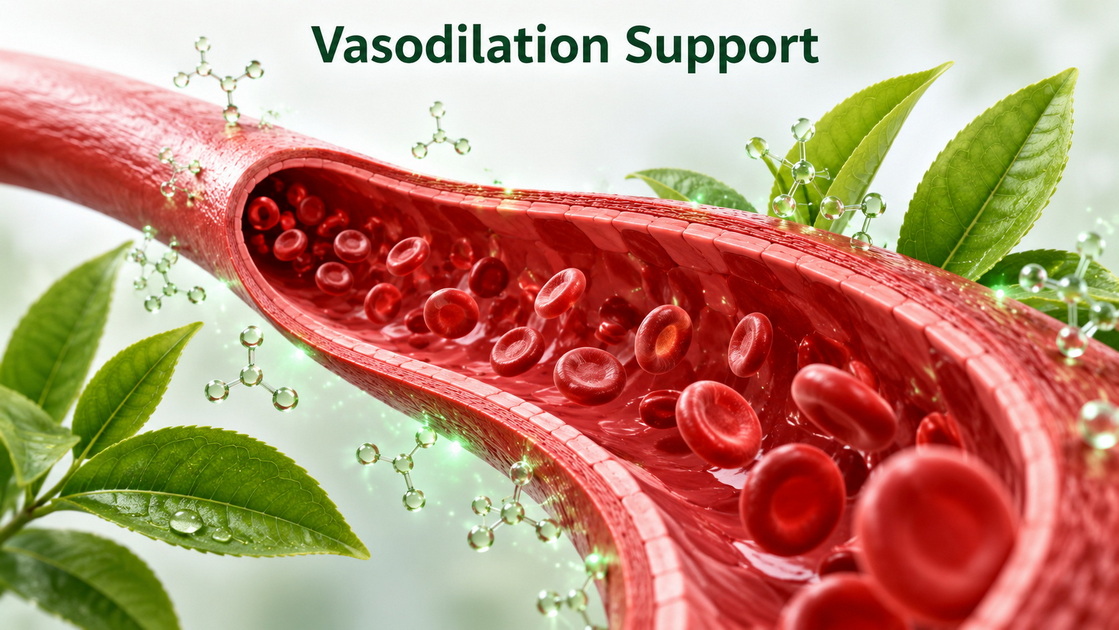
Green tea extract is rich in catechins, particularly epigallocatechin‑3‑gallate (EGCG), which exert multiple cardiovascular effects. [pubmed.ncbi.nlm.nih]
Key mechanistic pathways:
- Endothelial nitric oxide synthase (eNOS) activation: EGCG rapidly activates eNOS via phosphatidylinositol‑3‑kinase, Akt, and cAMP‑dependent protein kinase signalling, leading to NO‑dependent vasorelaxation. [pubmed.ncbi.nlm.nih]
- Direct vasodilation of aortic rings: EGCG induces dose‑dependent relaxation in rat aortic rings, an effect blocked by NO synthase inhibition, confirming NO‑mediated vasodilation. [sciencedirect]
- KCNQ5 ion channel activation: Catechin‑type flavonoids like epicatechin gallate and EGCG activate KCNQ5 potassium channels in vascular smooth muscle, promoting hyperpolarization and vessel relaxation, explaining antihypertensive properties of tea. [pmc.ncbi.nlm.nih]
- Antioxidant and anti‑inflammatory actions: Catechins scavenge free radicals, reduce oxidized LDL, and inhibit NF‑κB‑mediated inflammatory signalling in endothelial cells. [scirp]
These mechanisms give green tea extract a strong E‑E‑A‑T profile: plausible biology, reproducible in vitro findings, and translation into human vascular endpoints.
Human Evidence on Vasodilation and Blood Pressure
Multiple clinical and translational studies showcase green tea's impact on vascular function:
- In a randomized crossover study, flow‑mediated brachial artery vasodilation increased from 5.68% with placebo to 11.98% after green tea extract, demonstrating significant improvement in endothelial responsiveness. [pubmed.ncbi.nlm.nih]
- Reviews of green and black tea show both teas stimulate NO production and vasorelaxation via eNOS activation, with EGCG identified as a pronounced NO‑dependent vasorelaxant. [pubmed.ncbi.nlm.nih]
- Meta‑analyses indicate daily green tea consumption (≈5–6 cups, ~200 mg EGCG) can modestly reduce systolic blood pressure and improve total and LDL cholesterol, although not a substitute for antihypertensive medication. [pmc.ncbi.nlm.nih]
- Recent integrated reviews link regular tea consumption with better blood pressure regulation, improved cholesterol profiles, and more effective blood sugar control, supporting its role in long‑term vascular health. [pmc.ncbi.nlm.nih]
From a product formulator standpoint, these data support dosing strategies in the range of 150–300 mg EGCG equivalents per day in standardized extracts for vasodilation and blood flow support SKUs. [pubmed.ncbi.nlm.nih]
Lycopene for Endothelial Function and Microcirculation
Mechanisms: Antioxidant Protection and Endothelium
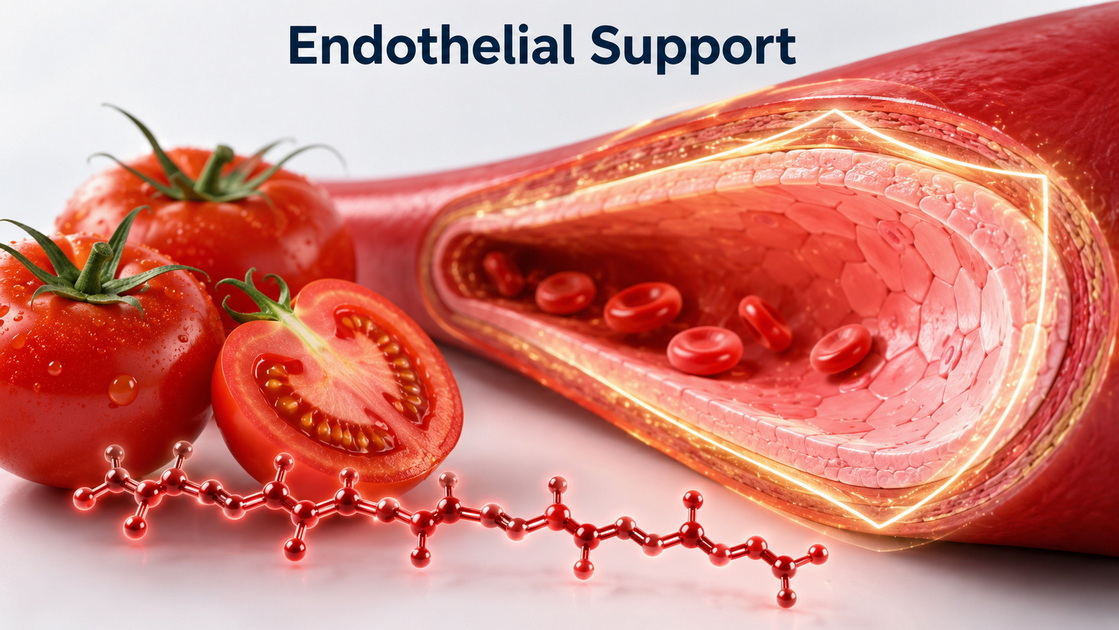
Lycopene is a lipophilic, unsaturated carotenoid abundant in tomatoes, watermelon, papaya, red grapefruits, and guava. Unlike catechins, lycopene does not primarily act via rapid eNOS activation; instead, it provides deep antioxidant and endothelial protection: [pubmed.ncbi.nlm.nih]
- Potent singlet oxygen quenching and lipid peroxidation reduction, lowering malondialdehyde (MDA) as a marker of oxidative stress. [pubmed.ncbi.nlm.nih]
- Protection of endothelial cells and LDL particles from oxidative damage, indirectly supporting vascular function. [sciencedirect]
- Modulation of inflammatory markers (e.g., IL‑6, CRP) in some tomato‑based interventions, although results are heterogeneous. [sciencedirect]
This positions lycopene as a structural support ingredient for long‑term vascular integrity, rather than a fast‑acting vasodilator.
Human Evidence on Endothelial Function, FMD and Blood Pressure
The clinical picture for lycopene is more mixed but still promising:
- Observational meta‑analyses show higher lycopene exposure associated with lower cardiovascular disease risk, including reduced stroke and coronary heart disease incidence. [pubmed.ncbi.nlm.nih]
- A grade‑based systematic review found lycopene consumption significantly reduced MDA (oxidative stress) but did not consistently improve major cardiovascular risk factors such as blood lipids or blood pressure, highlighting heterogeneity in trials. [pubmed.ncbi.nlm.nih]
- Meta‑analysis of tomato and lycopene interventions reports significant reductions in LDL‑cholesterol, IL‑6, and improvements in FMD, with lycopene supplementation alone contributing to systolic blood pressure reductions (~5.7 mmHg). [sciencedirect]
- Controlled trials using standardized lycopene preparations show improved endothelium‑dependent vasodilation, normalizing FMD in cardiovascular disease patients without major changes in blood pressure or lipids. [ahajournals]
- A recent trial demonstrated increased FMD after lycopene‑rich tomato juice intake at 4–12 weeks, with serum lycopene significantly elevated and vascular endothelial function improved despite no clear change in NO levels. [pubmed.ncbi.nlm.nih]
For formulators, these findings suggest lycopene is best framed as a background vascular support nutrient, ideal for chronic use and synergistic combinations, rather than as the sole driver of acute vasodilation.
Direct Comparison – Green Tea Extract vs. Lycopene in Vasodilation & Blood Flow
Mechanistic and Clinical Differences
| Dimension | Green tea extract | Lycopene |
| Primary bioactives | Catechins (EGCG, EGC, ECG) pubmed.ncbi.nlm.nih | Carotenoid lycopene in tomato matrix pmc.ncbi.nlm.nih |
| Core mechanism | eNOS activation, NO‑mediated vasorelaxation, KCNQ5 activation pubmed.ncbi.nlm.nih | Antioxidant lipid protection, endothelial oxidative stress reduction pmc.ncbi.nlm.nih |
| Vasodilation speed | Relatively rapid, seen in aortic ring and short‑term human FMD studies pubmed.ncbi.nlm.nih | More gradual, via structural endothelial support and improved FMD over weeks ahajournals |
| FMD impact | Doubling of brachial artery FMD in some trials pubmed.ncbi.nlm.nih | Significant but modest FMD improvements in CVD or high‑risk subjects ahajournals |
| Blood pressure | Small reductions in systolic BP at higher habitual intake cebm.ox.ac | Systolic BP reduction (~5–6 mmHg) in meta‑analyses of lycopene supplementation sciencedirect |
| Antioxidant focus | Strong, multi‑pathway, but not limited to lipids pubmed.ncbi.nlm.nih | Focused on lipid peroxidation and MDA reduction pubmed.ncbi.nlm.nih |
| Regulatory narrative | "NO‑mediated vasodilation", "endothelial function", "blood vessel relaxation" nature | "Antioxidant support", "endothelial protection", "stroke and CVD risk reduction" pubmed.ncbi.nlm.nih |
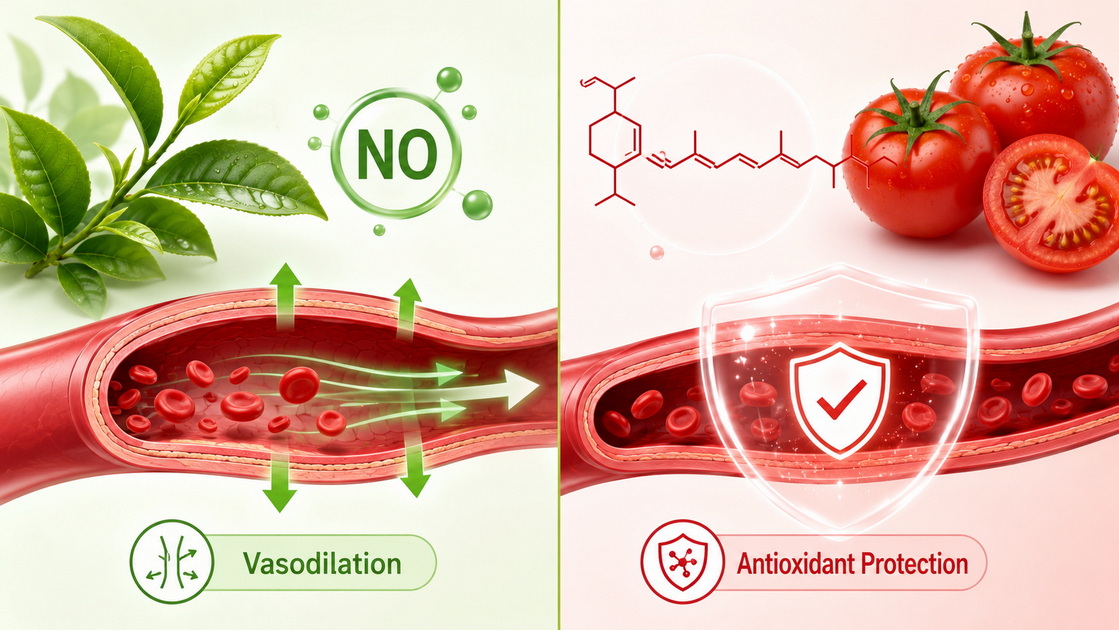
From a formulation and marketing standpoint:
- Green tea extract is the primary product when your positioning centers on vasodilation, NO signalling, and acute endothelial responsiveness.
- Lycopene serves as a comparator and complementary co‑star, reinforcing vascular integrity, oxidative stress protection, and stroke risk narratives, especially in Mediterranean‑style or tomato‑based formulations. [pubmed.ncbi.nlm.nih]
Practical Formulation Strategy – When to Lead with Green Tea vs. Lycopene
Use‑Case Scenarios From an Industry Expert Lens
Lead with green tea extract when:
- You need fast, measurable vasodilation endpoints (e.g., FMD, pulse wave velocity) in short‑term studies.
- Your target audience includes consumers focused on blood pressure, circulation, or exercise performance, where NO‑mediated blood flow is central. [scirp]
- You are developing high‑value capsules, powders, or beverages where standardized EGCG content and tea‑based storytelling resonate with a "science‑backed" and "traditional" dual narrative. [nature]
Prioritize lycopene or tomato complexes when:
- Your product concept aligns with Mediterranean diet, "food as medicine," or culinary‑driven heart health stories. [pmc.ncbi.nlm.nih]
- You are building long‑term vascular support formulas where oxidative stress reduction, stroke risk, and endothelial resilience are central. [pubmed.ncbi.nlm.nih]
- You want synergy with other carotenoids, phytosterols, or omega‑3s for broad cardiometabolic protection rather than acute vasodilation. [pubs.rsc]
For Botaniex customers, a high‑performing vascular product often combines green tea extract (for NO‑driven vasodilation) with lycopene (for endothelial antioxidant support), backed by structured dosing and biomarker endpoints.
Step‑by‑Step Formulation Blueprint for a Vasodilation‑Focused Product
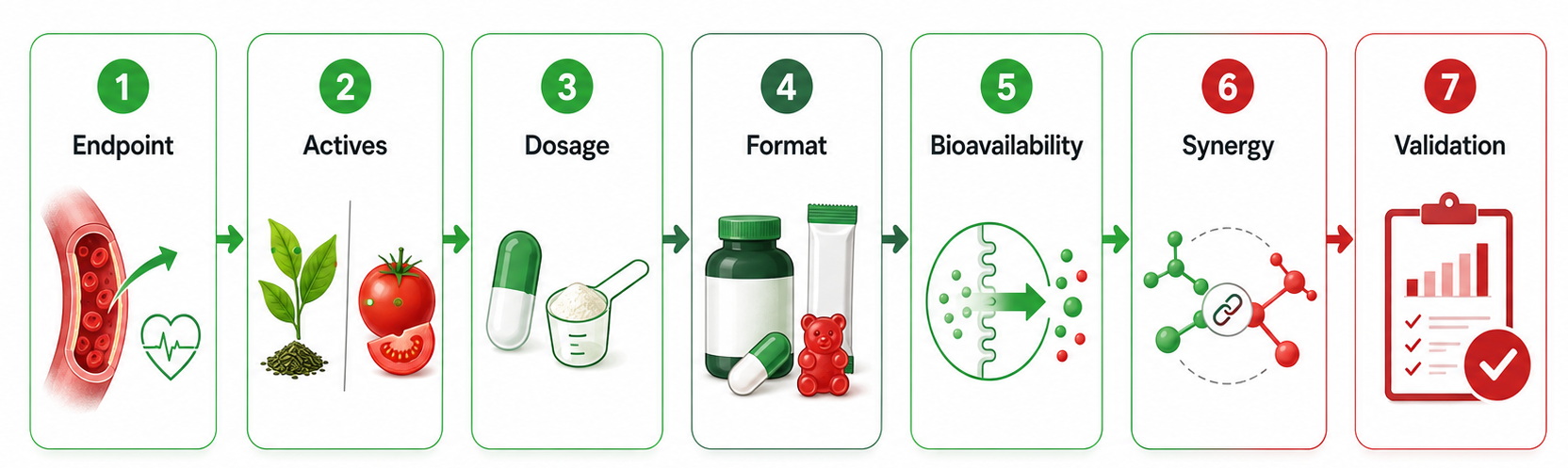
7‑Step Development Framework (Industry Perspective)
1. Define the clinical endpoint.
Decide whether you will prioritize FMD, blood pressure, or composite cardiovascular risk scores; this shapes your ratio of green tea extract to lycopene. [cebm.ox.ac]
2. Select evidence‑aligned dosages.
- Green tea extract: target ~150–300 mg EGCG equivalents per daily serving, ensuring safety and compliance with regional guidelines. [pmc.ncbi.nlm.nih]
- Lycopene: aim for 5–30 mg lycopene per day, reflecting typical doses shown to benefit blood pressure and vascular markers. [pmc.ncbi.nlm.nih]
3. Choose delivery format.
- Capsules or tablets for concentrated vasodilation formulas.
- Functional beverages or shots for fast perception of blood flow and performance support.
- Tomato‑based or tea‑infused functional foods for Mediterranean lifestyle positioning. [botaniex]
4. Optimize bioavailability.
- Use standardized green tea extract with controlled caffeine, if any, and consider pairing with vitamin C or amino acids to support catechin stability. [pubmed.ncbi.nlm.nih]
- Deliver lycopene with appropriate lipid matrices (oils, emulsions) to enhance absorption given its lipophilic nature. [sciencedirect]
5. Design synergy.
Combine green tea extract with lycopene plus supportive nutrients (e.g., L‑arginine, magnesium, vitamin K2) for multi‑pathway endothelial benefits, while respecting local regulatory limits. [cebm.ox.ac]
6. Plan marketing and storytelling.
Anchor your primary claim in vasodilation & blood flow support, then ladder secondary claims to "endothelial protection," "stroke risk reduction," and "Mediterranean‑inspired heart health." [tandfonline]
7. Validate with structured data.
Design pilot studies with FMD, blood pressure, and oxidative stress biomarkers (MDA, oxidized LDL) to generate your own brand‑level E‑E‑A‑T data, strengthening claims and differentiation. [sciencedirect]
Action‑Oriented Conclusion & CTA
From both personal and industry expert perspectives, if your goal is to optimize vasodilation and blood flow, green tea extract should be the primary driver, supported by mechanistic and clinical data on NO‑mediated vasorelaxation and improved FMD. Lycopene adds meaningful value as a secondary, complementary ingredient, fortifying endothelial health and reducing oxidative stress and cardiovascular risk over the long term. [ahajournals]
If you are evaluating ingredients for your next vascular support product, consider partnering with Botaniex to design a customized green tea–lycopene formulation aligned with your target market, regulatory environment, and desired clinical endpoints, and request a technical dossier with standardized specifications and proposed study designs. [botaniex]
FAQs
Q1. Is green tea extract safe at vasodilation‑effective doses?
Most human data suggest standardized green tea extracts in the range of ~200 mg EGCG per day are generally well tolerated, with modest blood pressure benefits, provided total catechin intake and hepatic safety are monitored and regional guidelines respected. [pmc.ncbi.nlm.nih]
Q2. Can lycopene replace green tea extract for blood flow support?
Lycopene can improve endothelial function markers (FMD) and lower systolic blood pressure in some studies, but it lacks the rapid NO‑centred vasodilation evidence seen with green tea catechins; it is better used as a complementary antioxidant and endothelial support ingredient. [sciencedirect]
Q3. What consumer segments respond best to a green tea–lycopene combo?
Data support use in adults with elevated cardiometabolic risk, those concerned about blood pressure and endothelial function, and consumers seeking Mediterranean‑style, food‑based cardiovascular protection with added tea‑based performance benefits. [pmc.ncbi.nlm.nih]
Q4. How long should supplementation continue to see endothelial benefits?
Trials indicate improvements in FMD and vascular responsiveness typically emerge over several weeks—often in the 4–12‑week range for both green tea and lycopene interventions—making sustained use critical to perceived benefits. [pubmed.ncbi.nlm.nih]
Q5. Are there formulation caveats, such as interactions with milk or food matrices?
Some findings suggest that adding milk to tea may blunt catechin‑mediated vasodilation via KCNQ5 activation, while lycopene absorption is enhanced in lipid‑rich matrices, underscoring the need to design delivery formats carefully. [medschool.uci]
References
1. Botaniex – High‑quality botanical extracts and herbal formulations for health food, functional beverage, cosmetics and pharmaceuticals. [botaniex]
2. Research‑backed botanical extracts from professional China supplier – Botaniex. [botaniextract]
3. Botaniex HACCP certification announcement, emphasizing food safety and quality for natural ingredients. [newswire]
4. Murase et al. *Green Tea Reduces LDL Oxidability and Improves Vascular Function*. Journal of the American College of Nutrition. [pubmed.ncbi.nlm.nih]
5. Lorenz et al. *Green and black tea are equally potent stimuli of NO production and vasodilation*. British Journal of Nutrition. [pubmed.ncbi.nlm.nih]
6. Bhattarai et al. *Green tea catechins and cardiovascular health: an update*. [pubmed.ncbi.nlm.nih]
7. Schini‑Kerth et al. *EGCG activates eNOS and leads to endothelial‑dependent vasorelaxation*. Journal of Biological Chemistry. [pubmed.ncbi.nlm.nih]
8. Abbott et al. *KCNQ5 potassium channel activation underlies vasodilation by tea*. Science Advances / UCI summary. [pmc.ncbi.nlm.nih]
9. Oxford Centre for Evidence‑Based Medicine – Green tea and blood pressure effects. [cebm.ox.ac]
10. Chen et al. *Cardioprotective effects of tea and its catechins*. [scirp]
11. Mahmood et al. *Lycopene and vascular health*. Nutrients. [pmc.ncbi.nlm.nih]
12. Li et al. *Lycopene and tomato and risk of cardiovascular diseases: systematic review and meta‑analysis*. [pubmed.ncbi.nlm.nih]
13. Li et al. *Lycopene and risk of cardiovascular diseases: meta‑analysis of observational studies*. [pubmed.ncbi.nlm.nih]
14. GRADE assessment systematic review and meta‑analysis on lycopene and cardiovascular risk factors. [pubmed.ncbi.nlm.nih]
15. Tomato and lycopene supplementation and cardiovascular risk factors: systematic review and meta‑analysis. [sciencedirect]
16. Oral lycopene supplementation and improved endothelial function in CVD patients (Ateronon study). [ahajournals]
17. Recent trial on lycopene intake and improved FMD at 4–12 weeks. [pmc.ncbi.nlm.nih]
18. Umbrella review on tomato‑derived lycopene and cardiovascular risk factors. [pubs.rsc]
19. Narrative reviews linking regular tea consumption with improved cardiovascular regulation. [pmc.ncbi.nlm.nih]