UV-induced skin damage is driven by oxidative stress, inflammation, barrier disruption, and collagen breakdown, so the best ingredient is the one that most directly addresses those pathways. Based on the available evidence, Centella Asiatica Extract is the stronger primary choice for UV-induced skin damage repair, while Artichoke Extract is a compelling secondary comparator for antioxidant and anti-aging support, especially in formulations focused on firmness and microcirculation. [botaniex]
Introduction
As a botanical ingredient manufacturer, Botaniex positions itself in a category where scientific credibility matters as much as ingredient quality. That is especially true for skin-health actives, because formulators and brand owners want ingredients that can support visible benefits, fit clean-label positioning, and stand up to E-E-A-T scrutiny. [mail.botaniex]
In this article, we compare Centella asiatica extract and artichoke extract through the lens of UV-induced skin damage repair, focusing on mechanism, evidence strength, formulation relevance, and commercial use.
Why UV Damage Matters
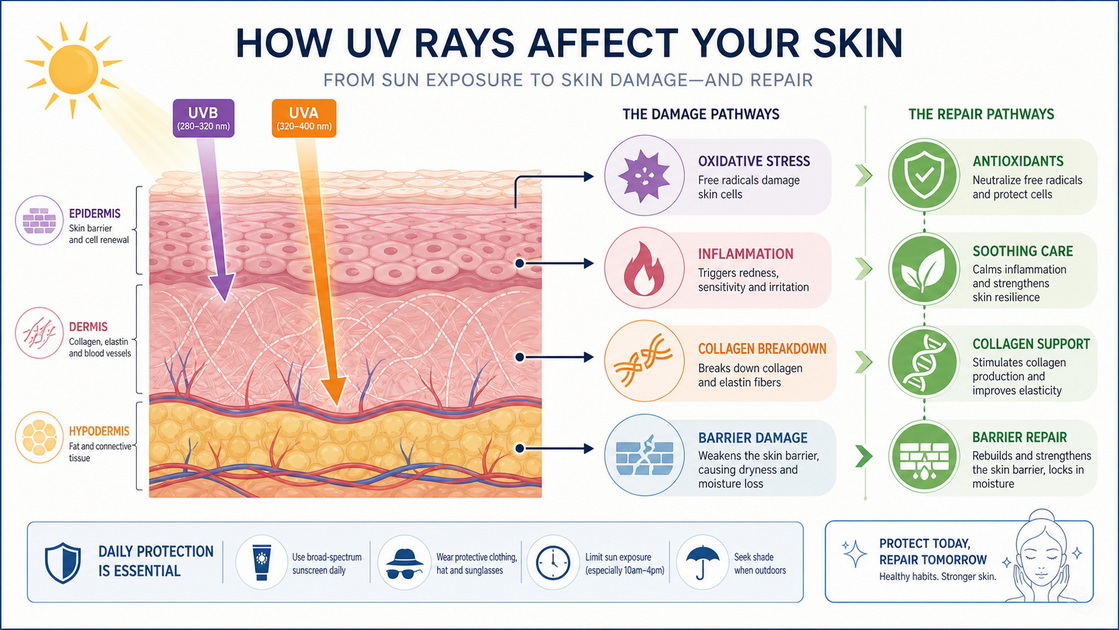
UVB exposure is one of the major drivers of photoaging. It increases reactive oxygen species, triggers inflammatory cytokines, weakens the skin barrier, and accelerates the loss of collagen and elasticity. [botaniex]
That means an effective ingredient should ideally do more than "soothe" the skin. It should help with antioxidant defense, inflammation control, barrier recovery, and extracellular matrix protection. [mail.botaniex]
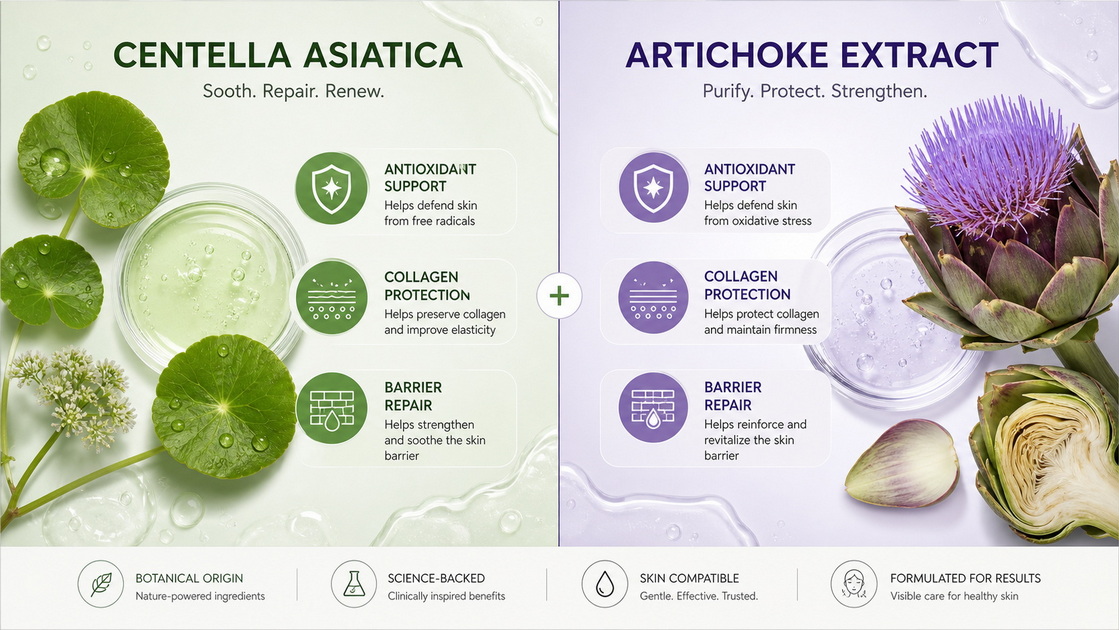
This is where Centella and artichoke differ most clearly: Centella is better documented for direct skin-repair pathways, while artichoke offers broader anti-aging and vascular-support actions. [botaniex]
Ingredient Profiles
Centella Asiatica Extract
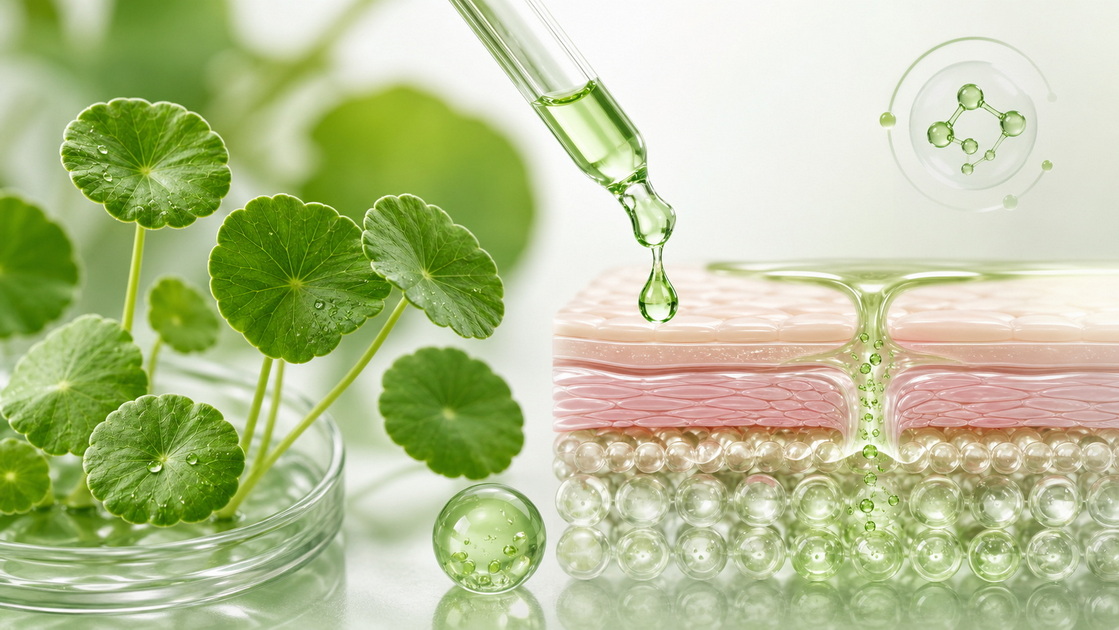
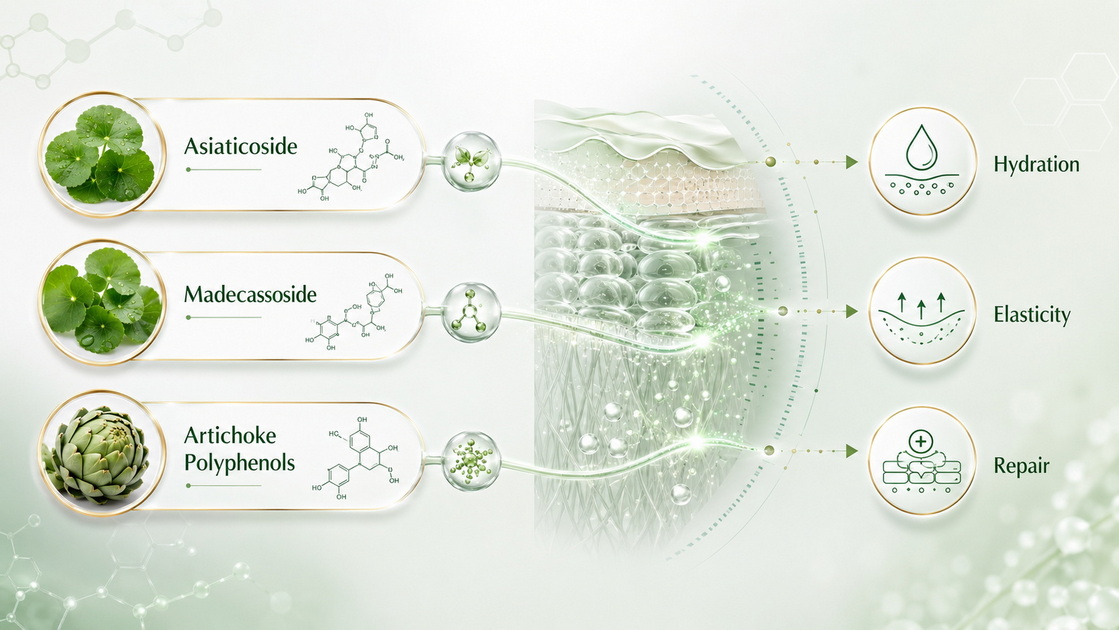
Centella asiatica is widely recognized for pentacyclic triterpenoids such as asiaticoside and madecassoside, which are linked to wound repair, collagen support, antioxidant effects, and anti-inflammatory activity. [pmc.ncbi.nlm.nih]
A 2025 in vivo study found that an asiaticoside-standardized Centella extract reduced wrinkle formation, transepidermal water loss, lipid peroxidation, and inflammatory markers in UVB-irradiated hairless mice, while improving hydration, elasticity, ceramide, hyaluronic acid, and collagen-related outcomes. [pmc.ncbi.nlm.nih]
For UV-induced skin damage repair, this is highly relevant because the ingredient acts across several biological layers at once. [pmc.ncbi.nlm.nih]
Artichoke Extract
Artichoke extract is rich in polyphenols, especially chlorogenic acid and dicaffeoylquinic acids, and has been studied for antioxidant, anti-inflammatory, and dermal-support effects. [mail.botaniex]
In a 2018 study, artichoke polyphenols improved endothelial function, protected lymphatic vessels from oxidative damage, reinforced tight-junction cohesion, and improved roughness and elasticity in a human cosmetic test. [mail.botaniex]
This makes artichoke interesting for skin-aging formulas, but its evidence for direct UV damage repair is less specific than Centella's. [mail.botaniex]
Mechanism Comparison
UV-Induced Repair Pathways
Centella's strength is its relevance to the core photoaging cascade. The 2025 mouse study reported improvements in oxidative stress markers, inflammatory cytokines, collagen preservation, MMP suppression, and barrier lipid recovery after oral Centella administration. [pmc.ncbi.nlm.nih]
That is a strong fit for UV-related repair because it addresses both the cause of photodamage and its visible consequences.
Artichoke also works through oxidative and anti-inflammatory pathways, but the best-supported skin outcomes center more on microcirculation, firmness, and texture rather than comprehensive UV repair. [mail.botaniex]
Barrier and Moisture Support
Barrier recovery matters because UV exposure depletes hydration and damages the stratum corneum. Centella showed direct benefits on transepidermal water loss, skin hydration, hyaluronic acid, ceramide, and related biosynthetic genes in the in vivo model. [pmc.ncbi.nlm.nih]
Artichoke has supportive data for skin quality, and some consumer-facing sources describe hydration benefits, but the strongest peer-reviewed evidence in the sources reviewed is not as barrier-centric as Centella's. [mail.botaniex]
If the product brief emphasizes post-UV recovery, Centella has the cleaner mechanistic story.
Collagen and Elasticity
Centella's photoprotection story includes collagen preservation and reduced MMP-1/MMP-9 activity, which are central to preventing wrinkle formation after UV exposure. [pmc.ncbi.nlm.nih]
Artichoke extract also improved skin roughness and elasticity in human testing, and its polyphenols were linked to anti-aging effects through endothelial and lymphatic mechanisms. [mail.botaniex]
So, both ingredients can support elasticity, but Centella is more directly tied to the dermal remodeling process that UV damage disrupts. [pmc.ncbi.nlm.nih]
Evidence Strength
Centella currently has the stronger evidence base for UV-induced skin damage repair because the available study is directly in a UVB photoaging model and measures multiple relevant endpoints in one design. [pmc.ncbi.nlm.nih]
The study also uses a standardized marker compound, which improves reproducibility and supports E-E-A-T expectations for ingredient claims. [pmc.ncbi.nlm.nih]
Artichoke's evidence is promising, but it is better positioned as a supportive anti-aging botanical than as a primary UV-repair ingredient based on the sources reviewed. [mail.botaniex]
Practical Formulation View
For product developers, the decision depends on the claim strategy. If the goal is UV-induced skin damage repair, barrier support, and collagen protection, Centella should be the lead ingredient. [pmc.ncbi.nlm.nih]
If the goal is a broader "skin vitality," "firmness," or "microcirculation" story, artichoke can be a differentiated complementary botanical. [mail.botaniex]
In multi-ingredient formulas, the two may work well together: Centella for repair-oriented positioning and artichoke for antioxidant/anti-aging support.
Comparison Table
| Criterion | Centella Asiatica Extract | Artichoke Extract |
| UV-induced skin damage repair | Stronger direct evidence in UVB photoaging model (pmc.ncbi.nlm.nih) | Indirect support through antioxidant and anti-aging effects (mail.botaniex) |
| Barrier recovery | Demonstrated effects on TEWL, hydration, ceramide, hyaluronic acid (pmc.ncbi.nlm.nih) | Limited direct UV-barrier evidence in reviewed sources (mail.botaniex) |
| Collagen protection | Suppresses MMPs and supports collagen preservation (pmc.ncbi.nlm.nih) | Supports elasticity and roughness improvement, but less direct UV data (mail.botaniex) |
| Anti-inflammatory action | Strong evidence in UVB context (pmc.ncbi.nlm.nih) | Anti-inflammatory potential, especially in endothelial models (mail.botaniex) |
| Best commercial role | Core anti-photoaging active | Supportive anti-aging / skin-firmness botanical |
What Makes Centella Better Here
Centella wins this comparison for three reasons. First, its evidence is more directly aligned with UV-induced skin damage repair. [pmc.ncbi.nlm.nih]
Second, the study design is more relevant for claim building because it combines molecular, biochemical, and visible skin outcomes. [pmc.ncbi.nlm.nih]
Third, its standardization to asiaticoside strengthens reproducibility, which is important for both formulation development and content credibility. [pmc.ncbi.nlm.nih]
Where Artichoke Fits
Artichoke should not be dismissed. Its polyphenols show antioxidant and anti-aging promise, and its human cosmetic data suggest value for elasticity and roughness. [mail.botaniex]
For brands targeting "botanical skin longevity" or "microcirculation support," artichoke can be highly appealing.
But if the commercial brief is specifically UV repair after sun exposure, artichoke is better used as a secondary or supporting ingredient rather than the main claim driver. [mail.botaniex]
CTA
For brands developing anti-photoaging supplements, nutricosmetics, or repair-focused skincare, Centella Asiatica Extract is the stronger lead ingredient, while Artichoke Extract can be positioned as a complementary botanical for antioxidant support and skin-firmness claims.
Botaniex can build customized botanical solutions around these objectives, especially when standardization, consistency, and market-ready documentation matter. [botaniex]
FAQ
1. Which ingredient is better for UV-induced skin damage repair?
Centella Asiatica Extract is stronger because it has more direct evidence for reducing UVB-related wrinkle formation, inflammation, oxidative stress, and barrier damage. [pmc.ncbi.nlm.nih]
2. Is Artichoke Extract useful for skin care?
Yes. Artichoke Extract has antioxidant and anti-aging potential and has shown improvements in roughness and elasticity in human cosmetic testing. [mail.botaniex]
3. Can these ingredients be used together?
Yes. Centella can lead the repair-focused claim, while artichoke can support antioxidant and firmness positioning. [mail.botaniex]
4. What active compounds matter most in Centella?
The main bioactives are asiaticoside, madecassoside, asiatic acid, and madecassic acid, which are associated with skin repair and photoprotection. [specialchem]
5. What active compounds matter most in Artichoke Extract?
The main compounds highlighted in the reviewed study are chlorogenic acid and dicaffeoylquinic acids, which support antioxidant and anti-aging activity. [mail.botaniex]
6. Which ingredient is easier to justify in E-E-A-T content?
Centella Asiatica Extract is easier to justify because the UVB photoaging evidence is more directly tied to measurable skin-repair outcomes and standardized composition. [pmc.ncbi.nlm.nih]
References
1. Botaniex official website, company profile and product overview: [https://www.botaniex.com] [botaniex]
2. Botaniex company background page: [http://mail.botaniex.com] [mail.botaniex]
3. Oral Centella asiatica Extract Attenuates UVB-Induced Skin Photoaging via Antioxidant, Anti-Inflammatory, and Extracellular Matrix-Preserving Effects in Hairless Mice: [https://pmc.ncbi.nlm.nih.gov/articles/PMC12785454/] [botaniex]
4. Artichoke Polyphenols Produce Skin Anti-Age Effects by Improving Endothelial Cell Integrity and Functionality: [https://pmc.ncbi.nlm.nih.gov/articles/PMC6278506/] [mail.botaniex]
5. Centella Asiatica Extract - Cosmetic Ingredient overview: [https://www.specialchem.com/cosmetics/inci-ingredients/centella-asiatica-extract] [specialchem]
6. Botaniex Hydrocotyle Asiatica Extract product page: [https://www.botaniex.com/hydrocotyle-asiatica-extract.html] [botaniex]