Content Menu
● Introduction: Why Compare Mulberry vs. Mango Leaf Extract for Respiratory Histamine Management?
● Understanding Respiratory Histamine Management
● Mulberry Leaf Extract: Primary Botanical for Airway and Histamine Support
>> What Is Mulberry Leaf Extract?
>> Mechanisms Relevant to Respiratory Histamine Management
>> Evidence in Respiratory and Metabolic Contexts
● Mango Leaf Extract: Secondary Botanical for Anti-Allergic and Immunomodulatory Synergy
>> What Is Mango Leaf Extract?
>> Anti-Allergic Mechanisms and Immunomodulation
● Side-by-Side Comparison: Mulberry vs. Mango Leaf Extract
>> Comparative Profile for Respiratory Histamine Management
● Synergistic Formulation Strategy for Botaniex
>> Designing a Dual-Botanical Respiratory Support Concept
>> Practical Development Steps (Expert View)
● Safety, Regulatory, and Quality Considerations
>> Safety Profiles and Responsible Use
>> Quality and Standardization as Backbone
● User-Centric Application: Who Might Consider These Extracts?
● CTA: Partner with Botaniex for Evidence-Based Respiratory Botanicals
● FAQ: Mulberry Leaf Extract vs. Mango Leaf Extract
● References
Mulberry leaf extract and mango leaf extract both offer promising natural support for respiratory histamine management, but mulberry leaf extract generally provides a more targeted, multi-pathway approach for airway inflammation and oxidative stress, while mango leaf extract adds complementary anti-allergic and immunomodulatory benefits. [academia]
Introduction: Why Compare Mulberry vs. Mango Leaf Extract for Respiratory Histamine Management?
Respiratory histamine management is increasingly important for consumers struggling with seasonal allergies, pollution-related airway irritation, and chronic respiratory conditions like asthma or COPD. Histamine release in the airway mucosa can trigger bronchoconstriction, mucus overproduction, and persistent cough, which is why more brands are exploring botanical strategies to modulate histamine and related inflammatory pathways. [pubmed.ncbi.nlm.nih]
Botaniex, as a specialist in high-quality botanical extracts and functional herbal formulations for dietary supplements and functional foods, is well-positioned to develop evidence-informed combinations of Mulberry Leaf Extract (primary) and Mango Leaf Extract (secondary) that support respiratory comfort and histamine balance in a science-backed, market-ready format. [botaniex]
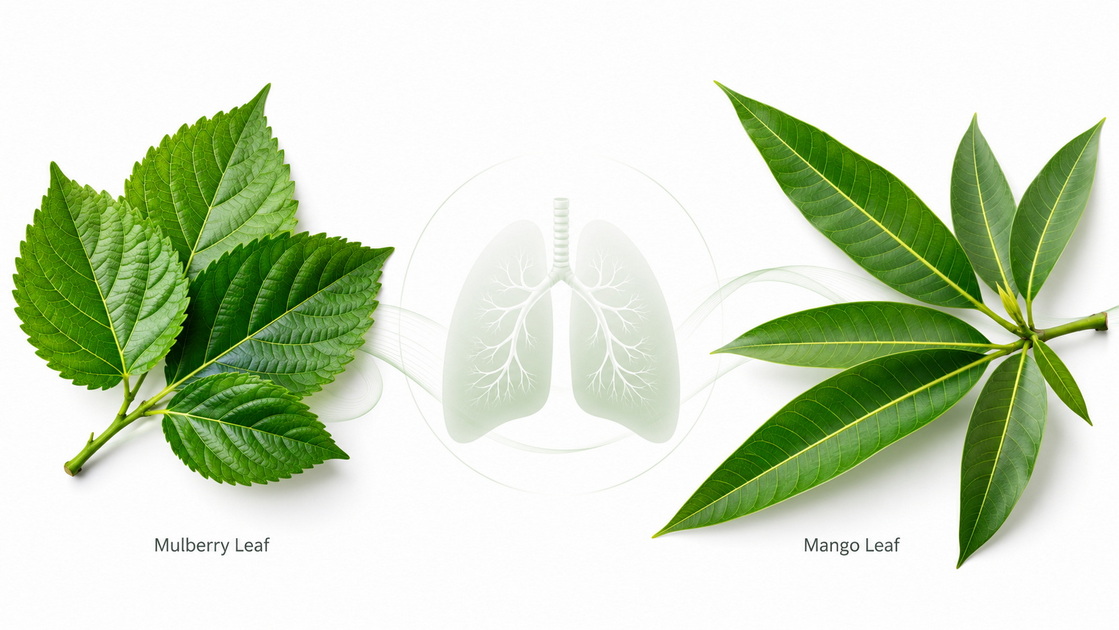
Understanding Respiratory Histamine Management
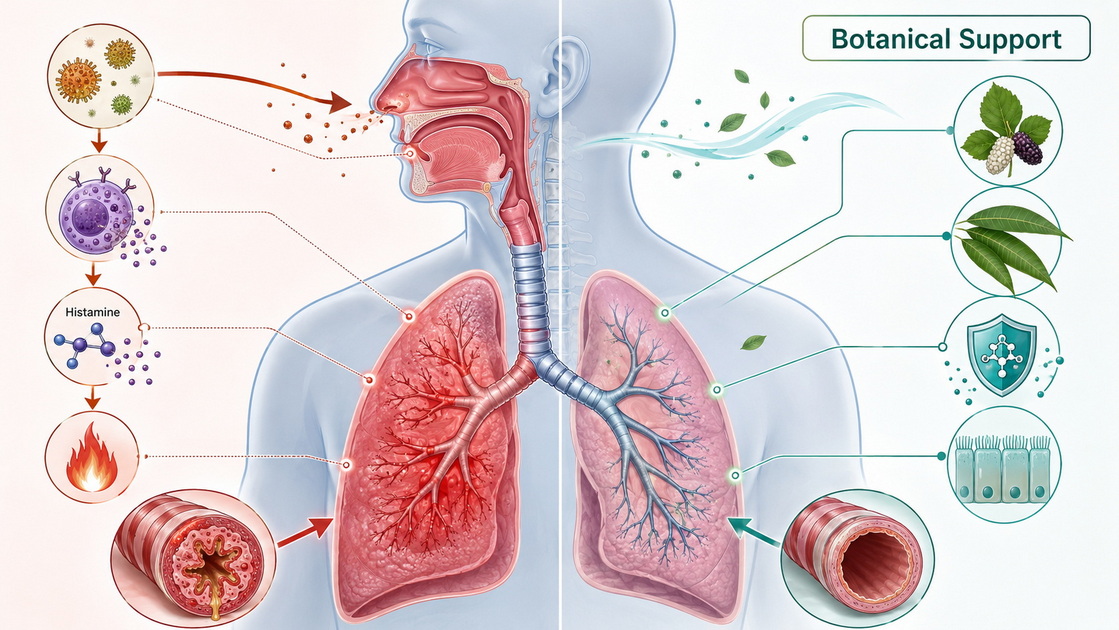
Histamine is a bioactive amine released mainly by mast cells and basophils in response to allergens, irritants, and some infections in the respiratory tract. In the airways, excessive histamine contributes to: [academia]
- Bronchoconstriction and shortness of breath.
- Increased vascular permeability and mucosal edema.
- Hypersecretion of mucus and chronic cough. [pubmed.ncbi.nlm.nih]
Modern respiratory support strategies often combine H1 receptor–targeting drugs with lifestyle and nutritional interventions that address the underlying drivers of histamine sensitization—chronic inflammation, oxidative stress, and immune imbalance. This is where mulberry leaf and mango leaf extracts can provide synergistic support as adjuncts to conventional management under professional guidance. [nccih.nih]
Mulberry Leaf Extract: Primary Botanical for Airway and Histamine Support
What Is Mulberry Leaf Extract?
Mulberry leaf (Morus alba) has a long history in traditional Asian medicine for managing cough, sore throat, fever, and bronchitis, as well as metabolic and cardiovascular issues. Modern phytochemical analysis shows mulberry leaves are rich in flavonoids, phenolic acids, and unique compounds such as rutin, chlorogenic acid, quercetin derivatives, and DNJ (1-deoxynojirimycin) with strong antioxidant and anti-inflammatory properties. [nccih.nih]
These bioactive components position mulberry leaf as a multifunctional ingredient in respiratory formulations aimed at soothing irritated airways and modulating histamine-related responses. [academia]
Mechanisms Relevant to Respiratory Histamine Management
From an expert perspective, mulberry leaf extract supports respiratory histamine management through several complementary mechanisms:
- Anti-inflammatory modulation of arachidonic acid (AA) pathways: A recent experimental study showed mulberry leaf water extract (MLWE) downregulated COX-2 and 5/12/15-lipoxygenase (LOX) expression in lung tissue, reducing AA-derived inflammatory eicosanoids linked to COPD-like airway inflammation. [pubmed.ncbi.nlm.nih]
- Reduction of pro-inflammatory cytokines such as IL-6, IL-1β, and TNF-α, while increasing anti-inflammatory IL-10, which can indirectly lower histamine sensitization and mast-cell activation. [pubmed.ncbi.nlm.nih]
- Potent antioxidant activity via increased SOD, CAT, and GSH-Px and reduced MDA, limiting oxidative stress that amplifies histamine-driven tissue damage. [academia]
Although not a direct H1 antihistamine, mulberry leaf's broad anti-inflammatory and antioxidant profile helps normalize the inflammatory milieu that typically makes the respiratory mucosa more reactive to histamine and environmental triggers. [academia]
Evidence in Respiratory and Metabolic Contexts
In preclinical respiratory models, mulberry leaf extract improved pulmonary function parameters and reduced inflammatory cell infiltration when used alongside aminophylline, outperforming high-dose extract alone. This suggests a potential adjunctive role in integrative respiratory care under professional supervision. [pubmed.ncbi.nlm.nih]
Clinical and mechanistic reviews also highlight mulberry leaf's broader benefits on metabolic dysfunction, cardiometabolic risk, and oxidative stress, all of which indirectly influence respiratory resilience and histamine-related symptom severity. [nccih.nih]
- From a formulation strategist's viewpoint, mulberry leaf offers a primary platform ingredient for respiratory histamine management because it addresses inflammation, oxidative stress, and metabolic comorbidities in one botanical. [nccih.nih]
Mango Leaf Extract: Secondary Botanical for Anti-Allergic and Immunomodulatory Synergy
What Is Mango Leaf Extract?
Mango leaf (from Mangifera indica) contains distinctive polyphenols, most notably mangiferin, along with flavonoids such as quercetin, which are responsible for its antioxidant and anti-inflammatory actions. Reviews of mango leaf extract highlight anti-inflammatory, antioxidant, and gastroprotective effects, as well as potential metabolic benefits that complement respiratory-focused interventions. [annexpublishers]
For respiratory histamine management, the key interest lies in mangiferin's impact on allergic airway responses and immune regulation. [sciencedirect]
Anti-Allergic Mechanisms and Immunomodulation
A notable experimental study reported that mangiferin suppressed allergic asthma symptoms by:
- Decreasing Th9 and Th17 responses, which are associated with pro-allergic and pro-inflammatory signaling in the airways. [sciencedirect]
- Increasing regulatory T cell (Treg) responses, helping rebalance immune activity and reduce exaggerated histamine-mediated reactions. [sciencedirect]
In addition, mango leaf extract's flavonoids, including quercetin, have been associated with mast-cell stabilizing and anti-allergic effects, potentially moderating histamine release in response to allergens. [patents.google]
- For product developers, mango leaf extract functions as a secondary, synergistic component that focuses on immune balance and allergic response, complementing mulberry leaf's strong anti-inflammatory and antioxidant core. [annexpublishers]
Side-by-Side Comparison: Mulberry vs. Mango Leaf Extract
Comparative Profile for Respiratory Histamine Management
| Aspect | Mulberry Leaf Extract | Mango Leaf Extract |
| Primary bioactives | Flavonoids, phenolic acids, DNJ; diverse antioxidant and anti-inflammatory compounds academia | Mangiferin, quercetin, other flavonoids with strong antioxidant/anti-allergic activity annexpublishers |
| Core respiratory role | Anti-inflammatory modulation of AA pathways, reduced cytokines, enhanced antioxidant enzymes for airway protection pubmed.ncbi.nlm.nih | Immunomodulation of Th9/Th17/Treg pathways; mast-cell stabilization and anti-allergic support annexpublishers |
| Histamine-related impact | Indirect histamine control via lowering inflammatory sensitization and oxidative stress academia | More direct relief of allergic asthma–type responses and histamine-driven symptoms through immune balance annexpublishers |
| Evidence base | Preclinical respiratory models, clinical/metabolic data, safety reviews from NCCIH and others pubmed.ncbi.nlm.nih | Preclinical allergic asthma studies and mechanistic reviews on mangiferin and mango leaf benefits annexpublishers |
| Formulation positioning | Primary ingredient for respiratory histamine management and airway resilience academia | Secondary comparator / synergist to enhance anti-allergic, immunomodulatory effects annexpublishers |
From a technical marketing angle, positioning Mulberry Leaf Extract as the hero ingredient and Mango Leaf Extract as a synergistic co-star helps align with both scientific evidence and consumer-friendly storytelling. [annexpublishers]
Synergistic Formulation Strategy for Botaniex
Designing a Dual-Botanical Respiratory Support Concept
For Botaniex and its global B2B customers, a mulberry–mango leaf concept can be framed as "Synergistic Respiratory Histamine Management Blend" with three key pillars:
1. Inflammation and oxidative stress control (driven by mulberry leaf extract). [academia]
2. Immune and allergic response modulation (driven by mango leaf extract). [annexpublishers]
3. Metabolic and systemic resilience (supported by both botanicals' broader nutraceutical properties). [nccih.nih]
Practical Development Steps (Expert View)
From an industry expert standpoint, a typical development pathway might include:
1. Define target use-case and regulatory positioning (e.g., dietary supplement for adult respiratory wellness, no disease claims). [nccih.nih]
2. Standardize extracts based on key markers (e.g., total flavonoids for mulberry, mangiferin + quercetin for mango) to support reproducible efficacy and labeling transparency. [patents.google]
3. Conduct synergistic in vitro or ex vivo assays on mast-cell degranulation, oxidative markers, and cytokine profiles to substantiate the "synergistic support" narrative. [sciencedirect]
4. Integrate safety and interaction assessments, especially for consumers using antihistamines or asthma medications, aligned with NCCIH and dietary supplement regulatory guidance. [nccih.nih]
Botaniex's expertise in extraction technologies and formulation development provides a strong foundation for such evidence-informed, market-ready solutions. [botaniextract]
Safety, Regulatory, and Quality Considerations
Safety Profiles and Responsible Use
White mulberry leaf has been studied in human trials for up to 12 weeks without serious harmful effects, with mild digestive upset being the most commonly reported side effect. For mango leaf and mangiferin, safety assessments from available preclinical and nutraceutical literature suggest good tolerability, though large-scale clinical data remain limited. [annexpublishers]
Because both botanicals can influence metabolic markers and immune function, it is advisable for consumers—especially those with chronic respiratory or metabolic conditions—to consult healthcare professionals before long-term use. [annexpublishers]
Quality and Standardization as Backbone
Brands should emphasize:
- Traceable sourcing and GMP-level manufacturing for all mulberry and mango leaf extracts. [botaniex]
- Standardized active marker ranges on labels and technical datasheets, backed by internal and third-party analytical testing. [patents.google]
- Transparent communication of study types (preclinical vs. clinical), limitations, and appropriate use recommendations. [sciencedirect]
Botaniex's focus on scientific rigor and customized ingredient solutions aligns well with these best practices, strengthening perceived authority for both B2B buyers and end consumers. [botaniextract]
User-Centric Application: Who Might Consider These Extracts?
From a practical, user-centered standpoint, formulations featuring mulberry and mango leaf extracts may appeal to:
- Adults with seasonal allergic symptoms seeking botanical support for nasal and airway comfort alongside lifestyle and medical management. [sciencedirect]
- Urban, pollution-exposed populations interested in antioxidant and anti-inflammatory respiratory support. [pubmed.ncbi.nlm.nih]
- Health-conscious consumers looking for plant-based, science-informed adjuncts to conventional respiratory care. [annexpublishers]
Brands should clearly communicate that such products are not substitutes for prescribed medications, but may be integrated as part of a broader wellness strategy under professional guidance. [annexpublishers]

CTA: Partner with Botaniex for Evidence-Based Respiratory Botanicals
For brands, formulators, and buyers seeking to differentiate their respiratory wellness portfolios, Botaniex can provide standardized mulberry and mango leaf extracts, custom blends, and technical support grounded in current scientific evidence. [botaniex]
CTA example:
- Ready to develop a synergistic respiratory histamine management formula? Contact Botaniex's formulation team to explore customized mulberry–mango leaf solutions tailored to your market and regulatory needs. [botaniextract]
FAQ: Mulberry Leaf Extract vs. Mango Leaf Extract
1. Is mulberry leaf extract a direct antihistamine?
No. It does not act as a conventional H1 antihistamine, but it can help modulate inflammatory and oxidative pathways that indirectly influence histamine-related respiratory symptoms. [pubmed.ncbi.nlm.nih]
2. How does mango leaf extract support allergic respiratory conditions?
Mango leaf, via mangiferin, has been shown to decrease Th9 and Th17 responses and increase Treg activity, helping rebalance immune reactions typical of allergic asthma. [sciencedirect]
3. Can these extracts replace asthma or allergy medications?
No. They should be considered adjunctive botanical support and used in consultation with healthcare professionals, not as replacements for prescribed therapies. [sciencedirect]
4. What safety considerations apply to mulberry and mango leaf extracts?
Mulberry leaf appears safe for short-term use with minor digestive side effects, while mango leaf and mangiferin show good preclinical safety; however, people with chronic conditions should seek medical advice before use. [nccih.nih]
5. Why position mulberry leaf extract as the primary ingredient?
Mulberry offers broader, well-characterized anti-inflammatory and antioxidant respiratory support, making it a robust primary ingredient, while mango leaf adds focused anti-allergic synergy. [academia]
References
1. Botaniex. High-Quality Botanical Extracts and Functional Herbal Formulations. https://www.botaniex.com [botaniex]
2. Botaniex. Botaniex – Manufacturer of Botanical Extracts. https://www.botaniextract.com [botaniextract]
3. National Center for Complementary and Integrative Health (NCCIH). White Mulberry Leaf: Usefulness and Safety. https://www.nccih.nih.gov/health/white-mulberry-leaf [nccih.nih]
4. Zhang R et al. Mulberry leaf (Morus alba L.) influences mechanisms of action on metabolic diseases. Pharmacological Research. 2022. [academia]
5. PubMed. Mulberry leaf water extract improves arachidonic acid metabolic dysregulation in COPD models. https://pubmed.ncbi.nlm.nih.gov/41101074 [pubmed.ncbi.nlm.nih]
6. Annex Publishers. A Review on Antioxidant, Anti-Inflammatory and Gastroprotective Abilities of Mango Leaf Extract and Mangiferin. [annexpublishers]
7. ScienceDirect. Mangiferin suppresses allergic asthma symptoms by decreased Th9 and Th17 responses and increased Treg response. https://www.sciencedirect.com/science/article/abs/pii/S0161589019301592 [sciencedirect]
8. Google Patents. Method for extracting mangiferin and quercetin from mango leaves with assistance of cellulase. https://patents.google.com/patent/CN104530022A/en [patents.google]