Content Menu
● Understanding Liver Oxidative Stress
● Grape Seed Extract: Primary Engine Against Liver Oxidative Stress
● Grape Skin Extract: Resveratrol- and Anthocyanin-Driven Synergy
● Grape Seed vs. Grape Skin: Antioxidant Profile and Liver-Relevant Differences
>> Antioxidant and liver-relevant differences
● Synergistic Support: Combining Seed and Skin for Liver Formulations
● Expert Perspective: When to Lead With Grape Seed vs. Grape Skin
● Practical Formulation Considerations for B2B Buyers
● How Brands Can Position Liver Support Solutions
● How a Formulator Might Build a Synergistic Liver Oxidative Stress Blend
● Why Botaniex Is Well-Positioned in This Space
● FAQs: Grape Seed vs. Grape Skin for Liver Oxidative Stress
● References
Grape seed extract and grape skin extract both help counter liver oxidative stress, but they do so via slightly different polyphenol profiles and mechanisms, making them complementary tools for liver-focused formulations. For a liver-health ingredient strategy, grape seed extract typically serves as the primary antioxidant workhorse, while grape skin extract adds resveratrol- and anthocyanin-driven synergy, especially under metabolic or diet-induced stress. [econtent.hogrefe]
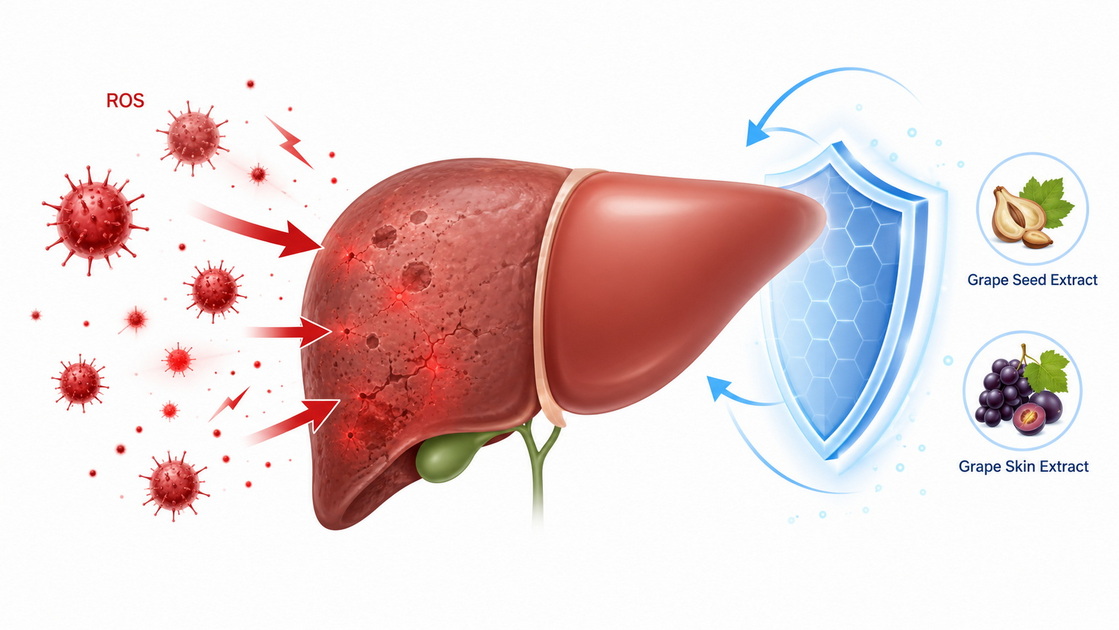
Understanding Liver Oxidative Stress
Liver oxidative stress occurs when reactive oxygen species (ROS) overwhelm the liver's antioxidant defenses, damaging lipids, proteins, and DNA. This imbalance underlies conditions such as non-alcoholic fatty liver disease (NAFLD), alcohol-related liver injury, drug-induced hepatotoxicity, and radiation- or toxin-induced damage. [pubmed.ncbi.nlm.nih]
From an industry perspective, this makes antioxidant-rich botanicals a strategic pillar in liver health supplements, functional beverages, and condition-specific nutrition formulations. Clinically, lowering oxidative stress is often associated with improved liver enzymes, better lipid handling, and enhanced quality of life in at-risk populations. [pubmed.ncbi.nlm.nih]
Grape Seed Extract: Primary Engine Against Liver Oxidative Stress
Grape seed extract (GSE) is naturally rich in proanthocyanidins, a class of oligomeric and polymeric flavan-3-ols with potent free radical scavenging activity. In in vitro antioxidant capacity tests, undigested grape seed extracts showed over 13 times higher DPPH antioxidant capacity than grape skin extracts, highlighting their power as primary anti-oxidative actives. [d-nb]
In a randomized clinical trial in patients with NAFLD, GSE supplementation (250 mg proanthocyanidins twice daily for 2 months) significantly reduced liver-related oxidative stress markers (e.g., malondialdehyde) and inflammatory mediators and increased endogenous antioxidant defenses (TAC, SOD, GPx) compared with placebo. Preclinical studies in bile duct ligation and radiation-induced liver injury models also show that GSE protects hepatic tissue by limiting lipid peroxidation, restoring antioxidant enzyme activities, and attenuating fibrosis. [article.imrpress]
Key mechanisms of GSE in liver support:
- Direct ROS scavenging: Proanthocyanidins neutralize free radicals and prevent lipid peroxidation in liver cell membranes. [pmc.ncbi.nlm.nih]
- Glutathione metabolism support: Grape seed proanthocyanidin extract improved hepatic glutathione ratios and overall antioxidant capacity in obese rodent models. [onlinelibrary.wiley]
- Anti-inflammatory modulation: Clinical and preclinical data show reduced inflammatory markers (e.g., hs-CRP, IL-6) and stabilized liver function tests with GSE supplementation. [onlinelibrary.wiley]
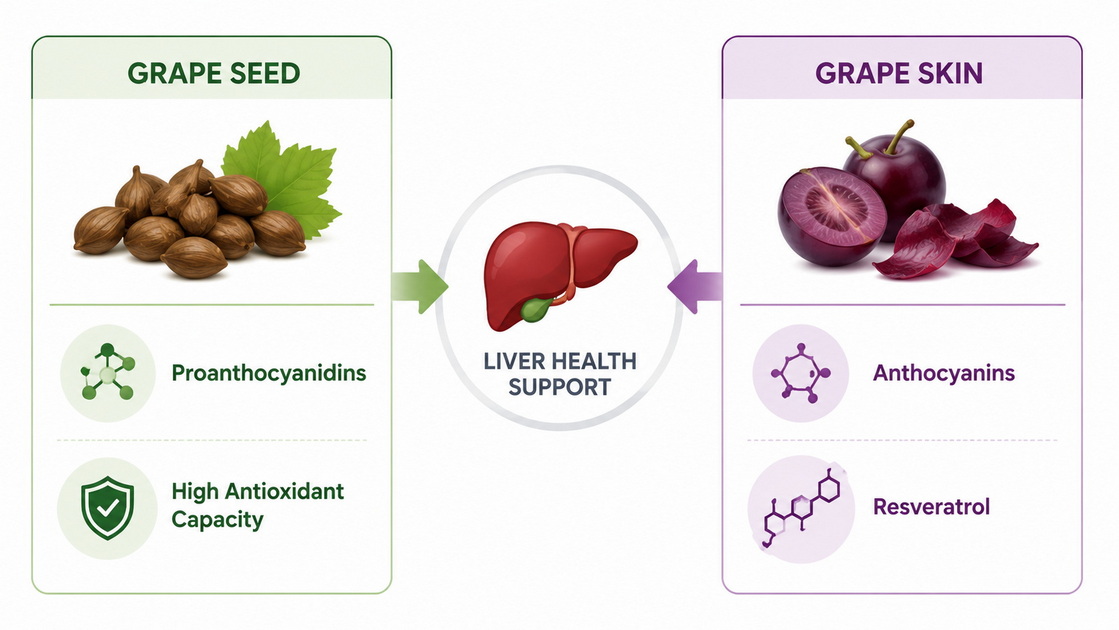
Grape Skin Extract: Resveratrol- and Anthocyanin-Driven Synergy
Grape skin extract is particularly rich in anthocyanins and resveratrol, which contribute not only antioxidant but also metabolic and signaling effects relevant to liver health. A study on purified anthocyanins from red grape skin showed enhanced serum total antioxidant capacity and protection against declines induced by oxidative stress in humans, indicating systemic antioxidant benefits. [pubmed.ncbi.nlm.nih]
In high-fat diet animal models of NAFLD, polyphenol-rich grape skin extracts improved liver steatosis, modulated lipid metabolism, and reduced oxidative stress through enhanced antioxidant levels and increased β-oxidation. Anthocyanins and related grape skin polyphenols have also demonstrated cytoprotective effects in intestinal and immune cells, supporting barrier function and anti-inflammatory responses that indirectly influence liver load. [onlinelibrary.wiley]
Key mechanisms of grape skin extract in liver support:
- Anthocyanin-rich antioxidant effect: Anthocyanins quench ROS, support endothelial and mitochondrial function, and contribute to systemic redox balance. [pdfs.semanticscholar]
- Resveratrol-mediated signaling: Grape skin polyphenols modulate lipid metabolism, mitochondrial function, and inflammatory pathways, contributing to improved steatosis and metabolic profiles in preclinical models. [pubmed.ncbi.nlm.nih]
- Metabolic and vascular benefits: By influencing lipid handling and vascular health, grape skin polyphenols help reduce upstream drivers of liver oxidative stress in metabolic syndrome contexts. [onlinelibrary.wiley]
Grape Seed vs. Grape Skin: Antioxidant Profile and Liver-Relevant Differences
From an R&D and formulation standpoint, the choice is not "either/or" but how to position each extract for specific liver-health use cases.
Antioxidant and liver-relevant differences
| Aspect | Grape Seed Extract | Grape Skin Extract |
| Dominant compounds | Proanthocyanidins (oligomeric/polymeric flavan-3-ols) (d-nb) | Anthocyanins, resveratrol, other flavonoids (pubmed.ncbi.nlm.nih) |
| In vitro antioxidant capacity | Seed extracts show ~13× higher DPPH capacity vs skin extracts before digestion. (d-nb) | Lower DPPH capacity vs seed but still robust antioxidant activity. (d-nb) |
| Evidence in NAFLD / steatosis | Human RCT in NAFLD: improved oxidative stress markers, TAC, antioxidant enzymes. (econtent.hogrefe) | High-fat diet models: improved steatosis, lipid metabolism, oxidative stress markers. (pubmed.ncbi.nlm.nih) |
| Liver oxidative damage models | Protects against radiation- and bile-duct-ligation-induced liver oxidative damage and fibrosis in rats. (pubmed.ncbi.nlm.nih) | Anthocyanin-rich skin extracts enhance systemic antioxidant capacity under oxidative challenge. (pdfs.semanticscholar) |
| Typical positioning | Primary liver antioxidant for oxidative stress, enzyme support, and fibrosis risk management. (econtent.hogrefe) | Synergistic metabolic and vascular support, targeting steatosis, lipid metabolism, and systemic oxidative load. (pubmed.ncbi.nlm.nih) |
From a formulation standpoint, this means grape seed extract is often the main driver of direct liver antioxidant support, while grape skin extract is an intelligent co-star for metabolic and systemic oxidative stress scenarios. [econtent.hogrefe]
Synergistic Support: Combining Seed and Skin for Liver Formulations
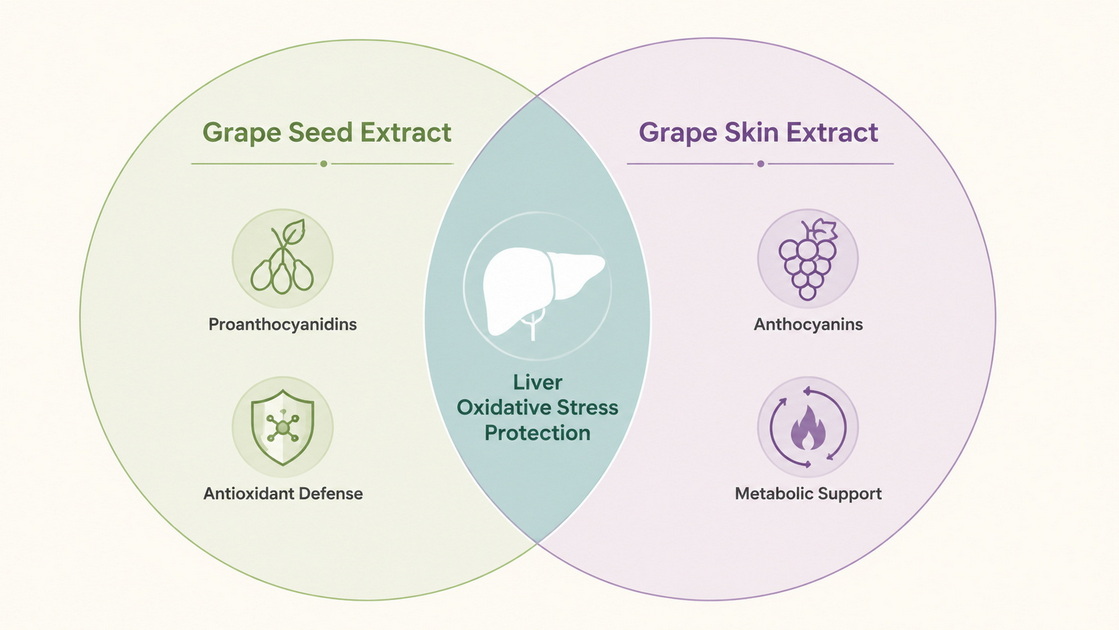
Some studies have already evaluated combined grape seed and skin extracts (GSSE), showing robust antioxidative properties and protective effects in liver-related models. In a high-fat diet model, GSSE provided preventive effects against liver lipotoxicity and steatosis, suggesting that combining seed and skin enhances resilience to diet-induced liver stress. [pubmed.ncbi.nlm.nih]
Mechanistically, the synergy comes from overlapping but distinct antioxidant pathways: seed proanthocyanidins excel at direct radical scavenging and glutathione-related protection, while skin anthocyanins and resveratrol influence lipid metabolism, mitochondrial function, and vascular health. For brand owners, this opens the door to positioning a comprehensive "grape matrix" liver support system, framed as a science-backed combination addressing both oxidative damage and its metabolic drivers. [onlinelibrary.wiley]
Expert Perspective: When to Lead With Grape Seed vs. Grape Skin
From a formulator and ingredient strategy point of view, the decision often starts with primary health positioning.
Lead with grape seed extract when:
- The core claim focuses on liver oxidative stress, antioxidant protection, or support during toxin, drug, or radiation exposure. [pubmed.ncbi.nlm.nih]
- The target consumer profile includes individuals with metabolic risk factors but already aware of liver enzyme issues or NAFLD diagnoses. [onlinelibrary.wiley]
- You need strong human clinical support around oxidative stress markers and quality of life outcomes in liver-related conditions. [article.imrpress]
Elevate grape skin extract when:
- The product concept integrates metabolic health, weight management, or high-fat-diet lifestyles, where steatosis and lipid dysregulation are key. [pubmed.ncbi.nlm.nih]
- You want to leverage resveratrol- and anthocyanin-driven storytelling, such as "red wine polyphenols without the alcohol." [pdfs.semanticscholar]
- The brand emphasizes holistic vascular and metabolic support as upstream drivers of liver wellness. [pmc.ncbi.nlm.nih]
For Botaniex, a pragmatic approach is to position grape seed extract as the primary, standardized core ingredient, and grape skin extract as a value-adding co-ingredient that strengthens differentiation and supports broader health narratives. [botaniex]
Practical Formulation Considerations for B2B Buyers
While exact specifications will depend on Botaniex's internal standards, B2B buyers typically evaluate several practical dimensions when choosing between grape seed and grape skin extracts.
Key considerations your buyers will care about:
1. Standardization and specifications
- Seed extracts are often standardized to total polyphenols or proanthocyanidins, which directly connects to oxidative stress claims. [d-nb]
- Skin extracts may be standardized to anthocyanins and/or resveratrol, supporting claims related to vascular and metabolic benefits. [onlinelibrary.wiley]
2. Dosage strategy
- Human NAFLD trial: 500 mg/day of GSE (as 250 mg twice daily) showed meaningful changes in oxidative stress markers over 2 months. [econtent.hogrefe]
- Anthocyanin and skin extract studies typically use doses that ensure sufficient systemic antioxidant effects, often combined in multi-ingredient formulas. [pdfs.semanticscholar]
3. Delivery formats and stability
- Seed extracts with high proanthocyanidin content suit capsules, tablets, and powders, and can be used in functional beverages with appropriate stabilization. [botaniextract]
- Skin extracts can contribute color and functional polyphenols but may require careful handling of color stability and pH in beverages and gummies. [airitilibrary]
4. Regulatory and claim language
- Most markets allow structure–function style language such as "helps protect cells from oxidative stress" or "supports antioxidant defenses," framed within local regulations. [onlinelibrary.wiley]
- Liver-specific claims should be aligned with local health authority guidance and supported by the combination of human and preclinical data available for each extract. [pubmed.ncbi.nlm.nih]
How Brands Can Position Liver Support Solutions
- "Liver Defense Antioxidant Complex"
- Core: Grape seed extract (primary antioxidant driver).
- Support: Grape skin extract plus other hepatoprotective botanicals.
- Narrative: Protects the liver's antioxidant shield in the face of modern lifestyle stressors.
- "Metabolic & Liver Harmony Formula"
- Core: Grape skin extract (anthocyanins, resveratrol) plus metabolic modulators.
- Support: Moderate dose of grape seed extract for direct antioxidant support.
- Narrative: Addresses metabolic stress and oxidative burden that converge on the liver.
For Botaniex's global customers, these concepts can be adapted across capsules, effervescent tablets, functional beverages, and stick packs, with seed and skin extracts scaled according to target market price points and regulatory constraints. [botaniex]
How a Formulator Might Build a Synergistic Liver Oxidative Stress Blend
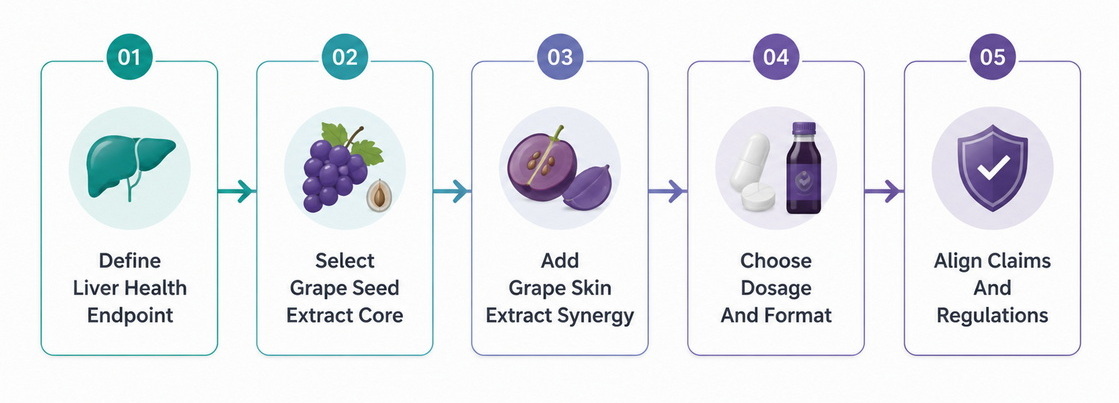
From a practitioner's perspective, the development process often follows a structured path:
1. Define the primary endpoint
- Is the priority reducing oxidative stress markers, supporting liver enzyme balance, or addressing fatty liver and steatosis? Clinical and preclinical data for GSE and grape skin can be mapped to these endpoints. [pubmed.ncbi.nlm.nih]
2. Select core actives and ratios
- Start with grape seed extract to ensure robust antioxidant activity, then layer grape skin extract to broaden metabolic and vascular support, adjusting ratios depending on price, color, and claim focus. [d-nb]
3. Optimize dosage and format
- For capsules/tablets, a split-dose regimen (e.g., morning/evening) can align with oxidative stress rhythms and user adherence patterns.
- For beverages, balance polyphenol content with taste, solubility, and stability parameters. [botaniextract]
4. Design compliant, credible messaging
- Use phrasing like "helps protect liver cells from oxidative stress" or "supports the body's antioxidant defenses" backed by human and animal data, rather than overt disease claims. [pubmed.ncbi.nlm.nih]
Why Botaniex Is Well-Positioned in This Space
Given Botaniex's specialization in botanical extracts and functional herbal formulations for dietary supplement, functional beverage, cosmetic, and pharmaceutical industries, the company is uniquely placed to deliver standardized, research-aligned grape seed and grape skin extracts for liver-focused innovation. Its expertise across extraction technologies and formulation development can support tailored polyphenol profiles, matching different regulatory environments and brand narratives around liver oxidative stress. [botaniex]
For global customers looking to differentiate their liver health products, partnering with an ingredient supplier that can provide consistent quality, technical documentation, and formulation guidance around seed–skin synergy becomes a competitive advantage. When combined with transparent analytical data and application support, this allows brand owners to move beyond generic "antioxidant" claims toward specific, mechanism-based liver support propositions rooted in polyphenol science. [botaniextract]
FAQs: Grape Seed vs. Grape Skin for Liver Oxidative Stress
1. Is grape seed extract better than grape skin extract for liver oxidative stress?
Grape seed extract generally shows higher direct antioxidant capacity and strong evidence in liver oxidative stress and NAFLD contexts, making it the preferred primary ingredient. Grape skin extract adds complementary anthocyanins and resveratrol that support metabolic and vascular factors influencing liver health. [pmc.ncbi.nlm.nih]
2. Can grape seed and grape skin extracts be used together in one liver formula?
Yes, studies using combined grape seed and skin extracts report robust antioxidative properties and protective effects against diet-induced liver lipotoxicity, suggesting a synergistic potential when both are included. This combination allows brands to claim broader support for oxidative stress, steatosis, and metabolic balance. [pubmed.ncbi.nlm.nih]
3. What kind of clinical evidence supports grape seed extract for liver health?
A randomized controlled trial in NAFLD patients showed that grape seed extract reduced oxidative stress markers and improved antioxidant status and quality of life compared with placebo. Additional preclinical models demonstrate protection against radiation-induced and cholestatic liver injury, with improvements in antioxidant enzyme activities and reduced fibrosis. [pubmed.ncbi.nlm.nih]
4. How does grape skin extract specifically help the liver if its antioxidant capacity is lower than grape seed?
Although skin extracts may have lower direct DPPH antioxidant capacity than seed, their anthocyanins and resveratrol positively modulate lipid metabolism, mitochondrial function, and systemic oxidative stress, especially in high-fat-diet models of NAFLD. This makes them valuable in formulations that target metabolic drivers of liver oxidative stress rather than antioxidation alone. [pubmed.ncbi.nlm.nih]
5. What should brands consider when choosing between grape seed and grape skin extracts?
Brands should map their primary claim (antioxidant vs. metabolic–liver integration), preferred delivery format, and regulatory environment to the available evidence and standardization options for both extracts. In many cases, grape seed extract becomes the core for liver oxidative stress, while grape skin extract is layered in for enhanced differentiation and broader health storytelling. [botaniex]
References
1. International Journal for Vitamin and Nutrition Research – "Grape seed extract supplementation in non-alcoholic fatty liver disease: A randomized controlled trial." https://econtent.hogrefe.com/doi/10.1024/0300-9831/a000805 [article.imrpress]
2. PubMed – "Grape seed extract on radiation-induced liver toxicity." https://pubmed.ncbi.nlm.nih.gov/19110663/ [pubmed.ncbi.nlm.nih]
3. PubMed – "Grape seed extract reduces oxidative stress and fibrosis in rats." https://pubmed.ncbi.nlm.nih.gov/17565645/ [pubmed.ncbi.nlm.nih]
4. Molecular Nutrition & Food Research – "Grape seed proanthocyanidin extract improves the hepatic glutathione metabolism in obese Zucker rats." https://onlinelibrary.wiley.com/doi/10.1002/mnfr.201300455 [onlinelibrary.wiley]
5. International Journal of Clinical Practice – "The effect of grape seed extract supplementation on oxidative stress and liver function tests: a systematic review and meta-analysis." https://onlinelibrary.wiley.com/doi/10.1111/ijcp.14469 [onlinelibrary.wiley]
6. PubMed – "Efficacy and Mechanism of Polymerized Anthocyanin from Grape-Skin Extract on High-Fat-Diet-Induced Nonalcoholic Fatty Liver Disease." https://pubmed.ncbi.nlm.nih.gov/31717842/ [pubmed.ncbi.nlm.nih]
7. Molecular Nutrition & Food Research – "Modulation of lipid metabolism by polyphenol-rich grape skin extract improves liver steatosis and adiposity in high fat fed mice." https://onlinelibrary.wiley.com/doi/abs/10.1002/mnfr.201200447 [onlinelibrary.wiley]
8. Life Science Journal – "Antioxidant activity of grape skin and seeds and effect on liver function in rats." http://www.lifesciencesite.com/lsj/life0904/514_12983life0904_3464_3474.pdf [lifesciencesite]
9. Dissertation – "Bioaccessibility and Antioxidant Capacity of Grape Seed and Grape Skin Extracts." https://d-nb.info/1330169514/34 [d-nb]
10. Semantic Scholar – "Effect of the Daily Ingestion of a Purified Anthocyanin Extract from Red Grape Skin on Oxidative Stress." https://pdfs.semanticscholar.org/729f/ba3edb8f9988199672df040461c17299e97e.pdf [pdfs.semanticscholar]
11. PubMed – "Protective effect of grape seed and skin extract against high-fat diet-induced liver steatosis and zinc depletion in rat." https://pubmed.ncbi.nlm.nih.gov/24705696/ [pubmed.ncbi.nlm.nih]
12. Nutrients (PMC) – "Health Effects of Grape Seed and Skin Extracts and Their Polyphenols." https://pmc.ncbi.nlm.nih.gov/articles/PMC7696942/ [pmc.ncbi.nlm.nih]
13. Airiti Library – "Comparison of Antioxidant Activity of Water and Methanolic Extracts in Grape Skin and Seed from Indigenous Kyoho Grape of Taiwan." https://www.airitilibrary.com/Article/Detail/16844335-201606-201709220012-201709220012-9-23 [airitilibrary]
14. Botaniex – "High-quality Botanical Extracts and Proprietary Herbal Formulas." https://www.botaniex.com [botaniex]
15. Botaniex – "Botaniex – Manufacturer of botanical extracts and functional herbal formulations." https://www.botaniextract.com [botaniextract]