Content Menu
● Why Joint Pain Support Needs More Than "Anti-Inflammatory" Claims
● Gardenia Extract for Joint Pain – Mechanisms and Evidence
>> Key Actives in Gardenia Extract
>> Gardenia Extract and Joint Pain Outcomes
● Green Tea Extract for Joint Pain – Benefits and Limits
>> EGCG and Joint Health Mechanisms
>> What the Data Say About Joint Outcomes
● Bioavailability Bottlenecks – Gardenia Vs. Green Tea Extract
>> Understanding the Bioavailability Challenge
>> How Bioavailability Impacts Joint Pain Support
● Industry Expert Insight – When to Lead With Gardenia Vs. Green Tea
● Practical Formulation Considerations for Joint Support Products
>> Dosage, Formats, and Stability
>> Safety, Tolerability, and Regulatory Views
● Side-by-Side Comparison for Joint Pain Support
>> Gardenia Extract Vs. Green Tea Extract – Joint Support Snapshot
● FAQs
● References
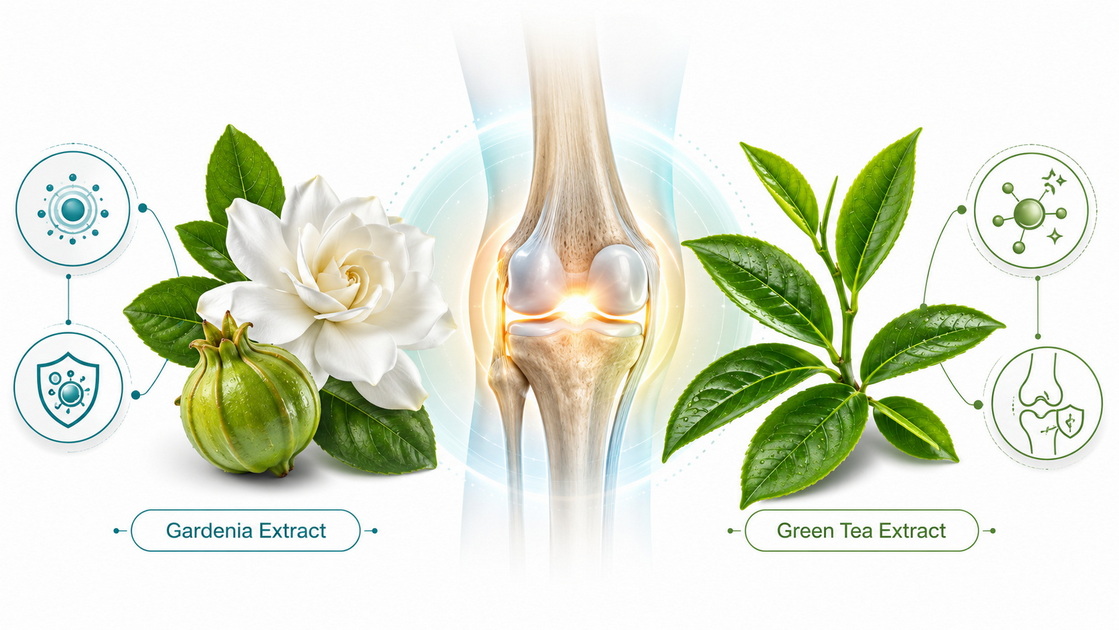
From a product strategist's and industry expert's perspective, gardenia extract is emerging as a targeted, inflammation-focused ingredient candidate, while green tea extract remains a broadly recognized antioxidant with supportive joint benefits but persistent bioavailability challenges. For a manufacturer like Botaniex, which specializes in standardized botanical extracts and customized formulations, this comparison is not just academic—it informs ingredient positioning, formulation design, and customer education across joint health portfolios. [botaniextract]
Why Joint Pain Support Needs More Than "Anti-Inflammatory" Claims
Joint pain—whether from osteoarthritis, rheumatoid arthritis, overuse, or aging—is driven by a mix of chronic inflammation, cartilage breakdown, oxidative stress, and immune dysregulation. For dietary supplement and functional beverage brands, consumers are no longer satisfied with generic "joint formula" labels; they look for ingredients with clear mechanisms, clinical backing, and realistic dosing strategies. [pubmed.ncbi.nlm.nih]
From a UX and product-marketing standpoint, three questions dominate buyer and formulator decisions:
- Does the ingredient reach effective levels in the body (bioavailability)? [sciencedirect]
- Does it target the right inflammatory and cartilage pathways relevant to joint pain? [pmc.ncbi.nlm.nih]
- Can it be formulated into stable, palatable, and compliant delivery systems (capsules, RTD beverages, powders)? [botaniex]
Gardenia and green tea extracts both answer "yes" to the second question, but they diverge sharply on the first, which is where bioavailability bottlenecks redefine their value in joint formulations. [pubmed.ncbi.nlm.nih]
Gardenia Extract for Joint Pain – Mechanisms and Evidence
Key Actives in Gardenia Extract
Gardenia jasminoides (often used in traditional Chinese medicine) contains several bioactive classes, with iridoid glycosides such as geniposide and related compounds being particularly relevant for inflammation and arthritis. These molecules modulate inflammatory and immune pathways rather than simply acting as antioxidant scavengers. [frontiersin]
In preclinical studies, geniposide has been shown to:
- Reduce arthritis scores, paw swelling, and structural joint damage in arthritis animal models. [pubmed.ncbi.nlm.nih]
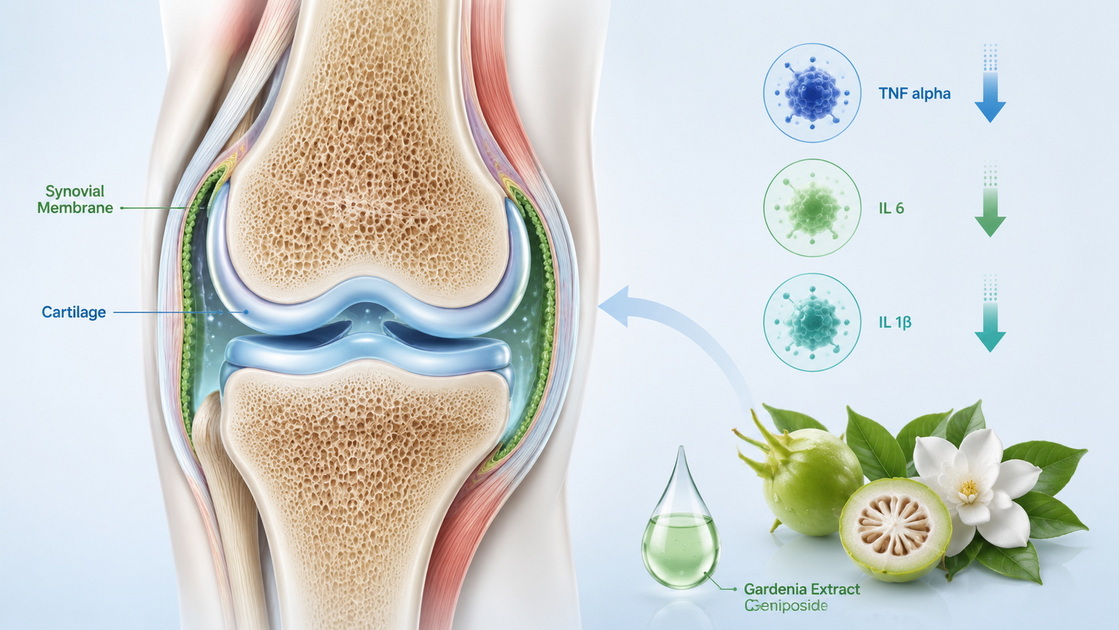
- Downregulate pro-inflammatory cytokines such as TNF-α, IL-1β, IL-6, and IL-17. [pmc.ncbi.nlm.nih]
- Upregulate anti-inflammatory cytokines like IL-10 and IL-4 and modulate pathways such as NF-κB and MAPK signaling. [frontiersin]
From an expert formulator's viewpoint, these data position gardenia extract as a mechanism-rich joint support ingredient, especially for formulas targeting autoimmune-like or chronic inflammatory joint complaints. [pubmed.ncbi.nlm.nih]
Gardenia Extract and Joint Pain Outcomes
Systematic reviews and experimental models of rheumatoid arthritis indicate that geniposide significantly improves clinical arthritis scores and histopathological joint markers, suggesting real potential as an anti-arthritic agent. Although human clinical data are still limited, the consistency of preclinical effects across inflammatory pathways is encouraging for next-generation joint formulations. [pmc.ncbi.nlm.nih]
For a company like Botaniex, this allows positioning gardenia extract as a differentiated joint support ingredient focused on immune-modulating and anti-inflammatory mechanisms, especially in premium or science-driven SKUs. [botaniex]
Green Tea Extract for Joint Pain – Benefits and Limits
EGCG and Joint Health Mechanisms
Green tea extract is rich in catechins, particularly epigallocatechin-3-gallate (EGCG), which shows broad anti-inflammatory and antioxidant actions relevant to cartilage and synovial tissue. Preclinical studies indicate that EGCG can: [pmc.ncbi.nlm.nih]
- Inhibit inflammatory mediators and matrix metalloproteinases associated with cartilage breakdown. [pmc.ncbi.nlm.nih]
- Protect against cartilage degradation in osteoarthritis models and modulate immune responses in rheumatoid arthritis models. [pmc.ncbi.nlm.nih]
These mechanisms support green tea extract's inclusion in joint formulas aimed at general joint health, especially when combined with other structural and anti-inflammatory ingredients. [pharmacy.wsu]
What the Data Say About Joint Outcomes
Animal and in vitro studies show that EGCG can reduce cartilage destruction and inflammatory markers in models of arthritis. Research from academic groups also suggests that EGCG may interfere with key pathways involved in rheumatoid arthritis progression, making it an attractive complementary ingredient. [pmc.ncbi.nlm.nih]
However, clinical translation has been constrained by the same issue that affects many polyphenols: poor bioavailability and stability, especially in conventional oral supplement formats. [pmc.ncbi.nlm.nih]
Bioavailability Bottlenecks – Gardenia Vs. Green Tea Extract
Understanding the Bioavailability Challenge
From an industry perspective, bioavailability is where the difference between theoretical and real-world joint support becomes obvious. [sciencedirect]
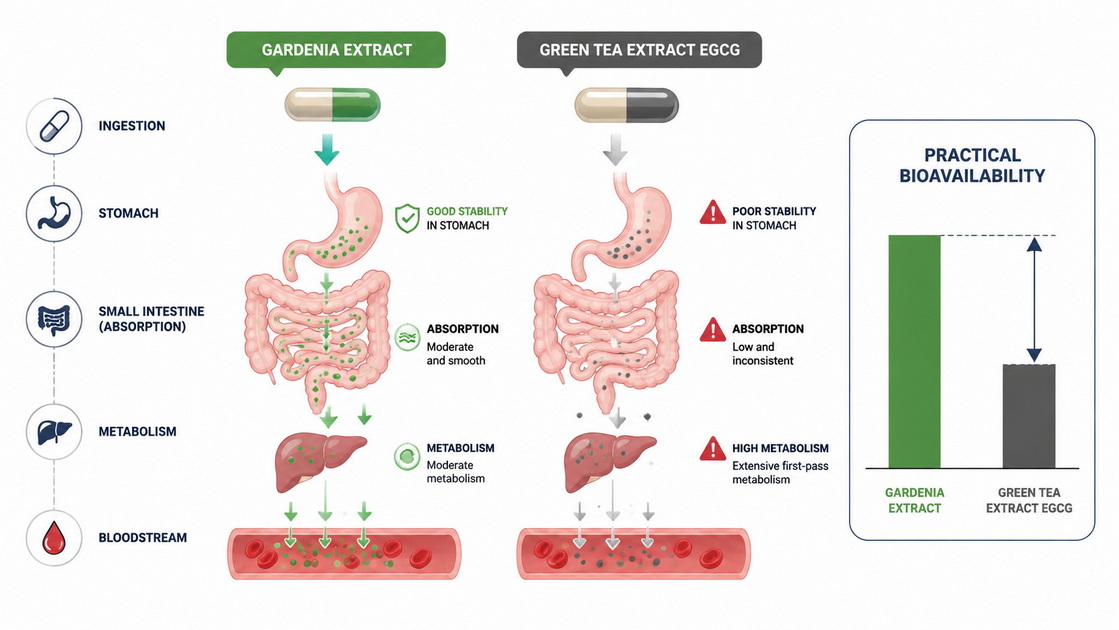
- For green tea extract (EGCG), multiple reviews and pharmacokinetic analyses show low oral bioavailability due to poor stability, rapid metabolism, and limited absorption. [pmc.ncbi.nlm.nih]
- For gardenia extract (geniposide), the oral bioavailability profile is more favorable relative to EGCG, and many of the preclinical joint studies already use oral administration models, suggesting practical translational potential. [frontiersin]
From a formulator's and marketer's vantage point, this means that dose efficiency and formulation complexity differ substantially between the two. [sciencedirect]
How Bioavailability Impacts Joint Pain Support
In practical joint pain formulations:
- Gardenia extract
- May reach functional plasma levels at lower or moderate doses, given the demonstrated oral efficacy in animal models. [pubmed.ncbi.nlm.nih]
- Targets cytokine and signaling pathways closely aligned with inflammatory joint damage, potentially making it more potent per milligram in arthritis-focused products. [pubmed.ncbi.nlm.nih]
- Green tea extract
- Often requires higher dosing or advanced delivery systems (lipid-based carriers, nanoemulsions, phospholipid complexes) to overcome poor EGCG bioavailability. [pmc.ncbi.nlm.nih]
- Is more commonly used as a supporting antioxidant and anti-inflammatory ingredient rather than the primary joint pain "hero" due to these bottlenecks. [pharmacy.wsu]
For brand owners, this translates directly into capsule count, serving size, cost of goods, and label claims. [pmc.ncbi.nlm.nih]
Industry Expert Insight – When to Lead With Gardenia Vs. Green Tea
From the viewpoint of an R&D or product development manager working with a manufacturer like Botaniex, the choice between gardenia and green tea extract depends on product positioning and regulatory strategy. [botaniex]
Lead with gardenia extract when:
- The product is framed as an advanced joint pain or arthritic comfort formula with an emphasis on inflammation pathways and immune modulation. [pmc.ncbi.nlm.nih]
- You want a differentiated botanical story beyond the crowded "green tea antioxidant" narrative. [botaniex]
- You can support the ingredient with science-backed content focused on geniposide and anti-arthritic mechanisms. [pubmed.ncbi.nlm.nih]
Use green tea extract as a complementary support when:
- You're building a multi-target joint formula where oxidative stress, weight management, and metabolic support are also part of the value proposition. [botaniex]
- You want to leverage strong consumer recognition of green tea while letting other ingredients (like gardenia, curcumin, or boswellia) carry the primary joint pain claim. [pmc.ncbi.nlm.nih]
- You have access to advanced delivery technologies that partially overcome EGCG's bioavailability limitations. [pmc.ncbi.nlm.nih]
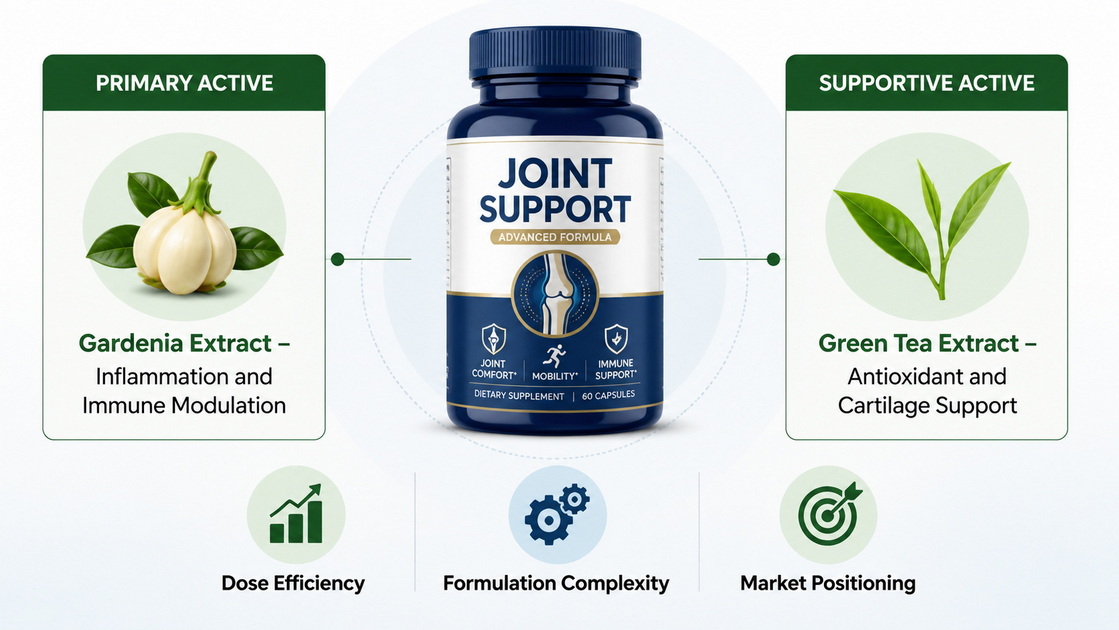
For Botaniex and similar suppliers, this portfolio strategy allows bundling gardenia and green tea extracts in layered joint concepts: gardenia as the mechanistic anchor, green tea as a supportive antioxidant and lifestyle-friendly component. [botaniextract]
Practical Formulation Considerations for Joint Support Products
Dosage, Formats, and Stability
In real-world product development, UX and compliance are closely tied to dose size and delivery format. [pharmacy.wsu]
- Gardenia extract
- Typically standardized to iridoid glycosides such as geniposide; dosage is guided by preclinical efficacy and safety margins. [frontiersin]
- Works well in capsules, tablets, and possibly in certain functional beverages, provided color and flavor are acceptable within the formulation. [botaniex]
- Green tea extract
- Often standardized to EGCG or total catechins; higher doses may be needed for meaningful joint effects, especially without enhanced delivery systems. [sciencedirect]
- Is widely used in capsules, tablets, powdered beverages, and RTDs, but its stability and potential bitterness must be managed carefully. [pmc.ncbi.nlm.nih]
Safety, Tolerability, and Regulatory Views
Both gardenia and green tea extracts are generally considered safe when used within appropriate dose ranges, but there are nuanced considerations:
- Green tea extract at high EGCG doses has raised concerns in some contexts about liver-related adverse events, requiring cautious formulation and labeling. [pmc.ncbi.nlm.nih]
- Gardenia extract's iridoids have shown favorable safety profiles in preclinical arthritis models, but human dose benchmarks are still developing, so conservative and compliant dosing is advisable. [pubmed.ncbi.nlm.nih]
For global brands sourcing from manufacturers like Botaniex, aligning ingredient standardization, quality documentation, and safety data with target market regulations is crucial for smooth commercialization. [botaniextract]
Side-by-Side Comparison for Joint Pain Support
Gardenia Extract Vs. Green Tea Extract – Joint Support Snapshot
| Feature | Gardenia Extract (Primary) | Green Tea Extract (Comparator) |
| Primary actives | Iridoid glycosides (e.g., geniposide) pubmed.ncbi.nlm.nih | Catechins, mainly EGCG pmc.ncbi.nlm.nih |
| Core mechanism | Anti-inflammatory, immunomodulatory, anti-arthritic pathways pubmed.ncbi.nlm.nih | Antioxidant, anti-inflammatory, cartilage-protective pmc.ncbi.nlm.nih |
| Evidence in joint/arthritis models | Reduces arthritis score, paw swelling, inflammatory cytokines; improves joint histology pubmed.ncbi.nlm.nih | Protects cartilage, modulates inflammatory markers in OA and RA models pmc.ncbi.nlm.nih |
| Bioavailability profile | Oral models suggest practical systemic exposure; fewer stability issues than EGCG pubmed.ncbi.nlm.nih | Well-documented poor bioavailability and stability; limits clinical translation without delivery tech pmc.ncbi.nlm.nih |
| Typical positioning | Advanced joint pain and inflammation support; immune-modulating anti-arthritic ingredient pubmed.ncbi.nlm.nih | Broad antioxidant joint support; lifestyle-oriented and adjunct to other joint actives pmc.ncbi.nlm.nih |
| Formulation complexity | Moderate; focus on standardization and color/flavor management botaniex | Higher; needs stability, bitterness masking, and sometimes delivery enhancements pmc.ncbi.nlm.nih |
For a joint health product that must deliver perceptible relief, gardenia extract offers a more targeted, mechanism-driven and potentially more dose-efficient path, while green tea extract can enhance overall antioxidant and wellness positioning. [pharmacy.wsu]
FAQs
Q1: Is gardenia extract clinically proven for human joint pain?
A1: Most of the current evidence for gardenia extract (geniposide) in joint pain comes from preclinical models, where it significantly reduces arthritis scores and inflammatory cytokines; well-designed human trials are still needed. [pubmed.ncbi.nlm.nih]
Q2: Why is green tea extract still used for joint support if its bioavailability is low?
A2: Despite poor EGCG bioavailability, green tea extract shows meaningful anti-inflammatory and cartilage-protective effects in preclinical studies, and its broader wellness reputation makes it a popular supportive ingredient when used thoughtfully in formulations. [pmc.ncbi.nlm.nih]
Q3: Can gardenia and green tea extracts be combined in the same joint formula?
A3: Yes, many formulators view gardenia as a targeted anti-arthritic active and green tea as a complementary antioxidant, so combining them can create a multi-pathway joint support concept when dosage and safety are properly managed. [botaniex]
Q4: What should brands prioritize when sourcing joint-support botanical extracts?
A4: Brands should prioritize standardized active content, consistent quality, safety documentation, and supplier support for formulation and regulatory needs, especially when targeting sensitive indications like joint pain and arthritis. [botaniex]
Q5: How can product teams address bioavailability bottlenecks in joint formulas?
A5: Teams can select ingredients with more favorable absorption profiles (such as gardenia extract), use delivery technologies to enhance bioavailability (for EGCG and similar polyphenols), and formulate at doses supported by preclinical and emerging clinical data. [pmc.ncbi.nlm.nih]
References
1. Botaniex – High-quality botanical extracts and functional herbal formulations. Available at: [https://www.botaniex.com] [botaniex]
2. Botaniex – Manufacturer of green tea extract and other botanical ingredients. Available at: [https://www.botaniextract.com] [botaniextract]
3. Chemistry and bioactivity of *Gardenia jasminoides*. Available at: [https://pmc.ncbi.nlm.nih.gov/articles/PMC9333430/] [pmc.ncbi.nlm.nih]
4. Anti-arthritic and immunomodulatory effects of geniposide: a systematic review and meta-analysis of preclinical studies. PubMed. [pubmed.ncbi.nlm.nih]
5. Anti-inflammatory mechanism of geniposide. Frontiers in Pharmacology. [https://www.frontiersin.org/articles/10.3389/fphar.2018.00105/full] [frontiersin]
6. Comparative anti-arthritic investigation of iridoid glycosides from *Gardenia jasminoides*. PubMed. [pubmed.ncbi.nlm.nih]
7. Green tea polyphenol epigallocatechin-3-gallate in arthritis. Available at: [https://pmc.ncbi.nlm.nih.gov/articles/PMC2888220/] [pmc.ncbi.nlm.nih]
8. Green tea polyphenol epigallocatechin-3-gallate – chemistry and bioavailability. Available at: [https://pmc.ncbi.nlm.nih.gov/articles/PMC3146294/] [pmc.ncbi.nlm.nih]
9. Impacts of green tea on joint and skeletal muscle health. Available at: [https://pmc.ncbi.nlm.nih.gov/articles/PMC7692648/] [pmc.ncbi.nlm.nih]
10. Investigating the therapeutic potential of epigallocatechin-3-gallate: bioavailability and stability challenges. ScienceDirect. [sciencedirect]
11. Compound in green tea found to block rheumatoid arthritis. Washington State University Pharmacy News. [pharmacy.wsu]
12. Geniposide, an iridoid glucoside derived from gardenia fruit, anti-inflammatory activity. PubMed. [pubmed.ncbi.nlm.nih]
13. Botaniex – Botanical extracts for immune support and dietary supplements. Available at: [https://www.botaniex.com/botanical-extracts-for-immune-support-core-ingredients-for-dietary-supplements.html] [botaniex]
14. Botaniex – Green tea extract market and manufacturers overview. Available at: [https://www.botaniex.com/top-10-green-tea-extracts-manufacturers-in-usa.html] [botaniex]