Content Menu
● Why Botanical Extract Powders Taste Strong and Dissolve Poorly
● Strong Taste vs Poor Solubility: Quick Comparison
● Why Do Botanical Extracts Taste So Strong?
>> Polyphenols and Flavonoids Drive Bitterness
>> Astringency Is a Different Sensation
>> Other Bitter Families
● Why Do Botanical Extract Powders Dissolve Poorly?
>> Molecular Structure Limits Dissolution
>> Powder Physics Matters Too
● The Hidden Link Between Taste and Solubility
● Proven Solutions: From Lab to Production
>> 1. Spray Drying with Carriers
>> 2. Cyclodextrin Inclusion
>> 3. Taste Masking Strategies
>> 4. Extraction and Purification Choices
● Practical Workflow: How to Choose the Right Powder
● Application Case Examples
● Why Work With a Specialist Supplier
● Frequently Asked Questions
● References
Why Botanical Extract Powders Taste Strong and Dissolve Poorly
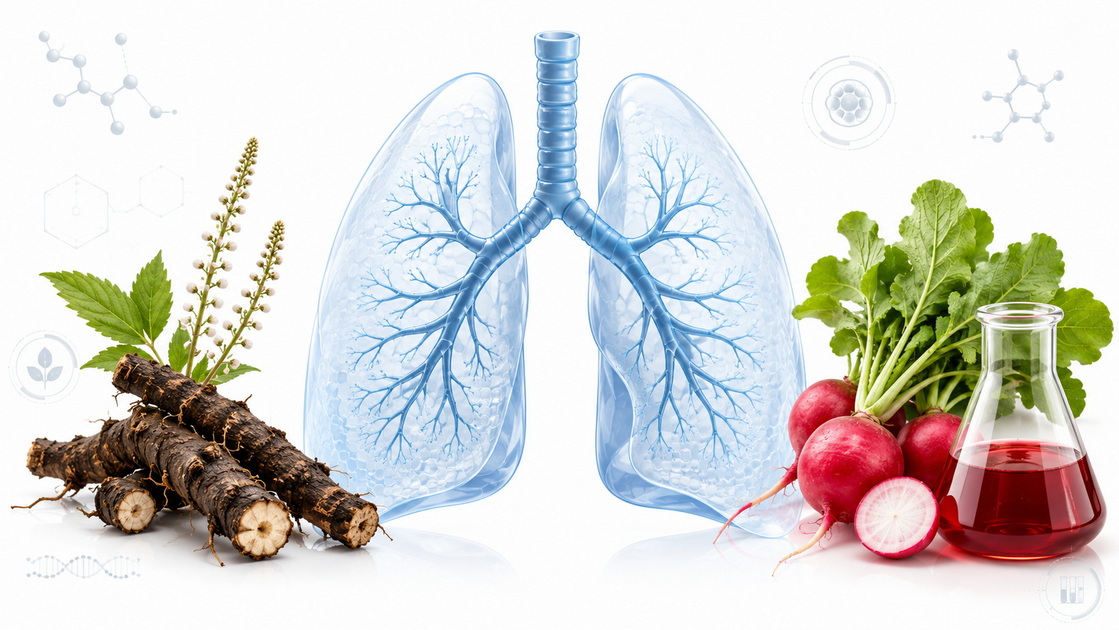
Botanical extract powders taste strong because the same plant compounds that deliver bioactivity are often bitter or astringent. They dissolve poorly because many of those compounds are large, hydrophobic, or tightly bound to other molecules. The two problems share a root cause: plant chemistry.
In formulation work, I often see teams treat taste and solubility as separate tickets. They are not. A compound's polarity, size, and sugar attachments affect both how it binds taste receptors and how it behaves in water. Fix one without understanding the other, and the second problem often gets worse.
This guide compares the two issues side by side. It then shows how to solve both in dietary supplements, functional foods, and beverages.
Strong Taste vs Poor Solubility: Quick Comparison
| Factor | Strong Taste (Bitterness/Astringency) | Poor Water Solubility |
| Main cause | Polyphenols, flavonoids, alkaloids, terpenoids, saponins | Hydrophobic aglycones, large molecules, aggregation |
| Who notices it | Consumers | Formulators and consumers |
| Typical symptom | Bitter, drying, puckering mouthfeel | Sediment, cloudiness, floating clumps |
| Business impact | Low repeat purchase, reformulation | Failed beverage, low bioavailability |
| Main fixes | Masking, encapsulation, purification | Carriers, cyclodextrins, particle engineering |
| Overlap | Encapsulation helps both | Encapsulation helps both |
Why Do Botanical Extracts Taste So Strong?
Polyphenols and Flavonoids Drive Bitterness
Plants make bitter compounds as chemical defense. Bitter perception helps animals avoid toxins. Polyphenols are the largest family of plant secondary metabolites. About 8,000 have been identified, and most are bitter and some are astringent.
Flavonoids are a primary bitter principle in fruits and vegetables. Catechin and gallic acid are key bitter substances in green tea. That is why green tea extract, grape seed extract, and citrus flavonoid powders can be hard to sweeten.
Astringency Is a Different Sensation
Astringency is not a taste. It is a drying, roughening, puckering feeling in the mouth. It is common with anthocyanins, flavanols such as catechins, and hydrolyzable tannins. Bitterness from phenolics often comes from interaction with salivary glycoproteins, which changes oral tactile and taste perception.
Other Bitter Families
Bitter medicinal plants also contain alkaloids, terpenoids, secoiridoids, glycosides, and steroids. Sugar groups matter too. Their number, type, and position change molecular polarity and receptor binding, so they change bitterness intensity.
Expert note: Concentration amplifies the problem. A 10:1 or 20:1 extract concentrates the bitter fraction along with the active one. A powder can taste far harsher than the raw herb.
Why Do Botanical Extract Powders Dissolve Poorly?
Molecular Structure Limits Dissolution
Many bioactives are hydrophobic. Clinical translation of polyphenol-rich extracts is often limited by poor water solubility and low bioavailability. Sugar groups influence solubility characteristics as well as bitterness.
Powder Physics Matters Too
Solubility is not only chemistry. Four physical factors also decide how a powder behaves in water:
- Particle size: Fine powders clump and form a dry shell ("fish eyes").
- Hygroscopicity: Powders that absorb moisture become sticky.
- Insoluble plant matter: Fiber, resins, and waxes stay suspended.
- Extraction solvent: Ethanol-heavy extracts carry more lipophilic compounds.
The Hidden Link Between Taste and Solubility
Here is the insight most competitor articles miss. The same hydrophobic compounds that resist water also bind strongly to taste receptors and mouth proteins. Make a powder "more soluble" by simply releasing more free polyphenols into water, and bitterness can increase.
Maltodextrin illustrates the tradeoff. Higher concentrations raise the water solubility index, but they can also reduce total phenolic, flavonoid, and antioxidant content. So the goal is not maximum solubility. The goal is balanced solubility, taste, and potency.
Proven Solutions: From Lab to Production
1. Spray Drying with Carriers
Spray drying turns liquid extract into stable powder. Carriers such as maltodextrin are slightly sweet, nearly tasteless, and highly soluble. In one study, a maltodextrin/pectin matrix encapsulated polyphenol-rich extracts with loading efficiencies of 80.1% to 97.2%. The powders had improved dissolution rates.
2. Cyclodextrin Inclusion
β-cyclodextrin improves the water solubility of poorly soluble compounds. In sage encapsulation, it gave better solubility and turbidity than gum Arabic and maltodextrin. Hydroxypropyl-β-cyclodextrin has a hydrophobic cavity and a hydrophilic exterior. It is widely used to solubilize poorly soluble ingredients. In garlic oil microcapsules, a maltodextrin–γ-cyclodextrin blend gave the highest solubility, 78.27% to 86.00% across formulations.
Practical benefit: Encapsulation can both lift solubility and reduce free bitter compounds. It is one of the few levers that addresses both problems.
3. Taste Masking Strategies
- Sweetener and flavor systems: Match the flavor to the botanical's profile (citrus for bitter flavonoids, vanilla for earthy notes).
- Encapsulation: Keep bitter molecules away from receptors.
- Fractionation: Remove high-tannin fractions during purification.
- pH and salts: Adjust to reduce perceived harshness.
- Protein or fat matrices: Bind astringent polyphenols in the product.
4. Extraction and Purification Choices
Use selective solvents and resin purification to standardize actives while reducing unwanted fractions. Specify the extract ratio, standardized marker, and solvent early, because they decide the downstream taste and solubility profile.
Practical Workflow: How to Choose the Right Powder
A simple process I recommend to R&D teams:
1. Define the format: Beverage, stick pack, capsule, gummy, or cosmetic.
2. Rank priorities: Potency, clarity, taste, cost.
3. Request specifications: Marker compounds, solubility test, particle size, moisture.
4. Run a bench test: Dissolve 1 g in 100 mL water at 25 °C and observe at 1 and 30 minutes.
5. Run a sensory test: Use at least 8–10 panelists at target dose.
6. Pilot stability: Check sediment, color, and taste after storage.
Application Case Examples
Always run application-specific tests. Examples of how choices differ:
| Application | Main Challenge | Suggested Approach |
| Ready-to-drink beverage | Clarity, sediment | Highly soluble spray-dried powder, cyclodextrin |
| Functional gummies | Bitterness, heat | Encapsulated powder, flavor system |
| Capsules/tablets | Bioavailability | Solubility-enhanced extract |
| Cosmetics | Dispersion, color | Water-soluble grade, filtered extract |
Why Work With a Specialist Supplier
A strong supplier should combine botanical science, extraction technology, and formulation support. Botaniex positions itself as a manufacturer of botanical extracts, herbal formulations, and plant-based ingredients for supplements, functional food, beverage, cosmetic, and pharmaceutical customers. Its approach is customized ingredient solutions. That matters here because taste and solubility need to be solved at the specification level, not after launch.
Frequently Asked Questions
1. Why are botanical extract powders bitter?
They are rich in polyphenols, flavonoids, alkaloids, and terpenoids. These interact with taste receptors and salivary proteins.
2. Why do some herbal powders not dissolve in water?
Many actives are hydrophobic or large. Insoluble plant matter and poor powder wetting also contribute.
3. Does higher solubility always mean better taste?
No. More dissolved polyphenols can increase bitterness. Balance solubility, flavor, and potency.
4. What is the best carrier for improving solubility?
Maltodextrin is common and nearly tasteless. Cyclodextrins can help with poorly soluble compounds. Test carriers on your specific extract.
5. Can taste masking reduce potency?
Not necessarily. Encapsulation can preserve actives, but carrier ratios matter. High maltodextrin levels reduced phenolic and flavonoid content in some studies.
6. What is the difference between bitterness and astringency?
Bitterness is a taste. Astringency is a drying, puckering tactile sensation.
References
1. [Sensory Nutrition and Bitterness and Astringency of Polyphenols – PMC]
2. [Advances in Spray-Drying and Freeze-Drying Technologies – PMC]
3. [Bitter taste, phytonutrients, and the consumer: a review – AJCN]06901-0/fulltext)
4. [Potential of Bitter Medicinal Plants: A Review of Flavor Physiology – PMC]
5. [Bitter Compounds in Medicinal Food Plants – MDPI Molecules]
6. [Metabolomics of bitter ingredients in Lonicera caerulea – Frontiers in Nutrition]
7. [Maltodextrin/pectin microparticles as carrier for nutraceutical extracts]
8. [Spray Drying for Pharmaceutical Raw Materials – PMC]
9. [Spray-dried maltodextrin–γ-cyclodextrin microcapsules of garlic essential oil – J. Appl. Biol.]