
Language

Views: 222 Author: Botaniex Publish Time: 2026-06-09 Origin: Site


Content Menu
● Understanding Sleep Fragmentation
● Why Compare Artichoke Extract and Panax Notoginseng for Sleep?
● Quick Snapshot: Key Differences for Sleep Fragmentation
● Artichoke Extract: Mechanisms Relevant to Sleep Fragmentation
>> Digestive Comfort and Night-Time Arousals
>> Liver and Lipid Support as Metabolic Levers
>> Cognitive and Mood Support: Secondary Links to Sleep
● Panax Notoginseng Extract: Mechanisms Relevant to Sleep Fragmentation
>> Vascular Health, Brain Perfusion, and Sleep
>> Neuroprotective Pathways and Sleep Architecture
>> Sleep Trade-Offs: Energy vs Rest
● Artichoke Extract vs Panax Notoginseng: Which Is Better for Sleep Fragmentation?
>> Comparative Strengths and Use Cases
>> Safety and Regulatory Considerations
● Industry Expert View: How Botaniex Can Position These Extracts
>> Positioning Artichoke Extract for Sleep-Focused SKUs
>> Positioning Panax Notoginseng Extract for High-Value Sleep Concepts
● Practical Guidance for Brands and Formulators
>> 1. Define the Sleep Fragmentation Phenotype
>> 2. Combine Botanicals with Sleep Hygiene Education
>> 3. Dosage, Timing, and Formulation Format
● Evidence-Based Cautions and Future Research Needs
● CTA: How Sleep-Focused Brands Can Work with Botaniex
● FAQs
Artichoke extract and Panax notoginseng extract are both promising botanical ingredients, but they support sleep fragmentation through very different primary mechanisms and use cases, making them complementary rather than interchangeable in sleep-focused formulations. [webmd]
Sleep fragmentation refers to repeated brief interruptions of sleep architecture—often without full awakening—that prevent the brain and body from maintaining sustained restorative sleep. These micro-arousals can occur dozens or even hundreds of times per night, disrupting deep and REM sleep and impairing cognitive performance, mood, and cardiometabolic health. [empowersleep]
From a clinical perspective, fragmented sleep is strongly associated with:
- Reduced executive function, attention, and working memory. [ubiehealth]
- Increased daytime sleepiness and fatigue. [empowersleep]
- Elevated cardiometabolic risk (hypertension, insulin resistance, weight gain) when fragmentation is chronic. [newmexicosleeplabs]
For product developers, this means sleep-support ingredients should not only shorten sleep latency or prolong total sleep time, but also help stabilize sleep architecture and reduce micro-arousals.

Most consumers do not intuitively associate artichoke extract with sleep; it is better known for digestive and lipid-lowering benefits. Panax notoginseng, a ginseng species, is traditionally used for circulation and cardiovascular support, with some emerging data on neuroprotective and sleep-related pathways. [medicalnewstoday]
However, from a formulation and R&D perspective:
- Artichoke extract may influence sleep indirectly by supporting liver function, digestion, and cognitive performance, which are meaningful upstream drivers of sleep fragmentation in stress-driven and lifestyle-driven insomnia. [qualialife]
- Panax notoginseng extract (notoginseng saponins) may influence vascular health, neuroinflammation, and possibly amyloid-β burden, all of which relate to sleep quality and brain recovery. [webmd]
For a manufacturer like Botaniex, which focuses on botanical science, extraction technologies, and customized herbal solutions for dietary supplements and functional foods, positioning these two extracts in a sleep-fragmentation context allows for differentiated SKUs aimed at both metabolic/organ-health-driven and vascular/neuro-driven sleep issues. [botaniex]
| Dimension | Artichoke Extract | Panax Notoginseng Extract |
|---|---|---|
| Primary traditional use | Digestive, liver, lipid support. webmd | Cardiovascular, circulation, bleeding and stroke support. webmd |
| Mechanistic relevance to sleep fragmentation | Indirect: digestion comfort, liver detox, lipid balance, potential cognitive benefits. webmd | Indirect: vascular tone, neuroprotection, possible impact on neuroinflammation and amyloid. webmd |
| Evidence base for sleep | No direct RCTs on sleep fragmentation; some cognitive and mood-related data. qualialife | Limited but growing mechanistic data related to brain health and sleep quality pathways. sciencedirect |
| Safety profile | Generally safe up to 12 weeks, mild GI side effects in some users. webmd | Possibly safe up to 6 weeks; potential insomnia, dry mouth, flushing at higher doses. webmd |
| Best positioning in a sleep formula | For "sleep-disrupting digestion and metabolic stress" concepts, especially in evening digestion-focused products. webmd | For "sleep and circulation" or "brain recovery during sleep" positioning, more in premium or condition-specific SKUs. webmd |
Artichoke extract is widely used for indigestion (dyspepsia), helping reduce nausea, gas, and stomach pain over 2–8 weeks, with human clinical data supporting its use in digestive discomfort. Since gastrointestinal discomfort often triggers micro-arousals and frequent awakenings, especially in late-night heavy eaters, digestive relief can indirectly reduce sleep fragmentation caused by bloating or reflux-like sensations. [webmd]
Key implications for sleep-support positioning:
- Evening artichoke extract may help users who wake repeatedly due to upper GI discomfort. [medicalnewstoday]
- Pairing artichoke with low-acid formulations, digestive enzymes, or mild carminatives can strengthen a "calm digestion, calm sleep" narrative for fragmented sleep driven by meals.
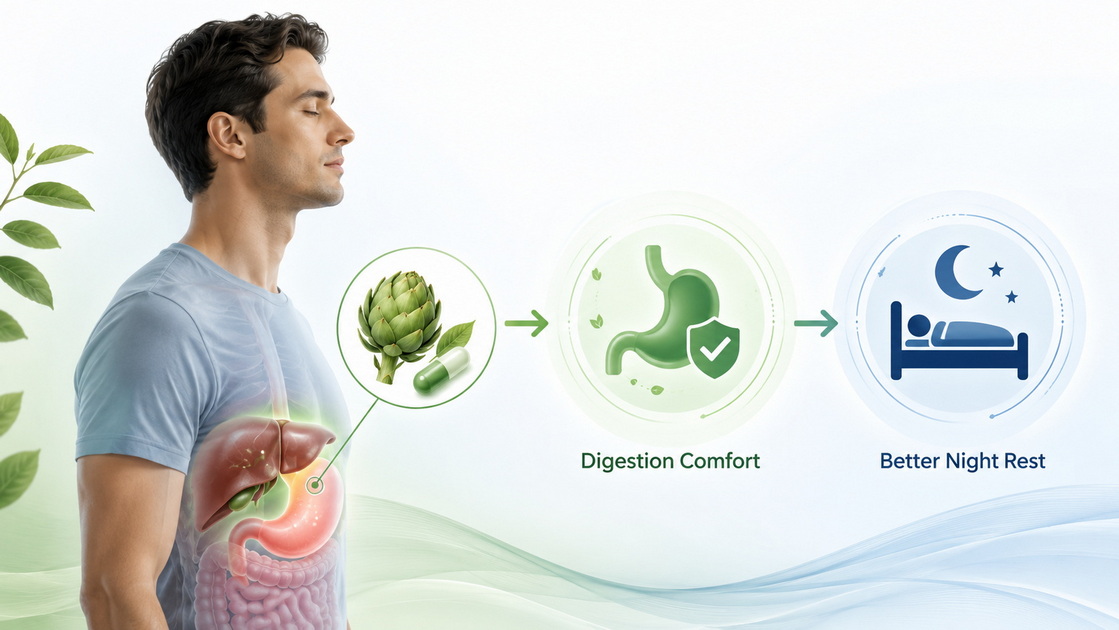
Artichoke extract is known to modestly reduce total and LDL cholesterol and support liver health in some clinical contexts. Metabolic syndrome and non-alcoholic fatty liver disease are increasingly recognized as upstream drivers of sleep-disordered breathing and fragmented sleep via weight gain, systemic inflammation, and altered hormone balance. [pubmed.ncbi.nlm.nih]
From an industry expert perspective, this opens a strategic angle:
- Artichoke extract can be featured in metabolic sleep formulations designed for users with borderline dyslipidemia, heavy alcohol intake, or night-time metabolic stress. [pubmed.ncbi.nlm.nih]
- While the evidence is indirect, positioning artichoke as part of a broader "sleep and metabolic resilience" concept is scientifically coherent and differentiates products in a crowded melatonin market. [newmexicosleeplabs]
Some nootropic formulations highlight artichoke extract for potential cognitive benefits, particularly through cynarin and its interaction with cAMP signaling, which may impact memory, attention, and information processing. In practice, improved cognitive resilience and reduced mental fatigue may reduce stress-related rumination, a major driver of bedtime arousal. [nootropicsexpert]
Although sleep-specific trials are lacking, an evidence-informed narrative could be:
- Better cognitive flexibility and stress resilience by day may translate into fewer cognitive intrusions and awakenings at night. [qualialife]
- This supports positioning artichoke extract as part of a "day-to-night performance" stack rather than a purely sedative agent.
Panax notoginseng (Sanqi) contains saponins that may relax blood vessels, improve blood flow, and protect the heart. While clinical research focuses on angina, stroke, and intracranial hemorrhage, the same vascular mechanisms are highly relevant for sleep fragmentation related to cerebral perfusion and microvascular health. [sciencedirect]
Research on Panax notoginseng saponins suggests relevance to:
- Brain protection in the context of short sleep duration and reduced sleep quality, including associations with amyloid-β burden in neurodegenerative pathways. [sciencedirect]
- Modulating neuroinflammation and oxidative stress, factors implicated in nocturnal micro-arousals and poor sleep continuity in older adults. [sciencedirect]
For formulators, this positions Panax notoginseng as a premium ingredient for sleep products aimed at mid-life and older populations concerned about brain health, circulation, and restorative sleep.
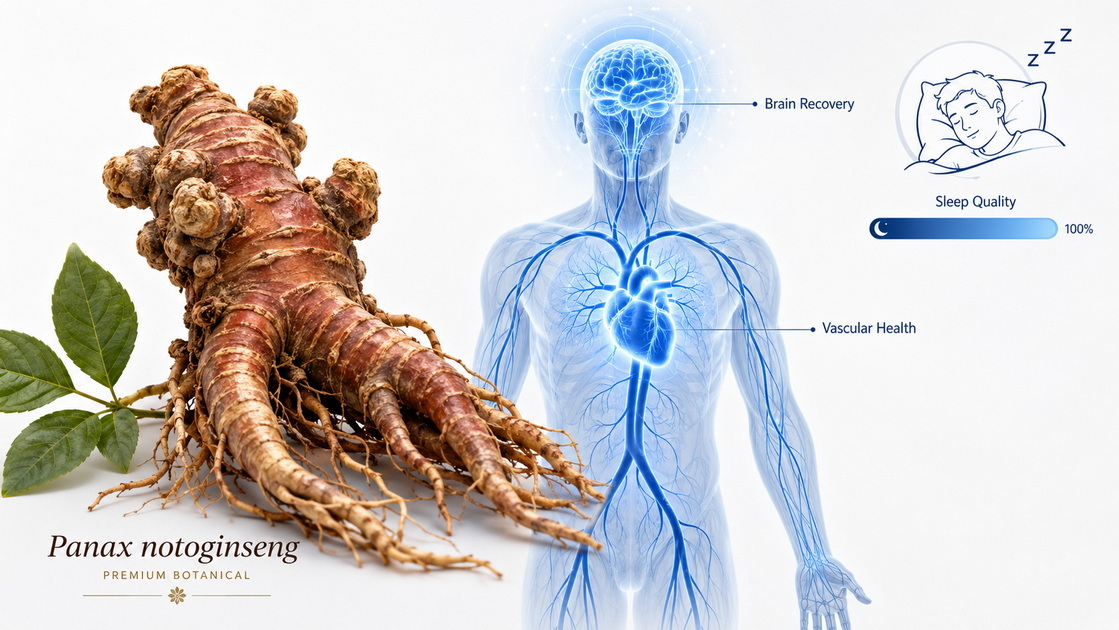
Though direct trials on sleep fragmentation are limited, broader ginseng-family research shows that ginseng can normalize the sleep–wake cycle, support deep sleep, and regulate neurotransmitters. While most of that data focuses on Panax ginseng, not notoginseng specifically, it provides a mechanistic rationale for exploring notoginseng in similar contexts. [my.klarity]
Key expert-level points:
- Notoginseng's saponin profile overlaps functionally with Panax ginseng in modulating stress responses and neuroinflammation, both key drivers of fragmented sleep. [my.klarity]
- Formulators can legitimately explore "neurovascular sleep support" concepts, particularly for individuals whose sleep fragmentation coexists with mild cognitive complaints or cardiovascular risk.
Ginseng-type ingredients can be double-edged in sleep products: while some users report better sleep through reduced stress and improved adaptation, others experience insomnia or restlessness at higher doses or when taken late in the day. Panax notoginseng is no exception; WebMD notes potential insomnia as a side effect. [dairylandginseng]
Practical implications:
- Dosing and timing are critical—morning or early afternoon dosing may support overall sleep quality without stimulating late-night alertness. [dairylandginseng]
- Notoginseng is best suited to formulations aimed at restorative sleep via daytime resilience rather than direct sedation.
From a strict clinical evidence standpoint, neither artichoke extract nor Panax notoginseng currently has strong, direct human RCT data targeting sleep fragmentation as a primary outcome. Instead, their relevance lies in addressing upstream contributors to fragmented sleep. [webmd]
- Artichoke extract is preferable when:
- Sleep fragmentation is linked to heavy evening meals, digestion issues, bloating, or dyspepsia. [webmd]
- Users show signs of metabolic stress (borderline dyslipidemia, fatty liver risk), and you want to position a metabolic–sleep product. [pubmed.ncbi.nlm.nih]
- Panax notoginseng extract is preferable when:
- Sleep fragmentation co-occurs with cardiovascular or neurovascular concerns, such as mild hypertension, vascular risk, or mid-life cognitive worries. [webmd]
- You are targeting brain recovery and neuroprotective narratives, emphasizing long-term brain health and sleep architecture.
- Combination concepts become compelling when addressing multi-factorial sleep fragmentation in aging populations: digestive issues plus vascular risk plus cognitive stress.
Artichoke extract is possibly safe when used medicinally for up to 12 weeks, with mild GI side effects as the main concern. Panax notoginseng is possibly safe for up to 6 weeks, but may cause dry mouth, flushing, nausea, rash, or insomnia, and is considered likely unsafe during pregnancy or breastfeeding. [webmd]
For brand owners and product developers:
- Both extracts should carry clear usage windows, pregnancy warnings (for notoginseng), and guidance to consult healthcare professionals for chronic or severe sleep issues. [newmexicosleeplabs]
- Artichoke-based sleep-metabolic formulas may be marketed with longer-term lifestyle support messaging, while notoginseng-based formulas may target shorter, focused intervention cycles.
From the perspective of a global botanical ingredient supplier like Botaniex, with strong R&D and value-added formulation services, there are several strategic angles. [botaniex.en.made-in-china]
An industry expert might design:
- "Nightly Digestive Ease & Sleep Continuity" blends where artichoke extract is combined with chamomile, lemon balm, and mild prebiotics, targeting consumers who wake from GI discomfort. [medicalnewstoday]
- Metabolic sleep formulas with artichoke plus berberine alternatives, inulin, or plant sterols, emphasizing cardiometabolic support and night-time recovery in marketing narratives. [pubmed.ncbi.nlm.nih]
In both cases, Botaniex's extraction expertise and organic/herbal portfolio can be leveraged to deliver consistent active marker levels and customized blends. [botaniex]
For Panax notoginseng, Botaniex can emphasize:
- Neurovascular sleep recovery blends combining notoginseng saponins with other neuroprotective botanicals (e.g., green tea catechin fractions at low doses, mushroom extracts), clearly framed around brain and vascular health. [botaniex]
- Condition-specific or premium SKUs aimed at mid-life professionals, high-stress executives, and aging populations who care about both performance and long-term brain health.
Botaniex's value-added services (such as private label and contract manufacturing) enable customers to rapidly develop differentiated sleep plus health-span products. [botaniex]
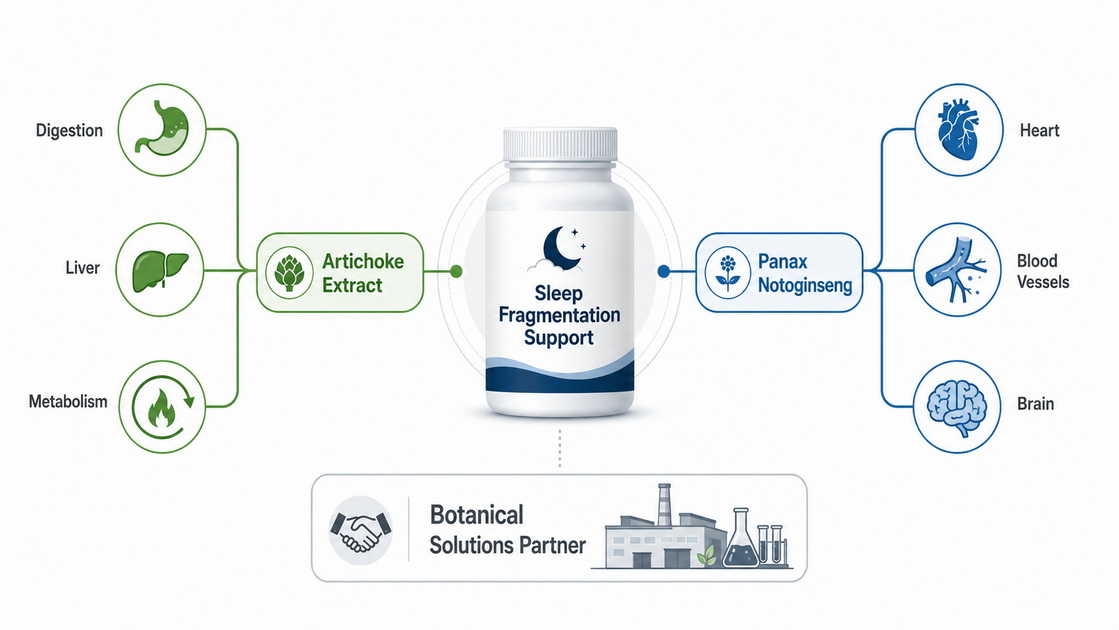
Not all fragmented sleep looks the same. Product developers should clarify whether they target:
1. Digestive-driven fragmentation (discomfort, reflux-like symptoms, food timing).
2. Stress and cognitive hyperarousal (rumination, late-night brain activity).
3. Cardio-metabolic and neurovascular factors (snoring, mild hypertension, mid-life brain concerns).
Artichoke extract naturally fits (1) and partially (2), while Panax notoginseng fits (3) and high-stress populations interested in vascular and brain support. [webmd]
Even the best extracts cannot fully compensate for poor sleep hygiene. High-performing brands embed educational content:
- Regular sleep schedule and optimized sleep environment. [empowersleep]
- Reduced caffeine and alcohol intake before bedtime. [empowersleep]
- Screening for underlying sleep-disordered breathing or restless legs when fragmentation is severe. [breatheworks]
- Artichoke extract is typically dosed during or after meals for digestive support; for sleep fragmentation, an evening dose with dinner can be aligned with late-meal scenarios. [medicalnewstoday]
- Panax notoginseng should typically be dosed earlier in the day, especially for users sensitive to ginseng-related stimulation. [dairylandginseng]
- Formats such as capsules, RTD teas, and functional beverages can be tailored by Botaniex with RTD tea mixes and herbal formulas already in their product portfolio. [botaniex]
To maintain scientific integrity:
- Current evidence directly linking artichoke or Panax notoginseng extracts to reduced sleep fragmentation is preliminary and indirect. [sciencedirect]
- Claims should emphasize supporting factors associated with better sleep quality, such as digestion comfort, vascular health, and neuroprotection, rather than promising specific sleep outcomes. [breatheworks]
Future research directions include:
- Human RCTs measuring objective sleep parameters (e.g., polysomnography, actigraphy) with artichoke extract or notoginseng saponins as adjunctive interventions.
- Comparative studies in populations with mild metabolic syndrome, early hypertension, or lifestyle-induced sleep fragmentation.
If you are developing a sleep-support product targeting fragmented sleep, consider partnering with a botanical specialist capable of:
- Providing standardized artichoke and Panax notoginseng extracts backed by quality and safety documentation. [botaniex.en.made-in-china]
- Co-developing customized herbal formulas that integrate digestive, metabolic, vascular, and neuroprotective angles into coherent sleep concepts. [botaniex]
By aligning scientifically plausible mechanisms, high-quality botanical extracts, and robust sleep-education content, you can create differentiated products that move beyond melatonin and deliver multi-layer benefits to consumers concerned about chronic sleep fragmentation.
1. Can artichoke extract directly improve my sleep?
Artichoke extract has not been conclusively shown in clinical trials to directly improve sleep, but it can reduce indigestion and support liver function, which indirectly helps people whose sleep is fragmented by digestive discomfort. [webmd]
2. Is Panax notoginseng suitable for people with insomnia?
Panax notoginseng may support vascular and brain health but can cause insomnia or restlessness in some individuals, especially at higher doses or if taken late in the day, so careful timing and medical advice are recommended. [dairylandginseng]
3. Can I take artichoke extract and Panax notoginseng together?
In principle they can be combined to address multiple factors related to sleep fragmentation, but because notoginseng affects circulation and may interact with cardiovascular medications, formulations should be designed and reviewed by qualified professionals. [pubmed.ncbi.nlm.nih]
4. How long can I safely use these extracts for sleep-related goals?
Artichoke extract is possibly safe up to about 12 weeks, while Panax notoginseng is possibly safe up to about 6 weeks, after which users should reassess with a healthcare provider. [webmd]
5. Should these extracts replace treatment for sleep apnea or other sleep disorders?
No; if sleep fragmentation is due to conditions like sleep apnea, restless legs, or other medical disorders, evidence-based medical treatments are essential, and botanicals should only be used as adjuncts under professional guidance. [breatheworks]
1. Botaniex. "About Botaniex – Botanical Extracts and Herbal Formulations." Botaniex official website. https://www.botaniex.com [botaniex]
2. Changsha Botaniex Inc. Profile and certifications. Made-in-China. https://botaniex.en.made-in-china.com [botaniex.en.made-in-china]
3. WebMD. "Artichoke – Uses, Side Effects, and More." https://www.webmd.com/vitamins/ai/ingredientmono-842/artichoke [webmd]
4. Medical News Today. "Artichoke extract: Benefits, uses, side effects, and more." https://www.medicalnewstoday.com/articles/artichoke-extract [medicalnewstoday]
5. Pharmacol. Studies of Artichoke Leaf Extract and its active compounds. PubMed. https://pubmed.ncbi.nlm.nih.gov/26310198 [pubmed.ncbi.nlm.nih]
6. Qualia (Neurohacker). "Get to Know the Benefits of Artichoke Extract." https://www.qualialife.com/get-to-know-the-benefits-of-artichoke-extract [qualialife]
7. Nootropics Expert. "Artichoke Extract (Luteolin)." https://nootropicsexpert.com/artichoke-extract-luteolin [nootropicsexpert]
8. WebMD. "Panax Notoginseng – Uses, Side Effects, and More." https://www.webmd.com/vitamins/ai/ingredientmono-906/panax-notoginseng [webmd]
9. ScienceDirect. "Mechanism of Panax notoginseng saponins in improving sleep quality and amyloid-β-related pathology." https://www.sciencedirect.com/science/article/abs/pii/S037887412401287X [sciencedirect]
10. Klarity Health. "Ginseng and its association with better sleep quality." https://my.klarity.health/ginseng-and-its-association-with-better-sleep-quality [my.klarity]
11. Dairyland Ginseng. "Can Ginseng Affect Your Sleep?" https://dairylandginseng.com/pages/can-ginseng-affect-sleep [dairylandginseng]
12. Empower Sleep. "Sleep Fragmentation: Mastering the Art of Perfect Sleep." https://www.empowersleep.com/articles/sleep-fragmentation [empowersleep]
13. New Mexico Sleep Labs. "Sleep Fragmentation and Its Impact on Cardiometabolic Health." https://newmexicosleeplabs.com/sleep-fragmentation-and-its-impact-on-cardiometabolic-health [newmexicosleeplabs]
14. BreatheWorks. "The Overlooked Consequence of Airway Restriction." https://breatheworks.com/sleep-fragmentation-airway-restriction-micro-arousals [breatheworks]
15. Botaniex. "Products and Value Added Services." https://www.botaniex.com/products.html; https://www.botaniex.com/value-added-services.html [botaniex]


