Content Menu
● A Technical and Market Perspective from an R&D Director
● Consumer Demand Is Driving Natural Umami Growth
● From Flavor Enhancement to Flavor Architecture
● Mushroom-Based Umami Is a Key Growth Segment
● Fermented Umami Technologies Are Expanding
● Sodium Reduction Is Accelerating Innovation
● Natural Umami Enables Plant-Based Food Success
● From MSG-Free to Intelligent Flavor Systems
● Final Perspective: The Future of Natural Umami
A Technical and Market Perspective from an R&D Director
The global seasoning industry is undergoing a profound transformation. Over the past decade, demand has shifted from high-intensity flavor enhancement toward clean label, natural ingredient sourcing, sodium reduction, and plant-based compatibility.
Today’s food manufacturers are no longer focused solely on taste intensity. Instead, they are prioritizing authentic culinary experiences supported by transparent, recognizable ingredients.
From an R&D perspective, this marks the beginning of a new era: the rise of Natural Umami Systems.
This evolution is not about simply replacing monosodium glutamate (MSG). It is about redefining how savory flavor is developed, structured, and delivered across modern food applications.
Consumer Demand Is Driving Natural Umami Growth
Consumers are not rejecting umami flavor itself—they are rejecting artificial perception.
Market research consistently shows that consumers still desire:
· Rich savory depth
· Mouthfeel and fullness
· Meaty and long-lasting taste profiles
However, purchasing decisions are increasingly influenced by clean label expectations. Ingredient lists are expected to be:
· Natural and recognizable
· Minimally processed
· Aligned with home-style cooking
As a result, global food brands are reformulating products using natural umami alternatives such as:
· Mushroom extracts
· Yeast extracts
· Fermented flavor systems
· Natural nucleotides
· Plant-based savory enhancers
These ingredients support both flavor performance and label transparency.
From Flavor Enhancement to Flavor Architecture
Traditional MSG-based systems deliver immediate umami impact but lack complexity. Modern food formulation now requires multi-dimensional flavor design.
This shift introduces the concept of flavor architecture, which includes:
· Front-end flavor release
· Mid-palate body and mouthfeel
· Long-lasting aftertaste
Natural umami systems enable this layered approach because different ingredients contribute distinct sensory functions. For example:
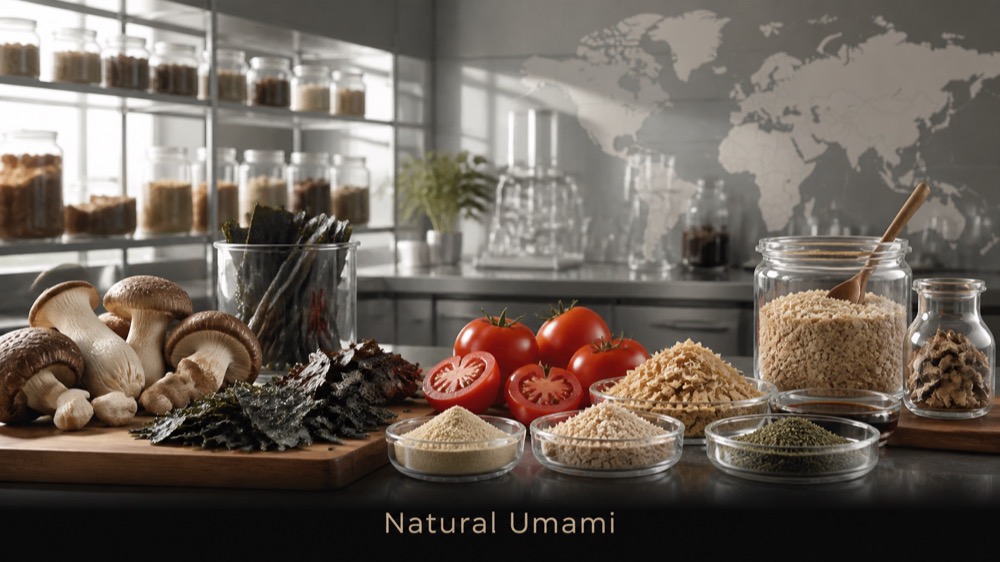
· Mushroom extract provides depth and broth-like body
· Yeast extract delivers immediate savory impact
· Tomato concentrate contributes natural glutamates
· Seaweed extract adds mild marine umami
· Fermented plant extracts enhance complexity and persistence
The future of seasoning lies in synergistic, multi-source umami systems rather than single ingredients.
Mushroom-Based Umami Is a Key Growth Segment
Among natural flavor ingredients, mushroom-derived umami systems are experiencing rapid global growth.
Key drivers include:
· Strong clean label positioning
· Natural culinary association
· Compatibility with plant-based formulations
· Premium consumer perception
Mushroom extracts offer functional benefits such as:
· Broth-like richness
· Roasted and kokumi characteristics
· Improved flavor persistence
They are widely used in:
· Plant-based meat products
· Instant noodles
· Sauces and seasonings
· Savory snacks
· Ready-to-eat meals
This makes mushroom-based umami a cornerstone of next-generation flavor development.
Fermented Umami Technologies Are Expanding
Fermentation is another major driver of innovation in the savory ingredient market.
Fermented umami systems provide:
· Natural flavor development
· Clean label advantages
· Reduced reliance on sodium
· Enhanced taste complexity
Emerging technologies include:
· Fermented mushroom extracts
· Yeast-derived savory systems
· Fermented soy-based ingredients
· Precision fermentation solutions
In addition to functionality, fermentation aligns with consumer preferences for authenticity, wellness, and traditional food craftsmanship.
Sodium Reduction Is Accelerating Innovation
Sodium reduction has become a critical challenge across the global food industry.
Consumers and regulators are pushing for:
· Lower salt intake
· Healthier formulations
· Improved nutritional profiles
However, reducing sodium often compromises flavor intensity and consumer satisfaction.
Natural umami systems address this gap by enhancing:
· Salt perception
· Flavor fullness
· Overall palatability
This allows manufacturers to reduce sodium chloride levels without sacrificing taste, making umami systems essential for future product development.
Natural Umami Enables Plant-Based Food Success
The rapid growth of plant-based foods presents both opportunities and formulation challenges.
Common issues with plant proteins include:
· Beany or off-flavors
· Bitterness
· Weak flavor impact
· Lack of meat-like depth
Natural umami systems help overcome these limitations by delivering:
· Stronger savory identity
· Improved mouthfeel
· Effective flavor masking
· Authentic culinary profiles
Successful plant-based products increasingly rely on integrated umami systems rather than single flavor ingredients.
From MSG-Free to Intelligent Flavor Systems
The industry is moving beyond simple “MSG-free” claims.
Future competition will focus on:
· Intelligent savory system design
· Functional flavor performance
· Clean label optimization
· Application-specific customization
· Sensory engineering
This signals a broader shift from ingredient supply to comprehensive flavor solution development.
Companies that combine R&D expertise, sensory science, and natural ingredient innovation will lead the next phase of industry growth.
Final Perspective: The Future of Natural Umami
Natural umami is no longer a niche trend—it is a core driver of innovation in the global seasoning and food industry.
For manufacturers, the key question is no longer whether to replace artificial flavor systems.
The real challenge is how to design the next generation of natural, high-performance savory solutions.
That is where the future of food formulation is heading.