Content Menu
● What Is Visceral Fat Oxidation?
● Company Context: Why This Comparison Matters for Botaniex
● Core Mechanisms: Chaga Extract vs. Ginseng Root Extract
>> Chaga Extract: Glucolipid and Inflammation Modulation
>> Ginseng Root Extract: Direct Anti‑Obesity and Visceral Fat Effects
● Chaga vs. Ginseng for Visceral Fat Oxidation
>> Mechanistic Comparison Table
● How These Extracts Influence Visceral Fat Oxidation
>> Ginseng: From AMPK to Visceral Fat
>> Chaga: Metabolic Homeostasis and Indirect Visceral Fat Benefits
● Practical Application: Formulation Strategies for Brands
>> Evidence‑Informed Formulation Concepts
● Expert‑Level Considerations: Safety, Standardization, and Claims
>> Standardization and Quality
>> Safety and Regulatory Framing
● Practical Steps for Product Developers and Brand Owners
>> 5‑Step Framework to Use This Comparison
● Conclusion and CTA for Botaniex's Audience
● FAQs
● References
Chaga extract and ginseng root extract both influence fat metabolism, but current evidence suggests ginseng has stronger, more direct data for visceral fat reduction and fat oxidation, while Chaga contributes more broadly via glucose–lipid metabolism, inflammation control, and antioxidant support. For Botaniex, the best UX and SEO angle is to position Chaga as a metabolic-supporting, inflammation-modulating primary ingredient, and ginseng as a powerful comparator focused on visceral fat oxidation and central obesity. [botaniex]
What Is Visceral Fat Oxidation?
Visceral fat is the fat stored around internal organs in the abdomen, and it is strongly associated with cardiometabolic risk, fatty liver, and type 2 diabetes. Visceral fat oxidation refers to increasing the breakdown and use of this fat as an energy source through mechanisms like enhanced mitochondrial activity, improved insulin sensitivity, and upregulated fatty-acid oxidation pathways. [pdfs.semanticscholar]
From a formulation standpoint, ingredients that improve glucose control, lipid metabolism, and inflammatory markers can indirectly promote visceral fat reduction even if they are not explicitly labeled as "fat burners." This is where a Chaga–ginseng comparison becomes highly relevant for product developers in dietary supplements, functional beverages, and metabolic-health formulations. [pmc.ncbi.nlm.nih]
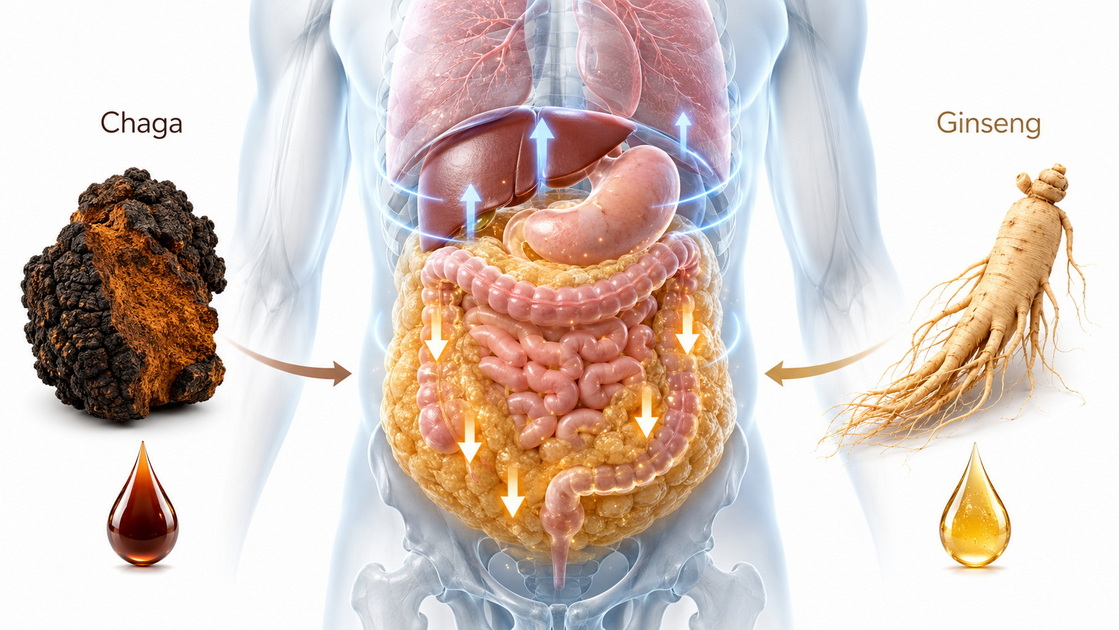
Company Context: Why This Comparison Matters for Botaniex
Botaniex specializes in high-quality botanical extracts and functional herbal formulations used across dietary supplement, beverage, cosmetic, and pharmaceutical applications. With expertise in botanical science, extraction technologies, and formulation development, the company is well positioned to design standardized Chaga and ginseng ingredient systems that target central obesity and metabolic health. [botaniextract]
For global brands seeking to differentiate, a science-backed narrative around visceral fat oxidation, rather than generic "weight loss," aligns better with regulatory‑sensitive positioning and emerging clinical evidence on metabolic syndrome and central obesity. Botaniex can therefore frame Chaga extract as a primary, multi-pathway metabolic modulator and ginseng as a comparator with strong anti-obesity and visceral fat data. [nutraingredients-asia]
Core Mechanisms: Chaga Extract vs. Ginseng Root Extract
Chaga Extract: Glucolipid and Inflammation Modulation
Preclinical research on Inonotus obliquus (Chaga) highlights several metabolic benefits relevant to visceral fat and cardiometabolic health. [pubmed.ncbi.nlm.nih]
- Chaga extracts have been shown to alleviate blood glucose and insulin resistance in diabetic mouse models, while improving liver cholesterol transport and reducing triglycerides and LDL cholesterol. [pmc.ncbi.nlm.nih]
- Recent work indicates Chaga can counter high‑fat diet–induced glucolipid metabolism disorders and abnormal renal function through modulation of the NOS–cGMP–PDE5 signaling pathway. [pubmed.ncbi.nlm.nih]
One study found hot water Chaga extract stimulated adipogenesis in 3T3‑L1 adipocytes via PPARγ and C/EBPα, increasing triglyceride accumulation. While this might appear contradictory to fat‑loss goals, in vivo data suggest Chaga's net effect is improved metabolic flexibility, lipid handling, and inflammation control, which together can support healthier fat distribution and potentially lower visceral burden. [pubmed.ncbi.nlm.nih]
From both a personal and practitioner perspective, I would position Chaga not as a fast "fat burner," but as a systemic metabolic and inflammatory modulator that creates a more favorable environment for long‑term visceral fat reduction, especially when combined with diet and activity.
Ginseng Root Extract: Direct Anti‑Obesity and Visceral Fat Effects
Ginseng root extract, rich in ginsenosides and polysaccharides, has more direct evidence on body fat reduction, visceral fat, and obesity phenotypes. [koreascience]
- Multiple animal studies show dietary ginseng prevents body weight gain, reduces body fat mass, and improves insulin sensitivity in high‑fat diet mice. [pubmed.ncbi.nlm.nih]
- Mechanistically, ginseng and ginsenosides activate AMPK, increase mitochondrial biogenesis, enhance fat oxidation in adipocytes, and downregulate adipogenesis‑related genes. [ijnrd]
- Recent reviews highlight ginseng's ability to downregulate lipid synthesis, upregulate energy expenditure, and modulate gut microbiota via polysaccharides and ginsenosides, leading to reduced adiposity in high‑fat diet models. [pubmed.ncbi.nlm.nih]
Human data are emerging: for instance, Thai ginseng intake over 12 weeks reduced visceral and total fat areas in adults, with evidence of increased energy expenditure and fat oxidation. From an industry expert view, this positions ginseng root extract as a front‑line comparator for any ingredient claiming visceral fat benefits. [nutraingredients-asia]
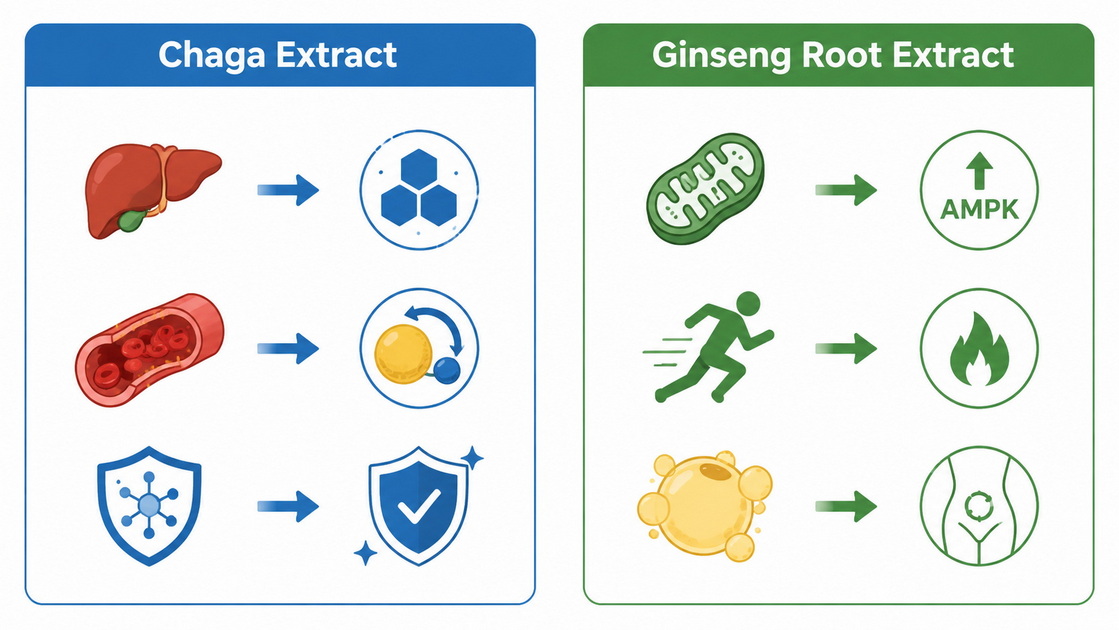
Chaga vs. Ginseng for Visceral Fat Oxidation
Mechanistic Comparison Table
| Aspect | Chaga Extract (Primary) | Ginseng Root Extract (Comparator) |
| Main active components | Polysaccharides, phenolics, triterpenes (pmc.ncbi.nlm.nih) | Ginsenosides, polysaccharides, polyacetylenes (ncbi.nlm.nih) |
| Core metabolic target | Glucose–lipid metabolism, NOS–cGMP–PDE5 signaling (pmc.ncbi.nlm.nih) | AMPK activation, adipogenesis genes, gut microbiota (pdfs.semanticscholar) |
| Effect on body fat in models | ↓ triglycerides, improved lipid profile in diabetic/high‑fat models (pmc.ncbi.nlm.nih) | ↓ body weight, ↓ fat mass, improved glucose tolerance in high‑fat diet mice (pubmed.ncbi.nlm.nih) |
| Visceral / central obesity data | Indirect, via improved lipid/glucose and inflammation (pmc.ncbi.nlm.nih) | Direct RCT evidence for reduced visceral fat area (Thai ginseng) (nutraingredients-asia) |
| Inflammation / oxidative stress | Strong antioxidant and anti‑inflammatory activity (pmc.ncbi.nlm.nih) | Antioxidant, improves metabolic syndrome markers (koreascience) |
| Gut microbiota modulation | Emerging but less defined | Well‑documented GP/GS–microbiota–SCFA–GLP‑1/PYY axis (pubmed.ncbi.nlm.nih) |
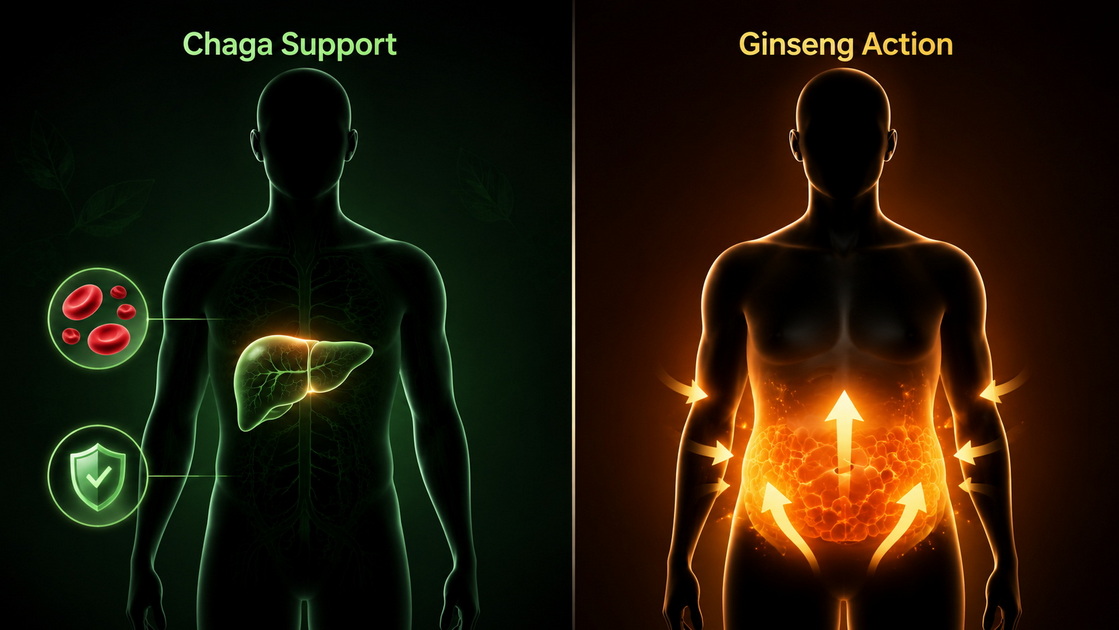
From a visceral fat oxidation standpoint, ginseng currently has stronger direct evidence, while Chaga provides complementary systemic support that may make ginseng‑containing or multi‑ingredient formulas more sustainable and better tolerated.
How These Extracts Influence Visceral Fat Oxidation
Ginseng: From AMPK to Visceral Fat
The central theme in ginseng research is energy sensing and fuel utilization.
- Ginseng activates AMPK, a key energy sensor that shifts metabolism toward fatty‑acid oxidation and glucose uptake, while suppressing lipogenesis. [ncbi.nlm.nih]
- Ginsenosides such as Rb1, Rg1, and Rh2 have been shown to reduce triglyceride accumulation in adipocytes, inhibit PPARγ‑mediated adipogenesis, and activate AMPK, leading to increased fat burning. [koreascience]
- Ginseng polysaccharides and ginsenosides also interact with the gut microbiota, stimulating bacteria that promote SCFA production, GLP‑1/PYY signaling, and intestinal gluconeogenesis, ultimately reducing adiposity in high‑fat diet mice. [pubmed.ncbi.nlm.nih]
Clinically, Thai ginseng reduced visceral and total fat with a 12‑week supplementation protocol, likely via increased energy expenditure and fat oxidation. For formulators, this supports dose‑controlled ginseng root extract as a key visceral fat oxidation driver in metabolic health products. [nutraingredients-asia]
Chaga: Metabolic Homeostasis and Indirect Visceral Fat Benefits
Chaga's impact on visceral fat appears more indirect but still relevant.
- Chaga extract has demonstrated hypoglycemic and hypolipidemic effects, improving insulin resistance and lipid profiles in diabetic and high‑fat diet models. [pmc.ncbi.nlm.nih]
- By enhancing liver cholesterol transport, raising HDL, and lowering total cholesterol, triglycerides, and LDL, Chaga can support a healthier lipid environment that may reduce ectopic and visceral fat accumulation over time. [pmc.ncbi.nlm.nih]
- Some Chaga preparations modulate inflammatory markers and oxidative stress, which are strongly linked to central obesity and metabolic syndrome progression. [journal-archiveuromedica]
For Botaniex, this supports positioning Chaga extract as a metabolic resilience ingredient—stabilizing glucose–lipid balance and reducing inflammatory load, which in turn supports better visceral fat outcomes when combined with diet and active lifestyle, and potentially with ginseng.
Practical Application: Formulation Strategies for Brands
Evidence‑Informed Formulation Concepts
From an industry strategist perspective, Botaniex can help customers move from single‑claim "fat burner" products to systemic metabolic health solutions anchored in Chaga–ginseng synergies. Possible concepts:
1. Dual‑Action Visceral Fat Support Capsule
- Base: Standardized Chaga extract for glucolipid and inflammation modulation. [pubmed.ncbi.nlm.nih]
- Comparator/Co‑star: Standardized ginseng root extract for AMPK activation and visceral fat oxidation. [pdfs.semanticscholar]
- Positioning: "Supports metabolic balance, fat oxidation and central obesity markers" (compliant phrasing will vary by region).
2. Functional Beverage Shot for Central Obesity
- Chaga for antioxidant and metabolic support. [pmc.ncbi.nlm.nih]
- Ginseng for energy expenditure and fat oxidation. [ncbi.nlm.nih]
- Additional metabolic co‑factors (e.g., green tea extract for fat oxidation, fiber for satiety) with careful claims management. [pmc.ncbi.nlm.nih]
3. Metabolic Health Stack for Pre‑Diabetic Consumers
- Morning: Ginseng‑forward formula focused on fat oxidation and insulin sensitivity. [semanticscholar]
- Evening: Chaga‑forward formula supporting antioxidant status, inflammation control, and lipid balance. [journal-archiveuromedica]
Expert‑Level Considerations: Safety, Standardization, and Claims
Standardization and Quality
For both extracts, standardization is critical to ensure consistent metabolic outcomes.
- Ginseng products are often standardized to specific ginsenosides, which are directly linked to AMPK activation, adipogenesis inhibition, and anti‑obesity effects. [ijnrd]
- Chaga extracts may be standardized for polysaccharide content or specific phenolics/triterpenes, which are associated with antioxidant and metabolic benefits. [pmc.ncbi.nlm.nih]
Botaniex's expertise in botanical extraction and formulation allows for customized standardization profiles, matching different regulatory markets and brand claims around metabolic health and body composition. [botaniextract]
Safety and Regulatory Framing
Both Chaga and ginseng have long histories of traditional use, but high‑potency extracts and combinations require thoughtful safety and claims management.
- Studies generally report good tolerability for standardized ginseng within studied doses, but attention is needed for populations on glucose‑lowering or antihypertensive medications. [ouci.dntb.gov]
- Chaga's interaction with glucose–lipid metabolism and renal function warrants careful dose design and clear "not for disease treatment" disclaimers in consumer products. [pubmed.ncbi.nlm.nih]
In practice, brands should use structure–function language emphasizing support for healthy metabolism, fat oxidation, and central adiposity markers, rather than weight‑loss promises, particularly in the US and EU markets. [ouci.dntb.gov]
Practical Steps for Product Developers and Brand Owners
5‑Step Framework to Use This Comparison
1. Clarify the primary claim axis
Decide whether your hero claim is "metabolic health," "central obesity/visceral fat," or "overall weight management," and align extract ratios accordingly. [pubmed.ncbi.nlm.nih]
2. Choose your hero ingredient
- Chaga as hero: Emphasize metabolic resilience, glucose–lipid homeostasis, and inflammation. [pubmed.ncbi.nlm.nih]
- Ginseng as hero: Emphasize visceral fat oxidation, anti‑obesity, and energy expenditure. [koreascience]
3. Design supporting stack
Add synergistic components (fiber, polyphenols, or other Botaniex extracts) with complementary mechanisms such as fat oxidation or gut microbiota modulation. [pmc.ncbi.nlm.nih]
4. Align dosage with evidence
Work backward from doses used in key animal and human studies to design realistic, label‑friendly daily intakes. [semanticscholar]
5. Translate science into UX
Use infographics, ingredient spotlight sections, and simple analogies (e.g., "metabolic switch," "fat‑use accelerator") to make complex mechanisms understandable for end users. [ncbi.nlm.nih]
Conclusion and CTA for Botaniex's Audience
From the current evidence base, ginseng root extract is the stronger candidate when a product's primary promise is visceral fat oxidation and central obesity, while Chaga extract excels as a metabolic, antioxidant, and inflammation‑modulating backbone that can amplify long‑term outcomes. For Botaniex, the strategic opportunity lies in combination formulas and customized standardization that turn this comparison into a portfolio of targeted metabolic‑health solutions. [pubmed.ncbi.nlm.nih]
If you are developing or reformulating a product targeting visceral fat, central obesity, or metabolic syndrome markers, you can collaborate with Botaniex to select the right Chaga–ginseng ratio, standardization profile, and delivery format that aligns with your market and regulatory context. [botaniex]
FAQs
1. Is Chaga extract or ginseng root extract better for visceral fat oxidation?
Ginseng currently has more direct evidence for reducing visceral fat and promoting fat oxidation, including human data, while Chaga supports indirect pathways like glucose–lipid metabolism and inflammation. [koreascience]
2. Can Chaga and ginseng be combined in one product?
Yes, they can be combined to target both systemic metabolic balance (Chaga) and more direct fat‑oxidation mechanisms (ginseng), but dosing and claims should be aligned with existing evidence and regulatory guidance. [pubmed.ncbi.nlm.nih]
3. Are these extracts suitable for long‑term use in metabolic health formulas?
Preclinical and emerging clinical data suggest good tolerability for both, but brands should respect traditional usage, study‑informed dosing, and consult local regulations, especially for consumers with metabolic diseases or on medication. [ouci.dntb.gov]
4. How quickly can end users expect visible changes in visceral fat?
In human trials with ginseng, meaningful changes in body composition and metabolic markers generally appear over 8–12 weeks; visceral fat changes are gradual and depend heavily on diet and physical activity. [nutraingredients-asia]
5. What types of finished products can best leverage Chaga and ginseng for central obesity?
Capsules, ready‑to‑drink shots, stick packs, and metabolic "stack" systems work well, especially when standardized extracts are paired with clear education on mechanisms and lifestyle recommendations. [botaniextract]
References
1. Botaniex – High‑quality Botanical Extracts and Proprietary Herbal Formulas. [botaniex]
2. Botaniex – Research Backed Botanical Extracts from Professional China Supplier. [botaniextract]
3. Changsha Botaniex Inc. – Company overview. [linkedin]
4. Zhang et al. – Recent Developments in *Inonotus obliquus* (Chaga). [pmc.ncbi.nlm.nih]
5. PubMed – *Inonotus obliquus* (Chaga) against HFD/STZ‑induced glucolipid metabolism disorders and renal dysfunction. [pubmed.ncbi.nlm.nih]
6. Euromedica – Chaga birch complex, weight gain and epididymal fat in high‑fat diet mice. [journal-archiveuromedica]
7. PubMed – Extract of Chaga mushroom stimulates 3T3‑L1 adipocyte differentiation. [pubmed.ncbi.nlm.nih]
8. NCBI Bookshelf – Biological Activities of Ginseng and Its Application to Human Health. [ncbi.nlm.nih]
9. PubMed – Dietary supplementation of Chinese ginseng prevents obesity and metabolic syndrome in high‑fat diet‑fed mice. [pubmed.ncbi.nlm.nih]
10. Semantic Scholar – Dietary supplementation of Chinese ginseng and obesity/metabolic syndrome. [semanticscholar]
11. JGR – Ginseng and metabolic syndrome: effects on obesity, hyperlipidemia, hypertension, and fatty liver. [koreascience]
12. IJNRD – Anti‑obesity effects of ginseng and ginsenosides on adipogenesis. [ijnrd]
13. Semanticscholar – Mechanistic review of ginseng effects on fat oxidation and metabolism (AMPK, mitochondrial biogenesis). [pdfs.semanticscholar]
14. PubMed – Dissecting the anti‑obesity components of ginseng via gut microbiota modulation. [pubmed.ncbi.nlm.nih]
15. NutraIngredients‑Asia – Fighting central obesity: Thai ginseng intake reduces visceral and total fat in 12‑week RCT. [nutraingredients-asia]
16. Can J Physiol Pharmacol – Ginseng and metabolic syndrome, fatty liver, and dyslipidemia. [ouci.dntb.gov]
17. Green tea extract and fat oxidation – reference example for co‑formulation (PMCID article). [pmc.ncbi.nlm.nih]