Content Menu
● Berberine vs. Radish Red: Managing Sweetener Optimization in Modern Formulations
● What Is Sweetener Optimization Today?
● Berberine – Metabolic Lever for Sweetener Optimization
>> How Berberine Works in Glucose and Sweetness Management
>> Application Scenarios for Berberine in Low‑Sugar Systems
● Radish Red – Sensory and Perception Lever in Sweetness Design
>> What Radish Red Is and Why It Matters
>> Where Radish Red Fits in Reduced‑Sugar Formulations
● Berberine vs. Radish Red – A Formulator's Comparison for Sweetener Optimization
● When to Prioritize Berberine vs. Radish Red
>> Choose Berberine When…
>> Choose Radish Red When…
● Expert Workflow – How to Integrate Berberine and Radish Red into a Sweetener Optimization Project
>> Step‑by‑Step Formulation Approach
● Case‑Style Illustration – Low‑Sugar Functional Beverage
● CTA
● FAQ
● References
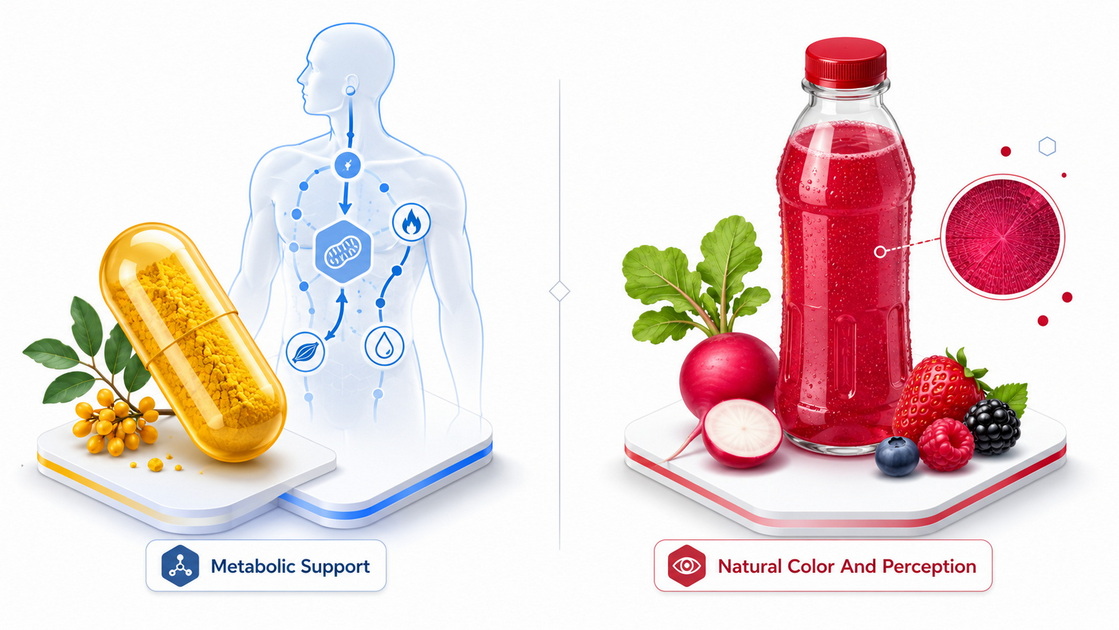
Berberine and radish red play very different roles in sweetener optimization: berberine works inside the body to modulate glucose and metabolic response, while radish red works in the product matrix to support color stability and perceived sweetness. When you design next‑generation low‑sugar foods and beverages under Botaniex's ingredient portfolio, you are essentially orchestrating metabolic modulators like berberine together with sensory modifiers like radish‑derived anthocyanin colors to hit the sweet spot between taste, health, and label appeal. [botaniex]
Berberine vs. Radish Red: Managing Sweetener Optimization in Modern Formulations
From an industry formulator's perspective, sweetener optimization is no longer just about making products taste sweet; it is about aligning glycemic response, consumer perception, regulatory constraints, and brand story in a single system. As a practitioner working with global B2B brands, I see berberine and radish red sitting at two ends of this system: berberine shaping how the body handles sugar, and radish red shaping how the consumer experiences sweetness and quality in low‑sugar matrices. [store.mayoclinic]
What Is Sweetener Optimization Today?
In 2026, sweetener optimization means reducing added sugars, managing total caloric load, and still delivering a sweetness curve, mouthfeel, and appearance comparable to traditional sucrose systems. For Botaniex's global customers, this typically involves layering high‑intensity natural sweeteners (stevia, monk fruit), bulk polyols (erythritol), and functional actives like berberine, supported by natural colors such as radish red to maintain visual cues of indulgence. [botaniex]
From a user perspective, "optimized sweetness" feels like a normal eating experience: no bitter off‑notes, no artificial aftertaste, no dull color, and no aggressive glucose spikes after a meal or drink. This is the core narrative that resonates in buyer and technical decision‑maker searches around "low sugar," "natural sweeteners," and "blood sugar friendly" formulations. [pmc.ncbi.nlm.nih]
Berberine – Metabolic Lever for Sweetener Optimization
How Berberine Works in Glucose and Sweetness Management
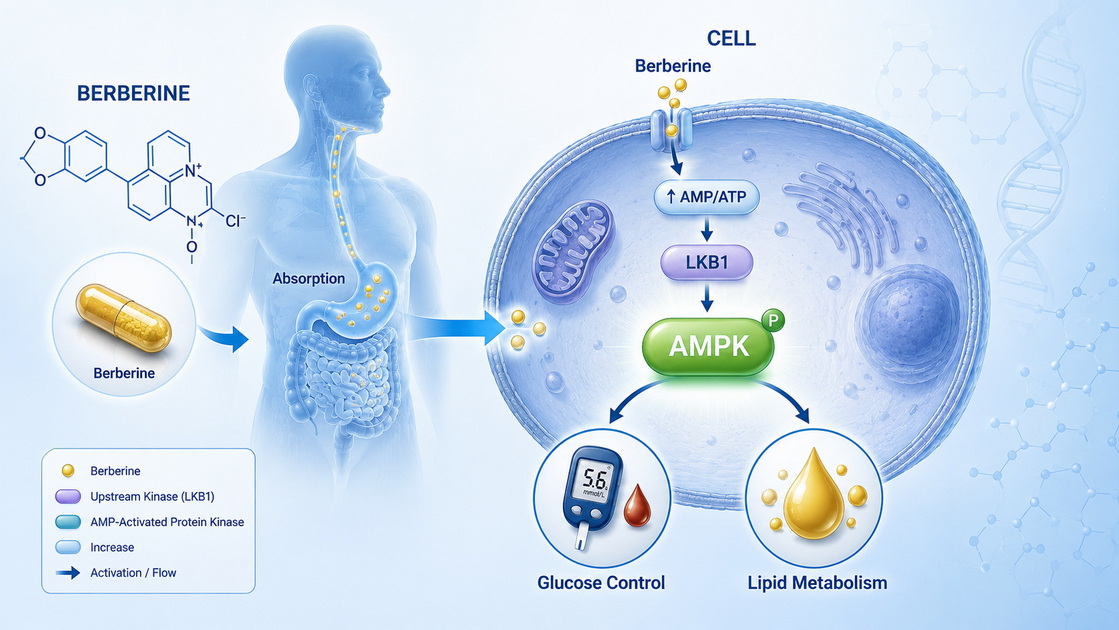
Berberine is an isoquinoline alkaloid widely studied for its ability to modulate glucose and lipid metabolism, largely through activation of AMP‑activated protein kinase (AMPK). Clinical and mechanistic data suggest berberine can help lower fasting blood glucose, HbA1c, and triglycerides, with effects in some studies comparable to first‑line oral hypoglycemics. [reemhospital]
For formulators, the relevance to sweetener optimization is clear: by supporting better insulin sensitivity, glucose uptake, and hepatic glucose control, berberine allows product developers to position reduced‑sugar products with an added metabolic benefit claim where regulations permit. From a consumer's standpoint, this means not only less sugar on the label but a more favorable post‑prandial response when consumed as part of a balanced diet. [store.mayoclinic]
Application Scenarios for Berberine in Low‑Sugar Systems
In practice, I see berberine used in:
- Dietary supplement capsules or tablets positioned for blood sugar management in adults with metabolic concerns. [pmc.ncbi.nlm.nih]
- Functional beverages and shots where sweetener systems are already optimized with stevia or monk fruit, and berberine is layered in as a functional active. [botaniex]
- Meal replacement or metabolic shakes targeting glycemic control and weight management support. [health.osu]
Because berberine has a bitter, slightly astringent taste, sweetener optimization around it often requires multicomponent sweetener systems (e.g., stevia plus erythritol) and sometimes supportive flavors and colors to mask bitterness. [botaniex]
Radish Red – Sensory and Perception Lever in Sweetness Design
What Radish Red Is and Why It Matters
Radish red is a natural red colorant typically derived from red radish, rich in anthocyanin pigments accepted widely for food coloring. Compared with some fruit‑based anthocyanins, radish anthocyanins can offer favorable stability under selected pH and light conditions, which is crucial in beverages and dairy‑type products. [naturesflavors]
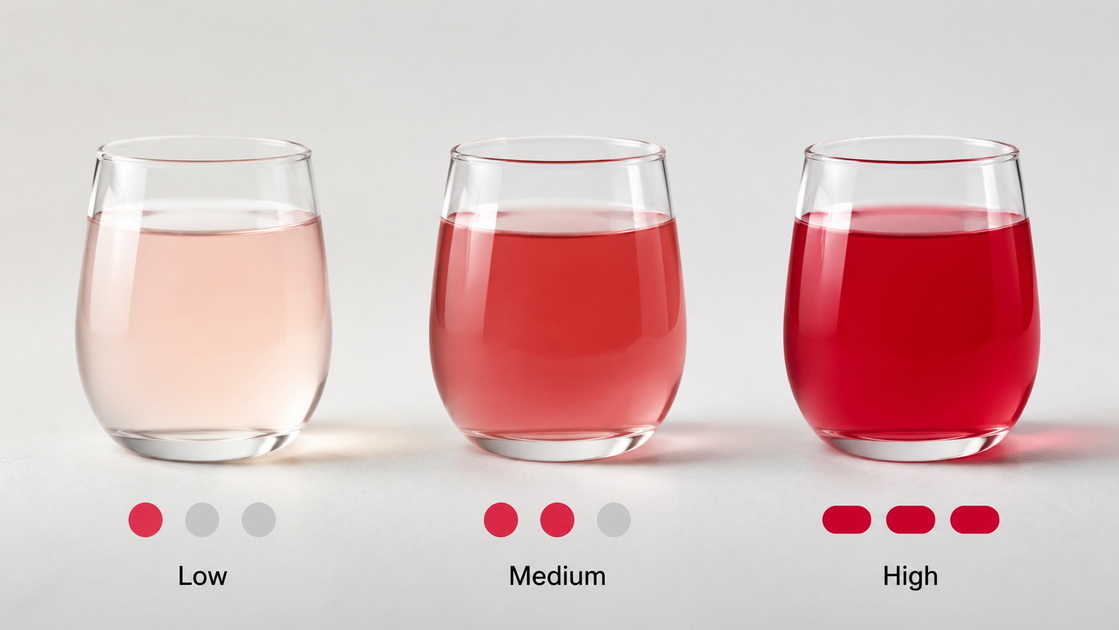
From a sweetener optimization angle, radish red does not change sugar metabolism directly; it changes how sweet the product seems and how "natural" or "premium" it feels to users. A vivid red or pink hue in a low‑sugar drink instantly reinforces flavor expectations (strawberry, berry, pomegranate) and can support the impression of full sweetness and flavor intensity even when sugar is significantly reduced. [oterra]
Where Radish Red Fits in Reduced‑Sugar Formulations
Radish red plays a critical role in:
- Low‑sugar flavored waters and functional beverages, where color intensity supports perceived flavor and sweetness. [naturalfoodcolor]
- Plant‑based yogurts and desserts, where anthocyanin colors underline fruit cues without synthetic dyes. [oterra]
- Confectionery with reduced sugar, helping candy or gummies look indulgent despite alternative sweeteners.
The key is that color, flavor, and sweetness form a psychological triad: when the color is washed‑out, users often perceive the flavor and sweetness as weaker, even if the sweetener concentration is unchanged. Radish red lets developers "turn up" this visual cue without increasing sugar. [naturalfoodcolor]
Berberine vs. Radish Red – A Formulator's Comparison for Sweetener Optimization
Below is a concise table I typically use when explaining to R&D or marketing teams how these two ingredients support sweetener optimization in very different but complementary ways.
| Dimension | Berberine | Radish Red |
| Primary role | Metabolic support for glucose and lipid control pmc.ncbi.nlm.nih | Natural colorant improving visual sweetness cues oterra |
| Mechanism | Activates AMPK, improves insulin sensitivity and glucose uptake pmc.ncbi.nlm.nih | Anthocyanin pigments influence appearance and perceived flavor intensity oterra |
| Direct effect on sweetness | None on taste; supports better handling of sugars metabolically store.mayoclinic | No metabolic effect; enhances perceived sweetness and fruitiness oterra |
| Typical dosage form | Capsules, tablets, functional beverages and shakes store.mayoclinic | Beverages, dairy analogues, confectionery, bakery glazes oterra |
| Key formulation challenge | Bitterness and astringency; need for masking and sweetener systems botaniex | pH and light stability; color shift over shelf life oterra |
| Label narrative | Metabolic, blood sugar and cardiometabolic support (where permitted) pmc.ncbi.nlm.nih | "Natural color," "no artificial colors," clean label visual appeal naturesflavors |
| Role in Botaniex portfolio | Part of functional actives supporting men's and women's health categories shippingonline | Alignment with natural food colors and sweetener systems for RTD and food botaniex |
When to Prioritize Berberine vs. Radish Red
Choose Berberine When…
As a product strategist, I advise prioritizing berberine in sweetener optimization projects when:
- The primary claim platform involves blood sugar, insulin, weight‑management, or metabolic wellness (within local regulatory frameworks). [health.osu]
- The format is a dietary supplement or a clearly functional beverage where consumers expect clinically discussed actives. [reemhospital]
- You need to differentiate a low‑sugar product with evidence‑backed metabolic benefits beyond "reduced calories." [pmc.ncbi.nlm.nih]
In these projects, sweetener optimization is mainly about taste‑masking berberine and ensuring the sweetener system does not add glycemic load inconsistent with the product's positioning. Botaniex's portfolio of natural sweeteners (e.g., stevia, monk fruit, erythritol) can be leveraged to build zero‑sugar or low‑GI systems that keep the label aligned with berberine's benefits. [botaniex]
Choose Radish Red When…
I recommend emphasizing radish red in sweetener optimization when:
- The product is highly visual (RTD beverages, juices, gummies), and color strongly influences perceived sweetness.
- The key brief is replacing synthetic colors while holding sweetness perception in a reduced‑sugar formula. [oterra]
- You are targeting clean label or "natural color only" claims for global markets where synthetic dyes are scrutinized. [naturesflavors]
Here, sweetener optimization is about calibrating sweetness curves and appearance together: a slightly more saturated red tone can allow a small reduction in high‑intensity sweetener without hurting perceived sweetness, especially when combined with flavor systems that align with the color.
Expert Workflow – How to Integrate Berberine and Radish Red into a Sweetener Optimization Project
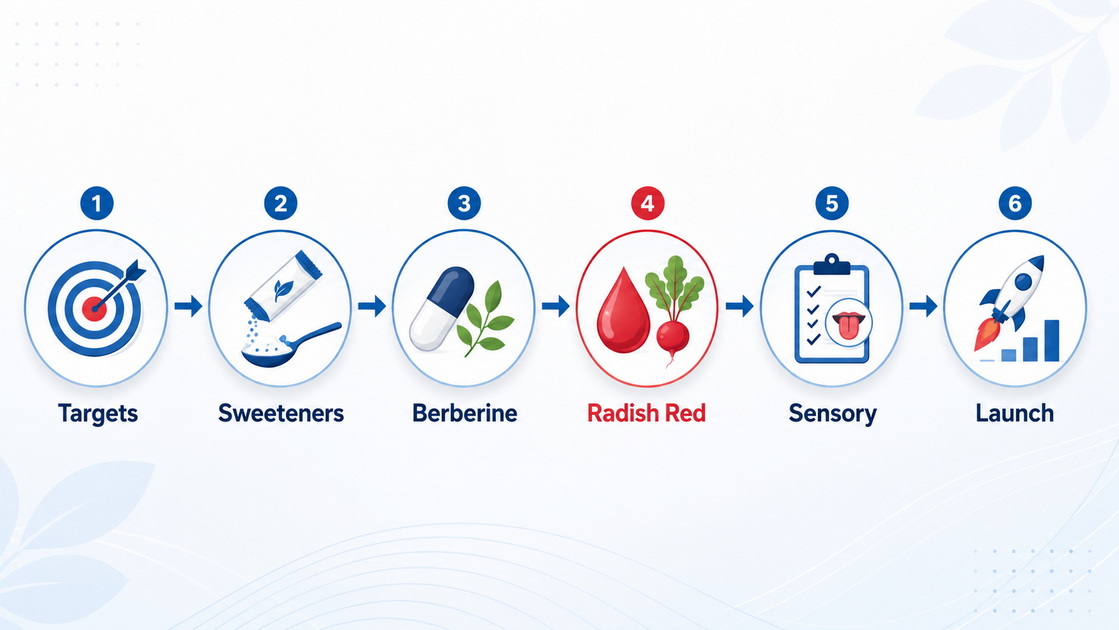
From an industry consultant's point of view, a practical workflow to integrate both ingredients with Botaniex's sweetener portfolio might look like this:
Step‑by‑Step Formulation Approach
1. Define the metabolic and sensory targets
- Clarify required blood sugar or metabolic positioning (e.g., "supports healthy glucose levels"). [store.mayoclinic]
- Specify sensory KPIs: target sweetness intensity, flavor profile, and color space (e.g., CIELAB or visual benchmark).
2. Select the sweetener backbone
- Build a zero‑ or low‑calorie sweetener system using stevia, monk fruit, and/or erythritol from Botaniex. [botaniex]
- Adjust sweetness curves (onset, peak, and linger) with blends and flavor modulators.
3. Layer in berberine as a functional active
- Define dosage per serving based on current evidence and regulatory guidance for your target markets. [reemhospital]
- Conduct bench trials focusing on bitterness masking with flavor, sweetener ratio, and matrix choice.
4. Design color strategy with radish red
- Choose the radish red system suitable for your pH range and processing conditions to minimize degradation. [naturalfoodcolor]
- Match the hue to flavor (e.g., berry red for mixed berries) so that visual cues support perceived sweetness.
5. Run sensory and shelf‑life validation
- Conduct triangle tests or hedonic panels assessing sweetness, aftertaste, and visual appeal versus a full‑sugar control.
- Evaluate color stability and sweetness perception over real‑time and accelerated aging.
6. Align marketing and regulatory narratives
- Ensure berberine‑related claims are substantiated and compliant for each market. [pmc.ncbi.nlm.nih]
- Highlight "natural color," "reduced sugar," and "no artificial sweeteners" where appropriate, leveraging Botaniex's natural sweetener and color portfolio. [botaniex]
Case‑Style Illustration – Low‑Sugar Functional Beverage
Consider a global beverage brand developing a low‑sugar metabolic support drink. The team targets a product with:
- <3 g sugars per serving
- Support for healthy blood sugar levels in adults
- A clear red‑berry appearance without artificial colors
By using Botaniex natural sweeteners (stevia plus erythritol), the brand reaches the desired sweetness at near‑zero calories, then layers in berberine at a research‑informed dose to support blood sugar claims. To maintain the look and feel of a classic berry drink, they incorporate radish red anthocyanins tuned to the beverage pH, achieving a bright red color that aligns with berry flavors and sustains perceived sweetness. [botaniex]
In sensory testing, consumers describe the drink as "sweet enough," "natural tasting," and "looks like a regular berry juice", even though its sugar content is drastically lower than the original full‑sugar reference. This is a practical example of how berberine and radish red together anchor both the metabolic and sensory sides of sweetener optimization.
CTA
If you are exploring sweetener optimization for your next low‑sugar beverage, supplement, or functional food, connect with Botaniex's formulation team to design a berberine‑powered, radish‑red‑enhanced system tailored to your regulatory market and target consumer." [botaniex]
FAQ
Q1: Does berberine itself replace sugar in formulations?
No. Berberine does not act as a sweetener; it does not provide sweetness or bulk. It supports metabolic pathways linked to glucose control and is used alongside sweeteners like stevia, monk fruit, or erythritol to create low‑sugar products. [store.mayoclinic]
Q2: Can radish red improve actual sweetness intensity?
Radish red does not change the chemical sweetness level, but it can enhance perceived sweetness by aligning color with flavor expectations, helping reduced‑sugar products feel closer to full‑sugar references. [oterra]
Q3: Is it safe to combine berberine with natural sweeteners in beverages?
Formulators routinely combine berberine with natural high‑intensity sweeteners in functional beverages and supplements, provided that dosage, stability, and regulatory considerations are carefully evaluated for each market. Manufacturers should always validate safety and labeling locally. [reemhospital]
Q4: How stable is radish red in acidic beverages?
Radish‑derived anthocyanin colors can show good stability in acidic matrices, especially when pH, light exposure, and packaging are optimized, making them suitable for many beverages and acidic foods. [naturalfoodcolor]
Q5: What type of brand benefits most from combining berberine and radish red?
Brands in functional beverages, metabolic wellness shots, and low‑sugar supplements benefit most, as they can communicate both metabolic support and clean label, naturally colored appeal in a single product concept. [botaniex]
References
1. Botaniex official site – Product categories, natural sweeteners, and natural colors portfolio. Available at: [https://www.botaniex.com] [botaniex]
2. Changsha Botaniex Inc. company profile – Botanical extracts and functional herbal formulations for dietary supplements and functional foods. Available at: [https://botaniex.en.made-in-china.com] [botaniex.en.made-in-china]
3. Yin J, Xing H, Ye J. Efficacy of berberine in patients with type 2 diabetes. *Metabolism* (pilot study via PubMed Central). Available at: [https://pmc.ncbi.nlm.nih.gov/articles/PMC2410097/] [pmc.ncbi.nlm.nih]
4. Mayo Clinic Store – "Berberine Explained: What It Is and Why It Matters." Available at: [https://store.mayoclinic.com/education/what-is-berberine/] [store.mayoclinic]
5. Ohio State Health & Discovery – "Berberine for Weight Loss." Available at: [https://health.osu.edu/wellness/exercise-and-nutrition/berberine-weight-loss] [health.osu]
6. Reem Hospital – "Is Berberine the New Ozempic? Facts, Benefits, and Safety." Available at: [https://www.reemhospital.com/health-hub/berberine-supplement/] [reemhospital]
7. Nature's Flavors – Red food coloring made with red radish, natural. Available at: [https://www.naturesflavors.com/products/red-food-coloring-made-with-red-radish-natural] [naturesflavors]
8. Oterra – Understanding the value of natural colors. Available at: [https://oterra.com/article/understanding-natural-colors] [oterra]
9. Natural Food Color industry resource – Anthocyanin colors and radish red stability data. Available at: [https://www.naturalfoodcolor.com/for-foods/] [naturalfoodcolor]
10. Shippingonline and other directories – Botaniex company descriptions and positioning as innovative manufacturer of natural ingredients. Representative profile: [http://www.shippingonline.cn/Yellowpages/temp1/about_us.asp?solid=dbllfji] [shippingonline]