Content Menu
● Understanding Constipation and Why It Matters
● Ashwagandha Extract for Constipation Support
>> What Is Ashwagandha Extract?
>> Clinical Evidence Linking Ashwagandha to Bowel Health
>> Mechanisms: How Ashwagandha May Influence Constipation
>> Safety, Tolerability, and Regulatory Considerations
● Apple Extract and Apple-Derived Ingredients for Constipation Support
>> Apples as a Traditional Constipation Aid
>> Mechanisms: How Apple Ingredients Support Bowel Regularity
>> Evidence and Limitations for Apple Extract
● Direct Comparison – Ashwagandha Extract vs. Apple Extract for Constipation Support
>> Key Differences in Constipation Support Focus
>>> Constipation Support Profile – Ashwagandha Extract vs. Apple-Derived Ingredients
● Expert Perspectives – When to Choose Each Ingredient
>> From a Clinical and Nutrition Perspective
>> From a Product Manager and Brand Strategist Perspective (Botaniex Angle)
● Practical Usage Scenarios and Formulation Concepts
>> Example Consumer Use Cases
>> Step-by-Step Guidance for End Users (Non-Medical)
● Botaniex Positioning and B2B Messaging for Constipation Support
>> How Botaniex Can Leverage Both Ingredients
● Action-Oriented Conclusion and CTA
● FAQs: Ashwagandha Extract, Apple Extract, and Constipation Support
● References
Constipation is a multifactorial condition that can be influenced by diet, stress, sleep quality, medication, and underlying gut health imbalances. In the nutraceutical and functional food space, formulators increasingly look beyond traditional fiber sources and explore multi-functional botanicals like ashwagandha that address both bowel regularity and stress-related drivers of gastrointestinal discomfort. [nutraingredients]
Botaniex, as a specialist in botanical extracts and functional herbal formulations, is strategically positioned to supply standardized ashwagandha extract alongside apple-derived ingredients to dietary supplement, functional beverage, and pharmaceutical brands seeking differentiated constipation support solutions. [botaniextract]
Understanding Constipation and Why It Matters
Constipation is typically defined as infrequent bowel movements, hard stools, or difficulty passing stool, often accompanied by bloating and discomfort. While occasional constipation is common, chronic issues can significantly impact quality of life and may be linked with diet, sedentary behavior, stress, and medication use. [pmc.ncbi.nlm.nih]
From a product development standpoint, constipation support formulas now go beyond simple laxatives to target: [verywellhealth]
- Stool bulk and consistency (fiber and water balance).
- Gut motility and microbiota (prebiotic and neuromodulatory actions).
- Stress and sleep (which influence bowel patterns).
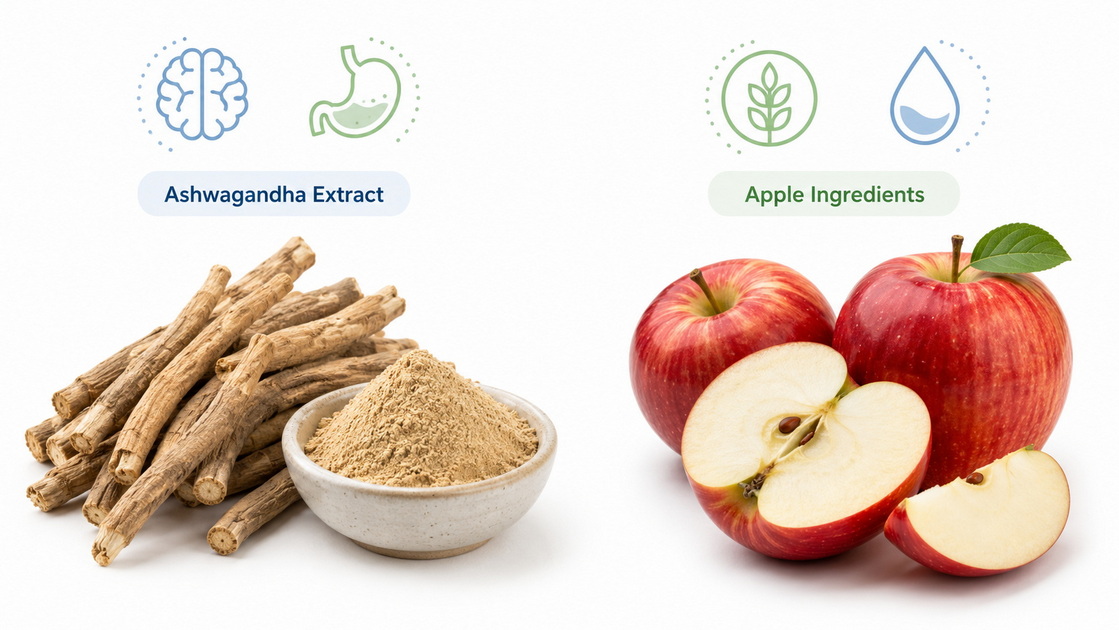
In this context, ashwagandha extract and apple extract or apple-derived ingredients occupy distinct yet complementary roles in evidence-based constipation support. [tuasaude]
Ashwagandha Extract for Constipation Support
What Is Ashwagandha Extract?
Ashwagandha (Withania somnifera) is an adaptogenic herb traditionally used in Ayurvedic medicine for stress, sleep, and general vitality. Modern standardized extracts focus on withanolide content and are formulated for capsules, tablets, functional beverages, and combination formulas. [webmd]
Key characteristics of ashwagandha extract for formulators: [nmi]
- Typically standardized for specific withanolide ranges.
- Often used in 225–600 mg/day dosing ranges in clinical trials. [health]
- Positioned as a multi-benefit ingredient (stress, sleep, mood, and in emerging cases, GI support). [pmc.ncbi.nlm.nih]
Clinical Evidence Linking Ashwagandha to Bowel Health
Recent clinical work has begun to explore ashwagandha's role in bowel function, particularly when combined with other botanicals. A proof-of-concept clinical trial of a proprietary blend containing standardized ashwagandha and okra extracts showed: [sciencedirect]
- Relief of constipation symptoms and improved bowel clearance.
- Better gastrointestinal function and associated metrics.
- Parallel improvements in stress, sleep, and quality of life.
Researchers concluded that this ashwagandha–okra blend "safely and effectively relieved constipation and improved several associated symptoms" in adult volunteers. While this is a combination product, it highlights a pathway through which ashwagandha's stress-modulating effects can indirectly support healthier bowel patterns. [nutraingredients]
Mechanisms: How Ashwagandha May Influence Constipation
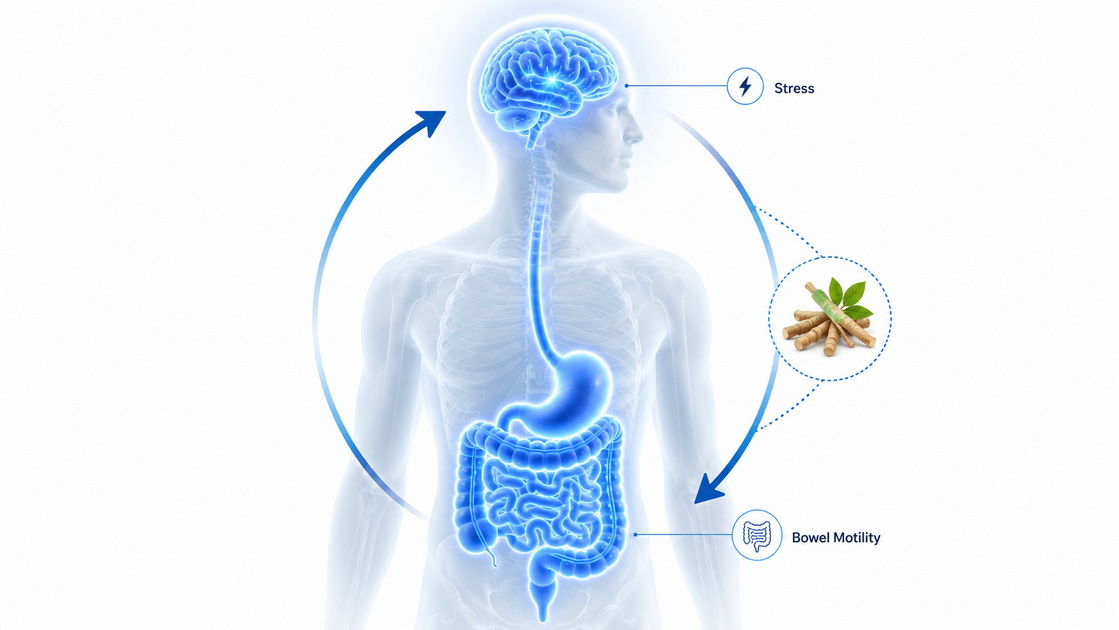
Ashwagandha is not a classic fiber-based laxative; its potential constipation support is largely indirect and linked to systemic effects: [nmi]
- Stress reduction: Multiple controlled trials show ashwagandha significantly reduces stress and anxiety scores, which can positively affect gut motility and perception of GI discomfort. [pmc.ncbi.nlm.nih]
- Sleep and circadian rhythm: Improved sleep quality may normalize autonomic regulation of bowel movements. [nmi]
- Gut–brain axis modulation: Emerging evidence suggests that adaptogens may influence GI function through the hypothalamic–pituitary–adrenal (HPA) axis and neural signaling. [pmc.ncbi.nlm.nih]
From a formulator's perspective, ashwagandha extract is best positioned as a stress-focused, gut–brain axis support ingredient that complements direct stool-bulking or osmotic strategies, rather than a standalone laxative. [sciencedirect]
Safety, Tolerability, and Regulatory Considerations
Most clinical trials report ashwagandha as generally well-tolerated at commonly used doses, with occasional gastrointestinal side effects such as mild stomach upset, nausea, or loose stools. However, regulators and safety bodies have raised a few considerations: [webmd]
- GI side effects and rare liver injury cases have prompted safety monitoring for products containing Withania somnifera. [tga.gov]
- Some reports describe nausea, vomiting, abdominal pain, and fatigue in susceptible individuals, particularly at higher doses. [health]
Practical implications for brands and manufacturers:
- Use standardized extracts with clear compositional and safety documentation. [webmd]
- Align with evidence-based dosage ranges (e.g., 225–600 mg/day in many studies), and avoid unsubstantiated high-dose positioning for constipation. [health]
- Include clear safety statements and encourage consumers to consult healthcare professionals, especially those with liver disease, on medications, or with pre-existing GI disorders. [tga.gov]
Apple Extract and Apple-Derived Ingredients for Constipation Support
Apples as a Traditional Constipation Aid
Apples have a long-standing reputation as a natural, gentle aid for constipation, largely due to their fiber and pectin content. Guidance from nutrition and health sources typically recommends: [healthline]
- Eating one to two raw apples with the peel per day to support regular bowel movements. [tuasaude]
- Leveraging the combination of soluble fiber (pectin), insoluble fiber, and water content to soften stools and increase stool frequency. [healthline]
This makes apples—and by extension, apple-derived ingredients—a familiar and consumer-friendly option in constipation support formulations. [verywellhealth]
Mechanisms: How Apple Ingredients Support Bowel Regularity
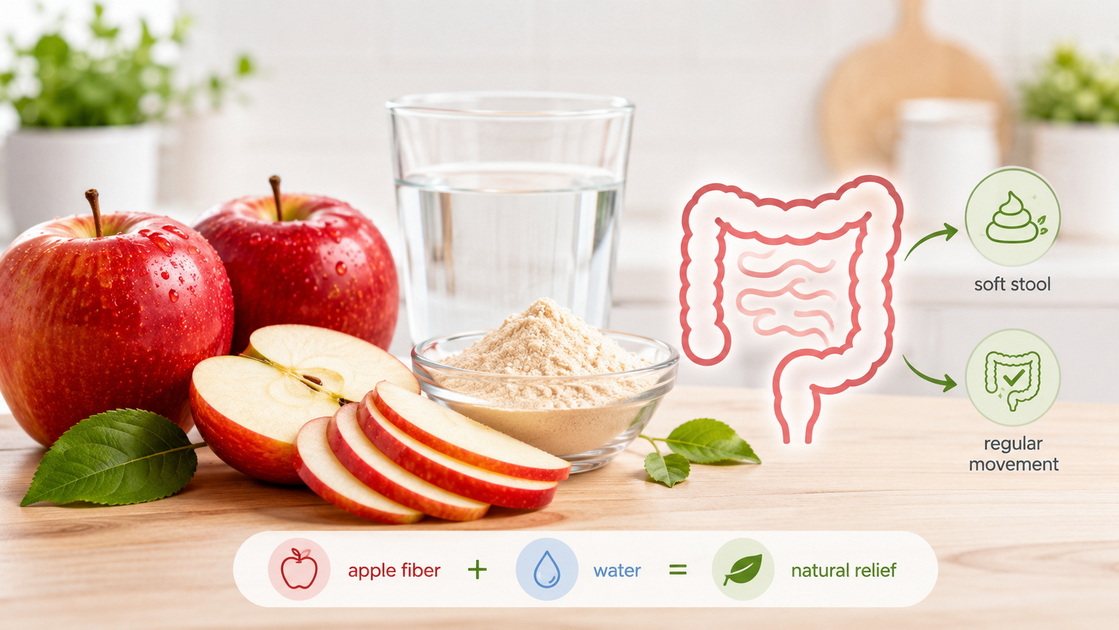
Apple-based solutions work primarily through dietary fiber and pectin-driven mechanisms: [tuasaude]
- Increased stool bulk: Insoluble fiber helps increase stool volume and reduce transit time.
- Improved stool consistency: Pectin, a soluble fiber, forms a gel-like matrix that softens stools and may enhance stool frequency. [healthline]
- Hydration synergy: Apples' high water content supports stool hydration, which works synergistically with fiber to relieve constipation. [verywellhealth]
From a formulation standpoint, apple extract or apple fiber can be positioned as:
- A natural fiber source in powders, bars, and functional foods.
- A prebiotic-supportive ingredient that may feed beneficial gut bacteria (depending on fiber and polyphenol profile). [healthline]
Evidence and Limitations for Apple Extract
Most of the constipation-related evidence focuses on whole apples, not necessarily concentrated extracts. Many consumer-facing resources highlight apples as one of the top fruits recommended for constipation due to observed improvements in stool frequency and consistency. [tuasaude]
However, for apple extract as an ingredient:
- Standardization varies (fiber-rich vs. polyphenol-rich extracts), which affects its relevance to constipation support.
- Many apple extracts in supplements emphasize antioxidant or cardiovascular benefits, and not all carry explicit GI claims.
Manufacturers like Botaniex can bridge this gap by developing fiber-optimized apple ingredients or pectin-rich apple extracts designed specifically for GI health applications. [botaniex]
Direct Comparison – Ashwagandha Extract vs. Apple Extract for Constipation Support
Key Differences in Constipation Support Focus
Below is a structured comparison focusing on constipation-related attributes that are relevant for formulation, marketing, and user experience.
Constipation Support Profile – Ashwagandha Extract vs. Apple-Derived Ingredients
| Aspect | Ashwagandha Extract | Apple-Derived Ingredients (Apple Extract / Fiber) |
| Primary mechanism | Gut–brain axis modulation via stress and sleep reduction; indirect support for bowel function. nutraingredients | Direct stool bulking and softening via fiber and pectin, plus hydration support. tuasaude |
| Evidence base for constipation | Emerging; combination trial with ashwagandha–okra blend shows improved constipation and bowel clearance. nutraingredients | Long-standing dietary evidence; apples widely recommended as natural laxatives and fiber sources. tuasaude |
| Positioning | Premium adaptogenic GI support, stress-related constipation, holistic wellness formulations. pmc.ncbi.nlm.nih | Everyday dietary fiber support, "natural fruit-based digestive health" positioning. tuasaude |
| Onset and intensity | Gradual effect via stress, sleep, and overall GI function; not a fast-acting laxative. nutraingredients | Gentle but more direct effect on bowel movements due to fiber and pectin. tuasaude |
| Safety profile | Generally well-tolerated; possible GI discomfort, rare liver injury cases under monitoring. webmd | Generally very safe; caution mainly in specific medical diets (e.g., low-FODMAP) or high-fructose sensitivity. healthline |
| Ideal format | Capsules, tablets, adaptogenic blends, stress–sleep–GI combo formulas. webmd | Powders, bars, functional beverages, high-fiber supplements and foods. tuasaude |
Expert Perspectives – When to Choose Each Ingredient
From a Clinical and Nutrition Perspective
Ashwagandha extract may be more suitable for:
- Individuals whose constipation appears tied to chronic stress, anxiety, or poor sleep. [nmi]
- Formulas targeting overall resilience, mood, and gut–brain balance rather than purely mechanical stool softening. [pmc.ncbi.nlm.nih]
Apple-based ingredients may be more suitable for:
- Consumers with low fiber intake who need a straightforward stool-bulking strategy. [verywellhealth]
- Functional food products where a "whole-food" story and fruit-based positioning resonate with mainstream users. [healthline]
Many practitioners may favor combination strategies, pairing a fiber-oriented ingredient (like apple fiber) with adaptogenic support (like ashwagandha) to address both mechanical and functional aspects of constipation. [nutraingredients]
From a Product Manager and Brand Strategist Perspective (Botaniex Angle)
For a supplier such as Botaniex, the opportunity lies in building a portfolio narrative around constipation support: [botaniex]
- Position ashwagandha extract as a premium, research-backed adaptogen that supports stress-related bowel irregularity and broader GI well-being. [nutraingredients]
- Position apple-based ingredients as foundational fiber and pectin sources for basic regularity and gut comfort. [tuasaude]
This dual positioning enables tiered product concepts—for example:
- Entry-level: Apple fiber drink mix targeting general regularity.
- Advanced: Ashwagandha–apple–fiber blend positioned for stress-management and GI balance.
Practical Usage Scenarios and Formulation Concepts
Example Consumer Use Cases
From a user experience viewpoint, the choice between ashwagandha extract and apple-derived ingredients for constipation support often depends on symptom patterns and lifestyle.
Scenario 1 – Stress-Driven Desk Worker
- Complaints: Irregular bowel movements, high stress, poor sleep.
- Strategy: Ashwagandha-focused supplement (e.g., 300–500 mg standardized extract) combined with moderate fiber intake from diet or apple-based products. [webmd]
Scenario 2 – Low-Fiber Diet Consumer
- Complaints: Hard stools, long intervals between bowel movements, low fruit/vegetable intake.
- Strategy: Apple fiber or pectin-based product (e.g., daily powder mix) plus general lifestyle changes (hydration, whole grains). [verywellhealth]
Scenario 3 – Holistic Wellness Enthusiast
- Complaints: Mild constipation, stress, and fatigue.
- Strategy: Combination formula with ashwagandha extract + apple fiber + other prebiotic fibers, marketed as a complete gut–brain regularity solution. [nutraingredients]
Step-by-Step Guidance for End Users (Non-Medical)
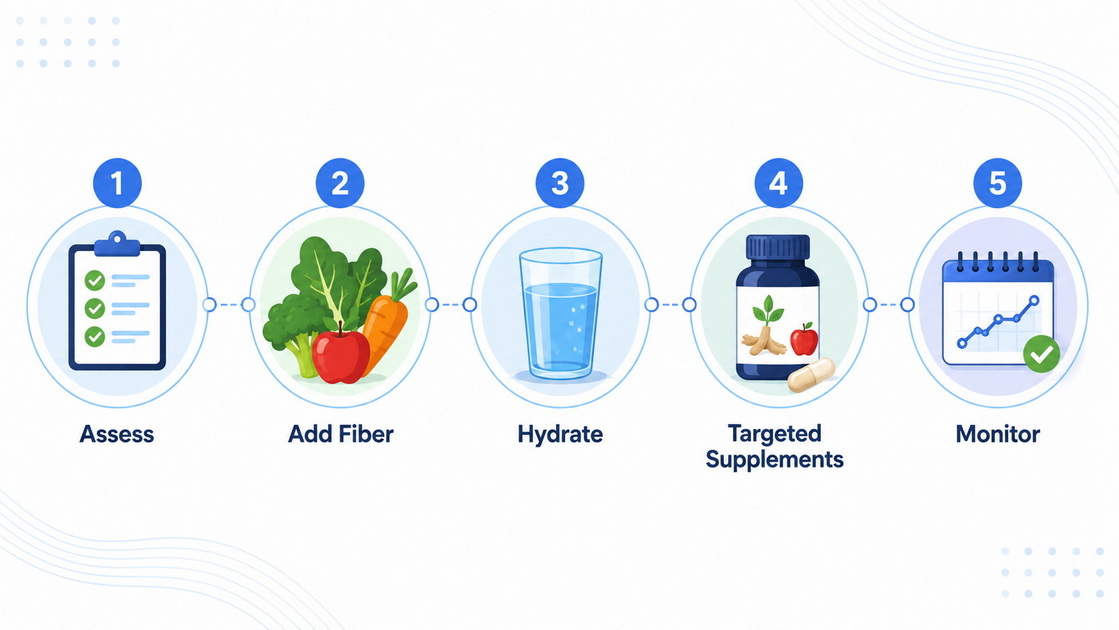
For educational content targeting end users (while clearly recommending medical consultation when needed), you can outline simple, practical steps:
1. Assess your pattern: Is your constipation linked to stress, diet, or both? Track for 1–2 weeks. [pmc.ncbi.nlm.nih]
2. Increase dietary fiber: Incorporate whole fruits (including apples), vegetables, and whole grains, aiming for at least moderate daily fiber intake. [tuasaude]
3. Hydrate consistently: Drink adequate water so that fiber can work effectively to soften stools. [healthline]
4. Consider targeted supplements:
- For stress-linked constipation, discuss ashwagandha-containing products with your healthcare professional. [webmd]
- For low-fiber diets, consider apple fiber or pectin supplements as part of a broader dietary strategy. [verywellhealth]
5. Monitor response and safety: If symptoms persist, worsen, or involve red flags (e.g., blood in stool, severe pain, unexplained weight loss), seek medical evaluation promptly. [pmc.ncbi.nlm.nih]
Botaniex Positioning and B2B Messaging for Constipation Support
How Botaniex Can Leverage Both Ingredients
As a global botanical extract manufacturer, Botaniex can create a differentiated constipation support portfolio by emphasizing: [mail.botaniex]
- Research-backed ashwagandha extract: Aligned with emerging clinical evidence on bowel function and stress modulation. [sciencedirect]
- Functional apple-based solutions: Such as apple fiber, pectin-rich extracts, or apple polyphenol ingredients tuned for GI health. [tuasaude]
B2B messaging may highlight:
- Customized ingredient solutions combining adaptogens and fiber for multi-dimensional constipation support. [botaniextract]
- Value-added services, including formulation support and technical documentation to help brands substantiate claims and align with regulatory requirements. [botaniex]
For SEO, consistently integrate long-tail phrases such as:
- "ashwagandha extract for constipation support,"
- "apple extract fiber for bowel regularity,"
- "adaptogenic gut–brain axis supplements,"
- "natural ingredients for stress-related constipation."
Action-Oriented Conclusion and CTA
For end readers, emphasize that constipation support should be individualized and that both ashwagandha extract and apple-based ingredients have roles to play, but with different strengths. [nmi]
Call to action for brand owners and formulators:
- If you are developing next-generation constipation support formulas, consider pairing evidence-backed ashwagandha extract with apple-derived fibers to address both stress-related and dietary contributors to irregularity. [sciencedirect]
- Reach out to your botanical ingredient partner (such as Botaniex) for standardized extract options, formulation support, and documentation tailored to your target market and regulatory environment. [mail.botaniex]
FAQs: Ashwagandha Extract, Apple Extract, and Constipation Support
1. Is ashwagandha extract a laxative?
No. Ashwagandha extract is not a traditional laxative; its potential role in constipation support comes mainly from stress reduction, sleep improvement, and gut–brain axis modulation, which may indirectly normalize bowel patterns. [nutraingredients]
2. Can I use apple extract instead of eating whole apples for constipation?
Apple-derived ingredients can provide concentrated fiber and pectin, but many studies and recommendations focus on whole apples with peel eaten daily. For consistent constipation support, whole fruit intake plus targeted ingredients may be more effective than extract alone. [healthline]
3. Is it safe to combine ashwagandha extract and apple fiber in one supplement?
In generally healthy adults, combining a moderate dose of standardized ashwagandha with apple-based fiber is broadly considered compatible and may provide complementary benefits. However, users should follow product directions and consult healthcare professionals if they have medical conditions, take medications, or experience GI discomfort. [tga.gov]
4. How long does it take to see effects on constipation from these ingredients?
Fiber-based approaches (like apple fiber or whole apples) may influence stool frequency and consistency within a few days when combined with adequate hydration. Ashwagandha's effects, particularly via stress and sleep, may take several weeks of consistent use, as seen in many clinical trials. [nmi]
5. Who should avoid ashwagandha extract for constipation support?
People with liver disease, significant GI disorders, pregnancy, or those taking multiple medications should be cautious with ashwagandha and consult a healthcare provider before use, especially in light of rare reports of liver injury and GI side effects. Anyone experiencing symptoms such as jaundice, dark urine, severe abdominal pain, or persistent nausea should stop use and seek medical advice immediately. [health]
References
1. Botaniex – About and value-added services (botanical extracts and functional herbal formulations for dietary supplements, beverages, cosmetics, and pharmaceuticals). Available at:
https://www.botaniex.com/value-added-services.html [botaniex]
2. Botaniex – Products overview (botanical extracts, herbal formulas, and related categories). Available at:
https://www.botaniex.com/products.html [botaniex]
3. Botaniex – Corporate site (manufacturer of botanical extracts and functional herbal formulations). Available at:
https://www.botaniex.com [botaniex]
4. NutraIngredients – "Ashwagandha–okra mix shows bowel health benefits in proof-of-concept clinical trial." Available at:
https://www.nutraingredients.com/Article/2023/09/21/ashwagandha-okra-mix-shows-bowel-health-benefits [nutraingredients]
5. ScienceDirect – CL18100F4 ashwagandha–okra blend study on constipation relief. Available at:
https://www.sciencedirect.com/science/article/abs/pii/S0378874123008656 [sciencedirect]
6. Tua Saúde – "Natural Laxatives: 15 Fruits That Relieve Constipation" (apples as natural laxatives). Available at:
https://www.tuasaude.com/en/natural-laxatives/ [tuasaude]
7. Healthline – "The 17 Best Foods to Relieve Constipation" (apples, fiber, stool frequency). Available at:
https://www.healthline.com/nutrition/best-foods-for-constipation [healthline]
8. Verywell Health – "Foods That Help You Poop and Relieve Constipation Naturally." Available at:
https://www.verywellhealth.com/foods-to-relieve-constipation-11706190 [verywellhealth]
9. WebMD – "Ashwagandha: Uses, Side Effects, Interactions." Available at:
https://www.webmd.com/vitamins-supplements/ashwagandha [webmd]
10. National Medicine Institute (NMI) – "Ashwagandha: A Review of Clinical Use and Efficacy." Available at:
https://www.nmi.health/ashwagandha-a-review-of-clinical-use-and-efficacy/ [nmi]
11. Health.com – "4 Potentially Serious Side Effects of Ashwagandha." Available at:
https://www.health.com/ashwagandha-side-effects-11819943 [health]
12. Australian Therapeutic Goods Administration (TGA) – "Medicines containing Withania somnifera (Withania, Ashwagandha)" safety alert. Available at:
https://www.tga.gov.au/safety/safety-monitoring-and-information/safety-alerts/medicines-containing-withania-somnifera-withania-ashwagandha [tga.gov]
13. PMC – "Addressing GI Health Through the Bidirectional Modulation of the Gut–Brain Axis" (includes ashwagandha data). Available at:
https://pmc.ncbi.nlm.nih.gov/articles/PMC11319522/ [pmc.ncbi.nlm.nih]