Content Menu
● Why Sensory Profile Optimization Matters in Botanical Extracts
● Core Differences Between Ginseng Root Extract and Milk Thistle Extract
>> Botanical Origin and Traditional Use
>> Typical Application Landscapes
● Sensory Profile of Ginseng Root Extract
>> Taste, Aroma, and Color Characteristics
>> Common Sensory Challenges in Formulations
● Sensory Profile of Milk Thistle Extract
>> Taste, Aroma, and Color Characteristics
>> Common Sensory Challenges in Formulations
● Side‑by‑Side Sensory Comparison in Real Formulations
>> Sensory Attributes Table – Ginseng Vs. Milk Thistle
● Industry‑Level Strategies to Optimize Ginseng Sensory Profiles
>> Selection of Extract Type and Specifications
>> Multi‑Layer Bitterness Management
>> Color and Clarity Control
● Industry‑Level Strategies to Optimize Milk Thistle Sensory Profiles
>> Managing Subtle Bitterness in Liver‑Support Products
>> Visual and Mouthfeel Considerations
● Expert Perspective – How a Supplier Like Botaniex Adds Sensory Value
● Practical Formulation Playbook – From Concept to Sensory‑Optimized Launch
>> Step‑by‑Step Approach for Ginseng‑Forward Products
>> Step‑by‑Step Approach for Milk Thistle–Dominant Formulas
● Strategic Choice – When to Lead With Ginseng, When With Milk Thistle
● Call to Action – Partnering for Sensory‑Ready Botanical Solutions
● FAQs
● References
Formulators in dietary supplements, functional foods, beverages, and cosmetics face a recurring challenge: how to optimize the sensory profile of botanicals without diluting efficacy or compromising label claims. From an industry practitioner's perspective, ginseng root extract and milk thistle extract sit at opposite ends of the sensory spectrum and require distinct approaches. [botaniex]
Why Sensory Profile Optimization Matters in Botanical Extracts
In B2B manufacturing, a botanical's sensory profile—its taste, aroma, color, and mouthfeel—directly affects consumer compliance, repeat purchase, and brand differentiation. For global brands, even small off‑notes in bitterness or herbal aftertaste can trigger costly reformulations, especially in RTD beverages and stick-pack powders. [botaniex]
From an expert UX and formulation standpoint, optimizing sensory attributes delivers three major benefits:
- Higher adherence for nutraceutical capsules, syrups, and gummies.
- More flexibility in flavor systems for functional beverages and powders.
- Stronger perceived quality in premium beauty-from-within and cosmetic products.
Botaniex, as a specialized manufacturer of botanical extracts and functional formulations, increasingly supports customers with value-added services such as custom standardization, blending, and process tailoring to help control these sensory variables. [botaniex]
Core Differences Between Ginseng Root Extract and Milk Thistle Extract
Botanical Origin and Traditional Use
- Ginseng root extract is typically derived from Panax species and has a long history in traditional East Asian medicine for vitality and stress support. [botaniextract]
- Milk thistle extract is obtained from Silybum marianum seeds and is widely associated with liver-support applications in Western and global markets. [botaniextract]
These different origins shape not only health-positioning but also expectations for flavor and aroma in finished products.
Typical Application Landscapes
Both ingredients are widely used in dietary supplements, but their deployment profiles differ by format: [botaniextract]
- Ginseng root extract
- Energy and focus capsules and tablets
- Functional beverages and RTD teas (especially in Asia)
- Cosmetic and cosmeceutical products targeting skin vitality
- Milk thistle extract
- Liver-support capsules, tablets, and softgels
- Complex detox blends in powders and liquids
- Occasional use in cosmetic and personal care formulations
Sensory Profile of Ginseng Root Extract
Taste, Aroma, and Color Characteristics
From a sensory standpoint, ginseng root extract is aromatically expressive and often polarizing:
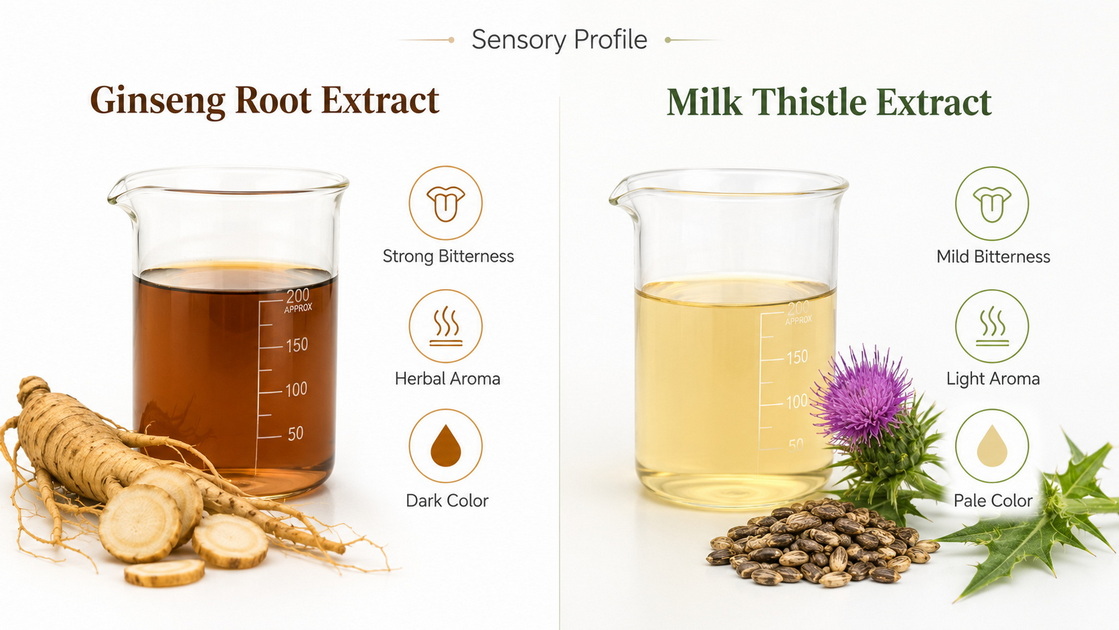
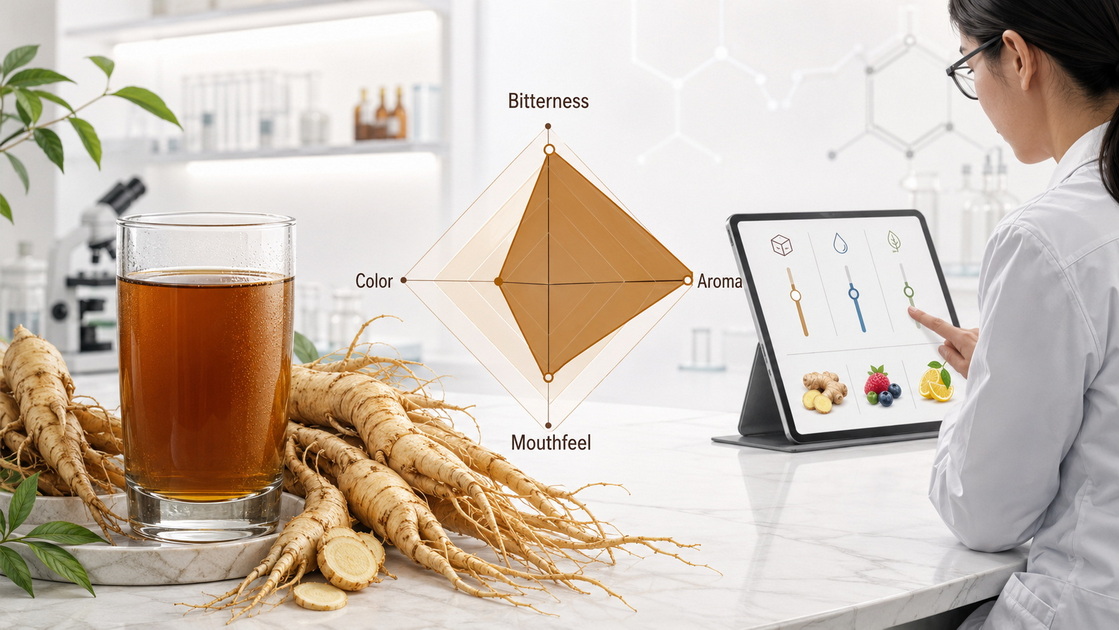
- Taste: pronounced bitterness, earthy and slightly sweet undertones, with a lingering herbal aftertaste.
- Aroma: warm, rooty, sometimes slightly medicinal.
- Color: typically light to dark brown, depending on extraction method and concentration.
These attributes can be advantageous in traditional tonics and "herbal energy" beverages, but they are problematic in neutral or dessert-type flavors.
Common Sensory Challenges in Formulations
Formulators working with ginseng routinely report:
- Strong bitter notes at efficacious doses.
- Aftertaste that conflicts with delicate flavor systems (e.g., vanilla, light citrus).
- Color darkening in clear beverages or light-colored gummies.
For global brands, this means that sensory optimization is not optional; it is a critical part of commercial viability.
Sensory Profile of Milk Thistle Extract
Taste, Aroma, and Color Characteristics
Milk thistle extract, typically standardized to silymarin, is sensory‑milder but still non‑neutral:
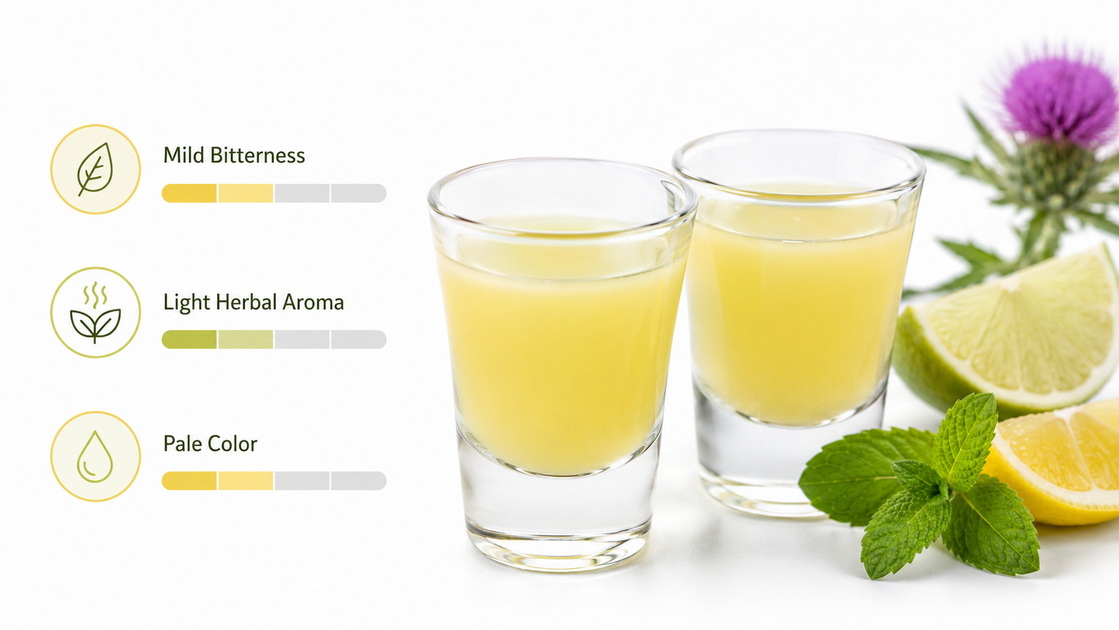
- Taste: mild to moderate bitterness, some nutty or seed-like notes.
- Aroma: light herbal, less intense than ginseng.
- Color: pale yellow to light brown, depending on concentration and carrier.
In capsule and tablet formats, sensory impact is often minimal, but in liquids and powders it becomes more noticeable.
Common Sensory Challenges in Formulations
Compared with ginseng, milk thistle's challenges are subtler but still important:
- Background bitterness in flavored powders and liquid shots.
- Light yellow/brown hue that may shift color in clear beverages.
- Potential mismatch with sweet "liver support" positioning if taste is not properly masked.
Because milk thistle is often part of detox blends or complex multi-herb formulas, its sensory footprint can amplify or interact with other bitter botanicals.
Side‑by‑Side Sensory Comparison in Real Formulations
Sensory Attributes Table – Ginseng Vs. Milk Thistle
| Attribute | Ginseng Root Extract | Milk Thistle Extract |
| Typical taste | Strong bitter, earthy, slightly sweet | Mild–moderate bitter, seed‑like |
| Aroma intensity | High, rooty and herbal | Low–medium, light herbal |
| Color in solution | Light to dark brown | Pale yellow to light brown |
| Aftertaste duration | Long and persistent | Shorter, less persistent |
| Impact on clear drinks | High (noticeable color and flavor) | Medium (mild color shift) |
| Masking difficulty | Higher, requires multi‑layer approach | Moderate, manageable with flavoring |
This comparison illustrates why ginseng often demands more aggressive sensory interventions, while milk thistle can often be handled with more minimal adjustments.
Industry‑Level Strategies to Optimize Ginseng Sensory Profiles
Drawing on common practice in botanical formulation and the kind of value‑added support companies like Botaniex provide, several strategies stand out for ginseng sensory optimization. [botaniex]
Selection of Extract Type and Specifications
Industry experts often begin with specification engineering rather than masking alone:
- Adjusting extraction parameters to reduce non‑active bitter fractions.
- Selecting carrier systems that improve dispersibility and mouthfeel.
- Choosing standardized ratios that balance potency with sensory impact.
Suppliers specializing in botanical science and extraction technologies can tailor extracts for specific beverage or solid dosage applications. [botaniex]
Multi‑Layer Bitterness Management
For ginseng beverages and gummies, a layered approach is recommended:
1. Baseline reduction via extract optimization and appropriate dosage.
2. Taste modulation using sweeteners (natural or high‑intensity) and acidulants.
3. Flavor architecture built around compatible profiles such as ginger, dark berries, or spiced citrus.
4. Texture and mouthfeel adjustments (for example, using hydrocolloids) to create a smoother, rounder perception.
This approach reduces the need for excessive sweetening, preserving clean label benefits.
Color and Clarity Control
For RTD and powdered drinks:
- Use lighter‑colored ginseng grades or purified fractions where possible.
- Consider blending with other botanicals that naturally support amber or tea-like color spaces (e.g., green tea extracts). [botaniex]
- For clear beverages, work closely with the extract supplier on solubility, filtration, and potential use of clarified or decolorized fractions.
Industry‑Level Strategies to Optimize Milk Thistle Sensory Profiles
Milk thistle typically allows for more flexibility, but methodical optimization still matters in competitive markets.
Managing Subtle Bitterness in Liver‑Support Products
In capsules, sensory issues are minimal; in powders and liquids, best‑practice steps include:
- Pairing milk thistle with citrus, apple, or herbal-mint flavors to harmonize mild bitterness.
- Using modest levels of natural sweeteners to balance taste without overpowering the "healthful" positioning.
- Carefully evaluating buffer systems and acidulants so the formula tastes bright rather than harsh.
Because the bitter load is usually lower than ginseng, single‑layer flavor systems are often sufficient.
Visual and Mouthfeel Considerations
Milk thistle extract's lighter color and typical use level make it more forgiving in finished products:
- In clear beverages, small adjustments to dose or blending with other lightly colored actives can maintain visual clarity.
- In opaque systems (smoothies, dairy analogs), its color is rarely a limiting factor.
- For syrups and shots, attention to viscosity and afterfeel is important so the product remains easy to swallow and not overly "coating."
Expert Perspective – How a Supplier Like Botaniex Adds Sensory Value
From a formulation UX perspective, the supplier's technical depth in botanical science, extraction, and formulation development is central to sensory success. Companies such as Botaniex support brands not only with raw materials but also with customized ingredient solutions designed around sensory targets. [botaniex]
Key expert-level value levers include:
- Co‑designing extract specifications for a target format (shot, RTD tea, gummy, capsule, cosmetic).
- Running bench-top sensory trials to balance efficacy and palatability before scale‑up.
- Providing application-specific documentation and prototype formulas to shorten R&D cycles. [botaniextract]
For multi‑market launches, this collaboration becomes even more important, because sensory preferences vary between regions and product categories.
Practical Formulation Playbook – From Concept to Sensory‑Optimized Launch
Step‑by‑Step Approach for Ginseng‑Forward Products
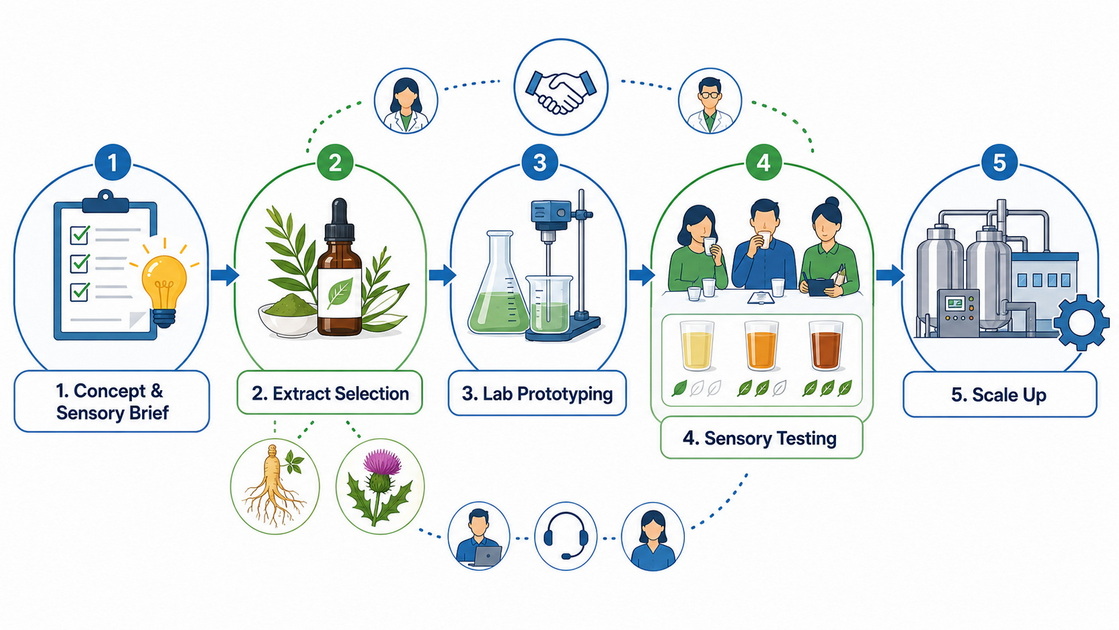
1. Define the sensory brief
Specify desired taste intensity, aroma character, color, and mouthfeel, aligned with your target consumer and category.
2. Select the right extract
Work with your supplier to choose an extract grade (e.g., standardized ginsenoside content, carrier system) that minimizes unnecessary bitterness and color load.
3. Draft a flavor and sweetness strategy
Build a flavor "umbrella" that works *with* ginseng's herbal profile (e.g., ginger‑citrus, berry‑spice) rather than against it.
4. Prototype and sensory test
Run rapid sensory panels focusing on bitterness, aftertaste length, and perceived naturalness; iterate with minor adjustments to acids, sweeteners, or extract dose.
5. Scale with process awareness
Validate that heat treatment, pH, and packaging do not degrade flavor or cause unexpected color shifts over shelf life.
Step‑by‑Step Approach for Milk Thistle–Dominant Formulas
1. Start from a clear efficacy target (liver-support positioning, claims, and supporting actives).
2. Select a milk thistle extract grade compatible with your dosage form (capsule vs. liquid).
3. Build a simple flavor framework, often centered on citrus or herbal notes.
4. Conduct a focused sensory check for subtle bitterness and color, adjusting levels as needed.
5. Finalize texture and sweetness so the product feels light, clean, and health-oriented, not dessert‑like.
Strategic Choice – When to Lead With Ginseng, When With Milk Thistle
For product developers and brand owners, the decision is rarely "either/or" but "which ingredient leads the story and sensory profile."
- Choose ginseng root extract as the hero when you want a strong energy, vitality, or adaptogen narrative and are prepared to invest in multi-layer sensory optimization.
- Choose milk thistle extract as the hero when liver support and detox are central, and you need a cleaner, easier-to-manage sensory base for simple flavor systems.
In complex blends, using ginseng at slightly lower levels and letting milk thistle and other botanicals carry more of the sensory load can be a powerful compromise.
Call to Action – Partnering for Sensory‑Ready Botanical Solutions
If you are developing next‑generation dietary supplements, functional beverages, or cosmetic formulas, it is crucial to align sensory optimization with your efficacy and branding strategy from the start. Partnering with a specialist manufacturer of botanical extracts and functional herbal formulations allows you to build products that are both clinically credible and genuinely enjoyable to consume. [botaniex]
For brands that want to use ginseng root extract, milk thistle extract, or synergistic combinations in global launches, working directly with a technical team experienced in extraction and formulation can significantly shorten time to market while improving sensory outcomes. Consider engaging your ingredient partner early in concept development to co‑create extract specifications, run application trials, and secure a competitive edge in both taste and performance. [botaniextract]
FAQs
Q1. Is ginseng always harder to formulate sensorially than milk thistle?
In most beverage and liquid applications, ginseng's stronger bitterness, aroma, and color make it more challenging and require more sophisticated sensory strategies than milk thistle.
Q2. Can ginseng and milk thistle be combined in one product without overwhelming bitterness?
Yes, but it requires careful dose setting, flavor system design, and possibly use of taste modulators to keep total bitterness and aftertaste within an acceptable range.
Q3. Which formats are most forgiving for ginseng root extract from a sensory standpoint?
Capsules and tablets are easiest, followed by dark‑colored tonics and RTD teas where herbal taste and color are part of the expected experience.
Q4. What is the biggest sensory risk when using milk thistle in clear beverages?
The main risks are a slight yellow/brown tint and a mild background bitterness, which must be balanced with appropriate flavoring and sweetening systems.
Q5. When should I involve my botanical extract supplier in sensory decisions?
Ideally at the concept and feasibility stage, so extract selection, specification design, and sensory targets are aligned before you scale formulation and packaging.
References
1. Botaniex. "High-quality Botanical Extracts and Proprietary Herbal Formulas Designed to Support Overall Health and Wellness." Available at: [https://www.botaniex.com] [botaniex]
2. Botaniex. "Value Added Services." Available at: [https://www.botaniex.com/value-added-services.html] [botaniex]
3. Botaniex. "Products." Available at: [https://www.botaniex.com/products.html] [botaniex]
4. Botaniex. "Botaniex – Manufacturer of Green Tea Extract, Tongkat Ali ..." Available at: [https://www.botaniextract.com] [botaniextract]
5. Changsha Botaniex Inc. Company information. Available at: [https://botaniex.en.made-in-china.com] [botaniex.en.made-in-china]