From a formulation and health-outcome perspective, grape seed extract (GSE) acts mainly as an antioxidant and anti‑inflammatory polyphenol system that protects tissues from acid‑related oxidative stress, while tea saponin behaves as a powerful non‑ionic surfactant that helps physically manage acids in emulsions, solutions, and complex matrices. [pmc.ncbi.nlm.nih]
For a company like Botaniex, which specializes in botanical extracts and customized herbal formulations for dietary supplements, functional foods, beverages, cosmetics and pharmaceuticals, combining these two ingredients can unlock differentiated products that both stabilize acidic systems and support acid‑related comfort or protection. [botaniex]
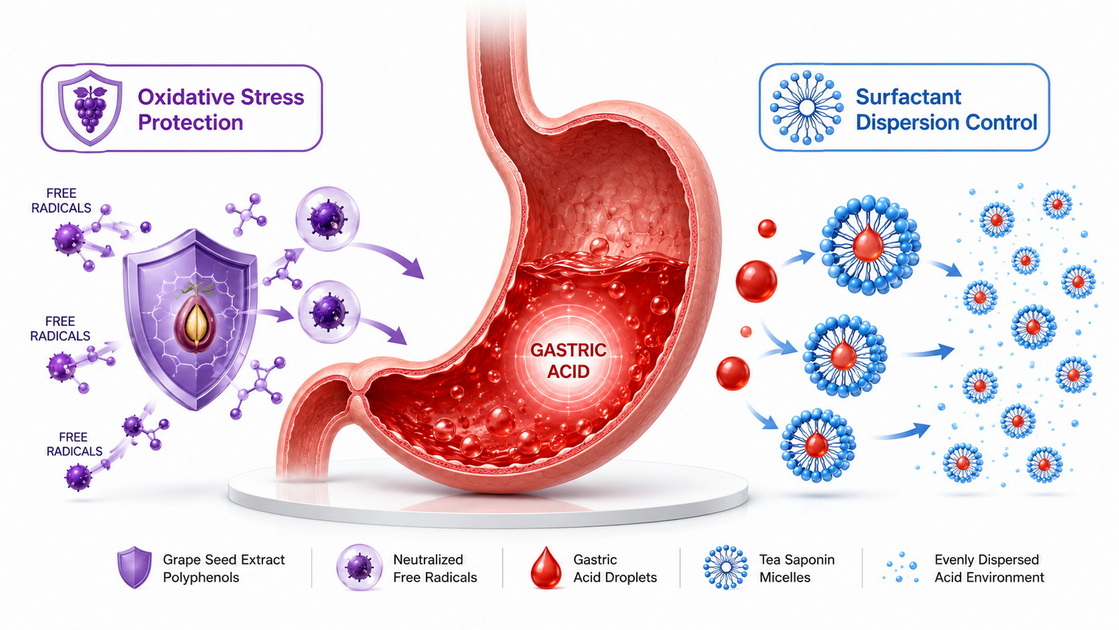
Understanding "Acid Neutralization" in Modern Formulations
In nutritional and cosmetic product development, "acid neutralization" is rarely just about adding a base to raise pH. It is more often a multi‑layer strategy that includes:
- Buffering or moderating local pH in the gut, oral cavity, or on skin.
- Protecting cells and tissues from oxidative stress triggered by acidic micro‑environments.
- Controlling how acids are dispersed and released in foods, beverages, or topical systems.
From a scientist's viewpoint, acid neutralization includes antioxidant defense, barrier support, and surfactant‑driven dispersion, not just "chemical neutralization" by alkaline compounds. [pubs.acs]
Grape Seed Extract – Polyphenolic Shield Against Acid‑Driven Stress
Key actives and mechanisms
Grape seed extract is rich in proanthocyanidins and other polyphenols, which show strong antioxidant and anti‑inflammatory activity in vitro and in vivo. [sciencedirect]
- These compounds scavenge reactive oxygen species (ROS) generated in acidic, inflamed or oxidatively stressed environments. [pubs.acs]
- Animal and human data suggest GSE improves glutathione status, reduces lipid peroxidation, and lowers inflammatory markers such as CRP and TNF‑α. [pmc.ncbi.nlm.nih]
- In model emulsions at both acidic (pH 3) and neutral (pH 7) conditions, higher levels of GSE significantly suppressed lipid hydroperoxide and propanal formation. [pubs.acs]
From a personal health perspective, this means GSE does not directly "neutralize" gastric acid like an antacid tablet; instead it reduces oxidative damage and inflammation that are amplified by acidic conditions in the gut or on mucosal surfaces. [pmc.ncbi.nlm.nih]
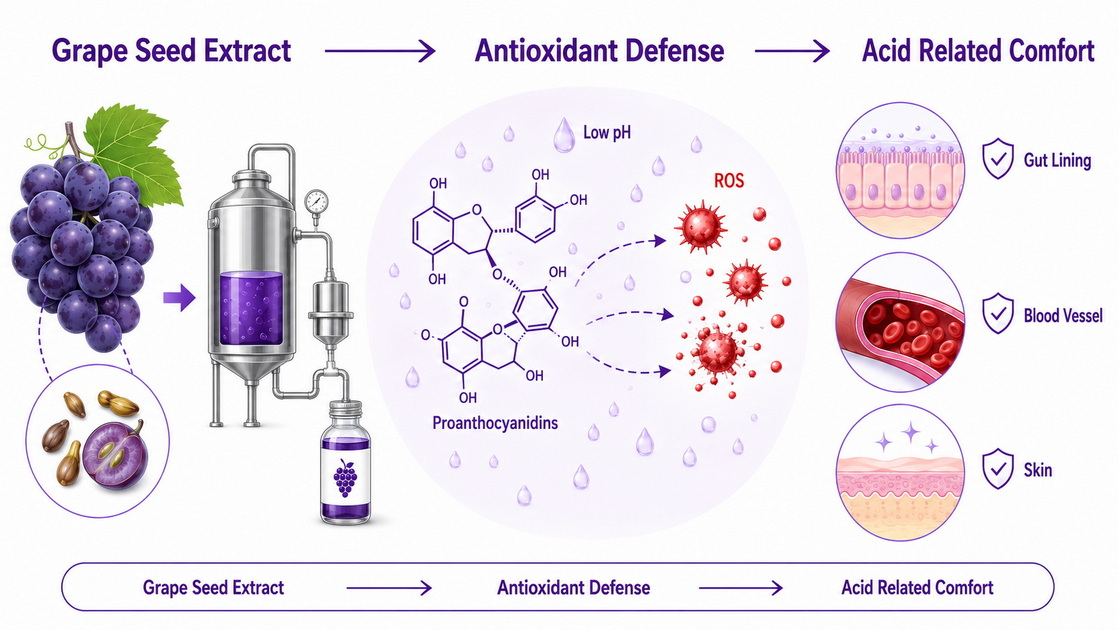
Acid‑related benefits and application ideas
For formulators working with acidic products (e.g., vitamin C drinks, fruit‑acid beverages, or low‑pH cosmetics), GSE can:
- Protect lipids and actives from oxidation at low pH, helping maintain flavor, color and efficacy. [sciencedirect]
- Support vascular and mucosal integrity, which is beneficial where chronic acidity contributes to oxidative stress. [medicalnewstoday]
- Complement buffering minerals or amino acids in gut‑comfort or reflux‑support supplements by addressing the oxidative component of acid stress. [pmc.ncbi.nlm.nih]
From an industry expert viewpoint, GSE is best positioned as a polyphenolic shield that works alongside classic pH‑modifying agents and surfactants, rather than as a standalone "neutralizer." [pmc.ncbi.nlm.nih]
Tea Saponin – Natural Surfactant to Manage Acid Systems
Surfactant‑driven control of acids
Tea saponins, isolated from *Camellia* plants, are natural non‑ionic surfactants with extensive use in soil remediation, agriculture, and increasingly in food systems. [pubs.rsc]
- They dramatically improve wetting, solubilization, and emulsification, allowing acids and other actives to distribute more evenly in aqueous or oil‑water systems. [pubmed.ncbi.nlm.nih]
- In environmental applications, tea saponins enhance desorption and mobility of ionic species and organic pollutants, partly by changing interfacial behavior and ion exchange. [pubs.rsc]
- In food science, tea saponin is now studied as a natural surfactant alternative to synthetic emulsifiers in emulsions, delivery systems, extraction and fermentation processes. [pubmed.ncbi.nlm.nih]
From a formulator's perspective, this surfactant action indirectly aids acid neutralization by reducing "hot spots" of acid concentration, improving mixing with buffers, and supporting controlled release from micelles or emulsions. [pmc.ncbi.nlm.nih]
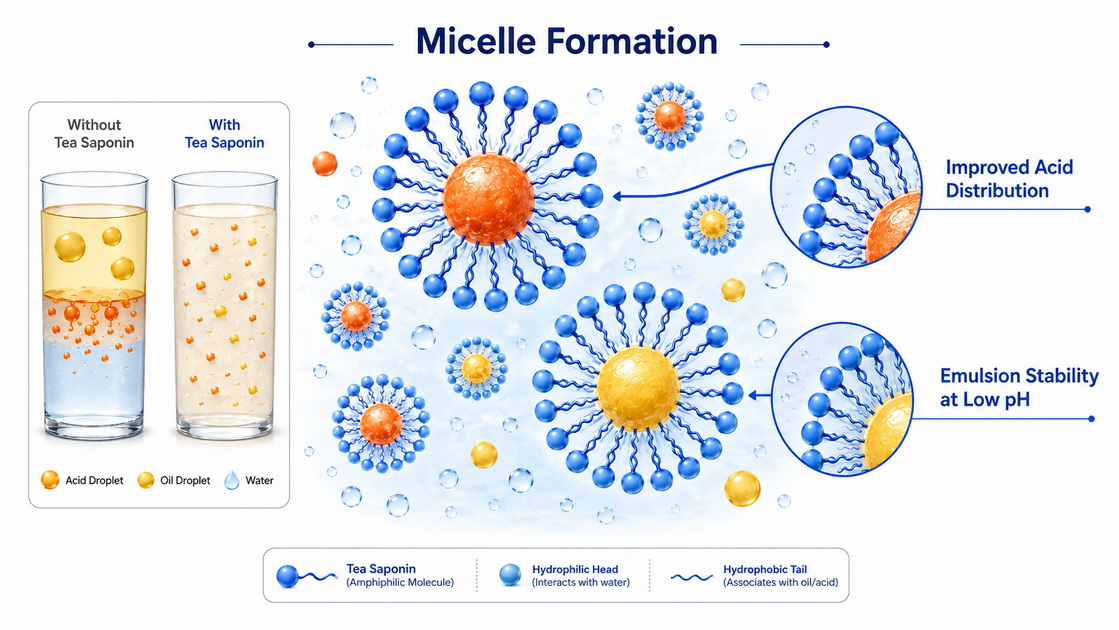
Functional benefits in acidic products
In functional beverages, syrups, or fermented products where organic acids are central, tea saponin can:
- Stabilize acidic emulsions, reducing creaming or phase separation even at low pH. [pubmed.ncbi.nlm.nih]
- Enhance mass transfer in extraction and fermentation, making acid‑related processes more efficient. [pubmed.ncbi.nlm.nih]
- Act as a biodegradable, label‑friendly surfactant, aligning with clean‑label trends and natural positioning. [pubmed.ncbi.nlm.nih]
In aquaculture and agriculture, tea saponin also improves water quality and acts as a natural pesticide, showing its versatility as a multi‑functional surfactant beyond food and nutrition. [hjagrifeed]
Side‑by‑Side Comparison for Acid‑Focused Formulation
Expert comparison table
| Dimension | Grape Seed Extract | Tea Saponin |
| Primary role | Polyphenolic antioxidant and anti‑inflammatory agent. pmc.ncbi.nlm.nih | Natural non‑ionic surfactant and emulsifier. pmc.ncbi.nlm.nih |
| Main actives | Proanthocyanidins and other flavanols. pmc.ncbi.nlm.nih | Triterpenoid saponins from Camellia seeds and other parts. pmc.ncbi.nlm.nih |
| Acid neutralization angle | Reduces oxidative damage and inflammation triggered or worsened by acidic conditions; stabilizes lipids and actives at low pH. pubs.acs | Improves distribution and interaction of acids with other components; supports buffering and controlled release via surfactant behavior. pmc.ncbi.nlm.nih |
| Best applications | Gut and vascular health supplements, antioxidant‑fortified acidic beverages, low‑pH cosmetics targeting oxidative stress. pmc.ncbi.nlm.nih | Acidic functional beverages, delivery systems, extractions, fermentations, and clean‑label emulsions. pmc.ncbi.nlm.nih |
| Evidence base | Multiple studies on antioxidant, anti‑inflammatory and cardiometabolic benefits. pmc.ncbi.nlm.nih | Growing literature on soil, environmental, and food applications as a natural surfactant. pubs.rsc |
| Positioning for Botaniex | Premium botanical antioxidant for acid‑related stress management. botaniex | Natural surfactant platform ingredient enabling "no synthetic emulsifier" claims. botaniex |
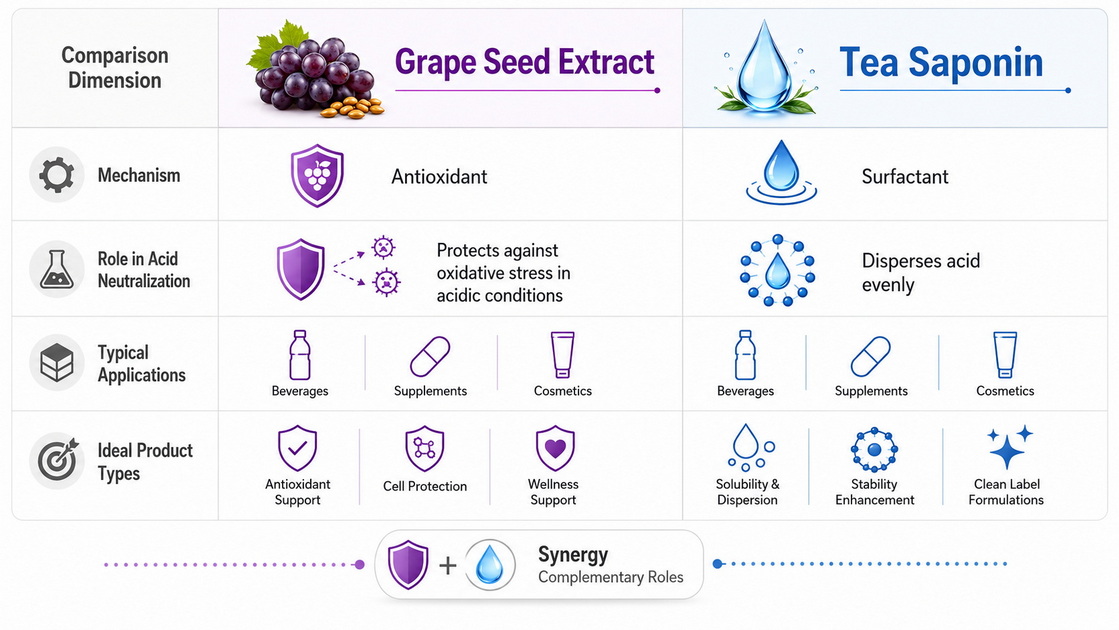
Practical Formulation Scenarios – Personal and Professional Lens
From a product developer's viewpoint
If you are formulating a citrus‑based functional drink with a pH around 3:
- Use grape seed extract to help protect lipids and flavor compounds from oxidative degradation over shelf life, and to add a credible antioxidant health halo. [medicalnewstoday]
- Use tea saponin to stabilize the emulsion, ensuring acids, flavors, and lipophilic actives remain evenly dispersed and gentle on the palate. [pubmed.ncbi.nlm.nih]
In a gut comfort or reflux‑support supplement, combining:
1. Classic buffering minerals or amino acid salts (e.g., carbonate systems).
2. Grape seed extract for antioxidant and anti‑inflammatory support against acid‑driven oxidative stress. [pmc.ncbi.nlm.nih]
3. Optional tea saponin in liquid formats to improve dispersion of acids and lipids, avoiding local irritation. [pubmed.ncbi.nlm.nih]
creates a multi‑mechanism "acid neutralization" system that is far more robust than pH adjustment alone.
From an end‑user / personal perspective
As a consumer dealing with frequent acidic beverages or spicy foods, a formulation that combines GSE with classic buffers may help you feel more comfortable by:
- Supporting microcirculation and tissue resilience. [medicalnewstoday]
- Reducing the impact of oxidative stress linked to high‑acid diets. [sciencedirect]
Meanwhile, tea saponin is largely invisible to you as a functional stabilizer, but it is what can make the product feel smoother, better mixed, and more consistent from first sip to last. [pubmed.ncbi.nlm.nih]
How Botaniex Can Position GSE and Tea Saponin for Acid‑Related Applications
Botaniex's expertise in botanical science, extraction and formulation allows it to offer standardized grape seed extracts and high‑purity tea saponin ingredients tailored to specific application needs in dietary supplements, functional foods, beverages, cosmetics and pharmaceuticals. [ttnet]
For acid‑focused projects, the company can provide:
- Custom polyphenol profiles for GSE to match antioxidant potency, solubility, and color targets in low‑pH systems. [botaniex]
- Optimized tea saponin grades for beverage, emulsified sauces, or cosmetic cleansers that must tolerate acidic pH while remaining stable and label‑friendly. [botaniex]
- Turnkey herbal formulations that integrate GSE and tea saponin with complementary botanicals for gut comfort, vascular support, or skin health in acidic environments. [botaniex]
For brand owners, this means moving beyond single‑mechanism antacid concepts towards holistic acid management systems that combine buffering, antioxidant protection and surfactant‑based control.
Expert Design Tips for Acid‑Neutralizing Formulations
Strategic formulation steps
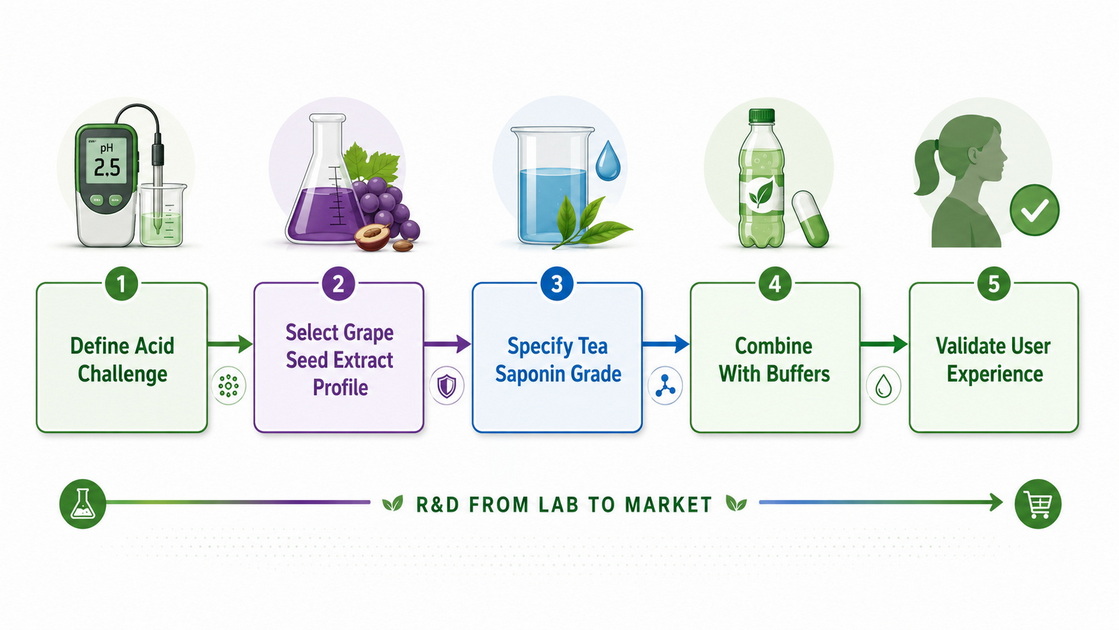
Formulation teams developing acid‑related products with GSE and tea saponin can follow this high‑level roadmap:
1. Define the acid challenge
- Is the priority gastric comfort, oral health, skin tolerance, or product shelf stability?
- Map pH range, acid type (organic vs inorganic), and exposure time.
2. Choose GSE specifications
- Target proanthocyanidin content and solubility suited to your matrix. [pmc.ncbi.nlm.nih]
- Validate antioxidant performance at the intended pH using accelerated oxidation tests. [pubs.acs]
3. Specify tea saponin grade and level
- Match desired surfactant strength and foaming behavior to the product type. [pmc.ncbi.nlm.nih]
- Check compatibility with acids, sweeteners, and other surfactants across the target pH range. [pubmed.ncbi.nlm.nih]
4. Integrate classic buffers and co‑actives
- Combine with mineral buffers, amino acids, or polysaccharides that directly influence pH and viscosity.
- Use GSE and tea saponin as functional enhancers, not replacements, for pH control.
5. Validate user experience
- Run sensory and tolerance studies, particularly for beverages and oral care products, to confirm that acid bite, mouthfeel, and GI comfort meet expectations.
Innovation angles for Botaniex clients
Forward‑looking concepts Botaniex can support include:
- Acid‑resilient antioxidant shots: high‑polyphenol GSE in vitamin C or fruit acid shots, stabilized with tea saponin for clean‑label emulsification. [medicalnewstoday]
- Low‑pH beauty drinks: collagen or hyaluronic acid beverages where GSE protects sensitive actives and tea saponin maintains clarity and stability. [willner]
- Acid‑smart cleansing and skin‑care formulas: mildly acidic facial cleansers where tea saponin replaces synthetic surfactants, while GSE supports antioxidant defense against urban pollution. [pmc.ncbi.nlm.nih]
Which Should You Choose – Or Should You Combine Them?
For most acid‑related projects, the practical decision is not "grape seed extract vs. tea saponin" but how to layer them:
- Choose grape seed extract when your primary goals are antioxidant capacity, vascular or mucosal support, and a strong health‑benefit story around oxidative stress made worse by acidity. [pmc.ncbi.nlm.nih]
- Choose tea saponin when your priority is stabilizing acidic formulations, replacing synthetic surfactants, and improving the physical behavior of acids in complex matrices. [pmc.ncbi.nlm.nih]
- Combine both when you want an integrated acid management system that stabilizes the product physically and supports the user biologically.
Targeted CTA
If you are developing an acid‑forward supplement, functional beverage or cosmetic line and want to integrate grape seed extract, tea saponin, or both, consider collaborating with Botaniex to co‑design a tailored botanical system that aligns with your regulatory, performance and branding requirements. [botaniex]
FAQs on Grape Seed Extract, Tea Saponin, and Acid Neutralization
Q1. Does grape seed extract directly neutralize stomach acid like antacids?
No. Grape seed extract does not chemically neutralize gastric acid; instead, it provides antioxidant and anti‑inflammatory support that can help limit oxidative stress and tissue irritation associated with acidic environments. [sciencedirect]
Q2. Is tea saponin safe as a natural surfactant in foods and beverages?
Current research supports tea saponin as a promising natural surfactant for food applications, though formulators must control dosage and evaluate foaming, taste, and regulatory status in each target market. [pmc.ncbi.nlm.nih]
Q3. Can I use grape seed extract in very acidic vitamin C drinks?
Yes, studies show GSE can maintain antioxidant activity and help reduce lipid oxidation even at low pH, making it suitable for acidic beverage systems when properly standardized and validated. [pubs.acs]
Q4. How does tea saponin help "neutralize" acids if it is not alkaline?
Tea saponin enhances dispersion and emulsification, helping acids mix evenly with buffers and other components, which reduces localized acid "hot spots" and supports smoother sensory and functional performance. [pmc.ncbi.nlm.nih]
Q5. Why partner with a specialist like Botaniex for these ingredients?
Botaniex integrates botanical science, extraction technology and formulation know‑how, enabling clients to access optimized GSE and tea saponin grades, plus multi‑ingredient concepts tailored to specific acid‑related challenges in supplements, foods, beverages, cosmetics and pharmaceuticals. [botaniex]
References
1. Botaniex – Company profile and product portfolio (botanical extracts, herbal formulations, value‑added services). [botaniex]
2. Botaniex – Corporate and catalog listings emphasizing natural ingredients for dietary supplements, functional foods, beverages, cosmetics and pharmaceuticals. [ttnet]
3. Ali et al. – "Grape seed extract: having a potential health benefits" (polyphenols, fatty acids and antioxidant activity). [pmc.ncbi.nlm.nih]
4. Shahidi & co‑authors – "Antioxidant Activity of a Proanthocyanidin‑Rich Extract from Grape Seed" (model emulsion, pH 3 and 7, lipid oxidation). [pubs.acs]
5. Functional foods and grape seed extract overview – antioxidant, anti‑inflammatory and metabolic effects. [pmc.ncbi.nlm.nih]
6. Medical News Today – "Grape seed extract: Benefits and side effects" (human‑oriented health outcomes and safety). [medicalnewstoday]
7. Frontiers and other sources – additional support for grape seed extract's immunomodulatory and antioxidant roles. [frontiersin]
8. Tea saponin in soil remediation – non‑ionic surfactant behavior and environmental applications. [pubs.rsc]
9. "An overview of tea saponin as a surfactant in food applications" – food emulsions, delivery systems, extraction and fermentation. [pubmed.ncbi.nlm.nih]
10. Technical and commercial descriptions of tea saponin powder for aquaculture and agriculture. [hjagrifeed]