Content Menu
● Kiwi Fruit Extract vs. Giant Knotweed Extract at a Glance
● Botanical Identity: What Does "Giant Knotweed Extract" Mean?
● Kiwi Fruit Extract for Protein Digestion: Where the Evidence Begins
>> How Actinidin Helps Break Down Protein
>> What Human Kiwifruit Research Actually Found
● Giant Knotweed Extract, Resveratrol, and VO₂ Max
>> Why Resveratrol Attracts Sports Nutrition Interest
>> A Human Trial That Changes the Comparison
● Protein Digestion and Aerobic Performance: Avoid the Evidence Gap
● An Evidence-First Formulation Workflow for Botaniex Customers
>> Step 1: Define One Primary Product Outcome
>> Step 2: Match the Ingredient to the Evidence
>> Step 3: Evaluate the Finished Formulation
>> Step 4: Test the Claim You Intend to Make
● Industry Insight: Label Accuracy Is Part of Product Performance
● Safety and Regulatory Boundaries
● Choosing the Right Development Path With Botaniex
● Frequently Asked Questions
>> 1. Is kiwi fruit extract better than giant knotweed extract for protein digestion?
>> 2. Can kiwi fruit extract increase VO₂ max?
>> 3. Does resveratrol improve endurance training results?
>> 4. Are giant knotweed and Japanese knotweed identical?
>> 5. Can whole-kiwifruit research support every kiwi extract?
>> 6. Should the two extracts be combined?
Kiwi fruit extract vs. giant knotweed extract is a comparison between two different botanical strategies: supporting protein digestion and exploring resveratrol-related exercise biology. For sports nutrition brands, the opportunity lies in understanding those differences—not presenting either ingredient as a proven shortcut to higher VO₂ max.
Green kiwifruit contains actinidin, a protein-digesting enzyme. Knotweed ingredients are often discussed as sources of resveratrol, a compound investigated for its relationship with cellular metabolism and exercise adaptation. However, laboratory mechanisms do not establish performance benefits, and human resveratrol findings are inconsistent.
My approach to this comparison is straightforward: start with the intended outcome, examine the actual ingredient, and match every proposed claim to relevant evidence.
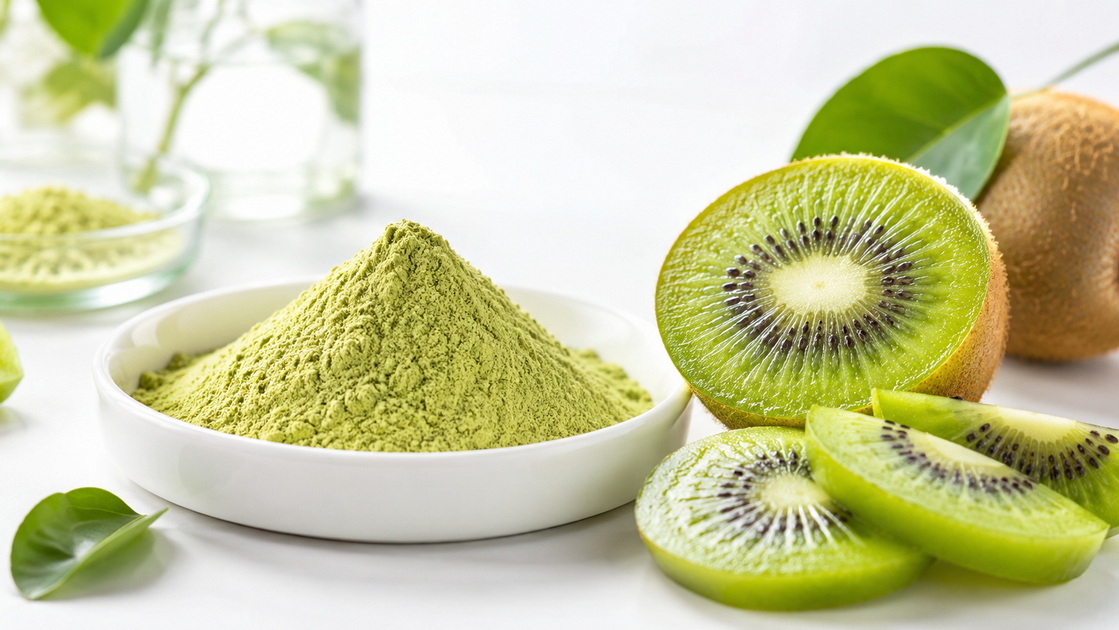
Kiwi Fruit Extract vs. Giant Knotweed Extract at a Glance
| Comparison point | Kiwi fruit extract | Giant knotweed extract |
| Primary positioning | Protein digestion and digestive comfort | Botanical polyphenols; resveratrol-related positioning requires verified composition |
| Ingredient specification to prioritize | Measured actinidin activity | Botanical identity, plant part, and quantified compounds |
| Most relevant evidence discussed here | Laboratory protein-digestion research and a small whole-fruit human trial | Human resveratrol studies, which do not automatically establish whole-extract benefits |
| Main limitation | Whole kiwifruit findings cannot automatically substantiate an extract | Resveratrol findings cannot automatically substantiate a different species or extract |
| Proven VO₂ max enhancement? | Not established by the cited research | Not established; one resveratrol trial found reduced training gains |
This is therefore not a contest with a universal winner. Kiwi has the clearer mechanistic connection to protein digestion. Knotweed-related performance positioning requires greater caution because botanical identity and human exercise outcomes both complicate the story.
Botanical Identity: What Does "Giant Knotweed Extract" Mean?
Before comparing benefits, check the botanical name.
Giant knotweed generally refers to *Reynoutria sachalinensis*, also known as *Fallopia sachalinensis*. Japanese knotweed is *Reynoutria japonica*, with synonyms including *Fallopia japonica* and *Polygonum cuspidatum*. Some horticultural listings also use "giant knotweed" as a common name for Japanese knotweed, illustrating why common names alone are insufficient.
For a formulation team, that ambiguity matters. A study involving purified trans-resveratrol is not automatically evidence for a *Reynoutria sachalinensis* extract. Nor does research on *Polygonum cuspidatum* establish equivalent benefits for every knotweed species.
Before approving an ingredient brief, request:
- The accepted botanical name and relevant synonyms.
- The plant part used.
- Extraction and standardization details.
- A compound profile rather than a common-name description alone.
My first procurement question would be: "What exactly is in the material we intend to sell?"
Kiwi Fruit Extract for Protein Digestion: Where the Evidence Begins
How Actinidin Helps Break Down Protein
Actinidin is a protease: an enzyme that breaks proteins into smaller fragments.
In a two-stage laboratory digestion study, researchers examined green kiwifruit extract containing actinidin alongside proteins from sources including meat, milk, soy, and cereals. The model simulated gastric digestion followed by upper-intestinal digestion.
This provides a plausible basis for researching actinidin-containing kiwi extracts in protein-focused products. It does not, by itself, establish improved athletic performance, greater muscle growth, or increased oxygen uptake.
The important distinction is between improving a step in digestion and improving an eventual training outcome. Several additional links would need to be demonstrated before making that larger claim.
What Human Kiwifruit Research Actually Found
A randomized crossover pilot study recruited ten healthy men to compare actinidin-containing Hayward green kiwifruit with a low-actinidin comparator alongside a 400-gram steak meal.
The study found:
- No significant difference in gastric emptying.
- No significant difference in small-bowel or colonic transit.
- No significant difference in measured satiety or subsequent meal intake.
- Significantly less bloating after the Hayward kiwifruit condition.
That is a useful but narrow result. It supports further investigation into digestive comfort after a large protein meal. It does not demonstrate that a commercial kiwi extract increases total protein absorption or improves VO₂ max.
For a consumer, less bloating and faster endurance performance are different outcomes. Responsible product communication should keep them separate.
Giant Knotweed Extract, Resveratrol, and VO₂ Max
Why Resveratrol Attracts Sports Nutrition Interest
Resveratrol has attracted attention because experimental research connects it with pathways involved in energy regulation and mitochondrial biology. That makes it scientifically interesting, but a promising mechanism is not the same as a demonstrated benefit in exercising humans.
A useful evidence ladder separates:
1. Cellular or animal findings.
2. Human biomarker changes.
3. Measured exercise outcomes.
4. Results from the actual commercial ingredient.
Moving from one level to the next requires evidence, not stronger marketing language.
A Human Trial That Changes the Comparison
A randomized study enrolled 27 men, approximately 65 years old, in eight weeks of high-intensity exercise training. Participants received either 250 mg of trans-resveratrol daily or placebo.
The increase in maximal oxygen uptake was 45% greater in the placebo group than in the resveratrol group.
That does not mean resveratrol reduced VO₂ max by 45%. It means the improvement from training was greater without resveratrol under that study's conditions.
The finding also should not be generalized to every age group, dose, or knotweed extract. Nevertheless, it directly challenges the assumption that adding resveratrol necessarily improves aerobic adaptation.
A broader review likewise described human exercise findings as unpromising or inconsistent compared with animal research.
Protein Digestion and Aerobic Performance: Avoid the Evidence Gap
Protein digestion and aerobic performance belong to the same broad sports nutrition conversation, but they are not interchangeable endpoints.
The kiwi evidence discussed here concerns protein breakdown in a laboratory model and digestive responses to a whole-fruit meal intervention. The resveratrol trial measured changes in maximal oxygen uptake during training.
Those studies answer different questions.
For example, a protein product might be designed to investigate post-meal comfort. An endurance product might be designed to improve measured aerobic capacity. Success on the first endpoint would not prove success on the second.
From a product-development perspective, the strongest question is not "Which ingredient sounds more performance-oriented?" It is "Which ingredient has evidence matching the outcome our customer actually wants?"
An Evidence-First Formulation Workflow for Botaniex Customers
Step 1: Define One Primary Product Outcome
Choose a measurable objective before choosing an ingredient.
Possible research objectives include:
- Digestive comfort following protein consumption.
- Protein breakdown under simulated digestion conditions.
- Stability of enzyme activity in a finished product.
- Aerobic performance measured in a controlled human study.
These should be treated as separate development goals, not bundled into an unsupported "complete performance" promise.
Step 2: Match the Ingredient to the Evidence
For kiwi fruit extract, request an enzyme-activity specification, not only an extract ratio. An actinidin-centered rationale requires evidence that the supplied material actually provides the relevant activity.
For knotweed, establish species identity first. Then examine whether the proposed evidence concerns purified resveratrol, a standardized extract, or another preparation entirely.
This is a recommended due-diligence process, not confirmation that any particular Botaniex ingredient already meets those requirements.
Step 3: Evaluate the Finished Formulation
An ingredient dossier is only the starting point.
Ask whether the manufacturing process and storage conditions preserve the properties on which the product concept depends. For an enzyme-led formulation, the practical question is whether measurable activity remains in the finished product throughout its proposed shelf life.
For a standardized botanical, the corresponding question is whether the finished serving delivers the specified compounds consistently.
Step 4: Test the Claim You Intend to Make
A digestive-comfort study should measure digestive comfort. An aerobic-performance claim requires an appropriate performance study.
Avoid substituting antioxidant measurements, laboratory protein breakdown, or supplier descriptions for the clinical endpoint customers will infer from the label.
Industry Insight: Label Accuracy Is Part of Product Performance
A published investigation of resveratrol supplements identified labeling and content concerns. It also reported that 25% of the products assessed exceeded the 150 mg/day level specified in the relevant EU novel-food conditions.
That finding offers a practical lesson: a well-supported ingredient concept can still fail through inconsistent composition or inappropriate serving instructions.
My recommended supplier scorecard would include:
| Evaluation area | Documentation to request |
| Identity | Botanical name, plant part, traceability |
| Composition | Validated assay and batch-specific results |
| Function | Relevant activity testing for enzyme ingredients |
| Quality | Applicable contaminant and microbiological specifications |
| Stability | Evidence supporting the proposed shelf life |
| Claims | Studies matching ingredient, dose, population, and outcome |
This scorecard is a procurement recommendation, not a published certification standard.
Safety and Regulatory Boundaries
Resveratrol should not be treated as risk-free simply because it is plant-associated. Reviews describe gastrointestinal adverse effects at higher doses and potential interactions with medicines, including anticoagulants.
An EU authorization for a specified trans-resveratrol novel-food ingredient established adult supplement conditions of use at up to 150 mg/day and required attention to medicine-related precautions. That authorization is not a universal safety limit for all resveratrol sources or botanical extracts.
Product developers should assess the exact preparation, intended population, serving size, and destination market. Consumers taking medication should seek individualized professional advice before using a resveratrol supplement.
Choosing the Right Development Path With Botaniex
Based on the company background provided, Botaniex's botanical science, extraction, and formulation capabilities are relevant to this evidence-led development process.
For a protein-focused concept, begin by investigating a kiwi fruit extract with documented actinidin activity. For a knotweed concept, begin with species verification and a clearly defined chemical specification.
Neither route should begin with a guaranteed VO₂ max promise.
Contact Botaniex with your target market, product format, desired endpoint, and proposed claims. Request a discussion covering botanical identity, analytical specifications, stability requirements, and the studies needed to support your finished formulation.

Frequently Asked Questions
1. Is kiwi fruit extract better than giant knotweed extract for protein digestion?
Actinidin-containing kiwi extract has the clearer mechanistic rationale. Laboratory research directly examined its effects on protein digestion. The cited knotweed-related evidence does not establish an equivalent digestive role.
2. Can kiwi fruit extract increase VO₂ max?
The cited kiwi studies do not establish that benefit. They investigated simulated protein digestion and responses to a whole-fruit meal intervention, not improvements in aerobic capacity.
3. Does resveratrol improve endurance training results?
Not reliably based on the evidence discussed here. One randomized trial found smaller gains in maximal oxygen uptake with resveratrol, and a review described inconsistent human findings.
4. Are giant knotweed and Japanese knotweed identical?
No. The names generally refer to different species, although common-name overlap occurs. Verify the Latin name instead of relying on "giant knotweed" alone.
5. Can whole-kiwifruit research support every kiwi extract?
No. The cited human trial used whole fruit. A commercial extract needs an evidence assessment addressing its composition, activity, serving size, and intended outcome.
6. Should the two extracts be combined?
The cited research does not establish a combined benefit. A combination would require its own formulation rationale, safety assessment, and testing rather than an assumption of synergy.
Hot Tags: China, Global, OEM, private label, manufacturers, factory, suppliers, manufacturing company