Content Menu
● Consumer Expectations Are Changing the Market
● The Shift from Flavor Enhancement to Flavor Architecture
● Why Mushroom-Based Umami Is Growing Fast
● Fermentation Is Expanding Umami Innovation
● Sodium Reduction Is Increasing the Need for Umami
● Market Outlook for Manufacturers
● About Botaniex
The global seasoning industry is undergoing a major transformation. Over the past decade, food manufacturers have moved beyond simply seeking stronger flavor intensity. Today, the market is increasingly driven by clean label formulations, natural ingredient sourcing, sodium reduction, plant-based compatibility, and authentic culinary experiences.
This shift is not just a short-term trend. It reflects a broader change in consumer expectations and food industry innovation. As more brands reformulate their products, natural umami is becoming one of the most important drivers in the future of savory flavor development.
From a technical and commercial perspective, the rise of natural umami systems represents a new era in seasoning innovation. It is no longer enough to replace artificial flavor enhancers. Manufacturers now need solutions that can deliver taste, transparency, functionality, and market appeal at the same time.
Consumer Expectations Are Changing the Market
One of the most important factors behind the growth of natural umami is the change in consumer perception.
Consumers are not rejecting savory taste. In fact, demand for depth, mouthfulness, meaty character, and long-lasting flavor remains strong. What has changed is the way people evaluate ingredients. Modern consumers increasingly prefer products that feel natural, recognizable, and minimally processed.
This has created pressure for food brands to reformulate using ingredients that support cleaner labels and more familiar ingredient declarations. As a result, the global market is seeing rising demand for mushroom-derived umami systems, yeast-based savory solutions, fermented flavor technologies, natural nucleotide synergists, and plant-based savory enhancers.
For manufacturers, this means that natural umami is no longer a niche concept. It has become a strategic category in the broader seasoning and flavor market.
The Shift from Flavor Enhancement to Flavor Architecture
Traditional seasoning systems often focus on a single function: delivering immediate taste impact. However, modern product development requires a much more sophisticated approach.
Today, successful savory formulation depends on flavor architecture. This means building a layered sensory experience that includes front-end flavor release, mid-palate body and mouthfeel, and long-lasting aftertaste complexity.
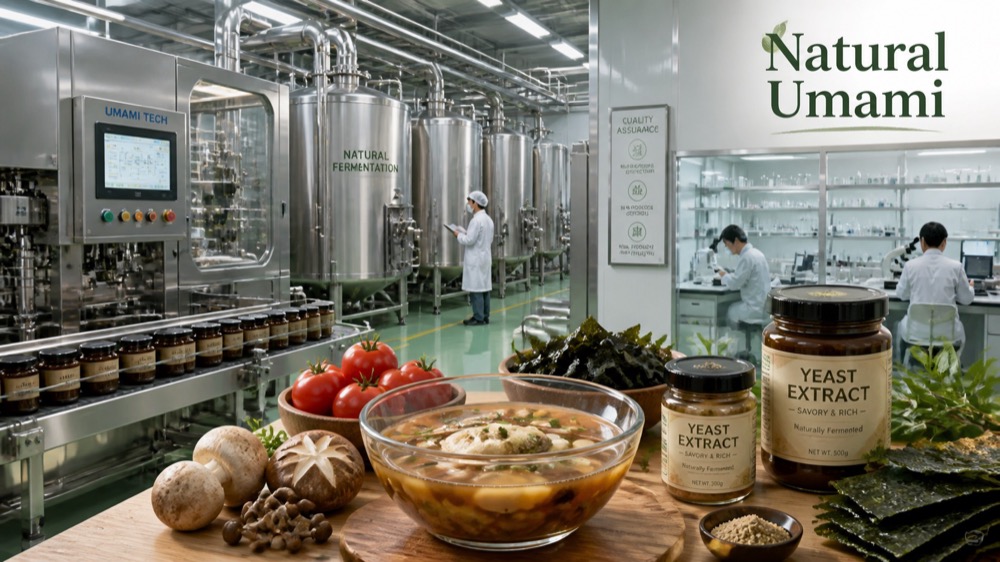
Natural umami systems are especially effective because different ingredients contribute different sensory roles. Mushroom extract can add depth and body. Yeast extract can provide immediate savory impact. Tomato concentrate contributes natural glutamate richness. Seaweed extract can deliver soft marine umami. Fermented plant extracts can enhance complexity and lingering notes.
This multi-source strategy is becoming increasingly important for food brands that want to improve taste without relying on artificial or overly industrial ingredients.
Why Mushroom-Based Umami Is Growing Fast
Among natural savory ingredients, mushroom-derived systems are seeing particularly strong growth.
This trend is driven by several advantages. Mushroom extracts have strong clean label positioning, a natural culinary image, broad compatibility with plant-based foods, and a premium consumer perception. They also support a more authentic flavor profile that resonates with modern food trends.
In practical applications, mushroom extracts can contribute broth-like depth, roasted character, kokumi sensation, and improved flavor persistence. These attributes make them especially useful in plant-based meat, instant noodles, sauces, savory snacks, and ready meals.
For food manufacturers, mushroom-based umami is becoming a core tool for next-generation seasoning development.
Fermentation Is Expanding Umami Innovation
Another major trend reshaping the seasoning industry is fermentation-driven umami.
Fermented savory systems offer more than just taste. They can support clean label positioning, natural flavor development, reduced sodium dependency, and greater complexity in finished products. This makes them highly attractive for brands looking to balance performance with consumer-friendly labeling.
Growing interest can be seen in fermented mushroom extracts, fermented yeast systems, fermented soy-derived savory ingredients, and precision fermentation technologies. These solutions are helping companies create flavors that feel more authentic, more layered, and more aligned with wellness-oriented consumer narratives.
For global brands, fermentation is becoming a powerful bridge between traditional food culture and modern product innovation.
Sodium Reduction Is Increasing the Need for Umami
Sodium reduction has become one of the most important innovation drivers in the food industry.
Consumers want healthier products with less salt, and regulators in many markets continue to encourage sodium reduction efforts. But lowering sodium often weakens flavor intensity, satisfaction, and repeat purchase behavior.
Natural umami systems help solve this problem. By improving flavor fullness, salt perception, and overall palatability, they allow manufacturers to reduce sodium chloride without sacrificing taste.
This is especially important in soups, sauces, snacks, seasonings, and ready meals, where salt reduction can easily damage the eating experience. In this context, umami is not just a flavor trend. It is a functional tool for better product design.
Market Outlook for Manufacturers
The global seasoning industry is moving from simple flavor enhancement toward integrated flavor solutions.
The next stage of competition will focus on intelligent savory system design, application-specific customization, clean label performance, and sensory engineering. Companies that can combine technical understanding, application expertise, and natural ingredient innovation will be best positioned to succeed.
Natural umami is no longer just a product concept. It is becoming a central business opportunity for food manufacturers, ingredient suppliers, and R&D teams around the world.
As consumer demand continues to evolve, the brands that can deliver natural, high-performance savory solutions will define the next generation of seasoning innovation.
About Botaniex
Botaniex is a market-oriented and research-driven manufacturer and supplier of natural ingredients, specializing in botanical extracts and functional herbal formulations for the dietary supplement, functional food, functional beverage, cosmetics, and pharmaceutical industries. With a strong focus on innovation, quality, and customized solutions, Botaniex supports global customers with natural ingredient development and application-oriented expertise.