Content Menu
● Plant-Based Foods Need Better Flavor Systems
● Savory Snacks and Sodium Reduction
● Ready Meals and Instant Foods
● Reformulation for Clean Label Products
● Application Example
● Future Opportunities
● About Botaniex
Natural umami systems are becoming essential tools for food manufacturers that want to improve flavor while meeting clean label and health-driven market demands. Across plant-based foods, savory snacks, and ready meals, manufacturers are under pressure to deliver better taste, better nutrition, and stronger consumer appeal.
This is creating a major opportunity for natural savory ingredients. By improving depth, mouthfeel, and flavor persistence, natural umami solutions help brands formulate products that are both marketable and technically effective.
Plant-Based Foods Need Better Flavor Systems
Plant-based products continue to grow globally, but flavor remains one of the biggest formulation challenges.
Many plant proteins have sensory issues such as beany notes, bitterness, weak mouthfeel, and lack of meat-like depth. These issues can reduce consumer acceptance, especially in products meant to compete with conventional meat.
Natural umami systems help solve these problems by strengthening savory identity, improving masking performance, and creating a more authentic culinary character. Mushroom extract, yeast extract, and fermented plant ingredients are especially useful in this category because they work together to improve both taste and overall product quality.
For plant-based food manufacturers, umami is one of the most important tools for building repeat purchase behavior.
Savory Snacks and Sodium Reduction
Snack manufacturers are also under pressure to reduce sodium without losing flavor.
Consumers want products that feel healthier, but they still expect strong taste and satisfaction. Natural umami ingredients help bridge this gap by increasing flavor intensity and improving salt perception. This allows manufacturers to reduce salt levels while maintaining the sensory experience that drives snacking behavior.
In applications such as chips, crackers, extruded snacks, and coated seasonings, natural umami can make a significant difference. It helps create a more rounded and longer-lasting taste profile, which is especially important in highly competitive snack categories.
Ready Meals and Instant Foods
Convenience foods depend on strong, stable flavor systems that perform under processing conditions and remain appealing during storage.
Ready meals, instant noodles, soups, and sauces all require flavor systems that can withstand heat, shelf life challenges, and inconsistent preparation methods. Natural umami ingredients offer thermal stability, flavor consistency, and broth-like richness that help improve finished product quality.
This makes them highly valuable for manufacturers of instant and prepared foods. By using natural savory ingredients, brands can create products that taste fuller, more authentic, and more premium.
Reformulation for Clean Label Products
For brands moving away from artificial additives, natural umami provides a practical reformulation path.
Instead of relying on single-function flavor enhancers, manufacturers can build multi-component umami blends that deliver depth, complexity, and functionality. Fermentation-derived ingredients can add authenticity. Mushroom extracts can provide body and richness. Yeast extracts can support immediate impact and balance.
This approach is particularly important for brands that want to improve label appeal without sacrificing taste performance. Clean label reformulation is no longer only about removing ingredients. It is about replacing them with better systems.
Application Example
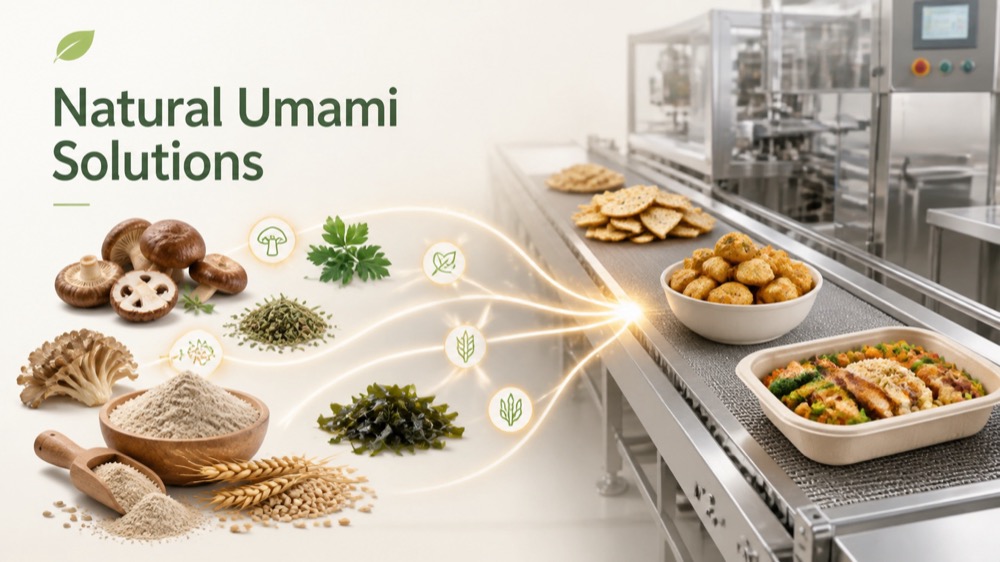
A plant-based burger seasoning system may combine mushroom extract for depth, yeast extract for immediate savory impact, and fermented soy extract for complexity.
This type of layered approach can improve meat-like character, reduce off-notes, and support a more convincing flavor profile. It also helps the product align with consumer expectations for natural and recognizable ingredients.
The same logic applies to soups, snacks, sauces, and ready meals. The key is designing a system that fits the product application and target market.
Future Opportunities
Natural umami is becoming a core ingredient strategy across multiple food categories. As demand for plant-based, lower-sodium, and clean label products continues to grow, manufacturers will need flavor systems that combine performance with consumer trust.
Brands that adopt integrated savory solutions will be better positioned to compete in global markets. The future of food innovation is not about adding more salt or stronger artificial flavor. It is about building smarter, more natural, and more effective flavor systems.
About Botaniex
Botaniex is a market-oriented and research-driven manufacturer and supplier of natural ingredients, specializing in botanical extracts and functional herbal formulations for the dietary supplement, functional food, functional beverage, cosmetics, and pharmaceutical industries. With a commitment to quality, innovation, and customized solutions, Botaniex supports food manufacturers with natural ingredient expertise and application-oriented development support.