Content Menu
● Epimedium Extract vs. Grape Skin Extract: Why Neuroinflammation Mechanisms Matter
● Understanding Neuroinflammation in Modern Brain Health
● Epimedium Extract: Mechanistic Depth in Neuroinflammation Mitigation
>> Core Bioactive – Icariin and Related Flavonoids
>> Anti-Neuroinflammatory Pathways of Epimedium Extract
>> Neuroprotective Outcomes and Cognitive Support
● Grape Skin Extract: Polyphenol-Driven Anti-Neuroinflammatory Effects
>> Resveratrol and Anthocyanins as Key Drivers
>> Mechanisms of Neuroinflammation Mitigation
>> Clinical and Translational Signals
● Head-to-Head: Epimedium Extract vs. Grape Skin Extract in Neuroinflammation
>> Mechanistic and Application Comparison Table
● Expert Insights: How R&D and Brand Teams Can Leverage These Extracts
>> Formulation Strategy from an Industry Perspective
>> Personal Use Case – From Stress to Cognitive Clarity (User-Level Narrative)
● Practical Considerations for Brand Owners and Formulators
>> Dosage, Delivery Formats, and Synergies
>> Regulatory and Claim-Positioning Nuances
● Where Botaniex Adds Value as a Botanical Ingredient Partner
>> Integrated Botanical Science and Customized Formulation
>> Co-Development Opportunities for Neuroinflammation-Focused Products
● Implementation Steps for Brand Teams Targeting Neuroinflammation
● FAQs on Epimedium Extract, Grape Skin Extract, and Neuroinflammation
● References
Epimedium extract and grape skin extract both show promising potential in mitigating neuroinflammation, but they act through distinct molecular pathways and offer different formulation and positioning opportunities for brain health products targeting microglial activation, oxidative stress, and blood–brain barrier integrity. [sciencedirect]
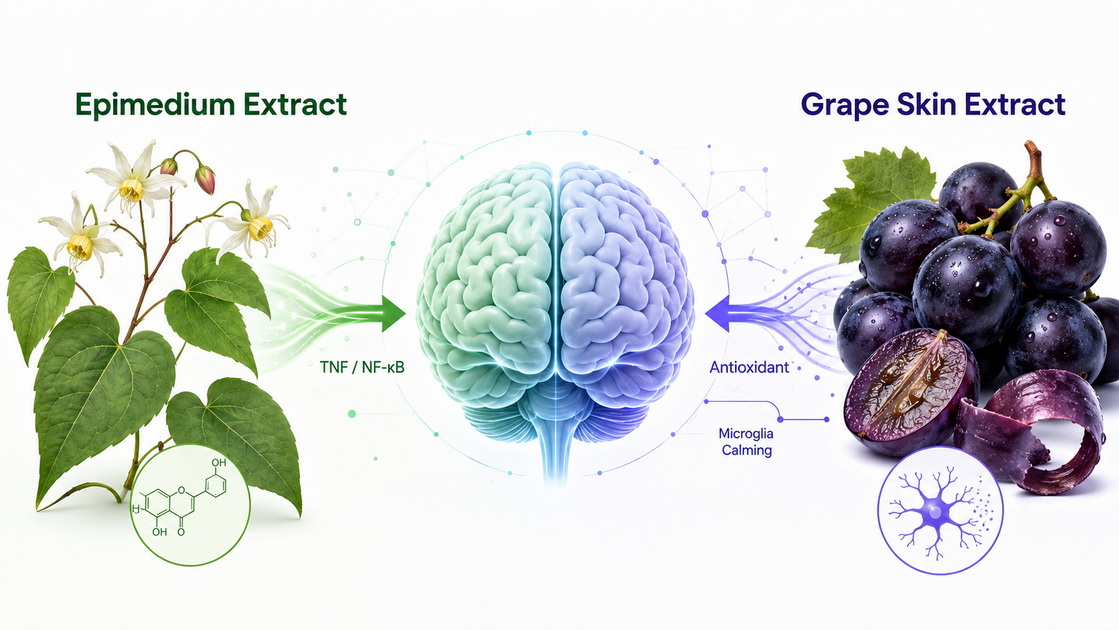
Epimedium Extract vs. Grape Skin Extract: Why Neuroinflammation Mechanisms Matter
Neuroinflammation is increasingly recognized as a central driver of cognitive decline, neurodegeneration, and mood disorders, largely mediated by chronic activation of microglia and astrocytes in the CNS. For brands developing brain health solutions, understanding how Epimedium extract and grape skin extract act on these pathways is critical for positioning, formulation, and claims strategy. [pubmed.ncbi.nlm.nih]
Epimedium extract, standardized typically to icariin, is a traditional botanical that has evolved into a modern neuroprotective candidate through its multi-target activity on TNF signaling, NF-κB, oxidative stress, and synaptic plasticity. Grape skin extract, rich in resveratrol and anthocyanins, is better known in cardiovascular and anti-aging contexts, but also shows microglia-focused anti-inflammatory and antioxidant effects in the brain. [aging-us]
For an ingredient solutions provider like Botaniex, these differential mechanisms create a strong foundation for customized formulations targeting cognitive performance, healthy aging, and stress-related neuroinflammatory states. [botaniex]
Understanding Neuroinflammation in Modern Brain Health
Neuroinflammation refers to immune activation inside the CNS, driven primarily by microglia and astrocytes responding to stimuli such as oxidative stress, toxins, beta-amyloid, or vascular insults. When this response becomes chronic, it contributes to synaptic dysfunction, neuronal death, and impaired neurogenesis, which are common features of neurodegenerative diseases and cognitive decline. [pmc.ncbi.nlm.nih]
Key mechanisms include:
- Microglial activation and release of pro-inflammatory cytokines (TNF-α, IL-1β, IL-6). [pubmed.ncbi.nlm.nih]
- Oxidative stress and ROS overproduction, amplifying damage in neurons. [aging-us]
- Disruption of the blood–brain barrier (BBB), enabling peripheral inflammatory mediators to enter the brain. [alzheimersnewstoday]
From a product development perspective, this means that multi-target botanicals that combine anti-inflammatory, antioxidant, and neuroprotective actions are particularly attractive for dietary supplements, functional foods, and beverages targeting brain health. [botaniex]
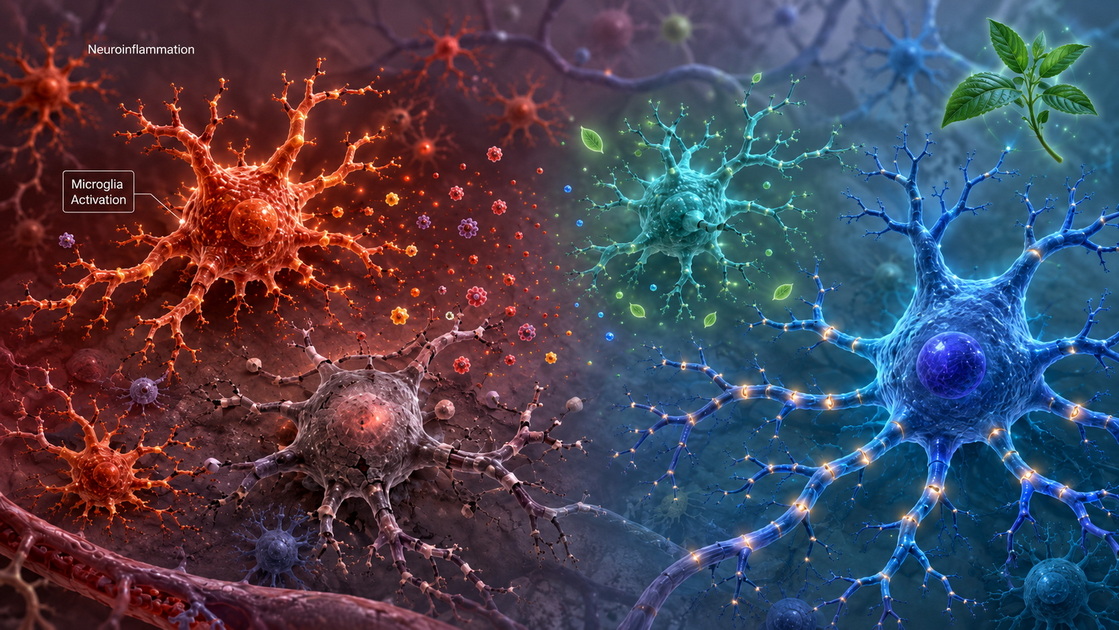
Epimedium Extract: Mechanistic Depth in Neuroinflammation Mitigation
Core Bioactive – Icariin and Related Flavonoids
Epimedium extract's neuroprotective profile is largely attributed to icariin, a flavonoid glycoside considered the main bioactive component of *Epimedii herba*. Preclinical evidence shows that icariin can improve neurologic function across multiple models, including Alzheimer's disease, Parkinson's disease, depression, cerebral ischemia, and radiation-induced brain injury. [dovepress]
Key characteristics:
- Flavonoid glycoside structure supports both antioxidant and signaling-modulation roles. [dovepress]
- Acts as a multi-target modulator, impacting Aβ deposition, tau phosphorylation, oxidative stress, and synaptic plasticity. [aging-us]
Anti-Neuroinflammatory Pathways of Epimedium Extract
Epimedium's neuroinflammation mitigation is rooted in several converging mechanisms:
- TNF signaling modulation: Epimedium attenuates TNF-related pathways, reducing TNF-α, IL-1β, IL-6 and downstream inflammatory signaling. [pmc.ncbi.nlm.nih]
- NF-κB inhibition: Icariin suppresses NF-κB activation, thereby limiting microglia-driven inflammatory responses in dopaminergic neurons. [dovepress]
- MAPK14 and PTGS2 (COX-2) regulation: Network analyses indicate icariin's ability to inhibit MAPK14 and PTGS2, key mediators in neuroinflammatory cascades. [dovepress]
- Oxidative stress reduction: Icariin upregulates antioxidant responses, including Nrf2-dependent pathways, lowering ROS-related neuronal damage. [papersflow]
In models of vascular dementia, Epimedium reduces oxidative stress, neuroinflammation, BBB dysfunction, and apoptosis, leading to improved learning and memory performance. Studies also highlight microglia and astrocyte deactivation in hippocampal regions following treatment. [pmc.ncbi.nlm.nih]
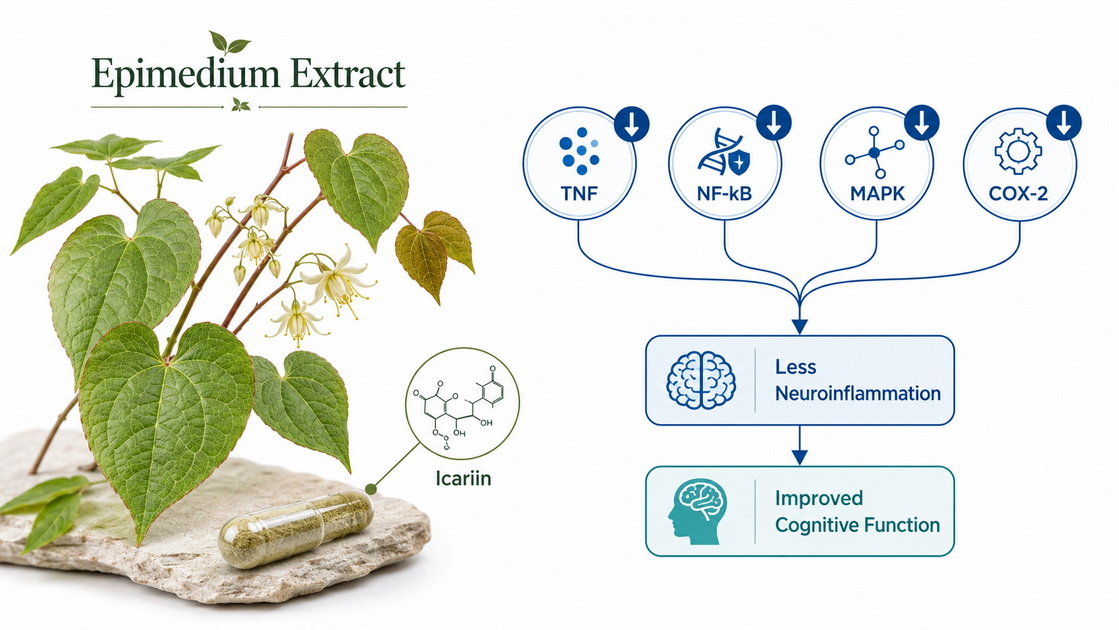
Neuroprotective Outcomes and Cognitive Support
Epimedium and icariin consistently demonstrate:
- Improved cognitive function in animal models of vascular dementia and Alzheimer's disease. [aging-us]
- Reduced β-amyloid burden and deposition, via downregulation of APP and BACE1. [dovepress]
- Enhanced synaptic plasticity, potentially via BDNF/TrkB/AKT signaling. [dovepress]
- Protection against radiation-induced and ischemia-related brain damage, highlighting broader neuroprotective coverage. [aging-us]
These outcomes position Epimedium extract as a primary neuroinflammation-focused ingredient with broad CNS applications, particularly in formulations targeting cognitive performance, aging brains, and neurovascular health. [pmc.ncbi.nlm.nih]
Grape Skin Extract: Polyphenol-Driven Anti-Neuroinflammatory Effects
Resveratrol and Anthocyanins as Key Drivers
Grape skin extract (GSE) is rich in resveratrol and anthocyanins such as malvidin 3,5-diglucoside (M3,5dG) and delphinidin 3-glucoside (D3G), which collectively underpin its neuroactive profile. Resveratrol gained attention from epidemiological observations linking moderate red wine consumption with potential reductions in dementia risk, prompting extensive mechanistic research. [aging-us]
Core features:
- Resveratrol: a polyphenol with anti-inflammatory and antioxidant activity in the brain, including microglia modulation. [alzheimersnewstoday]
- Anthocyanins: contribute to ROS reduction, mitochondrial support, and cell survival in neuronal models. [aging-us]
Mechanisms of Neuroinflammation Mitigation
Grape skin extract's anti-neuroinflammatory actions focus strongly on oxidative stress and microglial activation:
- Microglia inhibition: Resveratrol reduces activation of microglia, a key driver of chronic neuroinflammation. [pubmed.ncbi.nlm.nih]
- Reduction of inflammatory mediators: GSE has been associated with lower inflammatory cytokine levels and oxidative markers in aging contexts. [aging-us]
- ROS suppression and ATP support: GSE markedly decreases Aβ-induced ROS production and increases intracellular ATP levels in neuronal cells. [aging-us]
- BBB integrity preservation: Resveratrol has been reported to restore blood–brain barrier integrity by reducing MMP-9 levels, potentially limiting peripheral inflammatory infiltration. [alzheimersnewstoday]
In neuronal cell models (e.g., SH-SY5Y cells), GSE ameliorates Aβ-induced cytotoxicity, increases cell viability, and demonstrates robust anti-oxidative neuroprotection. [aging-us]
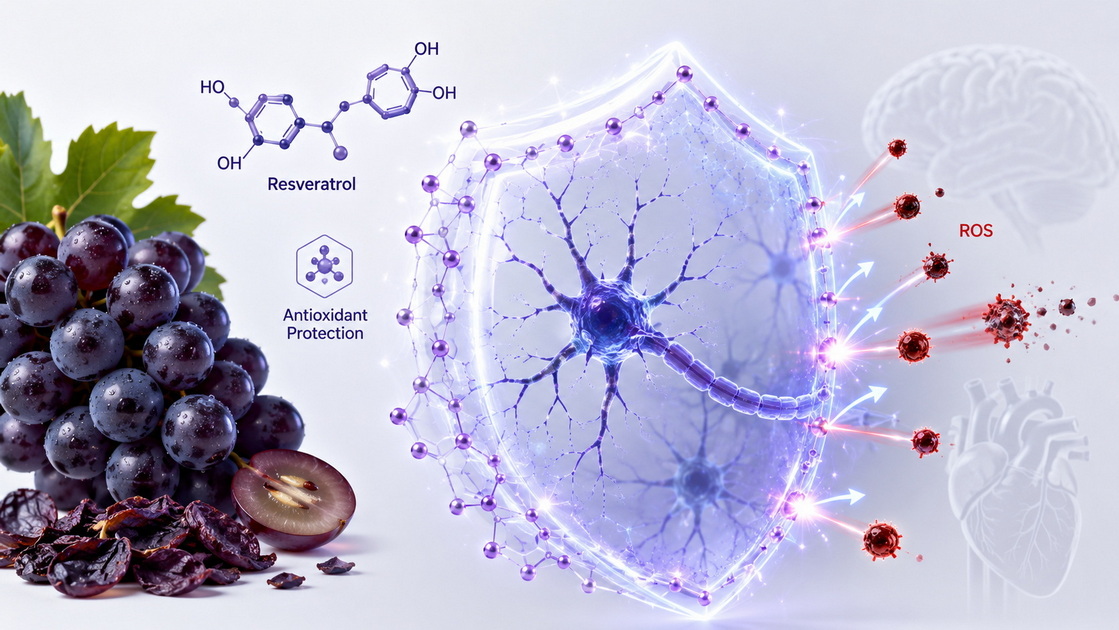
Clinical and Translational Signals
While human data remain limited compared with preclinical studies, early trials show that resveratrol:
- May reduce beta-amyloid levels and influence its clearance or breakdown. [alzheimersnewstoday]
- Can modulate BBB-related markers such as MMP-9, aligning with reduced neuroinflammatory burden. [alzheimersnewstoday]
For product developers, grape skin extract offers an attractive polyphenol-centered story that is easily integrated into functional beverages, nootropics, and anti-aging formulations where cardiovascular and brain health messaging intersect. [botaniex]
Head-to-Head: Epimedium Extract vs. Grape Skin Extract in Neuroinflammation
Mechanistic and Application Comparison Table
| Dimension | Epimedium Extract (Primary) | Grape Skin Extract (Comparator) |
| Primary bioactives | Icariin and related Epimedium flavonoids. aging-us | Resveratrol and anthocyanins (M3,5dG, D3G). aging-us |
| Main neuroinflammatory targets | TNF signaling, NF-κB, MAPK14, PTGS2, microglial and astrocyte activation. pmc.ncbi.nlm.nih | Microglial activation, ROS-driven inflammation, BBB-related markers (MMP-9). pubmed.ncbi.nlm.nih |
| Antioxidant actions | Nrf2-dependent pathways, reduction of ROS in diverse CNS models. aging-us | Strong ROS suppression, increased ATP in neuronal cells, anti-oxidative protection. aging-us |
| Neuroprotective outcomes | Improved cognition in vascular dementia and AD models; reduced Aβ burden; better synaptic plasticity. aging-us | Reduced Aβ-induced neurotoxicity; possible support for BBB integrity and amyloid clearance in early human data. aging-us |
| Evidence breadth | Extensive preclinical coverage across AD, PD, depression, ischemia, radiation-induced damage. aging-us | Strong in vitro and animal data; limited but growing clinical exploration in cognitive impairment. pubmed.ncbi.nlm.nih |
| Positioning focus | Multi-target neuroinflammation + neuroprotection for cognitive aging and neurovascular health. aging-us | Polyphenol-based antioxidant + microglia modulation for brain and cardiovascular–brain axis support. pubmed.ncbi.nlm.nih |
From a formulation standpoint, Epimedium extract is well-suited as the primary neuroinflammation-focused hero ingredient, with grape skin extract serving as a synergistic polyphenol partner that reinforces antioxidant and microglial modulation pathways. [aging-us]
Expert Insights: How R&D and Brand Teams Can Leverage These Extracts
Formulation Strategy from an Industry Perspective
From the perspective of a R&D director in a brain health supplement company, the choice between Epimedium and grape skin extract is not either–or—it is about mechanistic layering:
- Use Epimedium extract as the core neuroinflammation modulator, given its strong TNF, NF-κB, and multi-pathway coverage. [pmc.ncbi.nlm.nih]
- Add grape skin extract to reinforce antioxidant defense, microglia regulation, and BBB support. [pubmed.ncbi.nlm.nih]
A typical differentiation approach could be:
1. Neurovascular focus: Epimedium-led formula for users concerned with cognitive decline linked to vascular dysfunction and chronic inflammation. [pmc.ncbi.nlm.nih]
2. Healthy aging & lifestyle focus: Grape skin-led formula for consumers familiar with "red wine polyphenols" and seeking a more lifestyle-aligned, cardiovascular-brain positioning. [alzheimersnewstoday]
Personal Use Case – From Stress to Cognitive Clarity (User-Level Narrative)
From a personal user perspective, think of a professional under chronic stress and sleep disruption who experiences "brain fog" and poor focus. Chronic stress is known to exacerbate low-grade neuroinflammation and oxidative stress, creating a plausible target for multi-target botanicals. In such a scenario: [pubmed.ncbi.nlm.nih]
- Epimedium extract can be positioned as a daily neuroinflammation support, working on deeper inflammatory and neuroprotective pathways. [aging-us]
- Grape skin extract contributes a fast-acting antioxidant and microglial calming effect, complementing the longer-term structural benefits of Epimedium. [pubmed.ncbi.nlm.nih]
While users should not expect these ingredients to "cure" diseases, they can reasonably be positioned as part of a long-term brain health routine alongside sleep hygiene, exercise, and diet. [pubmed.ncbi.nlm.nih]
Practical Considerations for Brand Owners and Formulators
Dosage, Delivery Formats, and Synergies
Although specific commercial dosage decisions depend on regulations and product targets, the literature suggests:
- Epimedium/Icariin: Often investigated in doses supporting systemic anti-inflammatory and neuroprotective effects, though human CNS-specific dosing still requires further standardization. [aging-us]
- Grape skin polyphenols: Doses tuned to balance resveratrol-equivalent intake and total anthocyanin content for sustained antioxidant coverage. [aging-us]
Common delivery options include:
- Capsules and tablets for standardized dose control in dietary supplements. [botaniex]
- Functional beverages and stick packs leveraging grape skin extract's polyphenol narrative for RTD brain and energy drinks. [botaniex]
Synergistic opportunities:
- Pairing Epimedium extract with omega-3 fatty acids, phosphatidylserine, or B-complex vitamins for comprehensive brain nourishment.
- Combining grape skin extract with green tea catechins or mushroom extracts, aligning with Botaniex's broader portfolio of tea and mushroom ingredients. [botaniex]
Regulatory and Claim-Positioning Nuances
From a compliance and marketing standpoint:
- Focus on structure/function language such as "supports healthy inflammatory response in the brain" or "helps protect neurons from oxidative stress," rather than disease claims. [alzheimersnewstoday]
- Leverage in vitro and in vivo data to support internal documentation and technical dossiers, while remaining conservative in front-of-pack claims. [pmc.ncbi.nlm.nih]
These nuances are essential to align with global regulatory expectations in dietary supplements, functional foods, and cosmetics with neurocosmetic aspirations. [bio-botanica]
Where Botaniex Adds Value as a Botanical Ingredient Partner
Integrated Botanical Science and Customized Formulation
Botaniex combines botanical science, extraction technology, and formulation expertise to deliver customized ingredient solutions across dietary supplements, functional foods, beverages, cosmetics, and pharmaceuticals. This platform is particularly relevant for complex neuroinflammation strategies, where standardization, purity, and reproducibility determine both efficacy and regulatory acceptance. [botaniex]
Key value points:
- GMP, ISO, and HACCP-backed production, providing traceable quality for brain health formulations. [botaniex.en.made-in-china]
- Broad experience with herbal extracts, organic extracts, mushroom extracts, tea extracts, and custom herbal formulas, enabling synergistic combinations with Epimedium and grape skin extracts. [botaniex]
Co-Development Opportunities for Neuroinflammation-Focused Products
For brand owners and formulators, Botaniex can support:
- Tailored extract ratios of Epimedium and grape skin for specific target demographics (e.g., active professionals, seniors, students).
- Format-specific optimization (e.g., instant drink mixes vs. capsules) considering solubility, stability, and sensory impact. [botaniex]
- Evidence-aligned concept dossiers, presenting mechanistic diagrams, study summaries, and suggested claims aligned with regulatory norms. [dovepress]
Implementation Steps for Brand Teams Targeting Neuroinflammation
To translate these insights into a market-ready product, brand and formulation teams can follow a structured approach:
1. Define the primary outcome
- Cognitive longevity in aging adults
- Focus and mental clarity in high-stress populations
- Neurovascular support in cardio-brain concepts
2. Select the hero ingredient
- Epimedium extract as primary for deep neuroinflammation and neuroprotection coverage. [aging-us]
- Grape skin extract as complementary or as primary in lifestyle-focused, polyphenol-centric SKUs. [pubmed.ncbi.nlm.nih]
3. Design supportive matrix
- Add synergistic nutrients (e.g., vitamins, fats, other botanicals) to reinforce antioxidant and anti-inflammatory pathways. [dovepress]
4. Shape the narrative and claims
- Align messaging with "supports healthy brain inflammation response," "helps protect neurons from oxidative stress," and "supports cognitive performance under lifestyle stress", grounded in mechanistic evidence. [aging-us]
5. Collaborate with a specialized supplier
- Partner with a botanical ingredient specialist like Botaniex for standardized extracts, technical support, and formulation co-development. [botaniex]
FAQs on Epimedium Extract, Grape Skin Extract, and Neuroinflammation
Q1: Can Epimedium extract and grape skin extract be used together in one brain health product?
Yes, combining Epimedium's TNF/NF-κB-focused anti-neuroinflammatory activity with grape skin's antioxidant and microglial modulation creates a multi-layered neuroprotection strategy, particularly relevant for cognitive aging products. [pmc.ncbi.nlm.nih]
Q2: Is the evidence for neuroinflammation mitigation mostly preclinical?
Most mechanistic data are derived from in vitro and animal models, with human data emerging but still limited, especially for Epimedium; resveratrol-related clinical data are more advanced but remain exploratory in Alzheimer's and cognitive impairment. [alzheimersnewstoday]
Q3: How do these extracts relate to stress-induced "brain fog"?
Chronic stress can promote low-grade neuroinflammation and oxidative stress; both Epimedium and grape skin extracts act on these pathways, offering plausible support for cognitive clarity, though they should be seen as supportive, not therapeutic, tools. [pubmed.ncbi.nlm.nih]
Q4: Are these extracts suitable only for capsules, or also for beverages?
Both extracts can be integrated into capsules, tablets, powders, and functional beverages, with grape skin extract being particularly suitable for RTD drinks and stick packs thanks to its polyphenol narrative and compatibility with drink matrices. [botaniex]
Q5: What differentiates Botaniex as a supplier for neuroinflammation-focused botanicals?
Botaniex's specialization in botanical extracts, herbal formulations, and value-added services, combined with modern QA systems and versatile product categories, positions the company as a strategic partner for customized neuroinflammation-oriented ingredient solutions. [botaniex.en.made-in-china]
References
1. Li et al. "The neuroprotective effects of icariin on ageing, various neurodegenerative and neuropsychiatric disorders." *Aging (Albany NY)*. [aging-us]
2. "Molecular mechanism of Epimedium in the treatment of vascular dementia." *Frontiers in Pharmacology* (PMC article). [pmc.ncbi.nlm.nih]
3. Dovepress article: "Icariin, an up-and-coming bioactive compound against neurological diseases." [dovepress]
4. Angeloni et al. and related works summarized in "Icariin Neuroprotective Effects: Research Guide & Papers." [papersflow]
5. "Icariin alleviates cognitive dysfunction by reducing neuroinflammation via cGAS-STING modulation." *Journal on ScienceDirect*. [sciencedirect]
6. Minireview: "Anti-inflammatory activities of resveratrol in the brain." *Journal of Neuroinflammation*. [pubmed.ncbi.nlm.nih]
7. "Grape skin extract modulates neuronal stem cell viability and suppresses neuroinflammation-related oxidative stress." *Aging (Albany NY)*. [aging-us]
8. "Resveratrol and Alzheimer's disease: overview of preclinical and clinical insights." *Alzheimer's News Today*. [alzheimersnewstoday]
9. Botaniex official website – About, Products, and Herbal Extracts pages. [botaniex]
10. Changsha Botaniex Inc. profile with certifications and business scope. [botaniex.en.made-in-china]