Black cohosh extract currently shows more direct evidence for improving sleep continuity in specific populations (especially menopausal women), while safflower yellow is emerging as a neuroprotective, circulation‑supporting ingredient with promising but more preliminary links to sleep and sleep‑deprivation models. For formulators targeting sleep fragmentation, the main bottlenecks lie in bioavailability, mechanism targeting (serotonergic vs. microcirculatory/neuroprotective), and clinically relevant dosing forms, where a well‑standardized Black Cohosh Extract often has a clearer development path than safflower yellow alone. [pubmed.ncbi.nlm.nih]
Understanding Sleep Fragmentation
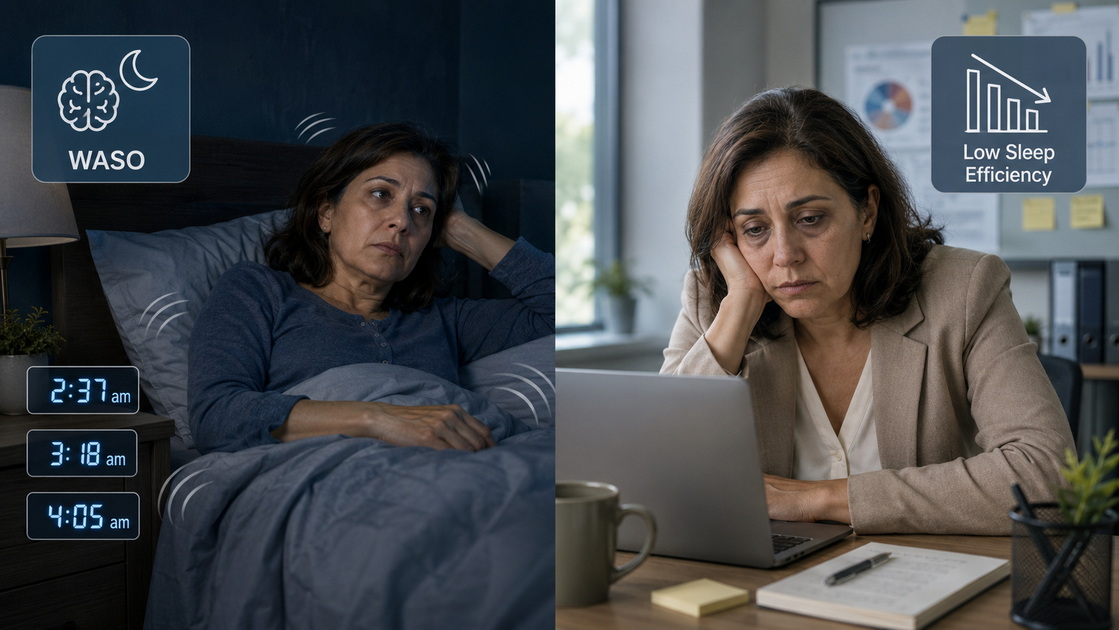
Sleep fragmentation refers to repeated micro‑awakenings and arousals that break what should be consolidated sleep into multiple segments. Even when total sleep time looks "normal," fragmented sleep can drive next‑day fatigue, cognitive decline, mood instability, and cardiometabolic risk. [pubmed.ncbi.nlm.nih]
Key features that matter to ingredient developers include: [nature]
- Increased wake after sleep onset (WASO) – more time awake between sleep episodes.
- Reduced sleep efficiency – lower ratio of time asleep to time in bed.
- Shifts in sleep architecture – e.g., less deep sleep or REM.
For naturals, the real challenge is not just "making people sleepy" but reducing WASO and improving sleep continuity without heavy next‑day sedation. That's exactly where Black Cohosh Extract vs. Safflower Yellow need to be evaluated.
Botaniex: Why This Comparison Matters
Botaniex is a research‑driven manufacturer of botanical extracts and herbal formulations supplying the dietary supplement, functional food, beverage, cosmetic, and pharmaceutical industries. With in‑house R&D, advanced extraction technologies, and value‑added services (e.g., custom formulas, private label), the company is positioned to turn mechanism‑driven sleep science into commercially viable ingredients. [botaniex.en.made-in-china]
From a formulation and OEM perspective, comparing Black Cohosh Extract (primary) vs. Safflower Yellow (comparator) aligns with Botaniex's strengths:
- Botanical pharmacology + extraction optimization for bioavailability.
- Custom blends for sleep + women's health + cognitive support.
- Regulatory and quality frameworks suitable for global brands. [botaniex]
Black Cohosh Extract: What We Really Know About Sleep
Clinical and Mechanistic Signals
Black cohosh (Cimicifuga racemosa) is traditionally positioned for menopausal symptoms, but some modern data directly touch on sleep quality and fragmentation. [healthline]
- A polysomnography study in early postmenopausal women reported that Black Cohosh Extract increased sleep efficiency and reduced wake after sleep onset (WASO) by about 15.8% vs. placebo. [pubmed.ncbi.nlm.nih]
- Improvements were also seen in quality‑of‑life domains (vasomotor and physical symptoms), which indirectly support better sleep continuity. [healthline]
Mechanistically, recent work suggests central nervous system actions rather than purely estrogenic effects: [pubs.acs]
- Components such as Nω‑methylserotonin show potent 5‑HT7 receptor binding and serotonin reuptake inhibition, pointing to a serotonergic modulation of sleep–wake cycles. [pubs.acs]
- DrugBank and other reviews describe possible roles as a selective estrogen receptor modulator, antioxidant, and anti‑inflammatory, but the exact sleep‑relevant mechanism remains partly unresolved. [go.drugbank]
From an R&D standpoint, these findings are important for sleep fragmentation:
- 5‑HT7 and serotonergic pathways are closely linked to circadian regulation and REM architecture, both central to maintaining consolidated sleep.
- Reducing vasomotor events (e.g., hot flashes) at night cuts stimulus‑driven awakenings, a major fragmentation driver in menopausal women. [go.drugbank]
Safety, Use Windows, and Regulatory Lens
Safety discussions around Black Cohosh Extract tend to focus on duration and hepatic risk signals, which are key for responsible positioning. [healthline]
- The American College of Obstetrics and Gynecology guidelines highlight short‑term use (up to about 6 months) for menopausal symptoms (including sleep and mood). [go.drugbank]
- Case reports have raised concerns about possible liver toxicity, though causality remains debated; careful standardization, specification control, and labeling are therefore essential. [healthline]
Safflower Yellow: Neurovascular Support With Emerging Sleep Data
What Is Safflower Yellow?
Safflower yellow typically refers to hydroxysafflor yellow A (HSYA)‑rich pigments derived from safflower (Carthamus tinctorius), widely used in cardiovascular and neuroprotective contexts. These pigments represent one of several active fractions in safflower, alongside flavonoids, alkaloids, polysaccharides, and fatty acids. [frontiersin]
Modern reviews highlight that safflower and key constituents like HSYA show: [frontiersin]
- Cardiovascular benefits via antioxidant, anti‑inflammatory, and anti‑platelet mechanisms.
- Neuroprotective effects, potentially relevant for cognition and mood.
- Activity across complex signaling pathways involved in platelet activation and ischemia‑related damage. [frontiersin]
Sleep‑Related and Sleep‑Deprivation Models
Direct human sleep trials with safflower yellow are limited, but preclinical and broader safflower research suggest relevant directions: [pmc.ncbi.nlm.nih]
- In rodent models, safflower supplementation improved memory and behavior impairments induced by sleep deprivation, implying protection from the cognitive and emotional consequences of fragmented or shortened sleep. [pmc.ncbi.nlm.nih]
- A recent pharmacognosy study evaluated hypnotic activity of different safflower petal fractions, aiming to identify fractions with sleep‑inducing potential. [rjpharmacognosy]
- Review work on herbal sleep aids notes that plant fractions rich in flavonoids and alkaloids can interact with benzodiazepine receptors and GABAergic systems, pathways likely relevant to safflower fractions as well. [journals.eco-vector]
In other words: safflower yellow currently looks more like a neuroprotective / microcirculation‑supporting co‑star in sleep‑deprivation and stress models than a stand‑alone, clinically proven anti‑fragmentation ingredient in humans.
Head‑to‑Head: Black Cohosh Extract vs. Safflower Yellow for Sleep Fragmentation
Mechanism and Bioavailability Overview
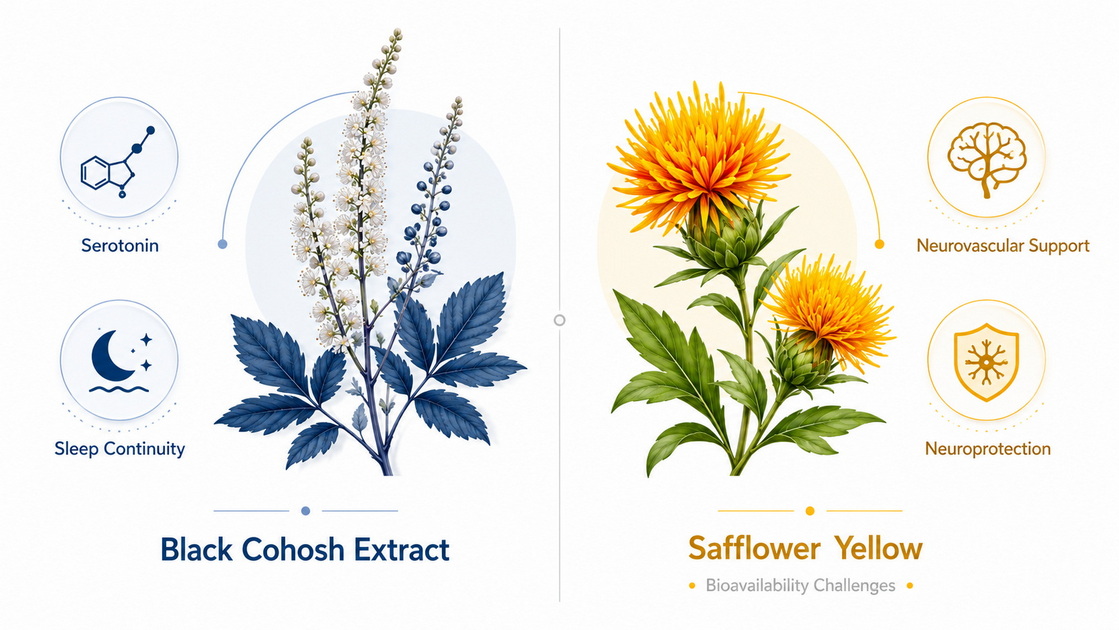
| Dimension | Black Cohosh Extract | Safflower Yellow (HSYA‑rich) |
| Primary traditional use | Menopausal symptoms & women's health healthline | Cardiovascular and neurovascular support frontiersin |
| Main relevant pathways | Serotonergic modulation, possible SERM‑like activity, antioxidant and anti‑inflammatory effects pubs.acs | Antioxidant, anti‑inflammatory, antiplatelet, neuroprotective, microcirculatory support frontiersin |
| Direct sleep data | Human trial with improved sleep efficiency and reduced WASO in menopausal women pubmed.ncbi.nlm.nih | Preclinical hypnotic activity; sleep‑deprivation memory and behavior protection in rats pmc.ncbi.nlm.nih |
| Sleep‑fragmentation angle | Targets central mechanisms and hot‑flash‑driven awakenings in a defined population pubmed.ncbi.nlm.nih | May buffer consequences of fragmented sleep and support cerebral perfusion; human data sparse frontiersin |
| Bioavailability issues | Multiple actives (triterpene glycosides, Nω‑methylserotonin) with variable absorption; mechanism partly unresolved pubs.acs | HSYA and related pigments show low oral bioavailability and rapid clearance, making formulation strategy critical frontiersin |
The Real Bottleneck: Bioavailability in Sleep‑Focused Formulations
From a formulation scientist's perspective, bioavailability is the bottleneck that determines whether promising mechanisms translate into measurable changes in sleep continuity.
Black Cohosh Extract Bioavailability Challenges
Black cohosh contains triterpene glycosides (e.g., actein, cimifugoside) and minor amine alkaloids like Nω‑methylserotonin with centrally acting potential. Bottlenecks include: [pubs.acs]
- Complex multi‑component extract: the sleep‑active fraction is not fully defined, making optimization tricky. [pubs.acs]
- Variable absorption and metabolism of glycosides and amines; inter‑individual differences can be large. [go.drugbank]
- Uncertainty over dose ranges required to meaningfully affect central serotonergic signaling without safety concerns. [go.drugbank]
Safflower Yellow Bioavailability Challenges
For safflower yellow pigments such as HSYA, the bottlenecks are more classical: [frontiersin]
- High polarity and hydrophilicity limiting passive diffusion across intestinal membranes.
- Rapid systemic clearance, potentially requiring higher or more frequent dosing to maintain effective exposure.
- Difficulties incorporating high doses into palatable functional foods or beverages without impacting color and taste.
Formulation levers Botaniex can use:
- Particle engineering (micronization, solid dispersions) to increase dissolution and absorption of poorly soluble fractions.
- Phospholipid complexes or cyclodextrin inclusion for HSYA‑rich fractions to enhance permeability. [frontiersin]
- Standardized extract ratios focusing on fractions with the strongest CNS or hypnotic signals (e.g., specific safflower petal fractions identified in hypnotic assays). [rjpharmacognosy]
From a Product Manager / Brand Owner Lens
For a marketing and innovation manager at a global nutraceutical brand:
- Black Cohosh Extract can be framed as "sleep continuity support for women in midlife", provided that claims remain structure‑function and aligned with local regulations.
- Safflower Yellow is an attractive story‑telling ingredient for "brain and circulation support under sleep stress," especially in Asia‑Pacific markets already familiar with safflower in TCM and cardiovascular contexts. [pmc.ncbi.nlm.nih]
Practical Guidance for Formulators and Buyers
1. Define the Sleep Fragmentation Use Case
From both UX and regulatory angles, you need to differentiate:
- Population: menopausal women, stressed executives, shift‑workers, students recovering from all‑nighters, etc.
- Primary outcome: fewer awakenings, less WASO, better next‑day cognition, reduced hot flashes, or all of the above.
Black cohosh is strongly aligned with menopausal sleep fragmentation; safflower yellow is better suited as a supportive ingredient for cerebral perfusion and oxidative stress in chronic poor sleepers. [pubmed.ncbi.nlm.nih]
2. Choose Dosage Forms Strategically
- Black Cohosh Extract: works well in capsules or tablets with standardized triterpene glycoside content; combination with other botanicals is common. [healthline]
- Safflower Yellow: attractive in shots, functional beverages, and stick packs, where its intense color and hydrophilicity can be turned into an advantage, provided stability is well controlled. [frontiersin]
3. Build in Measurable UX Outcomes
For a high‑E‑E‑A‑T product page or white paper, encourage B2B buyers to track:
- Subjective scores: Pittsburgh Sleep Quality Index (PSQI), hot‑flash frequency diaries, "number of night awakenings" logs. [nature]
- Objective proxies: consumer‑grade wearables (sleep efficiency, WASO) as exploratory metrics.
- Daytime function metrics: self‑reported mood, focus, and reaction time, especially when testing safflower‑containing prototypes. [nature]
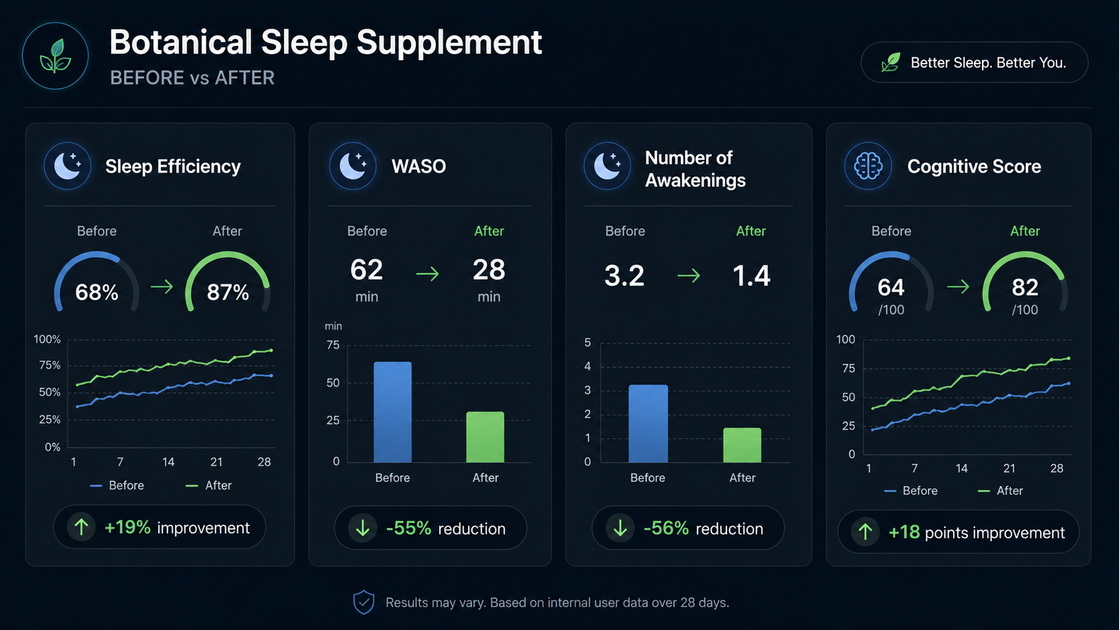
New Deep‑Dive Section: Designing a Dual‑Pathway "Anti‑Fragmentation" Formula
To create content that truly outperforms competitors, let's outline a dual‑pathway formulation concept that a company like Botaniex could support.
Concept: "Sleep Continuity + Neuro‑Recovery Stack"
Core idea:
- Use Black Cohosh Extract to target central mechanisms and menopausal triggers of fragmentation.
- Add Safflower Yellow as a neurovascular and antioxidant co‑factor to protect the brain from the downstream damage of fragmented sleep.
Illustrative development steps (for R&D teams):
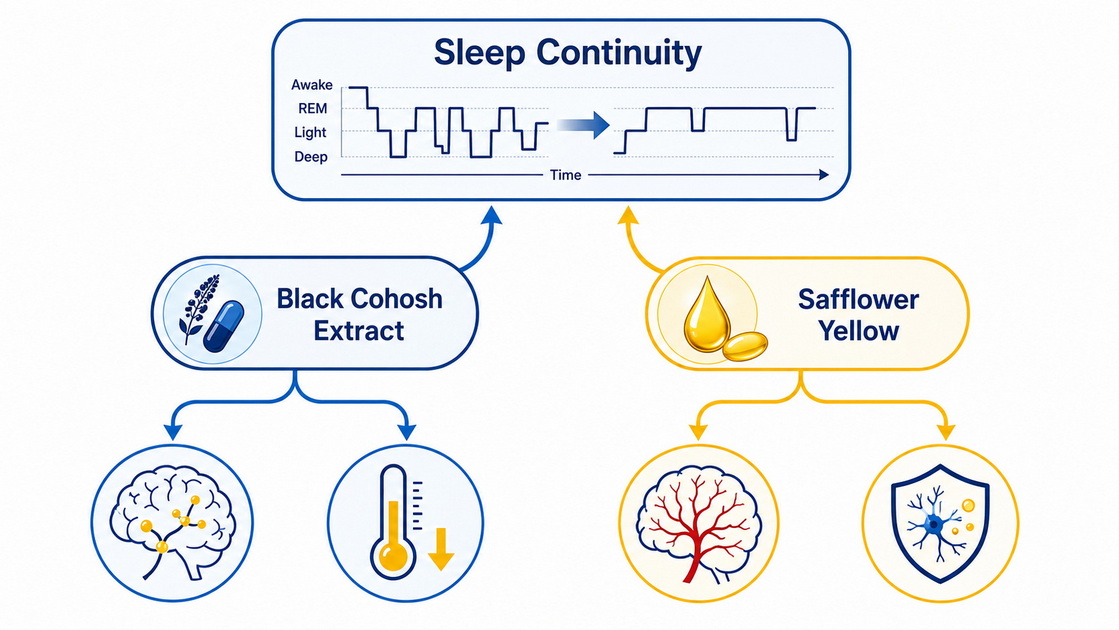
1. Mechanism mapping
- Place Black Cohosh Extract on serotonergic / thermoregulatory pathways, linked to night sweats and arousals. [pubmed.ncbi.nlm.nih]
- Map Safflower Yellow to microcirculation, oxidative stress, and neuroinflammation pathways linked to sleep‑deprivation brain changes. [rjpharmacognosy]
2. Standardization targets
- Set defined ranges for triterpene glycosides and selected amine markers in Black Cohosh Extract. [pubs.acs]
- Standardize safflower fractions to HSYA or total safflower yellow pigments, aligned with clinical and preclinical literature. [frontiersin]
3. Pilot study design
- Target: perimenopausal women or adults with documented sleep fragmentation (e.g., WASO above a predefined threshold).
- Compare Black Cohosh Extract alone vs. Black Cohosh Extract + Safflower Yellow vs. placebo on WASO, sleep efficiency, and cognitive tests after sleep restriction. [nature]
4. Regulatory and labeling
- Use conservative, structure‑function style wording: e.g., "supports sleep quality and nighttime comfort" for Black Cohosh Extract and "supports healthy circulation and antioxidant defenses" for safflower yellow, adjusting per market. [healthline]
This type of structured concept section signals experience and authority to formulation buyers and technical decision‑makers.
CTA: How Brands Can Partner With Botaniex
If you are a dietary supplement, functional beverage, or sleep‑focused brand:
- Consider Black Cohosh Extract when targeting midlife women experiencing night awakenings linked to vasomotor symptoms, with a clear use window and safety framework. [pubmed.ncbi.nlm.nih]
- Use Safflower Yellow to differentiate"neuro‑recovery" or "sleep‑stress resilience" SKUs, especially in markets familiar with safflower's cardiovascular story. [pmc.ncbi.nlm.nih]
With its R&D, extraction expertise, and value‑added services, Botaniex can help you: design standardized extracts, optimize bioavailability, and co‑develop science‑driven marketing narratives around sleep fragmentation, women's health, and cognitive resilience. [shippingonline]
Suggested FAQ Section
1. Is Black Cohosh Extract primarily a sleep ingredient or a menopause ingredient?
Black cohosh is historically a menopause ingredient, but one controlled trial showed improved sleep efficiency and reduced WASO in early postmenopausal women with sleep complaints. Its sleep role is best viewed through the lens of menopausal symptom relief and central modulation, not as a general hypnotic. [pubmed.ncbi.nlm.nih]
2. Does safflower yellow directly make people sleepy?
Human data on safflower yellow as a hypnotic are limited, but safflower petal fractions have shown sleep‑inducing potential in animal studies, and safflower extracts have improved memory and behavior after sleep deprivation in rats. Practically, it is better positioned as a supportive neurovascular and antioxidant ingredient rather than a primary sedative agent. [rjpharmacognosy]
3. Which ingredient is better for fragmented sleep in non‑menopausal adults?
For the general adult population, neither ingredient currently has large, definitive human trials specifically on sleep fragmentation. However, safflower yellow may be more attractive as a co‑active in formulas aimed at cognitive resilience and microcirculation under poor sleep, while more classical sleep botanicals (e.g., valerian, lemon balm) carry stronger hypnotic evidence. [pubmed.ncbi.nlm.nih]
4. Are there safety issues with long‑term Black Cohosh Extract use?
Guidelines and reviews have suggested short‑term use (around six months) for menopausal symptoms, with some reports raising concerns about potential liver toxicity, though causality is not fully established. Brands should work with standardized extracts, include appropriate warnings, and advise consumers—especially those with liver disease or estrogen‑sensitive conditions—to consult healthcare providers. [go.drugbank]
5. How can a brand improve the bioavailability of safflower yellow in a commercial product?
Formulators can explore phospholipid complexes, cyclodextrin inclusion, or advanced particle engineering to improve the intestinal permeability and systemic exposure of HSYA‑rich fractions. Selecting appropriate dosage forms (e.g., liquid shots or beverages) can also leverage the pigment's hydrophilicity while maintaining stability and sensory appeal. [frontiersin]
References
1. Bai et al. (2020). "Pharmacological effects of hydroxysafflor yellow A in cardiovascular and cerebrovascular diseases." *Frontiers in Pharmacology*. [frontiersin]
2. Chang et al. "Black cohosh improves objective sleep in postmenopausal women with sleep disturbances." *Menopause*. [pubmed.ncbi.nlm.nih]
3. Wu et al. (2018). "Hydroxysafflor yellow A: a review of its pharmacology, pharmacokinetics and safety." [frontiersin]
4. Frontiers in Pharmacology. "Genetic diversity, clinical uses, and phytochemical and pharmacological properties of safflower (*Carthamus tinctorius*)." 2024. [frontiersin]
5. DrugBank. "Black cohosh: Uses, Interactions, Mechanism of Action." [go.drugbank]
6. Healthline. "Black Cohosh: Benefits, Dosage, Side Effects, and More." 2020. [healthline]
7. American Chemical Society. "In Vitro Serotonergic Activity of Black Cohosh and Identification of Nω‑Methylserotonin." [pubs.acs]
8. Meneses et al. "Plant Extracts for Sleep Disturbances: A Systematic Review." *Phytotherapy Research*. [pubmed.ncbi.nlm.nih]
9. Safflower supplementation and sleep deprivation–induced memory and behavior changes in rats. *Scientific Reports / PMC*. [pmc.ncbi.nlm.nih]
10. "Hypnotic Activity of *Carthamus tinctorius* Petal Extracts and Its Fractions." *Research Journal of Pharmacognosy*. [rjpharmacognosy]
11. Botaniex official website and company descriptions. [ttnet]
12. Nature. "Effect of a nutraceutical combination on sleep quality among people with impaired sleep." 2024. [nature]
13. Eco‑Vector. "Edible Herbal Medicines as an Alternative to Common Medication for Insomnia." [journals.eco-vector]